
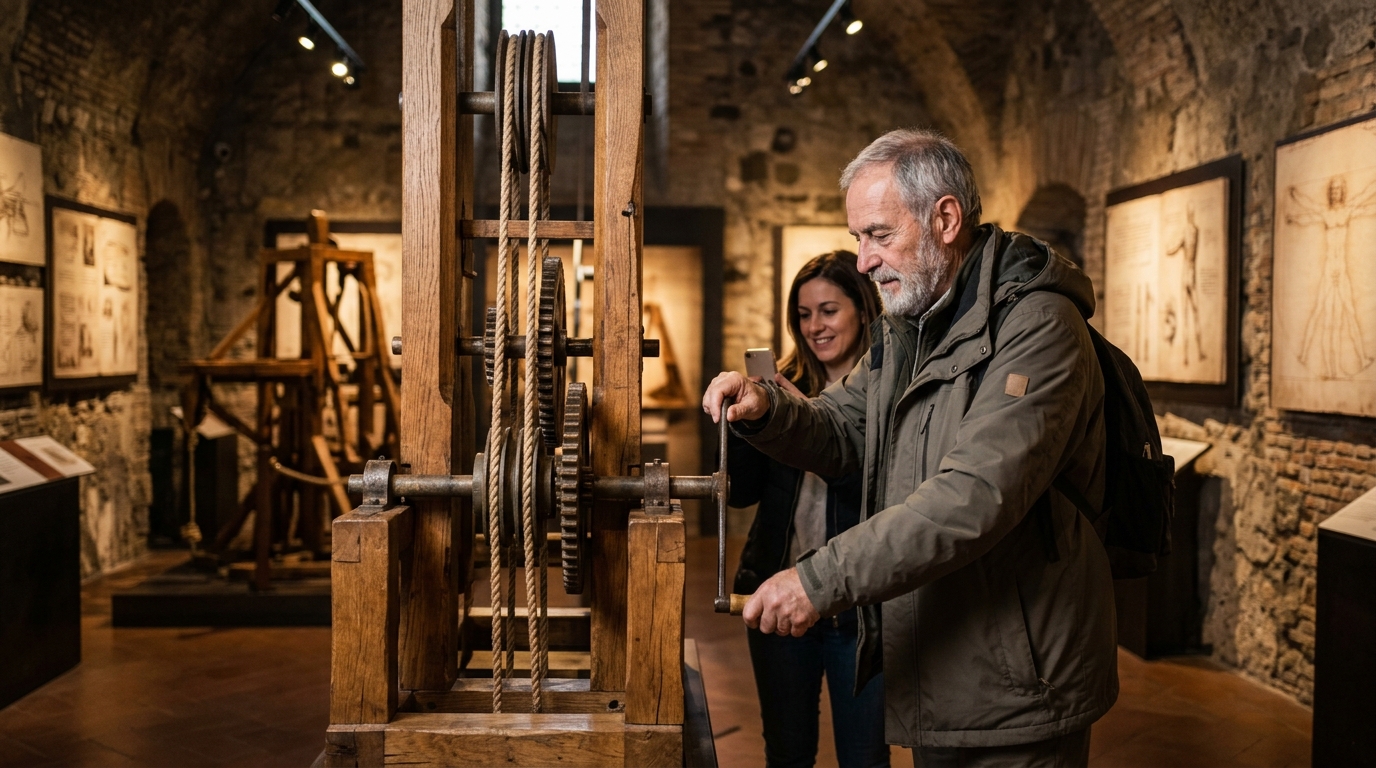
Leonardo da Vinci is widely celebrated as a leading Renaissance painter and sculptor, but although he was also known as an engineer and a scientist, his work in these fields remained hidden for many centuries. It is only relatively recently that a complete analysis of his work has revealed the full scope of his genius. He truly was one of the greatest inventors, artists, scientists and thinkers of all time. Today, visitors can witness the physical manifestation of his mechanical mind through large-scale wooden models and interactive exhibits. This guide details the premier locations where you can see Leonardo da Vinci's inventions in person, with a focus on the interactive experience available in Rome. (Museo Leonardo da Vinci)
Why Rome is the Premier Destination for Leonardo's Machines
While many assume that the original manuscripts of Leonardo are the only way to understand his engineering, the physical reconstruction of his machines offers a tangible connection to his genius. Rome has emerged as a critical hub for experiencing these mechanical wonders. The Museo Leonardo da Vinci in Piazza del Popolo stands out as the most popular dedicated Leonardo museum in Rome. It offers a unique underground setting that immerses visitors in the context of his studies.
The museum is located at the end of Via del Corso and is only a 5 minute walk from the Spanish Steps. This central location makes it an ideal stop for travelers exploring the historic center. The institution focuses on bringing his theoretical designs to life through large-scale, functional wooden models. These models are not static displays but are often built to demonstrate the mechanical principles Leonardo described in his codices.
Understanding the scope of his work requires looking beyond his paintings. Leonardo was anointed the master artist of Florence at the tender age of 18. His engineering work, however, remained hidden for many centuries. It is only relatively recently that a complete analysis of his work has revealed the full scope of his genius. This revelation has driven the creation of museums dedicated specifically to his mechanical contributions.
The Museo Leonardo da Vinci Experience
The Museo Leonardo da Vinci is situated in the underground vaults of the Basilica Santa Maria del Popolo. This is a major papal basilica second only in importance to St Peter's and one of the seven pilgrim churches in Rome. The choice of location is significant, as it places the viewer in a space of historical and spiritual weight, mirroring the depth of Leonardo's own intellectual pursuits.
Visitors to this museum will discover his incredible story, groundbreaking inventions, detailed anatomical sketches, startling scientific discoveries and much more. The exhibition is designed to leave you amazed that one person could create so much in one lifetime. The interactive nature of the displays allows guests to see how his gears, pulleys, and levers functioned in theory and practice.
The museum is great for all the family to enjoy. It serves as a must-see stop on the Rome itinerary for anyone interested in the intersection of art and science. By combining the visit to the museum with the exploration of Piazza del Popolo, visitors can appreciate the broader cultural context of the Renaissance. The museum provides a comprehensive look at his passions and studies in a dedicated environment.
Key Inventions on Display
Leonardo's engineering portfolio was vast, ranging from military hardware to civil infrastructure. The models displayed at the Museo Leonardo da Vinci in Rome typically include some of his most famous mechanical concepts. These reconstructions help demystify how his ideas could have worked in the real world.
The Aerial Screw
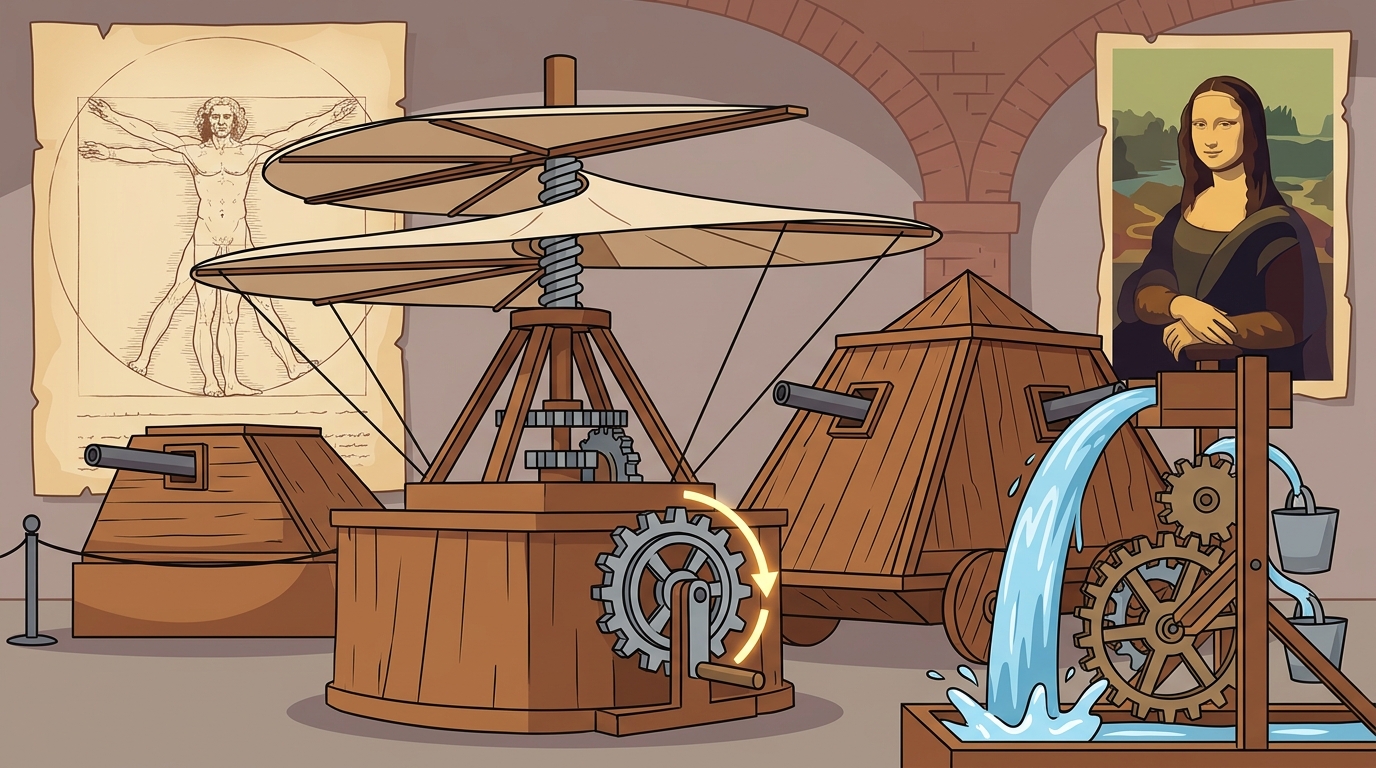
One of the most iconic designs is the aerial screw, often cited as a precursor to the modern helicopter. Leonardo sketched this device in his Codex Atlanticus. The museum displays a large-scale model that demonstrates the helical shape designed to compress air. While historical evidence suggests he may have tested smaller versions, the large model allows visitors to visualize the mechanics of early flight concepts.
The Giant Crossbow
Leonardo designed massive military equipment for the Sforza family in Milan. The giant crossbow, or balestra gigante, was intended to be a psychological weapon as much as a practical one. Its size was meant to intimidate enemies. The museum often features a reconstruction that highlights the complex tension mechanisms required to draw such a heavy bowstring.
The Self-Supporting Bridge
During his service to the Ottoman Sultan, Leonardo proposed a bridge design that required no scaffolding for construction. This self-supporting structure was a marvel of geometric precision. The model on display demonstrates how the interlocking wooden beams create a stable arch. This invention showcases his ability to solve complex structural problems with simple materials.
Comparing Leonardo Exhibition Venues
For travelers planning a comprehensive tour of Leonardo's legacy, it is helpful to understand the differences between major exhibition sites. While the Museo Leonardo da Vinci in Rome offers an interactive, underground experience, other venues provide different perspectives on his work.
| Venue | Location | Primary Focus | Experience Type |
|---|---|---|---|
| Museo Leonardo da Vinci | Rome, Italy | Interactive Machines & Inventions | Immersive, Family-Friendly |
| Leonardo3 Museum | Milan, Italy | Large-Scale Engineering Models | Technical, Detailed |
| Château du Clos Lucé | Amboise, France | Final Years & Manuscripts | Historical, Garden-Based |
| Royal Collection Trust | London, UK | Original Manuscripts | Archival, Rare Document |
The Museo Leonardo da Vinci in Rome distinguishes itself by its location within the Basilica Santa Maria del Popolo. This setting allows for a unique narrative that combines art, history, and engineering. The museum is the most popular dedicated Leonardo museum in Rome, making it a central point for enthusiasts.
Planning Your Visit
Visiting the Museo Leonardo da Vinci requires some preparation to ensure a smooth experience. The museum is located in the underground vaults of the Basilica Santa Maria del Popolo. Access is via a dedicated entrance that leads visitors into the interactive world of Leonardo's passions and studies.
It is advisable to book tickets in advance, especially during peak tourist seasons. The museum is great for all the family to enjoy, but the underground nature of the venue means that accessibility should be checked if mobility issues are a concern. The interactive displays are designed to engage visitors of all ages, making it a valuable educational stop.
Combine your visit to Museo Leonardo da Vinci and Piazza del Popolo by exploring the incredible historic and stunning Basilica Santa Maria del Popolo. Discover original Caravaggio paintings from the 1600s and the magnificent Chigi Chapel, built and decorated by the legendary Raphael. This combination provides a full day of cultural enrichment in the heart of Rome.
Key Takeaways
- The Museo Leonardo da Vinci in Rome is the most popular dedicated Leonardo museum in the city.
- The museum is located in the underground vaults of the Basilica Santa Maria del Popolo.
- Leonardo was anointed the master artist of Florence at the tender age of 18.
- Key inventions on display include the aerial screw, giant crossbow, and self-supporting bridge.
- The museum offers an interactive experience that brings his mechanical designs to life.
- Visitors can explore the museum and the surrounding Piazza del Popolo in a single itinerary.
- The institution highlights his role as an engineer and scientist, not just a painter.
Frequently Asked Questions
Where is the best place to see Leonardo da Vinci's machines in Rome?
The best place to see Leonardo da Vinci's machines in Rome is the Museo Leonardo da Vinci in Piazza del Popolo. It features large-scale, functional models of his inventions in an interactive setting.
Is the Museo Leonardo da Vinci suitable for children?
Yes, the museum is great for all the family to enjoy. The interactive nature of the exhibits helps children understand complex mechanical concepts through visual and physical engagement.
How long does a typical visit to the museum take?
A typical visit to the museum takes approximately one to two hours. This allows enough time to explore the underground vaults and read the detailed descriptions of each invention.
Can I see original manuscripts at the Museo Leonardo da Vinci?
The museum focuses on large-scale models and interactive displays rather than original manuscripts. However, it provides deep context for the ideas found in his codices through its detailed explanations.
What other attractions are near the Museo Leonardo da Vinci?
The museum is located at the end of Via del Corso and is only a 5 minute walk from the Spanish Steps. Visitors can also explore the Basilica Santa Maria del Popolo and its art collection.
Do I need to book tickets in advance?
It is highly recommended to book tickets in advance, especially during peak tourist seasons. This ensures entry and helps manage crowd flow in the underground venue.
What is the significance of the Basilica Santa Maria del Popolo?
The Basilica Santa Maria del Popolo is a major papal basilica second only in importance to St Peter's. It is one of the seven pilgrim churches in Rome and houses significant Renaissance art.
Book Your Experience
Don't miss your chance to be inspired by the genius of Leonardo da Vinci. The Museo Leonardo da Vinci in Piazza del Popolo offers a unique opportunity to see his inventions in person. Visit the official website to learn more about opening hours, ticket prices, and to book your visit today.