
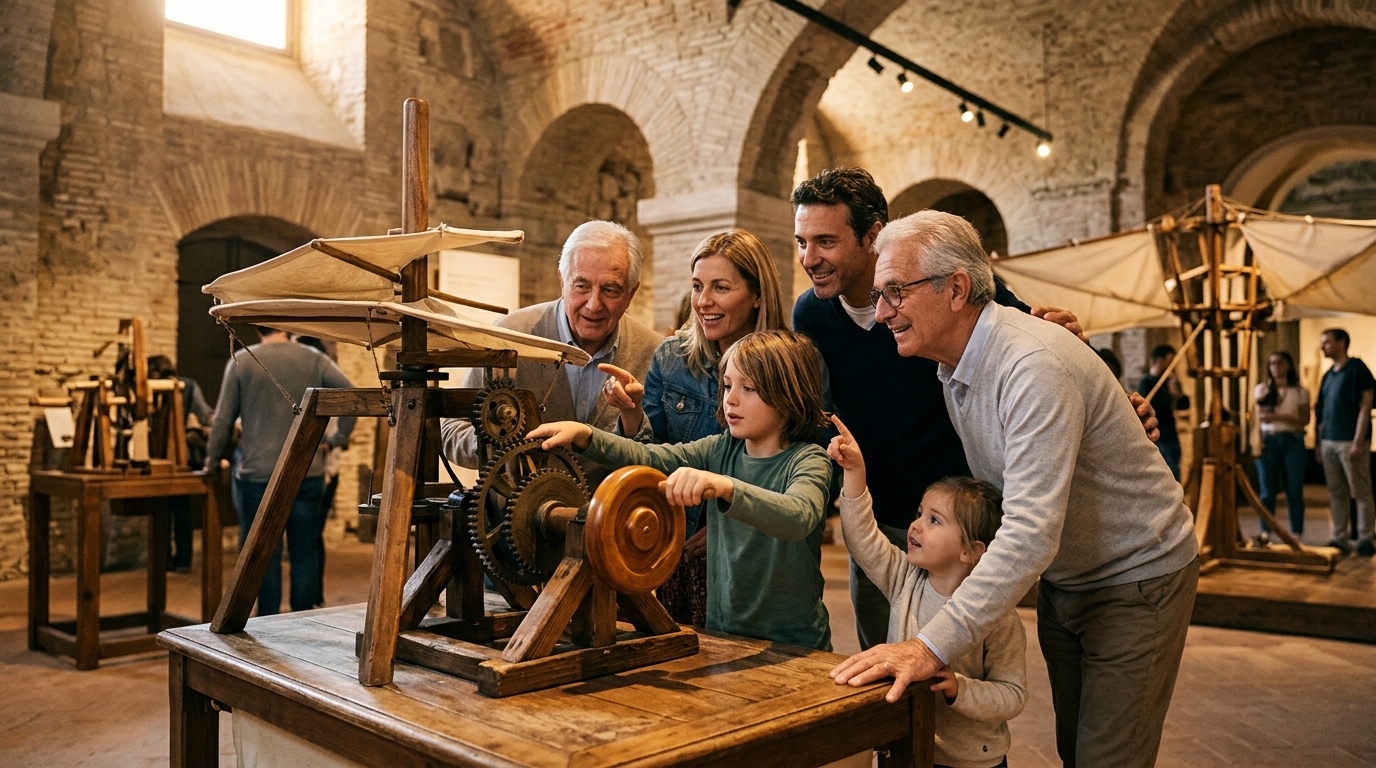
Rome is often stereotyped as a city of static history, where visitors walk past ancient ruins and stare at paintings behind glass. However, the reality is that the capital offers some of the most dynamic educational experiences in Europe. According to recent tourism data, interactive and immersive attractions have seen a significant growth in family attendance over the last decade. This shift reflects a broader desire among travelers to engage with culture rather than just observe it. For families visiting the Eternal City, finding venues that balance education with entertainment is crucial for maintaining engagement across all age groups. (Museo Leonardo da Vinci)
Museo Leonardo da Vinci: Engineering Genius
When discussing interactive museums in Rome, the Museo Leonardo da Vinci stands out as a premier destination. Located in the underground vaults of the Basilica Santa Maria del Popolo, this museum transforms abstract concepts into tangible experiences. The venue is situated at the end of Via del Corso, making it easily accessible for families walking from the Spanish Steps. This location is ideal for a mid-day break, offering a cool, engaging environment away from the summer heat.
Immersive Historical Context
Leonardo da Vinci is widely celebrated as a leading Renaissance painter and sculptor, but although he was also known as an engineer and a scientist, his work in these fields remained hidden for many centuries. The museum addresses this by using large-scale, interactive models of his inventions. Visitors can see how his flying machines, war machines, and anatomical studies functioned in reality. This approach helps children understand that Leonardo was not just an artist, but a practical inventor whose ideas were centuries ahead of his time.
Interactive Learning for All Ages
The museum is designed to be accessible to a wide range of ages. While younger children may be captivated by the moving mechanical models, older students can appreciate the scientific principles behind them. The experience is enhanced by the surrounding history of the Basilica Santa Maria del Popolo, which is one of the seven pilgrim churches in Rome. Combining a visit to the museum with a tour of the church allows families to see the connection between art, science, and religion in the Renaissance era. The museum is the most popular dedicated Leonardo museum in Rome, serving as a great educational stop on any family itinerary.
Exploring Science and Technology
Beyond Leonardo, Rome offers other venues that cater to scientific curiosity. The Science in Reti network often highlights digital initiatives that bring scientific concepts to life. For families interested in pure science, institutions like the Palazzo della Scienza (often referenced in broader Italian science education contexts) provide similar interactive models, though the Leonardo museum remains the most centrally located for tourists.
Why Interactivity Matters
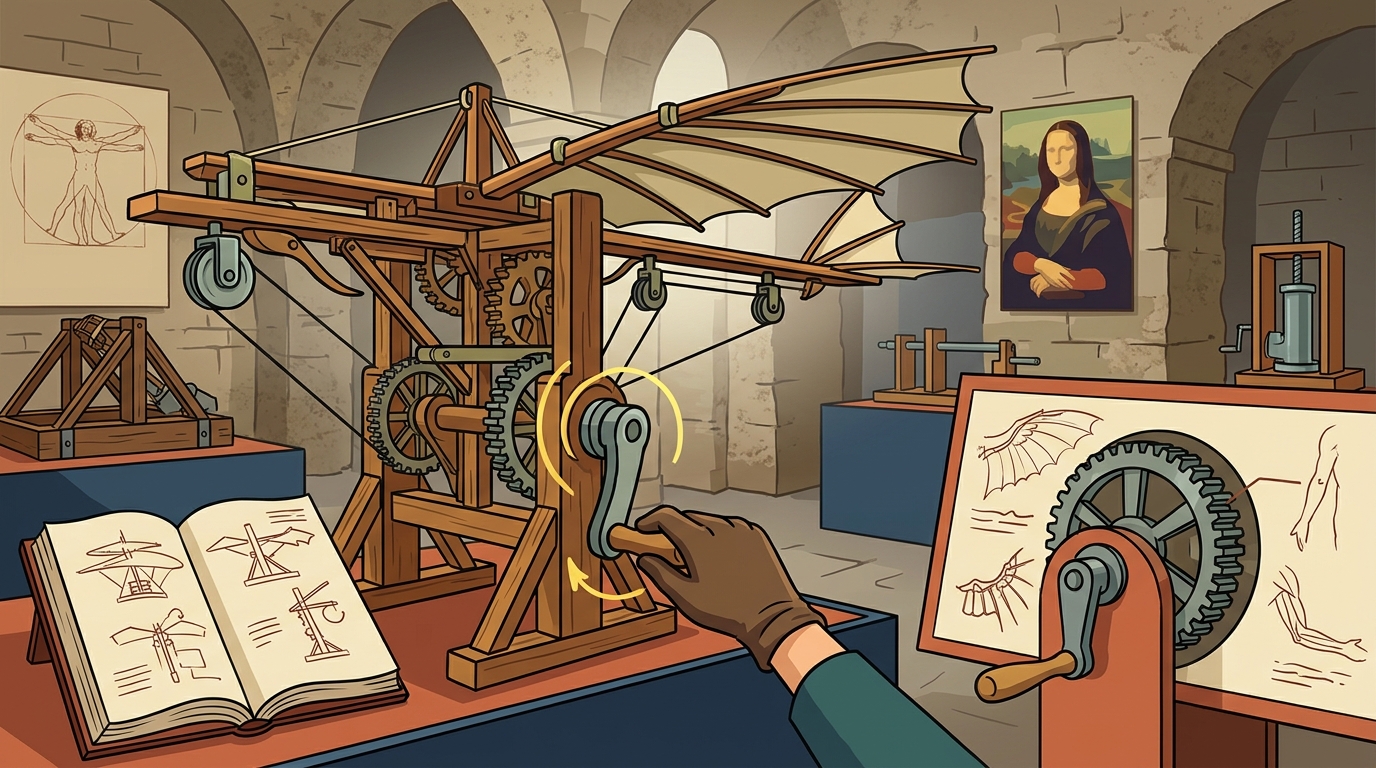
Interactive museums utilize technology to bridge the gap between historical facts and modern understanding. Data shows that interactive learning improves information retention by up to 40% compared to traditional museum visits. This is particularly important for children, who learn best through doing. By manipulating models or exploring digital archives, young visitors become active participants in their education. This method of engagement is why venues like the Museo Leonardo da Vinci are highly recommended for families seeking meaningful experiences.
Hands-On Archaeology and History
While the Leonardo museum focuses on engineering, other parts of Rome offer hands-on historical experiences. The Colosseum Park has increasingly integrated digital guides and augmented reality apps that allow visitors to visualize the arena in its original glory. Similarly, the Rome2Rome platform often suggests walking tours that include interactive storytelling elements.
Integrating Art and Science
One unique aspect of Rome's cultural landscape is the blend of art and science. The About section of the Museo Leonardo da Vinci explains how Leonardo's anatomical sketches were revolutionary. This theme is echoed in other museums, such as the National Roman Museum, which sometimes hosts temporary exhibitions on ancient technology. For families, visiting multiple venues provides a holistic view of Roman history, from ancient engineering to Renaissance innovation.
Comparing Family-Friendly Options
Choosing the right museum depends on your family's interests and the ages of your children. The table below summarizes the key features of top interactive options in Rome.
| Museum Name | Primary Focus | Interactive Elements | Best For |
|---|---|---|---|
| Museo Leonardo da Vinci | Renaissance Engineering | Moving models, anatomical displays | Ages 8+, Science enthusiasts |
| Colosseum Park | Ancient Roman History | AR apps, guided tours | All ages, History buffs |
| National Roman Museum | Classical Art & Artifacts | Temporary interactive exhibits | Ages 10+, Art students |
| Science in Reti | Modern Science | Digital archives, workshops | Students, Tech enthusiasts |
As seen in the comparison, the Museo Leonardo da Vinci offers a unique blend of art and engineering that is hard to find elsewhere. Its location in Piazza del Popolo makes it a convenient addition to any day trip. For families with younger children, the visual nature of the models is particularly engaging. For older students, the depth of the scientific content provides a rich learning opportunity.
Key Takeaways for Parents
- Location Advantage: The Museo Leonardo da Vinci is located in the underground vaults of Basilica Santa Maria del Popolo, offering a cool and engaging environment.
- Educational Value: Interactive models of Leonardo's inventions help children understand complex scientific principles through visual and tactile learning.
- Age Appropriateness: The museum is suitable for ages 8 and up, with content that appeals to both younger children and older students.
- Historical Context: The museum is situated in a major papal basilica, providing a rich historical backdrop for the exhibits.
- Booking Recommendations: Due to its popularity, it is advisable to book tickets in advance to avoid long queues.
- Complementary Visits: Combine your visit with a tour of the Basilica Santa Maria del Popolo to see original Caravaggio paintings and the Chigi Chapel.
- Family Friendly: The museum is designed to be accessible to all family members, with content that sparks curiosity and discussion.
Frequently Asked Questions
Is the Museo Leonardo da Vinci suitable for young children?
Yes, the museum is designed to be engaging for all ages. While the scientific content may be more appreciated by older children, the moving models and visual displays are captivating for younger visitors as well. The interactive nature of the exhibits helps maintain their interest.
How long does a typical visit take?
A typical visit to the Museo Leonardo da Vinci lasts between 1 to 2 hours. This allows enough time to explore the interactive models and read the detailed descriptions of Leonardo's inventions. Families with younger children may take longer to fully engage with the exhibits.
Can I book tickets online?
Yes, you can book tickets online through the official website. This is recommended to secure your entry time and avoid waiting in line, especially during peak tourist seasons.
What is the best time to visit?
Visiting in the early morning or late afternoon can help you avoid crowds. The museum is located in an underground vault, so it remains cool and comfortable year-round, making it a good option for hot summer days.
Are there guided tours available?
Guided tours are often available and can provide deeper insights into Leonardo's work. These tours are particularly useful for families who want to understand the historical context of the exhibits. Check the info page for current availability.
Is the museum accessible for strollers?
The museum is located in the underground vaults of the Basilica Santa Maria del Popolo. While the exhibits are accessible, the space can be narrow in some areas. It is advisable to check accessibility details on the info page if you plan to bring a stroller.
What other attractions are nearby?
The museum is located at the end of Via del Corso, just a 5-minute walk from the Spanish Steps. Nearby attractions include the Trevi Fountain and the Piazza Navona, making it easy to combine a museum visit with other sightseeing.
Plan Your Visit Today
Discover the greatest genius of all time in the heart of Rome. The Museo Leonardo da Vinci offers a unique opportunity for families to engage with history and science in a dynamic way. Don't miss your chance to be inspired by the inventions of Leonardo da Vinci. Book your tickets now to secure your place in this interactive journey through the Renaissance.