
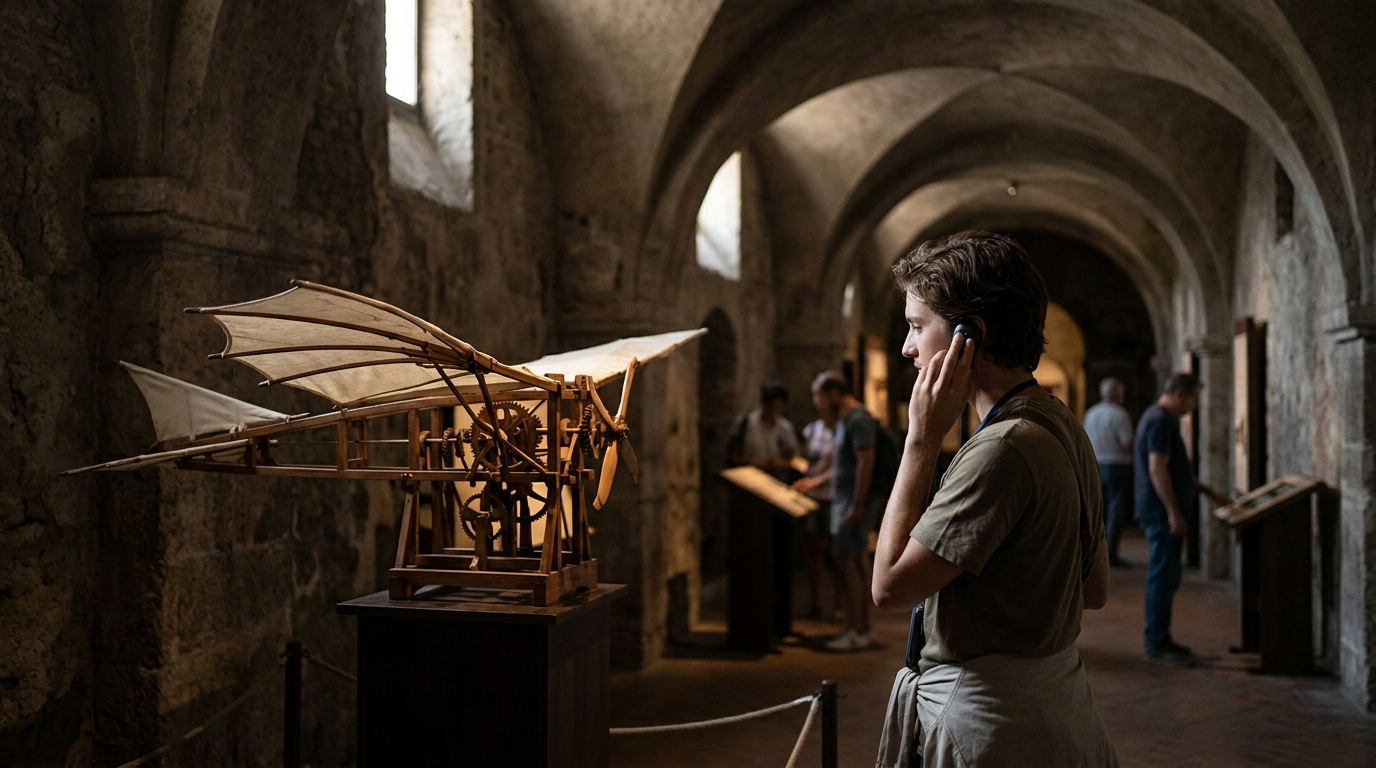
Rome is globally recognized as the eternal city of ancient ruins and papal history, yet it holds a profound secret dedicated to the ultimate Renaissance polymath. Museo Leonardo da Vinci in Piazza del Popolo stands as the most popular dedicated Leonardo museum in Rome, offering an immersive journey into the mind of history's greatest genius. Located in the underground vaults of the Basilica Santa Maria del Popolo, this institution bridges the gap between historical reverence and interactive education. While the original masterpieces like the Mona Lisa remain in Florence and Paris, this museum reconstructs his world through detailed models and scientific insights. For travelers planning their Roman itinerary, understanding the museum's unique location and offerings is essential for a culturally rich experience. (Museo Leonardo da Vinci)
Location and Access Details
The museum occupies a highly strategic position in the heart of Rome. It is situated at the end of Via del Corso, a major shopping street that leads directly to the Spanish Steps. This proximity makes it an ideal stop for tourists navigating the historic center. The entrance is hidden within the underground vaults of the Basilica Santa Maria del Popolo. This architectural choice creates a dramatic transition from the bustling modern city to a quiet, contemplative space dedicated to art and science.
Reaching the museum is straightforward for most visitors. The site is approximately a 5 minute walk from the Spanish Steps, a landmark that attracts millions of visitors annually. According to recent tourism data, the Spanish Steps area sees over 10 million visitors every year, making the museum easily accessible to a global audience. The location is also well-served by Rome's public transportation network, including bus lines that stop nearby. For those arriving by taxi or ride-share, the address is clearly marked near the piazza.
The museum's placement within a papal basilica adds a layer of historical gravity to the visit. Basilica Santa Maria del Popolo is one of the seven pilgrim churches in Rome. It is second only in importance to St. Peter's Basilica within the city's ecclesiastical hierarchy. This setting underscores the deep connection between the Renaissance era and the Catholic Church's patronage of the arts. Visitors often note that the contrast between the ancient stone vaults and the modern interactive exhibits is striking.
Inside the Museum: Exhibits and Experience
What defines the Museo Leonardo da Vinci is its focus on the man behind the myth. Leonardo da Vinci is widely celebrated as a leading Renaissance painter and sculptor, but his work as an engineer and scientist was hidden for centuries. This museum reveals the full scope of his genius through a curated collection of models and sketches. The exhibits are designed to be interactive, allowing visitors to engage with his inventions rather than just observe them.
The collection includes detailed anatomical sketches that showcase his understanding of human physiology. These drawings are based on his dissections of cadavers, a practice that was controversial at the time. The museum also features models of his groundbreaking inventions, such as flying machines, war tanks, and hydraulic pumps. These models are constructed based on his original notebooks, providing a tangible sense of his engineering prowess. The Vitruvian Man, one of his most iconic drawings, is prominently featured to illustrate his interest in proportion and geometry.
While you won't see the original artworks at this museum, the experience is designed to be equally impactful. The exhibits cover his passions for botany, geology, and optics. Each section is labeled with clear explanations that connect his scientific inquiries to his artistic output. This approach helps visitors understand that for Leonardo, art and science were not separate disciplines but interconnected pursuits. The museum is great for all the family to enjoy, with content that appeals to both adults and children.
The interactive nature of the museum encourages active learning. Visitors can manipulate models to see how Leonardo's mechanical ideas would have functioned in reality. This hands-on approach demystifies complex engineering concepts. It also highlights the limitations he faced due to the technology of his time. Many visitors report that the experience leaves them amazed that one person could create so much in one lifetime. The museum effectively communicates the breadth of Leonardo's intellectual curiosity.
The Historical Context of Piazza del Popolo
Understanding the museum requires an appreciation of its surrounding environment. Piazza del Popolo is a major public square that has served as Rome's northern gateway for centuries. The basilica itself is a burial site of 6 popes, adding to its historical significance. Legend also has it that the cruel and debaucherous Nero is buried deep below the church. This connection to ancient Roman history enhances the visitor's sense of place.
The basilica houses original Caravaggio paintings from the 1600s. These works are masterpieces of Baroque art and draw art historians from around the world. The Chigi Chapel, built and decorated by the legendary Raphael, is another highlight of the church. By combining your visit to Museo Leonardo da Vinci and Piazza del Popolo, you can explore both Renaissance art and Baroque masterpieces in a single day. This synergy makes the area a cultural hub for art enthusiasts.
The museum's location in the underground vaults provides a unique acoustic and visual environment. The stone walls dampen the noise of the city above, creating a serene atmosphere for reflection. This design choice aligns with the contemplative nature of Leonardo's work. It also protects the exhibits from the wear and tear of heavy foot traffic. The preservation of the vaults is a testament to the care taken in maintaining this cultural site.
Visitors often remark on the seamless integration of the museum with the basilica. The transition from the church's main hall to the museum's underground levels is gradual and respectful. This design ensures that the religious significance of the basilica is not compromised. Instead, the museum adds a new dimension to the visitor's understanding of the space. It transforms the basilica from a purely religious site into a center of intellectual history.
Visitor Logistics: Tickets and Hours
Planning a visit to the museum requires attention to practical details. The museum is open to the public on a regular schedule, but hours can vary by season. It is advisable to check the official website for the most current opening times. The museum is a must-see stop on the Rome itinerary, particularly for those interested in the Renaissance. Booking tickets in advance is recommended, especially during peak tourist seasons.
Ticket prices are structured to be accessible to a wide range of visitors. Discounts are often available for students, seniors, and groups. The museum also offers guided tours that provide deeper insights into the exhibits. These tours are led by knowledgeable staff who can answer questions about Leonardo's life and work. The guided experience is particularly valuable for those who want to understand the historical context of the inventions.
The museum is accessible to visitors with mobility challenges. Elevators and ramps are available to ensure that all guests can access the underground levels. This commitment to accessibility reflects the inclusive nature of Leonardo's legacy. His work was meant to benefit humanity, and the museum strives to make his story accessible to everyone. The staff is trained to assist visitors with special needs, ensuring a comfortable experience for all.
Photography is generally permitted in the museum, but flash photography may be restricted to protect the exhibits. Visitors are encouraged to take photos to capture the details of the models and sketches. The museum shop offers a selection of books, prints, and souvenirs related to Leonardo da Vinci. These items make for thoughtful gifts and provide a lasting memory of the visit.
Museo Leonardo da Vinci vs. Other Leonardo Sites
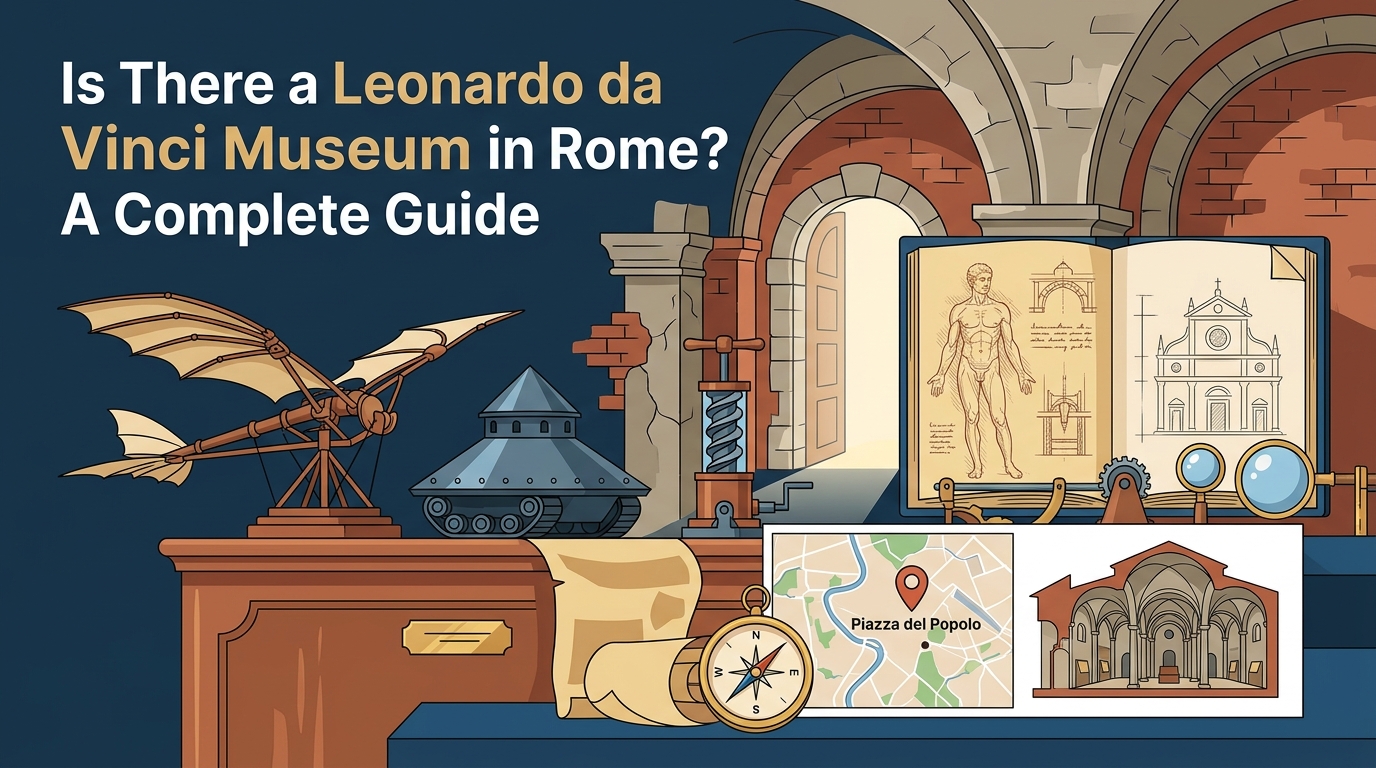
While Rome hosts this dedicated museum, other cities also claim connections to Leonardo. The Museo Leonardo da Vinci in Rome differs significantly from sites in Milan and Florence. In Milan, the focus is often on the original Last Supper and the Sforza Castle. In Florence, the Uffizi Gallery houses the Mona Lisa and other paintings. The Rome museum, however, focuses on the scientific and engineering aspects of his work.
| Feature | Museo Leonardo da Vinci (Rome) | Uffizi Gallery (Florence) | Castello Sforzesco (Milan) |
|---|---|---|---|
| Primary Focus | Interactive models and scientific inventions | Original Renaissance paintings | Historical artifacts and Last Supper |
| Location Type | Underground vaults of a basilica | Grand gallery building | Historic castle complex |
| Key Highlight | Vitruvian Man and mechanical models | Mona Lisa | Original Last Supper fresco |
| Visitor Experience | Interactive and educational | Observational and artistic | Historical and monumental |
This comparison highlights the unique value proposition of the Rome museum. It offers a different perspective on Leonardo's life, emphasizing his role as an inventor and scientist. For visitors who have already seen the paintings in Florence, the Rome museum provides a complementary experience. It deepens the understanding of his intellectual processes. The interactive models allow visitors to engage with his ideas in a way that static paintings cannot.
The Rome museum also benefits from its location in a historic basilica. This setting provides a context that is distinct from the secular galleries of Florence or Milan. The combination of religious architecture and scientific inquiry creates a unique atmosphere. It encourages visitors to reflect on the intersection of faith, art, and science during the Renaissance. This holistic approach is a hallmark of the museum's educational mission.
Key Takeaways
- The museum is located in the underground vaults of Basilica Santa Maria del Popolo.
- It is the most popular dedicated Leonardo museum in Rome.
- Leonardo was anointed the master artist of Florence at the age of 18.
- The museum features interactive models of his inventions and anatomical sketches.
- It is a 5 minute walk from the Spanish Steps.
- Basilica Santa Maria del Popolo is one of the seven pilgrim churches in Rome.
- Booking tickets in advance is recommended during peak seasons.
Frequently Asked Questions
Where exactly is the Leonardo da Vinci museum in Rome?
The museum is located at the end of Via del Corso, within the underground vaults of the Basilica Santa Maria del Popolo in Piazza del Popolo.
Can I see the original Mona Lisa at this museum?
No, the original Mona Lisa is housed in the Louvre Museum in Paris. This museum features models and sketches related to Leonardo's work.
How long does a typical visit last?
A typical visit lasts between 1 to 2 hours, depending on your interest in the interactive exhibits and the guided tour options.
Is the museum suitable for children?
Yes, the museum is great for all the family to enjoy. The interactive models and clear explanations make it engaging for children and adults alike.
Do I need to book tickets in advance?
It is highly recommended to book tickets in advance, especially during the high tourist season, to ensure entry and avoid long queues.
What is the connection between the museum and the basilica?
The museum is housed in the underground vaults of the Basilica Santa Maria del Popolo, a major papal basilica and one of the seven pilgrim churches in Rome.
Are there guided tours available?
Yes, guided tours are available and provide deeper insights into Leonardo's life, inventions, and the historical context of the exhibits.
Book Your Visit Today
Experience the genius of Leonardo da Vinci in the heart of Rome. The Museo Leonardo da Vinci offers a unique opportunity to explore his scientific and artistic legacy in a historic setting. Don't miss your chance to be inspired by the man who changed the world. Book your tickets now to secure your place in this extraordinary journey. Visit the About page to learn more about the museum's mission and history. Explore the gallery to preview the exhibits. For more information, check the Info page or contact us at info@museodavinci.it. Discover the greatest genius of all time in the heart of Rome.