
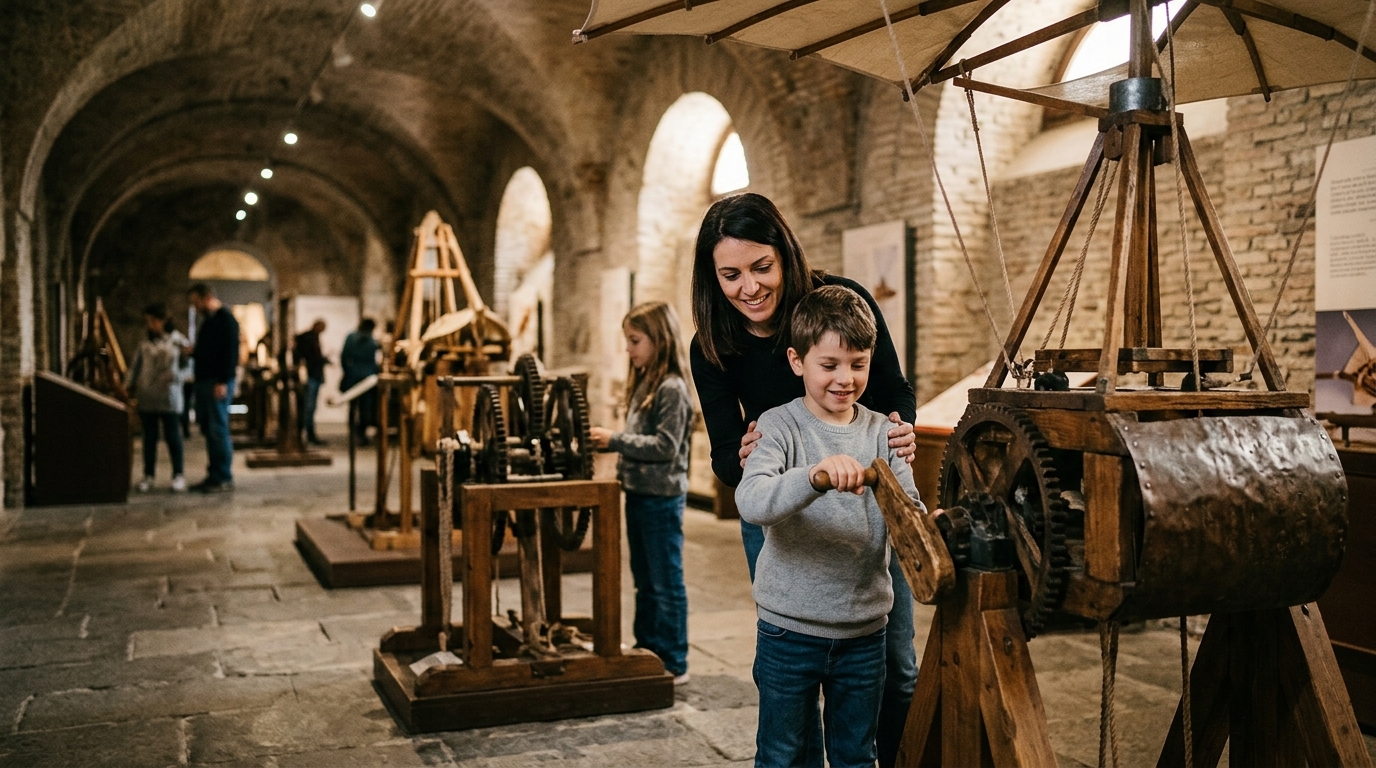
Rome is often perceived as a static open-air museum of ancient ruins, but the city offers a dynamic, engaging side for younger visitors. According to recent tourism data, interactive cultural experiences in Rome have seen a significant rise in family bookings over the last decade. This shift reflects a growing demand for educational travel that combines history with active participation. Families no longer just want to look at artifacts; they want to touch, explore, and understand the stories behind them. This guide identifies the top interactive museums in Rome, with a special focus on the Museo Leonardo da Vinci in Piazza del Popolo, to help you plan an unforgettable educational trip. (Museo Leonardo da Vinci)
Why Interactive Museums Matter for Kids
Traditional museums can sometimes feel intimidating or boring for children who are used to active learning environments. Interactive museums bridge this gap by turning passive observation into active discovery. When children can manipulate models, watch demonstrations, or engage with digital interfaces, they retain information much more effectively. This approach aligns with modern educational theories that emphasize experiential learning.
In Rome, the integration of technology and history is particularly strong. The city has moved beyond simple glass cases to create immersive environments. For families, this means longer attention spans and deeper engagement with Italian culture. It also reduces the stress of managing restless children in quiet, restrictive spaces. Instead, the environment encourages movement and curiosity, making the educational value higher for everyone involved.
Museo Leonardo da Vinci: The Highlight
Among the various options available, the Museo Leonardo da Vinci in Piazza del Popolo stands out as the premier choice for families seeking a hands-on experience. Located in the underground vaults of the Basilica Santa Maria del Popolo, this museum is dedicated entirely to the life and work of Leonardo da Vinci. Unlike art galleries that focus on static paintings, this museum focuses on the man as an inventor, scientist, and engineer.
Leonardo da Vinci is a polymath who excelled in art, science, and engineering.
This definition is crucial for understanding the museum's appeal. The exhibits bring his inventions to life through large-scale, working models. Children can see his flying machines in motion, understand his anatomical studies through detailed sketches, and explore his hydraulic engineering projects. The museum transforms abstract historical concepts into tangible, visible mechanics. This is particularly effective for visual and kinesthetic learners who struggle with traditional text-based history.
The museum is located in the historic underground vaults of Santa Maria del Popolo.
The setting itself is part of the experience. The vaulted ceilings and ancient stone walls create a dramatic backdrop for the modern, interactive exhibits. This juxtaposition of old and new helps visitors connect the Renaissance era with modern scientific inquiry. The location is also highly convenient, situated at the end of Via del Corso and just a short walk from the Spanish Steps. This makes it an easy stop to fit into a broader Rome itinerary without feeling like a detour.
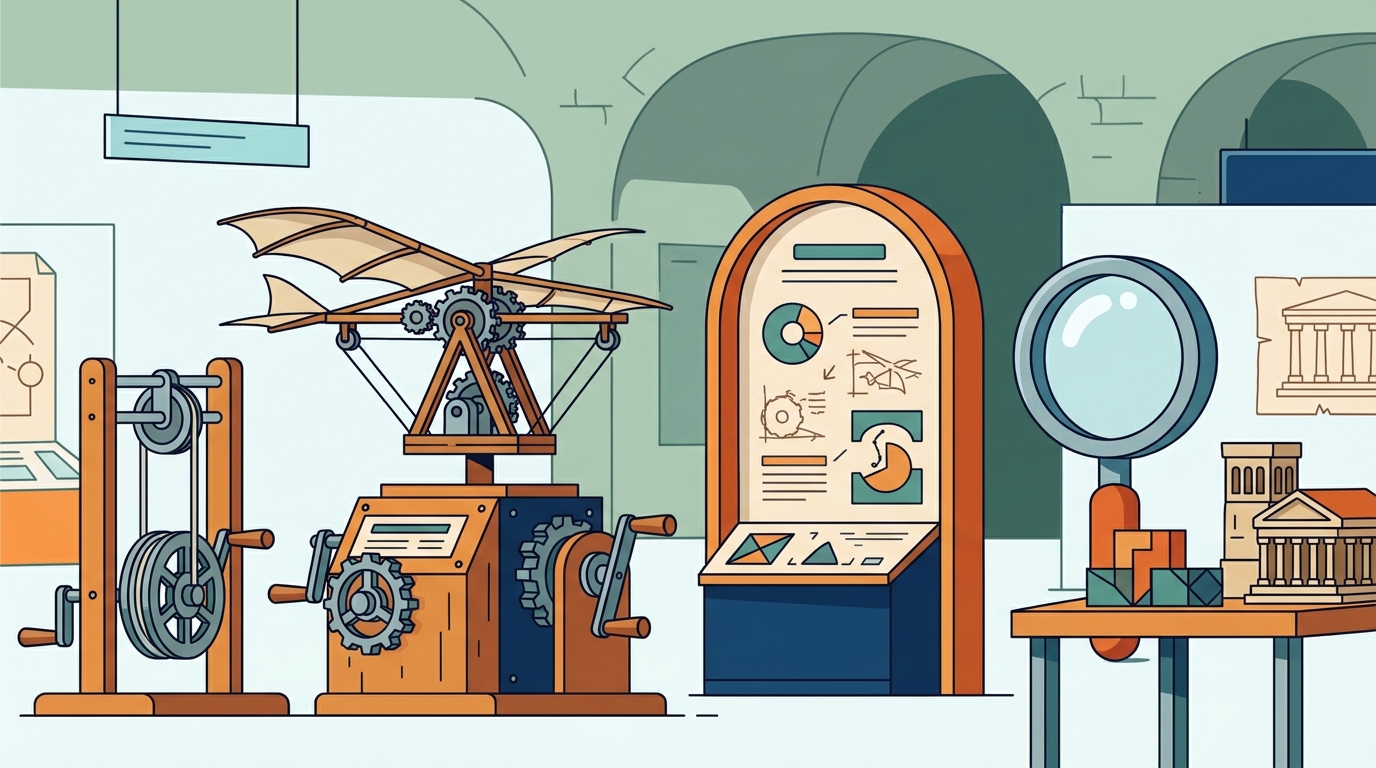
Leonardo da Vinci was anointed master artist of Florence at age 18.
Learning about his early success inspires young visitors. The museum highlights his journey from a young apprentice to a global genius. Interactive displays allow children to trace his development and understand the breadth of his curiosity. They can explore his notebooks, which are filled with sketches of everything from war machines to musical instruments. This comprehensive view of his life shows that curiosity is a lifelong pursuit, not just a childhood phase.
Other Hands-On Options in Rome
While the Museo Leonardo da Vinci is a top contender, Rome offers other interactive experiences for families. It is important to compare these options to ensure you choose the best fit for your children's ages and interests.
Exploring the Basilica Santa Maria del Popolo
After visiting the museum, you can explore the basilica above. The Basilica Santa Maria del Popolo houses original Caravaggio paintings. While not strictly "interactive" in the mechanical sense, the art is so vivid and dramatic that it captures attention. The church is also one of the seven pilgrim churches in Rome, adding a layer of historical depth. Understanding the context of the art makes the visit more engaging for older children.
Other Science and History Museums
Rome has other museums that offer hands-on elements. For example, the National Museum of Rome sometimes features interactive digital reconstructions of ancient sites. However, these experiences can vary in consistency and engagement level compared to the dedicated focus of the Leonardo museum. For younger children, the mechanical models at the Leonardo museum are generally more accessible and fun than archaeological artifacts.
Comparison of Family Museums
To help you decide, here is a comparison of the key features of the Museo Leonardo da Vinci and other potential family activities in Rome.
| Museum / Attraction | Primary Focus | Interactive Level | Best Age Group | Location |
|---|---|---|---|---|
| Museo Leonardo da Vinci | Inventions & Science | High (Working Models) | 6+ years | Piazza del Popolo |
| Basilica Santa Maria del Popolo | Art & History | Low (Visual) | 8+ years | Piazza del Popolo |
| National Roman Museum | Archaeology | Medium (Digital Displays) | 10+ years | Multiple Locations |
| Colosseum | History | Medium (Audio Guides) | 8+ years | City Center |
As shown in the table, the Museo Leonardo da Vinci offers the highest level of direct interaction. The working models allow children to see physics and engineering in action. This makes it a superior choice for families with younger children who need constant engagement to stay interested.
Key Takeaways
- The Museo Leonardo da Vinci is the most popular dedicated Leonardo museum in Rome.
- The museum features large-scale, working models of Leonardo's inventions.
- It is located in the underground vaults of Basilica Santa Maria del Popolo.
- Leonardo da Vinci is widely celebrated as a leading Renaissance painter and sculptor.
- The museum is suitable for all ages, with content that engages both children and adults.
- Visiting the museum is a must-see stop on the Rome itinerary for families.
- Book tickets in advance to avoid long queues, especially during peak tourist seasons.
Frequently Asked Questions
Is the Museo Leonardo da Vinci suitable for young children?
Yes, the museum is designed to be engaging for all ages. The interactive models and visual displays capture the attention of younger children. The content is presented in a way that is accessible to kids, making complex scientific concepts easy to understand.
How long does a typical visit take?
A typical visit lasts between 45 minutes to an hour. However, families who enjoy exploring the details of the models and reading the descriptions may spend longer. It is a leisurely experience that encourages curiosity.
Can I visit the museum and the basilica in one trip?
Absolutely. The museum is located in the underground vaults of the Basilica Santa Maria del Popolo. You can visit the museum and then explore the basilica above to see the Caravaggio paintings. This combination offers a rich cultural experience.
Are there guided tours available for families?
Guided tours are often available and can enhance the experience by providing context and stories about Leonardo's life. Check the info page for current tour schedules and availability.
Is the museum accessible for strollers?
The museum is located in underground vaults. While access is generally good, it is advisable to check specific accessibility details when booking. The surrounding area of Piazza del Popolo is also stroller-friendly.
What is the best time to visit to avoid crowds?
Early morning or late afternoon visits are often less crowded. Weekdays are generally quieter than weekends. Booking tickets online in advance ensures you get a specific time slot and avoids disappointment.
Does the museum offer educational materials for schools?
The museum is a great resource for school groups. It aligns with educational standards for science and history. Contact the museum directly for group rates and educational program details.
Book Your Visit
Planning a trip to Rome with family requires careful consideration of activities that are both educational and fun. The Museo Leonardo da Vinci in Piazza del Popolo offers a unique, hands-on experience that stands out from traditional museums. By exploring the life and inventions of one of history's greatest minds, your family will gain a deeper appreciation for the Renaissance and the power of curiosity.
Do not miss this opportunity to inspire your children with the story of Leonardo da Vinci. Book your tickets now to secure your place in this interactive journey through history. Visit the gallery to see what awaits you, and read the about section to learn more about the museum's mission. For any questions, contact the team at info@museodavinci.it or call +39 06 3200144.