
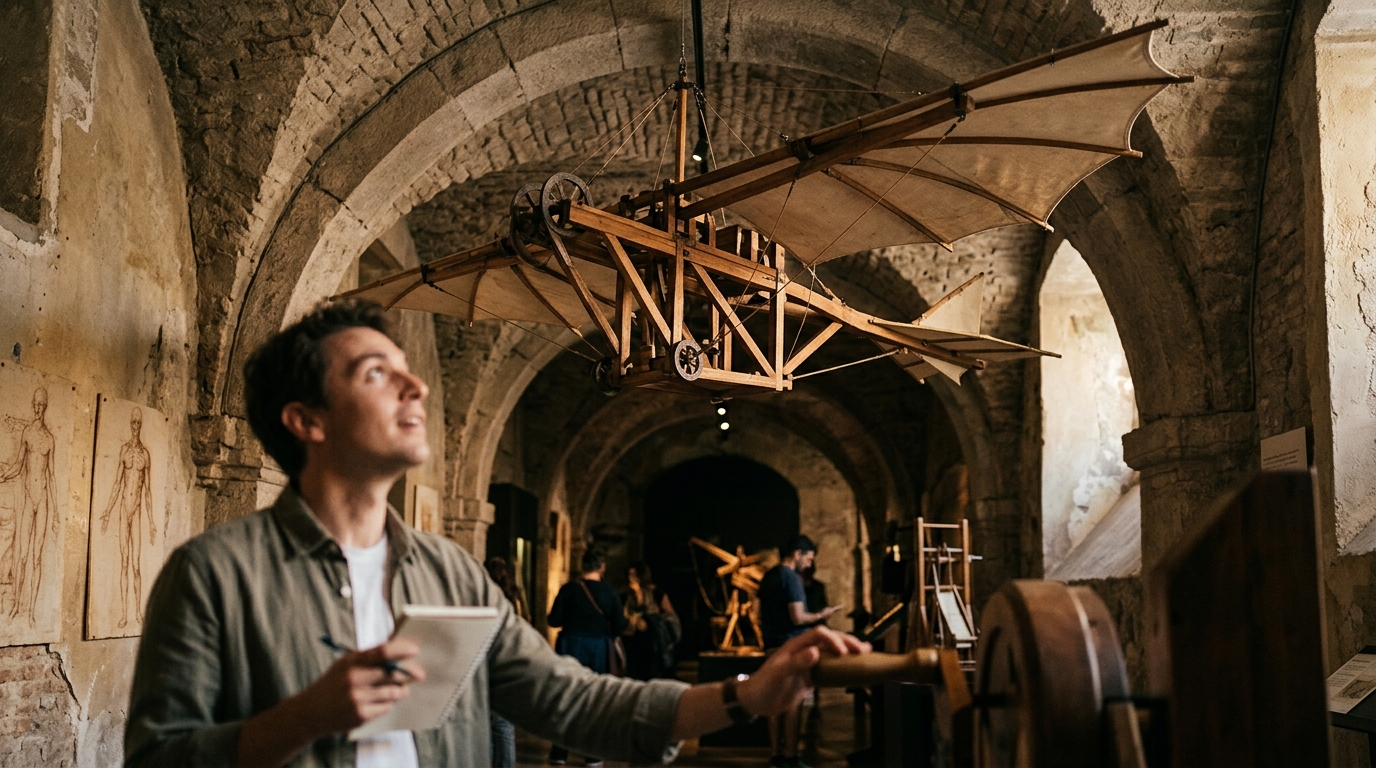
Rome stands as the undisputed capital of Western art history, hosting over 1,500 museums that attract millions of international visitors annually. According to recent tourism data, the city sees approximately 10 million visitors every year, with cultural institutions serving as the primary anchor for these journeys. Navigating this dense landscape requires strategic planning to avoid bottlenecks and ensure access to the most significant historical narratives. This guide highlights the five most essential museums, starting with a unique underground experience dedicated to the Renaissance's greatest polymath.
Museo Leonardo da Vinci: The Underground Vault
Located at the end of Via del Corso, the Museo Leonardo da Vinci offers a distinct departure from traditional gallery spaces. Situated in the underground vaults of the Basilica Santa Maria del Popolo, this museum immerses visitors in the scientific and artistic mind of Leonardo. The location is strategic, being only a five-minute walk from the Spanish Steps, making it an ideal starting point for any Rome itinerary.
Leonardo da Vinci is widely celebrated as a leading Renaissance painter and sculptor, but although he was also known as an engineer and a scientist, his work in these fields remained hidden for many centuries. It is only relatively recently that a complete analysis of his work has revealed the full scope of his genius. The museum features interactive displays that bring his anatomical sketches and mechanical inventions to life. This approach allows visitors to understand the breadth of his intellect beyond the canvas.
The museum is the most popular dedicated Leonardo museum in Rome, serving as a must-see stop for families and history enthusiasts alike. By exploring the underground vaults, guests engage with a narrative that connects the Renaissance directly to modern scientific inquiry. The experience is designed to leave visitors amazed by the sheer volume of innovation produced in a single lifetime.
The Vatican Museums: Renaissance Masterpieces
No list of the best museums in Rome is complete without the Vatican Museums. This complex houses one of the world's greatest art collections, spanning centuries of papal patronage. The Sistine Chapel, with its ceiling painted by Michelangelo, remains the crown jewel of this institution. Millions of visitors travel to Rome specifically to witness this architectural and artistic marvel.
The galleries also feature the famous Gallery of Maps, which showcases detailed cartography of Italy from the 16th century. The collection includes works by Raphael, Bramante, and Perugino, offering a comprehensive view of the High Renaissance. Booking tickets in advance is critical, as the queues can extend for hours during peak tourist seasons. The sheer scale of the museum requires a full day to appreciate fully.
Capitoline Museums: Ancient Roman Heritage
Designed by Michelangelo himself, the Capitoline Museums sit atop the Capitoline Hill, the symbolic center of ancient Rome. This institution holds the world's oldest public museum, established in 1471. The collection is dominated by massive bronze statues, including the iconic Capitoline Wolf and the equestrian statue of Marcus Aurelius.
The museum provides a direct link to the Roman Empire's political and military history. Visitors can view the original bronze statue of Marcus Aurelius, with a replica standing in its place on the piazza outside. The architectural layout, with its trapezoidal piazza, offers panoramic views of the Roman Forum below. This vantage point underscores the historical significance of the location as the heart of ancient civic life.
Galleria Borghese: Sculpture and Painting
The Galleria Borghese is housed in a former villa within the Villa Borghese park. It contains a concentrated collection of antiquities, paintings, and sculptures. The museum is famous for its exceptional holdings of works by Bernini and Caravaggio. The intimate size of the gallery ensures a more personal viewing experience compared to larger institutions.
Access to the Galleria Borghese is strictly controlled through timed entry tickets. This limitation helps preserve the artworks and manage visitor flow. The collection includes Bernini's "Apollo and Daphne," a masterpiece of marble that appears to be in motion. The painting gallery features Caravaggio's "David with the Head of Goliath," offering a stark contrast to the sculptural works. This balance of media makes the gallery a unique cultural destination.
Palazzo Spada: The Perspective Illusion
For those seeking architectural wonder, Palazzo Spada offers a fascinating study in perspective. The palace is home to the Colonnade, a corridor that appears to be 39 meters long but is actually only 8 meters long. This optical illusion was created by the architect Francesco Borromini in the 17th century.
The gallery within the palace also houses the "Bust of an Old Man," a sculpture that appears to be life-sized when viewed from a specific point but shrinks dramatically from other angles. This interplay of art and physics engages visitors in a way that purely visual museums do not. The palace serves as a reminder of the ingenuity of Baroque architects. It is a hidden gem that rewards curious travelers with a unique intellectual experience.
Comparative Analysis of Top Venues
Selecting the right museum depends on your specific interests in history, art, or architecture. The following table compares the key attributes of the top five destinations.
| Museum Name | Primary Focus | Key Highlight | Best For |
|---|---|---|---|
| Museo Leonardo da Vinci | Renaissance Science | Interactive Inventions | Families & Innovators |
| Vatican Museums | Religious Art | Sistine Chapel | Art Historians |
| Capitoline Museums | Antiquity | Capitoline Wolf | History Buffs |
| Galleria Borghese | Baroque Art | Bernini Sculptures | Intimate Viewing |
| Palazzo Spada | Architecture | Perspective Gallery | Curious Travelers |
Key Takeaways
- The Museo Leonardo da Vinci is located in the underground vaults of Basilica Santa Maria del Popolo.
- Rome attracts approximately 10 million visitors annually, making advance booking essential for major sites.
- Leonardo da Vinci was anointed the master artist of Florence at the age of 18.
- The Capitoline Museums are the oldest public museums in the world, established in 1471.
- The Vatican Museums house the Sistine Chapel, a critical destination for Renaissance art.
- Palazzo Spada features an 8-meter corridor that appears to be 39 meters long due to perspective.
- Galleria Borghese requires timed entry tickets to manage visitor capacity and preserve art.
Frequently Asked Questions
How far is the Museo Leonardo da Vinci from the Spanish Steps?
The museum is located at the end of Via del Corso, which is only a five-minute walk from the Spanish Steps. This proximity makes it easily accessible for tourists staying in the historic center.
Can I see original artworks by Leonardo da Vinci at the museum?
While you will not see the original artworks like the Mona Lisa at this museum, you will discover his incredible story, groundbreaking inventions, and detailed anatomical sketches. The focus is on his scientific and engineering genius.
Is the Museo Leonardo da Vinci suitable for children?
Yes, the museum is great for all the family to enjoy. The interactive nature of the displays helps engage younger visitors with complex scientific concepts in an accessible way.
What is the significance of the Basilica Santa Maria del Popolo?
The basilica is a major papal basilica second only in importance to St Peter's. It is one of the seven pilgrim churches in Rome and contains original Caravaggio paintings from the 1600s.
Do I need to book tickets for the Vatican Museums in advance?
Yes, booking tickets in advance is highly recommended. The Vatican Museums are among the most visited cultural sites in the world, and walk-up lines can be extremely long.
What is the best time to visit Rome's museums?
Visiting during the shoulder seasons of spring or fall can help avoid the peak crowds. However, the Museo Leonardo da Vinci offers a consistent experience year-round due to its underground location and interactive format.
Why is the Galleria Borghese restricted to timed entry?
The restriction is in place to preserve the delicate artworks and ensure a high-quality viewing experience. The limited capacity prevents overcrowding in the intimate gallery spaces.
Book Your Visit to the Museo Leonardo da Vinci
Experience the genius of the Renaissance in the heart of Rome. The Museo Leonardo da Vinci offers a unique underground journey through the mind of history's greatest polymath. Don't miss your chance to be inspired by his inventions and studies. Book your tickets now to secure your place in this extraordinary cultural destination.