
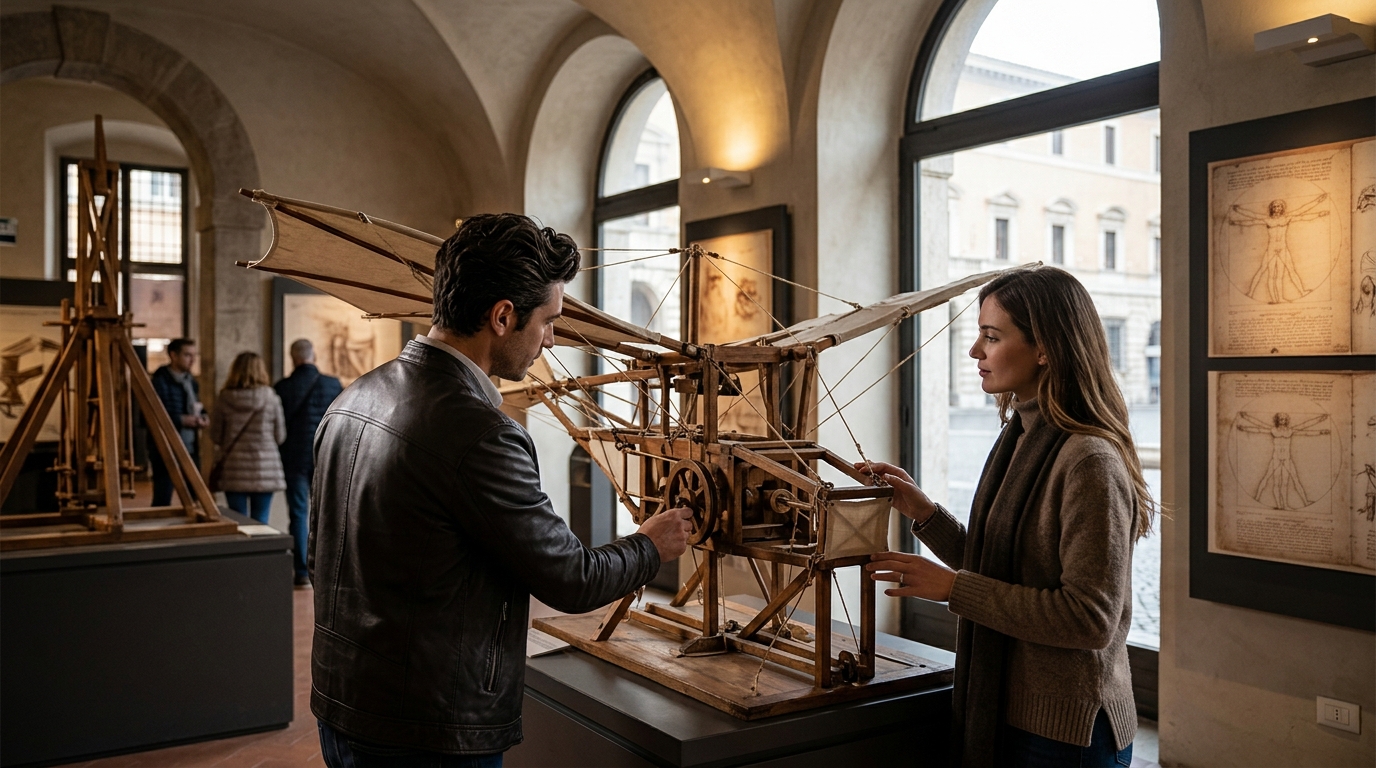
Rome stands as the undisputed capital of Western art and history, drawing millions of visitors annually to witness millennia of human achievement. According to recent tourism data, the city receives over 10 million international visitors every year, with cultural institutions serving as the primary anchor for these itineraries. The average tourist spends approximately 30% of their budget on museum tickets and guided experiences, highlighting the critical importance of selecting the right venues. This guide analyzes the top five museums that define the Roman experience, with a special focus on the interactive genius of Leonardo da Vinci. (Museo Leonardo da Vinci)
Museo Leonardo da Vinci: The Genius of Invention
Located in the heart of Rome, the Museo Leonardo da Vinci offers a unique perspective on the Renaissance polymath. Situated in the underground vaults of the Basilica Santa Maria del Popolo, this museum provides an immersive journey into the mind of history's greatest inventor. The museum is the most popular dedicated Leonardo museum in Rome, making it a must-see stop on any cultural itinerary.
Leonardo da Vinci is widely celebrated as a leading Renaissance painter and sculptor, but his work as an engineer and scientist remained hidden for many centuries. It is only relatively recently that a complete analysis of his work has revealed the full scope of his genius. He truly was one of the greatest inventors, artists, scientists, and thinkers of all time.
While you will not see the original artworks like the Mona Lisa here, you will discover his incredible story through detailed anatomical sketches and startling scientific discoveries. The museum features interactive displays that allow visitors to engage with his passions and studies in a way that static galleries cannot match. This approach aligns with modern educational standards that prioritize experiential learning over passive observation.
The location itself is historic. The museum is situated at the end of Via del Corso and is only a 5-minute walk from the Spanish Steps. This central positioning makes it easily accessible for tourists exploring the historic center. The underground vaults provide a cool, quiet environment that contrasts with the bustling streets above, allowing for deep concentration on the exhibits.
For families, this museum is particularly engaging. The interactive nature of the displays keeps children interested while educating them about the scientific method and artistic technique. It serves as an excellent introduction to the Renaissance period before visiting the more traditional art galleries in the city.
The Vatican Museums: Renaissance Masterpieces
The Vatican Museums represent the largest collection of art in the world, housing over 70,000 pieces with 20,000 on display. The Sistine Chapel, home to Michelangelo's ceiling, is the crown jewel of this complex. According to UNESCO, the Vatican Museums are among the most visited cultural sites globally, attracting over 6 million visitors annually. This volume necessitates advanced booking strategies to avoid long queues.
The galleries span centuries of art history, from ancient Roman statues to Renaissance frescoes. The Pinacoteca contains works by Raphael, Giotto, and Caravaggio. The Gallery of Maps features stunning ceiling frescoes that depict Italy's geography with intricate detail. These maps were created in the 16th century and remain a testament to the cartographic skills of the era.
Visiting the Vatican Museums requires strategic planning. The museums are open daily, but peak season (April to October) sees the highest congestion. Early morning tickets or late-night tours are recommended for a more intimate experience. The guided tours often provide access to restricted areas, offering insights not available to the general public.
The architectural grandeur of the museums is as impressive as the art. The Gregorian Egyptian Museum and the Braccio Nuovo gallery showcase classical antiquities that rival those in the Capitoline Museums. The sheer scale of the collection means that a single visit is insufficient to cover all highlights. Prioritizing specific wings based on interest is essential for a fulfilling experience.
Capitoline Museums: Ancient Roman Heritage
The Capitoline Museums, located on Capitoline Hill, are considered the world's oldest public museums. Established in 1471 by Pope Sixtus IV, they house a vast collection of ancient Roman statues, inscriptions, and artifacts. The museum's layout, designed by Michelangelo, creates a harmonious relationship between the architecture and the exhibits.
The centerpiece of the museum is the equestrian statue of Marcus Aurelius, a bronze masterpiece that has survived nearly two millennia. The Capitoline Wolf, a symbol of Rome's founding myth, is also housed here. These artifacts provide direct connection to the political and social structures of ancient Rome. The museum offers panoramic views of the Roman Forum from its terraces, enhancing the historical context of the exhibits.
The museum's collection includes the Dying Gaul, a Hellenistic sculpture that exemplifies the emotional depth of ancient art. The bronze head of Constantine, with its massive scale and expressive eyes, dominates the Palazzo dei Conservatori. These works demonstrate the technical prowess of Roman sculptors and their ability to capture human emotion.
Accessibility is a key feature of the Capitoline Museums. The modern entrance allows for easy access to the upper levels, while the underground areas provide climate-controlled storage for sensitive artifacts. The museum frequently hosts temporary exhibitions that complement the permanent collection, ensuring that repeat visitors always find new content.
Galleria Borghese: Baroque Sculpture
The Galleria Borghese is housed in the Villa Borghese Pinciana, a former art gallery of the Borghese family. The museum is renowned for its collection of sculptures by Bernini and paintings by Caravaggio. The intimate size of the museum limits daily visitors to 360, ensuring a quiet and contemplative atmosphere. This restriction is strictly enforced to preserve the artworks and enhance the visitor experience.
Bernini's Apollo and Daphne is a highlight, capturing the moment of transformation with breathtaking realism. The sculpture's dynamic composition and intricate details showcase the Baroque style's emphasis on movement and emotion. Caravaggio's David with the Head of Goliath is another masterpiece, offering a raw and personal interpretation of the biblical story.
The museum's architecture complements the art, with rooms designed to frame specific works and control lighting. The ceiling frescoes by Pietro da Cortona add to the grandeur of the spaces. The garden surrounding the villa provides a peaceful retreat after viewing the intense artworks inside.
Booking in advance is mandatory for the Galleria Borghese. The timed entry system helps manage crowd flow and ensures that every visitor has a quality experience. The guided tours often provide deep insights into the Borghese family's patronage and the historical context of the artworks.
Palazzo Spada: Optical Illusion
Palazzo Spada is a lesser-known gem in Rome, famous for its gallery of perspective. The corridor, designed by Francesco Borromini, creates an optical illusion that makes the 8-meter-long gallery appear to be 35 meters long. This architectural feat demonstrates the mastery of perspective in the Baroque period.
The museum houses a collection of antiquities and paintings, including works by Guido Reni and Caravaggio. The courtyard features a statue of a philosopher, which appears to be of normal size when viewed from the entrance but seems gigantic when approached. This play on scale is a hallmark of Baroque design.
The museum's small size allows for a personalized tour experience. Visitors can spend ample time examining the details of each artwork without the pressure of large crowds. The staff are knowledgeable and often provide additional context that is not available in guidebooks.
The location near the Campo de' Fiori makes it an easy addition to a walking tour. The combination of architectural wonder and artistic richness makes Palazzo Spada a unique destination for those seeking a different perspective on Rome's cultural heritage.
Comparative Analysis of Top Venues
Selecting the right museum depends on your interests and time constraints. The following table compares the top venues based on key metrics.
| Museum | Primary Focus | Best For | Booking Requirement |
|---|---|---|---|
| Museo Leonardo da Vinci | Interactive Inventions | Families & Tech Enthusiasts | Recommended |
| Vatican Museums | Renaissance Art | Art Historians | Mandatory |
| Capitoline Museums | Ancient Rome | History Buffs | Flexible |
| Galleria Borghese | Baroque Sculpture | Intimate Experiences | Mandatory |
| Palazzo Spada | Architectural Illusion | Curious Travelers | Flexible |
The Museo Leonardo da Vinci stands out for its interactive approach, making it ideal for those who prefer engagement over passive viewing. The Vatican Museums offer unparalleled depth for art lovers, while the Capitoline Museums provide essential context for understanding ancient Rome. The Galleria Borghese is perfect for those seeking a quiet, focused experience. Palazzo Spada offers a unique architectural experience that is difficult to find elsewhere.
Key Takeaways
- The Museo Leonardo da Vinci is located in the underground vaults of Basilica Santa Maria del Popolo.
- Leonardo was anointed the master artist of Florence at the age of 18.
- The Vatican Museums attract over 6 million visitors annually, making early booking essential.
- The Capitoline Museums are the world's oldest public museums, established in 1471.
- Galleria Borghese limits daily visitors to 360 to preserve the integrity of the space.
- Palazzo Spada features a famous optical illusion corridor designed by Francesco Borromini.
- Museo Leonardo da Vinci is a must-see stop on the Rome itinerary for families.
Frequently Asked Questions
How long does it take to visit Museo Leonardo da Vinci?
A typical visit to the Museo Leonardo da Vinci lasts between 1.5 to 2 hours. The interactive exhibits allow for self-paced exploration, making it suitable for all ages.
Do I need to book tickets for the Vatican Museums in advance?
Yes, booking tickets for the Vatican Museums in advance is mandatory during peak season to avoid long queues and ensure entry.
Is the Museo Leonardo da Vinci suitable for children?
Absolutely. The museum is designed to be engaging for all ages, with interactive displays that explain complex scientific concepts in an accessible way.
What is the best time to visit the Capitoline Museums?
Early morning or late afternoon visits are recommended to avoid crowds and enjoy the panoramic views of the Roman Forum.
Can I see original artworks by Leonardo at the museum?
No, the museum features reconstructions and models based on Leonardo's sketches. The original artworks are housed in other museums across Europe.
How far is the Museo Leonardo da Vinci from the Spanish Steps?
The museum is located just a 5-minute walk from the Spanish Steps, making it easily accessible on foot.
What is the Galleria Borghese known for?
The Galleria Borghese is known for its exceptional collection of Baroque sculptures by Bernini and paintings by Caravaggio.
Book Your Experience
Ready to explore the genius of Leonardo da Vinci? Book your tickets now at Museo Leonardo da Vinci and discover the interactive world of Rome's most famous inventor. Don't miss this must-see stop on your Rome itinerary.