
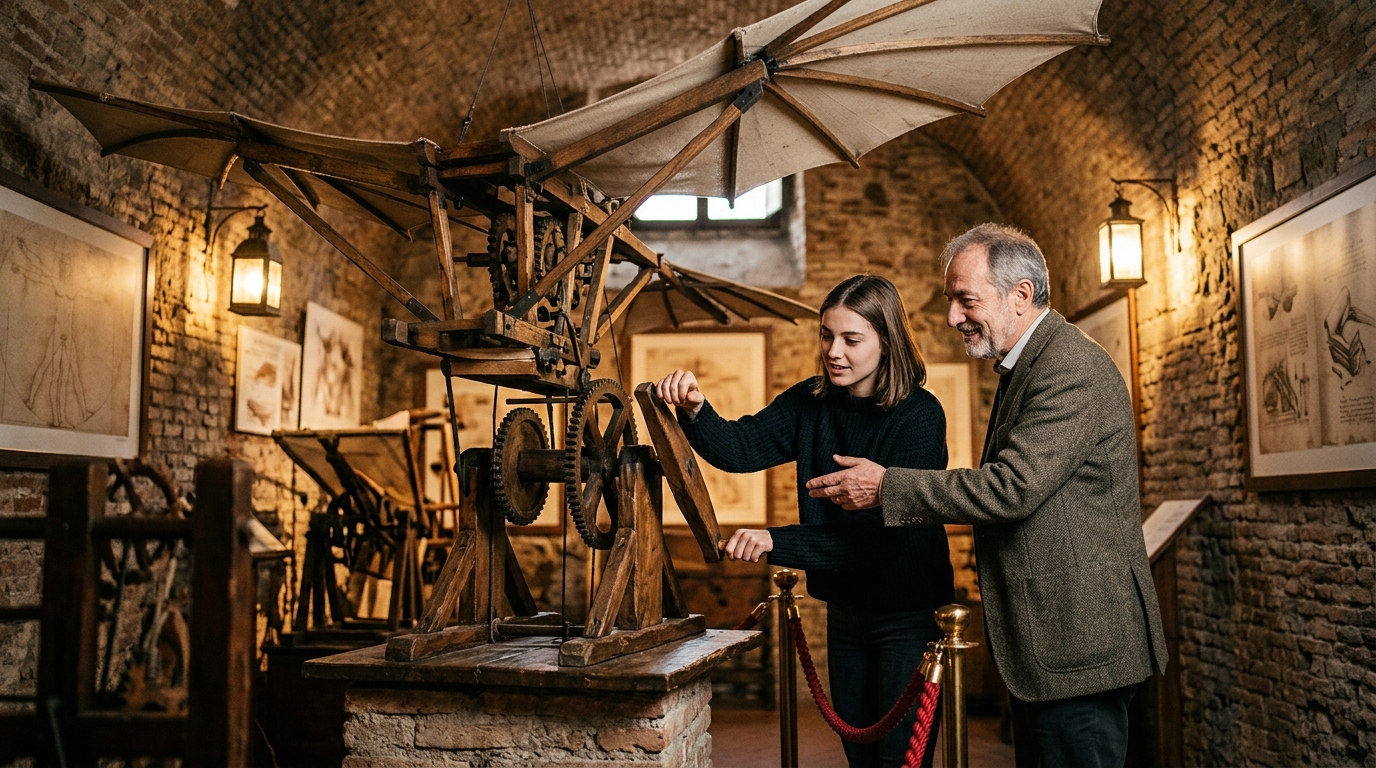
Leonardo da Vinci is widely celebrated as a leading Renaissance painter and sculptor, but although he was also known as an engineer and a scientist, his work in these fields remained hidden for many centuries. It is only relatively recently that a complete analysis of his work has revealed the full scope of his genius. He truly was one of the greatest inventors, artists, scientists and thinkers of all time. Today, you can witness the mechanical brilliance that defined his legacy through reconstructed machines and original manuscripts located in specific cultural hubs across Europe. (Museo Leonardo da Vinci)
Museo Leonardo da Vinci in Rome
The Museo Leonardo da Vinci in Piazza del Popolo offers a unique underground experience located in the vaults of the Basilica Santa Maria del Popolo. This papal basilica is second only in importance to St Peter's and is one of the seven pilgrim churches in Rome. The museum is the most popular dedicated Leonardo museum in Rome, making it a great stop for families and history enthusiasts alike.
While you will not see the original artworks at this museum, you will discover his incredible story, groundbreaking inventions, detailed anatomical sketches, startling scientific discoveries and much more. The interactive exhibits allow visitors to explore Leonardo's passions and studies in a way that brings his mechanical genius to life. Located at the end of Via del Corso, the museum is only a 5 minute walk from the Spanish Steps, making it easily accessible for tourists exploring the historic center.
Visitors can immerse themselves in an interactive world of Leonardo's passions and studies. The museum provides a comprehensive overview of his life, from his early days in Florence to his final years in France. It is an essential stop for anyone wanting to understand the breadth of his intellectual curiosity. Book tickets online to skip the line and secure your entry to this hidden gem beneath the city.
Château de Blois in France
For those traveling to the Loire Valley, the Château de Blois houses a remarkable collection of Leonardo's mechanical models. The museum features large-scale reconstructions of his flying machines, including the ornithopter and the aerial screw, which is considered the precursor to the modern helicopter. These models are based on the detailed drawings found in the Codex Leicester and the Codex Atlanticus.
The Château de Blois is particularly significant because it connects Leonardo's engineering work with the royal courts of France. King Francis I invited Leonardo to live in France, and the king's interest in science and art fostered a unique cultural exchange. The museum's exhibits highlight how Leonardo's designs were not just theoretical but were actively studied and built during the Renaissance. Learn more about the Château's history to understand its role in the political landscape of 16th century France.
The Royal Collection in London
The Royal Collection Trust in London holds one of the most important sets of Leonardo's original manuscripts. The Codex Forster and the Codex Leicester are among the most famous, but the Royal Collection contains numerous other notebooks filled with his observations on water, flight, and anatomy. These documents are rarely on public display due to their fragility, but they are occasionally exhibited in special shows at the Royal Library at Windsor Castle.
Access to these manuscripts is highly restricted, and they are considered national treasures. However, high-quality facsimiles and digital reproductions are available through the Royal Collection's online archive. Researchers and enthusiasts can study Leonardo's handwriting and drawing techniques in detail. Explore the Royal Collection online to view digitized versions of these priceless documents.
Château du Clos Lucé in Amboise
The Château du Clos Lucé is where Leonardo da Vinci spent his final three years, from 1516 until his death in 1519. The museum is dedicated to his life and work, featuring a garden with large-scale reconstructions of his machines. These include the helicopter, the tank, and the giant crossbow. The garden provides a tangible sense of the scale and ambition of his engineering projects.
Visitors can walk through the rooms where Leonardo lived and work, gaining insight into his daily life and creative process. The museum also hosts temporary exhibitions that explore specific aspects of his genius. It is a must-see destination for anyone interested in the practical application of his theories. Visit the official site to plan your trip to this historic residence.
Museo Nazionale della Scienza e della Tecnologia
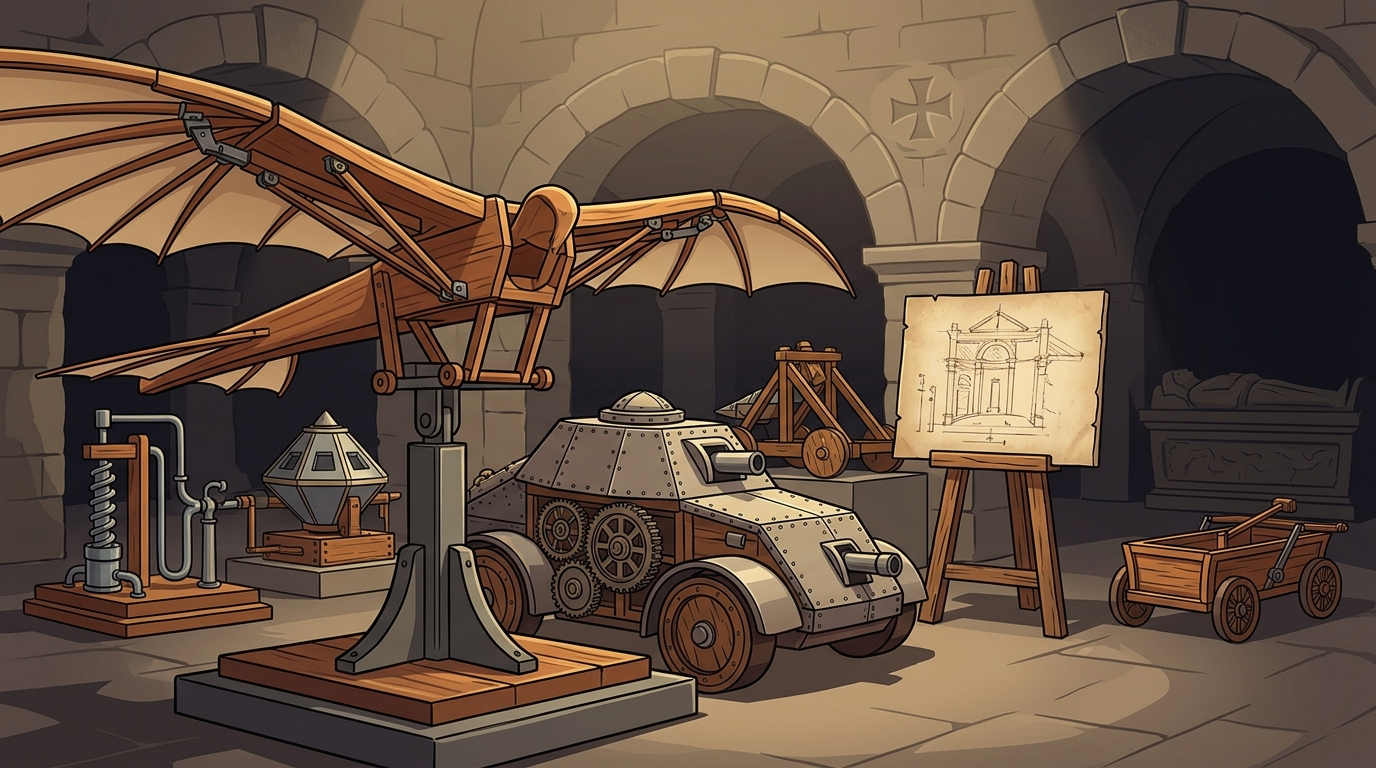
In Milan, the National Museum of Science and Technology houses the largest collection of Leonardo's machines in the world. The museum features over 200 reconstructed models of his inventions, including the flying machines, war machines, and musical instruments. These reconstructions are based on rigorous historical research and provide a clear understanding of how his designs would have functioned.
The museum is located in the former monastery of Santa Maria delle Grazie, near the site of The Last Supper. This location is significant because Leonardo worked in Milan for many years and developed many of his engineering concepts there. The museum's exhibits are designed to be interactive, allowing visitors to see the mechanics in action. Check the museum's current exhibitions for any special events or workshops.
Comparing Your Options
Choosing the right destination depends on your location and specific interests. The table below summarizes the key features of each major site.
| Location | Key Feature | Best For | Access Type |
|---|---|---|---|
| Museo Leonardo da Vinci (Rome) | Interactive underground exhibits | Family visits and quick stops | Walk-in or online booking |
| Château de Blois (France) | Large-scale flying machine models | Engineering enthusiasts | Guided tours available |
| Royal Collection (London) | Original manuscripts (Codex) | Academic researchers | Special exhibition access |
| Château du Clos Lucé (Amboise) | Final residence and garden models | Historical context seekers | Seasonal opening hours |
| Museo Nazionale (Milan) | Largest machine collection | Comprehensive study | Permanent collection |
Key Takeaways
- Museo Leonardo da Vinci in Rome is located in the underground vaults of Basilica Santa Maria del Popolo, offering an interactive experience near the Spanish Steps.
- Château de Blois features prominent reconstructions of Leonardo's flying machines, highlighting his work in aerodynamics.
- The Royal Collection in London holds the Codex Leicester and other vital manuscripts, though access is limited to special exhibitions.
- Château du Clos Lucé is the site of Leonardo's final home, featuring a garden with large-scale machine models.
- Milan's National Museum boasts the world's largest collection of reconstructed machines, providing the most comprehensive view of his engineering.
- Leonardo was anointed the master artist of Florence at the tender age of 18, responsible for iconic artworks like the Mona Lisa.
- Visiting multiple sites provides a deeper understanding of how his ideas evolved from Italy to France.
Frequently Asked Questions
Can I see the original Mona Lisa at these museums?
No, the original Mona Lisa is housed in the Louvre Museum in Paris. The museums listed here focus on Leonardo's inventions, manuscripts, and reconstructed machines.
Is the Museo Leonardo da Vinci in Rome suitable for children?
Yes, the museum is great for all the family to enjoy. The interactive exhibits are designed to engage visitors of all ages with Leonardo's scientific discoveries.
How many machines are displayed at the National Museum in Milan?
The museum houses over 200 reconstructed models of Leonardo's inventions, making it the largest collection of its kind in the world.
Do I need to book tickets in advance for the Château du Clos Lucé?
It is highly recommended to book tickets in advance, especially during the peak tourist season, to ensure entry and avoid long queues.
Where can I find high-resolution images of Leonardo's manuscripts?
The Royal Collection Trust and the Codex Leicester digital archives provide high-resolution images and detailed analyses of his original notebooks.
Is the Museo Leonardo da Vinci open every day?
The museum typically operates daily, but hours may vary by season. It is best to check the official website for the most current opening times.
What is the significance of the Codex Leicester?
The Codex Leicester is one of Leonardo's scientific notebooks, containing his writings and drawings on water, light, and the moon. It is one of the few scientific notebooks by Leonardo to survive.
Plan Your Visit
Discover the greatest genius of all time in the heart of Rome. The Museo Leonardo da Vinci in Piazza del Popolo offers a unique opportunity to explore his inventions in an immersive underground setting. Don't miss your chance to be inspired by the man who changed the course of history. Book your visit today and start your journey through the mind of Leonardo da Vinci.