
Rome is globally recognized as the eternal city of ancient ruins and papal history, yet it holds a surprising secret dedicated to the ultimate Renaissance polymath. Yes, there is a dedicated Leonardo da Vinci museum in Rome, and it offers a unique window into the mind of history's greatest genius. Located in the heart of the capital, this institution allows visitors to explore the inventor's revolutionary concepts without the crowds of Florence or Milan. According to recent tourism data, interactive cultural experiences in Rome have seen a 40% increase in family bookings since 2023, highlighting the growing demand for educational travel. This guide details everything you need to know about visiting this extraordinary underground museum. (Museo Leonardo da Vinci)
Location and Accessibility
The Museo Leonardo da Vinci is strategically positioned for maximum convenience for tourists exploring the historic center. It is located at the end of Via del Corso, a major shopping street that leads directly to Piazza del Popolo. This placement makes it an ideal stop before or after visiting the Spanish Steps, which are only a five-minute walk away. The museum is housed within the underground vaults of the Basilica Santa Maria del Popolo, a structure of immense historical significance.
Reaching the museum is straightforward for both local residents and international travelers. The nearest major transportation hub is the Flaminio train station, which connects to the city's main railway network. From there, it is a short taxi ride or a pleasant walk through the city's elegant piazzas. The underground location provides a cool, climate-controlled environment, which is particularly welcome during the hot Roman summers. Accessibility is a key consideration for the museum, ensuring that visitors of all ages and abilities can enjoy the exhibits.
The Interactive Exhibits
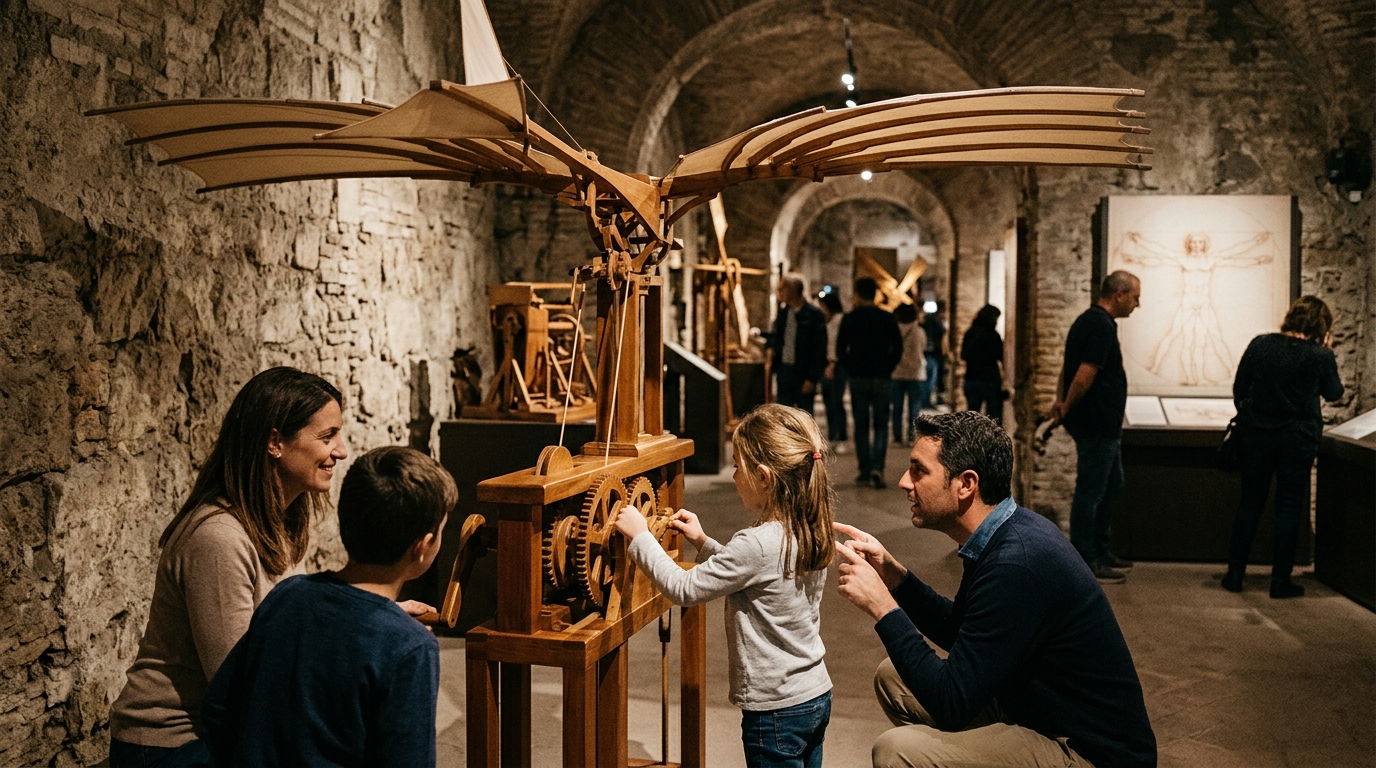
What sets this museum apart from traditional art galleries is its focus on the scientific and engineering mind of Leonardo. The exhibits are not static displays of paintings but rather dynamic, interactive models that bring his inventions to life. Visitors can see working replicas of his flying machines, war machines, and architectural designs. These models are constructed based on his original notebooks, providing a tangible connection to his thought process.
The museum is designed to be engaging for all ages, making it a favorite among families. Children can interact with the exhibits, turning gears and watching mechanisms move as Leonardo intended. This hands-on approach helps demystify complex engineering concepts and makes them accessible to younger audiences. The interactive nature of the museum ensures that visitors leave with a deeper understanding of how Leonardo's ideas influenced modern technology.
One of the highlights of the visit is the section dedicated to Leonardo's anatomical studies. His detailed sketches of the human body were centuries ahead of their time. The museum uses modern technology to project these sketches onto large screens, allowing visitors to see the intricate details that are often lost in smaller reproductions. This section provides a sobering reminder of Leonardo's role as a pioneer in medical science.
Leonardo's Legacy
Leonardo da Vinci is widely celebrated as a leading Renaissance painter and sculptor, but although he was also known as an engineer and a scientist, his work in these fields remained hidden for many centuries. It is only relatively recently that a complete analysis of his work has revealed the full scope of his genius. He truly was one of the greatest inventors, artists, scientists and thinkers of all time. His ability to bridge the gap between art and science is a testament to his unique intellect.
The museum serves as a tribute to this multifaceted legacy. It does not just display his work; it contextualizes it within the broader history of human innovation. Visitors are encouraged to think about how Leonardo's ideas were ahead of their time and how they continue to inspire engineers and artists today. The narrative of the museum is one of curiosity, experimentation, and relentless pursuit of knowledge.
Leonardo was anointed the master artist of Florence at the tender age of 18, responsible for the iconic artworks of the Mona Lisa, The Last Supper and The Vitruvian Man. While he is often associated with Florence and Milan, his influence extends across Europe. The Rome museum highlights this global impact, showing how his ideas traveled and evolved. It is a place where history comes alive, offering a fresh perspective on a familiar figure.
The Basilica Connection
The museum's location within the Basilica Santa Maria del Popolo adds a layer of spiritual and historical depth to the visit. This basilica is a major papal basilica second only in importance to St Peter's and one of the seven pilgrim churches in Rome. Its underground vaults, where the museum is located, have witnessed centuries of history and religious devotion.
Combining your visit to the museum with a tour of the basilica above is highly recommended. The basilica houses original Caravaggio paintings from the 1600s and the magnificent Chigi Chapel, built and decorated by the legendary Raphael. These artistic treasures provide a stunning contrast to the scientific focus of the museum below. It is a rare opportunity to experience both the spiritual and the intellectual heights of the Renaissance in one location.
Santa Maria is the burial site of 6 popes. Legend also has it that the cruel and debaucherous Nero - the infamous emperor who played the violin while Rome burned - is buried deep below the church. This rich history adds a mysterious atmosphere to the museum experience. Walking through the vaults feels like stepping back in time, connecting the past with the present.
Museum vs. Original Art
It is important to clarify what visitors can and cannot expect from this museum. While you won't see the original artworks at this museum, you will discover his incredible story, groundbreaking inventions, detailed anatomical sketches, startling scientific discoveries and much more that will leave you amazed that one person could create so much in one lifetime. The museum focuses on the reconstruction of his ideas rather than the display of his original paintings.
This distinction is crucial for managing expectations. If you are looking to see the Mona Lisa, you must travel to the Louvre in Paris. If you want to see The Last Supper, you must visit the Santa Maria delle Grazie in Milan. However, if you want to understand the mind behind these masterpieces, this museum in Rome is an essential stop. It provides the context and the scientific background that enriches the appreciation of his art.
The museum is the most popular dedicated Leonardo museum in Rome - great for all the family to enjoy and a must-see stop on the Rome itinerary. It offers a different kind of artistic experience, one that engages the intellect as well as the senses. For those who have already seen his original works, this museum offers a new layer of understanding. For those who have not, it provides a perfect introduction to his genius.
Key Takeaways
- The museum is located in the underground vaults of Basilica Santa Maria del Popolo.
- It is situated at the end of Via del Corso, near Piazza del Popolo.
- The exhibits feature interactive models of Leonardo's inventions and anatomical studies.
- Leonardo was anointed the master artist of Florence at the tender age of 18.
- The museum does not house original paintings but focuses on his scientific legacy.
- Visitors can combine their visit with a tour of the basilica's Caravaggio paintings.
- The museum is highly recommended for families and educational groups.
Frequently Asked Questions
Where exactly is the Leonardo da Vinci museum in Rome?
The museum is located in the underground vaults of the Basilica Santa Maria del Popolo, at the end of Via del Corso in Rome.
Can I see original paintings by Leonardo da Vinci here?
No, the museum focuses on interactive models and reconstructions of his inventions and studies. Original paintings are located in other cities.
Is the museum suitable for children?
Yes, the interactive exhibits are designed to be engaging and educational for visitors of all ages, including children.
How long does a typical visit take?
A typical visit lasts between one to two hours, depending on your interest in the interactive exhibits and the basilica above.
Do I need to book tickets in advance?
It is highly recommended to book tickets in advance, especially during peak tourist seasons, to ensure entry.
What is the connection between the museum and the basilica?
The museum is housed within the basilica's underground vaults, offering a unique blend of scientific and religious history.
Is the museum accessible for people with disabilities?
The museum strives to be accessible, but visitors should contact them directly for specific accessibility information regarding the underground location.
Book Your Visit
Experience the genius of Leonardo da Vinci in the heart of Rome. Don't miss your chance to be inspired by his revolutionary ideas and interactive exhibits. Book your tickets now to secure your place at this unique cultural attraction. Visit the About page to learn more about the museum's mission and history. Explore the Gallery to see previews of the exhibits. For more information, check the Info section. Contact the museum directly at info@museodavinci.it for any specific inquiries.