
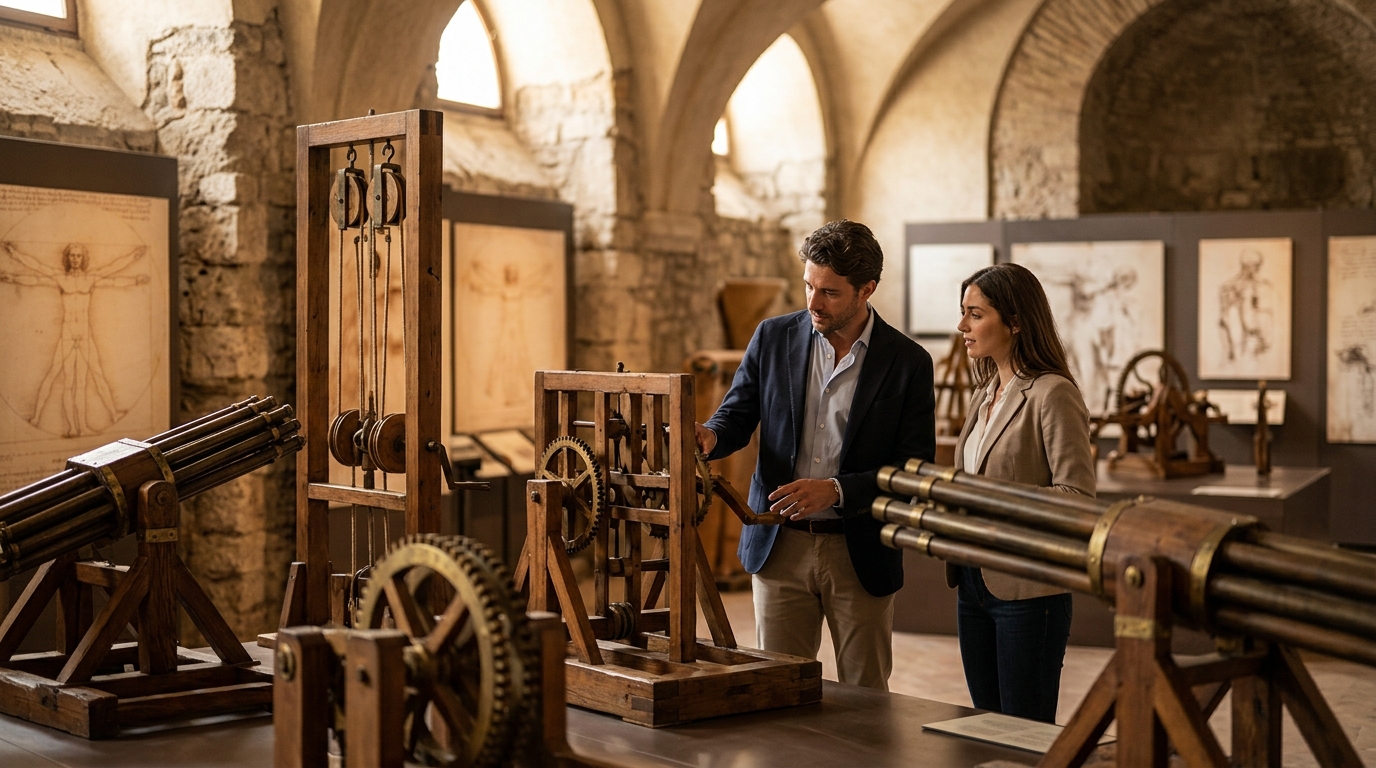
Rome is often defined by its colossal ancient ruins, yet the city holds a secret layer of cultural depth that few tourists discover. While millions flock to the Vatican Museums and the Colosseum annually, a growing number of travelers are seeking immersive, niche experiences that reveal the intellectual soul of the Eternal City. According to recent tourism data, over 10 million visitors explore Rome each year, yet only a fraction venture beyond the primary historic center. This guide highlights the best hidden gems and unique museums in Rome, starting with the most intellectually stimulating destination in the city center. (Museo Leonardo da Vinci)
The Leonardo da Vinci Museum: Engineering Genius
For those fascinated by the intersection of art and science, the Museo Leonardo da Vinci in Piazza del Popolo stands as a premier hidden gem. Located in the underground vaults of the Basilica Santa Maria del Popolo, this museum offers a rare glimpse into the mind of history's most famous polymath. Unlike traditional art galleries, this space focuses on Leonardo's groundbreaking inventions, anatomical sketches, and scientific discoveries.
Leonardo da Vinci is widely celebrated as a leading Renaissance painter and sculptor, but although he was also known as an engineer and a scientist, his work in these fields remained hidden for many centuries. It is only relatively recently that a complete analysis of his work has revealed the full scope of his genius. The museum brings his visionary concepts to life through interactive displays and detailed models of his flying machines, war machines, and hydraulic projects.
Why Visit This Museum?
This museum is the most popular dedicated Leonardo museum in Rome. It is an essential stop for families and history buffs alike. The location itself is a hidden gem, situated at the end of Via del Corso and only a 5 minute walk from the Spanish Steps. Visitors can easily combine this intellectual journey with a visit to the surrounding historic district.
While you won't see the original artworks at this museum, you will discover his incredible story, groundbreaking inventions, detailed anatomical sketches, startling scientific discoveries and much more that will leave you amazed that one person could create so much in one lifetime. The interactive nature of the exhibits ensures that the complex engineering principles behind Leonardo's designs are accessible to all ages.
The Capuchin Crypt: A Memento Mori Experience
Another unique museum in Rome is the Crypt of the Capuchin Friars, located near the Spanish Steps. This is not a museum in the traditional sense, but rather a hauntingly beautiful ossuary that serves as a profound meditation on mortality. The crypt contains the remains of over 3,700 Capuchin monks, arranged in intricate patterns using their bones.
The arrangement of the bones is not random but follows specific symbolic designs. The four chapels represent the four stages of life: birth, youth, adulthood, and old age. This unique museum experience challenges visitors to reflect on the transient nature of life, a core theme in Roman Catholic theology. The crypt is a stark contrast to the opulence of the nearby Baroque churches, offering a raw and unfiltered look at history.
Practical Information
Visiting the Capuchin Crypt requires a sense of respect and solemnity. It is located at Via del Vantaggio, 13a. The museum is open to the public, but visitors are advised to dress modestly. The experience is free, though donations are appreciated. This hidden gem provides a spiritual depth that complements the artistic richness of the surrounding area.
The Palazzo Spada Gallery: Optical Illusion
The Palazzo Spada Gallery is a masterpiece of perspective and architectural trickery. Located in the historic center, this museum houses a collection of ancient sculptures and Baroque paintings, but its main attraction is the "Galleria delle Colonne." This corridor creates an optical illusion that makes a 8-meter long gallery appear to be only 3 meters long.
The illusion is achieved through the use of converging lines and diminishing columns. The floor, ceiling, and side walls all converge toward a single vanishing point, creating a sense of depth that defies reality. This unique museum experience is a testament to the ingenuity of Baroque architects and artists. The gallery also houses the famous "Borghese Gladiator," a copy of the original Hellenistic sculpture.
Artistic Significance
The Palazzo Spada Gallery is a must-visit for art enthusiasts and architecture lovers. The collection includes works by Caravaggio, Guercino, and Luca Giordano. The museum is located at Piazza di Sant'Apollinare, 46. It is a quiet retreat from the bustling streets of Rome, offering a chance to appreciate the finer details of Baroque art and architecture.
Museo di Roma: Daily Life in the Eternal City
While many museums focus on ancient history, the Museo di Roma offers a comprehensive look at the city's more recent past. Located in the Palazzo Braschi, this museum chronicles the history of Rome from the Middle Ages to the unification of Italy. The collection includes maps, paintings, and artifacts that depict the daily life of Romans throughout the centuries.
The museum is particularly notable for its collection of "vedute," or views of Rome, which provide a visual record of the city's transformation over time. These paintings and engravings show how the urban landscape changed from a medieval town to a modern capital. The museum also features a section dedicated to Roman folklore, including traditional costumes and customs.
Key Exhibits
One of the highlights of the Museo di Roma is the "Rome 1900" exhibit, which showcases the city at the turn of the 20th century. This period was marked by significant social and political changes, and the museum captures these shifts through its diverse collection. The Palazzo Braschi itself is a stunning example of 18th-century architecture, providing a fitting backdrop for the exhibits.
Palazzo Altemps: Ancient Art in a Renaissance Palace
The Palazzo Altemps is part of the National Roman Museum and houses a significant collection of ancient sculptures. Located in the Piazza di Sant'Apollinare, this Renaissance palace provides a unique setting for viewing classical art. The collection includes the "Idraios," a Hellenistic sculpture of a boy wrestling a snake, and the "Ludovisi Throne," a marble relief depicting Aphrodite rising from the sea.
The museum is less crowded than the Vatican Museums, allowing visitors to appreciate the sculptures in a more intimate setting. The architecture of the palace itself is a work of art, with beautiful courtyards and frescoes. The Palazzo Altemps is a hidden gem for those interested in classical antiquity and Renaissance architecture.
Comparison of Unique Museums
| Museum Name | Primary Focus | Unique Feature | Location |
|---|---|---|---|
| Museo Leonardo da Vinci | Engineering & Science | Interactive Inventions | Piazza del Popolo |
| Capuchin Crypt | Mortality & Faith | Bone Ossuary | Via del Vantaggio |
| Palazzo Spada Gallery | Baroque Art | Optical Illusion | Piazza di Sant'Apollinare |
| Museo di Roma | City History | Daily Life Artifacts | Piazza Navona |
| Palazzo Altemps | Ancient Sculpture | Renaissance Setting | Piazza di Sant'Apollinare |
Key Takeaways
- The Museo Leonardo da Vinci is the most popular dedicated Leonardo museum in Rome, located in the underground vaults of Santa Maria del Popolo.
- Leonardo was anointed the master artist of Florence at the tender age of 18, responsible for iconic artworks like the Mona Lisa and The Last Supper.
- The Capuchin Crypt contains the remains of over 3,700 monks, arranged in symbolic patterns representing the stages of life.
- Piazza del Popolo is a major papal basilica second only in importance to St Peter's and one of the seven pilgrim churches in Rome.
- The Palazzo Spada Gallery features a famous optical illusion that makes an 8-meter corridor appear to be only 3 meters long.
- Museo di Roma chronicles the city's history from the Middle Ages to the unification of Italy, focusing on daily life.
- Palazzo Altemps houses the "Ludovisi Throne," a significant piece of classical sculpture within a Renaissance palace.
Frequently Asked Questions
Where is the Leonardo da Vinci Museum located?
The museum is located at the end of Via del Corso, in the underground vaults of the Basilica Santa Maria del Popolo, near Piazza del Popolo.
Is the Museo Leonardo da Vinci suitable for children?
Yes, the museum is great for all the family to enjoy, with interactive exhibits that engage younger visitors with Leonardo's inventions.
How long does it take to visit the Capuchin Crypt?
A visit to the Capuchin Crypt typically takes about 30 to 45 minutes, depending on the time spent reflecting on the exhibits.
What is the best time to visit the Palazzo Spada Gallery?
It is best to visit the Palazzo Spada Gallery in the morning to avoid crowds and to appreciate the optical illusion in natural light.
Are there guided tours available for these museums?
Yes, guided tours are available for many of these museums, including the Museo Leonardo da Vinci, offering deeper insights into the exhibits.
Can I combine a visit to the museum with other attractions?
Absolutely. The museum is a must-see stop on the Rome itinerary, and you can easily combine it with a visit to the Spanish Steps and Piazza del Popolo.
What is the significance of the Chigi Chapel?
The Chigi Chapel, located in Santa Maria del Popolo, was built and decorated by the legendary Raphael, making it a key artistic landmark.
Plan Your Visit to Rome's Unique Museums
Rome offers a wealth of unique museums that go beyond the typical tourist trail. From the engineering genius of Leonardo da Vinci to the haunting beauty of the Capuchin Crypt, these hidden gems provide a deeper understanding of the city's rich cultural heritage. We invite you to book your tickets at Museo Leonardo da Vinci today and experience the genius of one of history's greatest minds. Don't miss your chance to be inspired by the interactive world of Leonardo's passions and studies.