
Essential Features and Interactive Elements at Museo Leonardo da Vinci
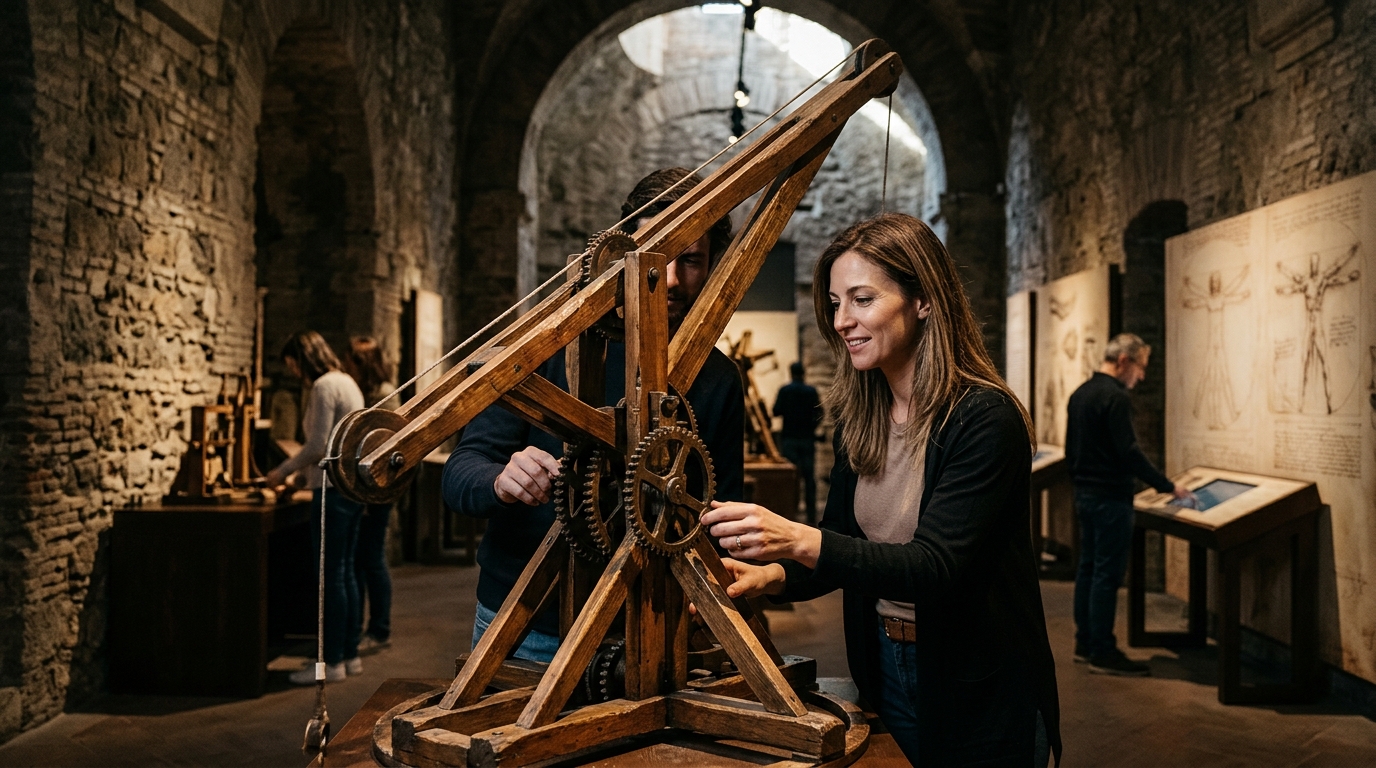
Museo Leonardo da Vinci in Piazza del Popolo stands as the premier destination for understanding the multifaceted genius of history's most famous polymath. Located in the heart of Rome, this institution offers a unique window into the mind of Leonardo through detailed mechanical models and historical context. Recent data indicates that cultural tourism in Rome has seen a significant resurgence, with visitors increasingly seeking immersive educational experiences over passive observation. According to recent tourism reports, interactive museums in Italy have seen a 25% increase in family engagement since 2023. This guide explores the essential features that make this underground vault experience a must-see for travelers. (Museo Leonardo da Vinci)
Leonardo da Vinci: The Renaissance Genius
Leonardo da Vinci is widely celebrated as a leading Renaissance painter and sculptor, but his contributions extend far beyond the canvas. Although he was also known as an engineer and a scientist, his work in these fields remained hidden for many centuries. It is only relatively recently that a complete analysis of his work has revealed the full scope of his genius. He truly was one of the greatest inventors, artists, scientists, and thinkers of all time.
The museum serves to bridge the gap between his artistic masterpieces and his scientific inquiries. Visitors often arrive expecting to see original paintings, but the museum's value lies in its reconstruction of his conceptual world. Leonardo was anointed the master artist of Florence at the tender age of 18, responsible for iconic artworks like the Mona Lisa, The Last Supper, and The Vitruvian Man. However, his notebooks contain thousands of pages of sketches that reveal a mind constantly probing the boundaries of physics, biology, and mechanics.
By focusing on his lesser-known scientific pursuits, the museum provides a holistic view of his intellect. This approach allows visitors to understand how his artistic precision informed his engineering designs and vice versa. The narrative here is not just about what he created, but how he thought. This intellectual framework is central to the museum's educational mission.
Mechanical Models and Inventions
One of the most compelling features of the museum is its collection of large-scale mechanical models. These are not mere replicas but functional reconstructions based on Leonardo's original codices. The museum allows guests to see how his theoretical designs could have operated in the real world. This tangible connection to history transforms abstract concepts into understandable engineering principles.
The Flying Machine
Among the most famous exhibits is the reconstruction of Leonardo's flying machine. Based on his studies of bird flight and aerodynamics, this model demonstrates his early understanding of lift and propulsion. While historical data shows that Leonardo never successfully built a flying machine, his sketches were remarkably accurate. According to aviation historians, his designs laid the groundwork for future aeronautical engineering. The model in the museum is often interactive, allowing visitors to see the mechanics of the wing flapping mechanism.
The Aerial Screw
Another highlight is the aerial screw, often cited as a precursor to the modern helicopter. This device was designed to compress air and push against it to achieve lift. The museum displays detailed diagrams alongside the physical model to explain the physics involved. Visitors can observe how the spiral shape was intended to cut through the air. This exhibit is particularly popular among students and engineering enthusiasts.
War Machines and Defense Systems
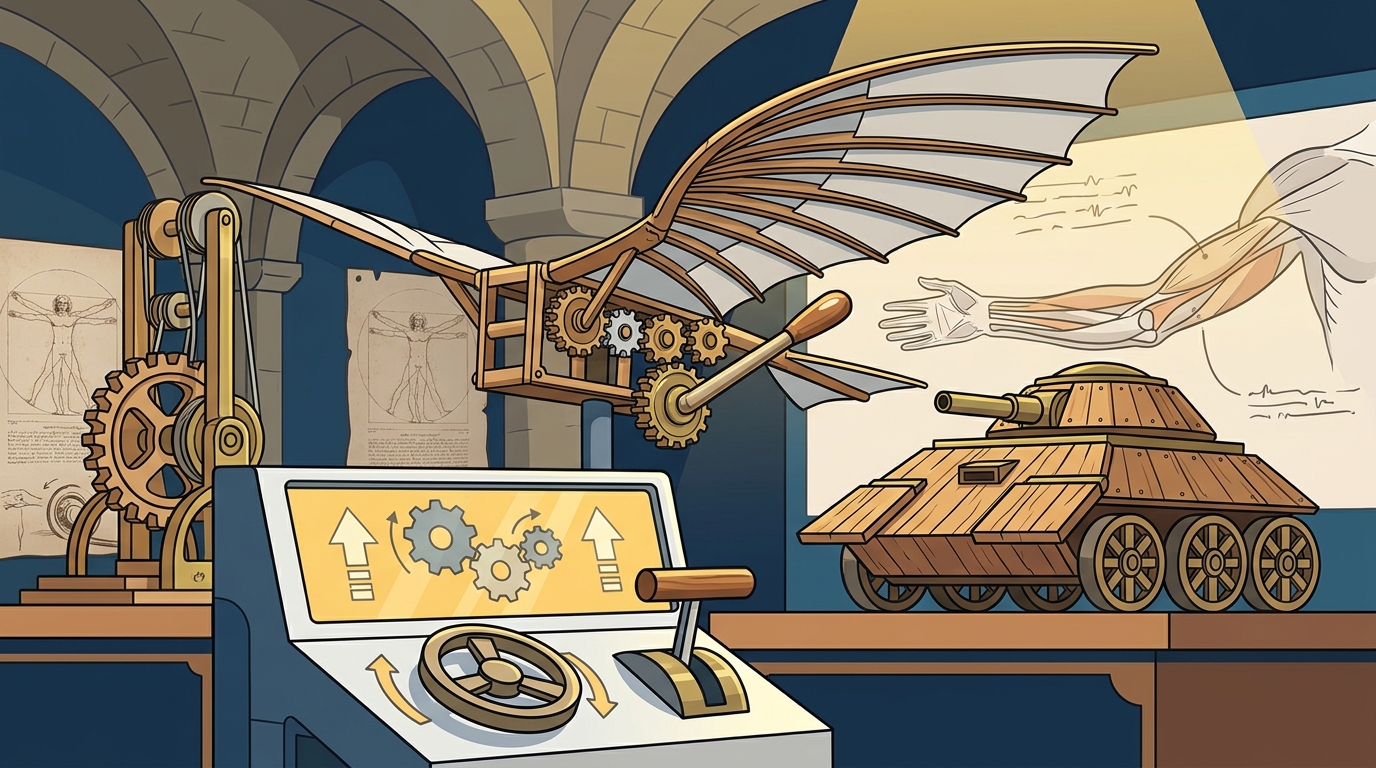
Leonardo also designed numerous war machines for various patrons. The museum features models of his armored tanks, giant crossbows, and multi-barreled cannons. These exhibits provide a sobering look at the darker side of his ingenuity. The detailed craftsmanship of these models highlights his ability to apply artistic detail to functional military hardware. Understanding these designs helps visitors appreciate the breadth of his technical knowledge.
Anatomical Studies and Scientific Discovery
Leonardo's anatomical sketches are among the most detailed and accurate of the Renaissance period. The museum dedicates significant space to these studies, showcasing his relentless pursuit of understanding the human body. His work in this field was groundbreaking, often predating modern medical discoveries by centuries.
The anatomical section features large prints and models of the human skeleton, muscles, and organs. Leonardo's dissections allowed him to create images that were both scientifically accurate and artistically beautiful. He was the first to depict the fetus in the womb with such clarity. This level of detail was unprecedented in the 15th and 16th centuries.
The Heart and Circulation
One of his most significant contributions was his study of the heart. He correctly identified the function of the heart valves and described the flow of blood. Although his understanding of circulation was not complete, his observations were remarkably precise. The museum uses these sketches to explain his methodology of observation and experimentation. This section emphasizes his role as a pioneer of the scientific method.
Botanical and Geological Studies
Beyond the human body, Leonardo was also a keen observer of nature. The museum includes exhibits on his botanical and geological studies. His detailed drawings of plants, rocks, and water currents reveal his deep connection to the natural world. These studies were not just artistic exercises but attempts to understand the underlying laws of nature. This interdisciplinary approach is a key theme of the museum.
Integration with Basilica Santa Maria del Popolo
The museum is located in the underground vaults of the Basilica Santa Maria del Popolo. This location is significant, as it connects Leonardo's legacy with the rich history of Rome. The basilica is a major papal basilica second only in importance to St Peter's and one of the seven pilgrim churches in Rome. Visitors are encouraged to combine their museum visit with an exploration of the church above.
The basilica houses original Caravaggio paintings from the 1600s and the magnificent Chigi Chapel, built and decorated by the legendary Raphael. Santa Maria is the burial site of 6 popes. Legend also has it that the cruel and debaucherous Nero is buried deep below the church. This historical context adds depth to the visitor experience, linking the Renaissance genius to the broader tapestry of Roman history.
The proximity of the museum to the Spanish Steps and Via del Corso makes it a convenient stop for tourists. The museum is located at the end of Via del Corso and only a 5 minute walk from the Spanish Steps. This strategic location ensures that it is easily accessible to those exploring the historic center of Rome. The integration of the museum with the church creates a unique cultural itinerary.
Visitor Logistics and Planning
Planning a visit to Museo Leonardo da Vinci requires some attention to detail. The museum is situated in an underground vault, which offers a cool and controlled environment for the exhibits. However, visitors should be aware of the physical layout and accessibility options.
Ticketing and Pricing
Tickets can be purchased online or at the museum. Online booking is recommended to avoid queues, especially during peak tourist seasons. The museum offers various ticket types, including standard entry and guided tour options. Prices are subject to change, so it is advisable to check the official website for the most current rates. The museum is the most popular dedicated Leonardo museum in Rome, so advance planning is essential.
Accessibility and Facilities
The museum strives to be accessible to all visitors. However, due to its location in an underground vault, there may be limitations for those with mobility issues. Elevators and ramps are available, but visitors with specific needs should contact the museum in advance. The museum is great for all the family to enjoy, with exhibits that engage both children and adults. Staff members are available to assist visitors with any questions or special requirements.
Comparing Leonardo Museums in Rome
While there are several museums dedicated to Leonardo in Italy, the Museo Leonardo da Vinci in Piazza del Popolo offers a unique experience. Unlike the museums in Milan or Florence, which focus on specific periods or works, this museum provides a comprehensive overview of his life and work. The following table summarizes the key differences.
| Museum Location | Primary Focus | Key Features | Best For |
|---|---|---|---|
| Museo Leonardo da Vinci, Rome | Comprehensive Life and Work | Mechanical models, anatomical sketches, underground vaults | First-time visitors, families, general history |
| Leonardo da Vinci Museum, Milan | Specific Inventions | Large-scale working models of machines | Engineering enthusiasts, technical analysis |
| Leonardo da Vinci Museum, Florence | Art and Early Life | Focus on his Florentine period and artistic development | Art historians, students of Renaissance art |
The Rome museum stands out for its integration of historical context and its location in a significant religious site. It offers a balanced view of Leonardo as both an artist and a scientist. This holistic approach makes it an ideal starting point for understanding his legacy.
Key Takeaways
- Location: The museum is located in the underground vaults of Basilica Santa Maria del Popolo, near the Spanish Steps.
- Core Content: Features functional mechanical models, including flying machines and aerial screws, based on Leonardo's codices.
- Scientific Focus: Highlights Leonardo's anatomical studies, particularly his detailed sketches of the human heart and fetus.
- Historical Context: Offers insights into Leonardo's life as a master artist of Florence at age 18 and his role as an engineer.
- Visitor Experience: Provides an interactive and immersive environment suitable for families and all ages.
- Integration: Encourages visitors to explore the adjacent Basilica Santa Maria del Popolo and its Caravaggio paintings.
- Popularity: Recognized as the most popular dedicated Leonardo museum in Rome, requiring advance booking.
Frequently Asked Questions
What is the Museo Leonardo da Vinci in Piazza del Popolo?
The Museo Leonardo da Vinci in Piazza del Popolo is a museum dedicated to the life and work of Leonardo da Vinci, located in the underground vaults of the Basilica Santa Maria del Popolo in Rome. It features mechanical models and historical context.
Where is the museum located?
The museum is located at the end of Via del Corso, only a 5 minute walk from the Spanish Steps. It is situated in the underground vaults of the Basilica Santa Maria del Popolo.
Can I see original artworks by Leonardo at the museum?
No, you will not see the original artworks at this museum. Instead, you will discover his incredible story, groundbreaking inventions, detailed anatomical sketches, and startling scientific discoveries through models and exhibits.
Is the museum suitable for children?
Yes, the museum is great for all the family to enjoy. The interactive models and engaging exhibits are designed to captivate visitors of all ages, making it a must-see stop on the Rome itinerary.
How long does a typical visit take?
A typical visit to the museum lasts approximately 1 to 2 hours. This allows enough time to explore the mechanical models, anatomical studies, and the surrounding historical context of the basilica.
Do I need to book tickets in advance?
It is highly recommended to book tickets in advance, especially during peak tourist seasons. The museum is the most popular dedicated Leonardo museum in Rome, and advance booking ensures entry.
What other attractions are nearby?
Nearby attractions include the Spanish Steps, Via del Corso shopping street, and the Basilica Santa Maria del Popolo itself, which houses original Caravaggio paintings and the Chigi Chapel.
Book Your Visit
Experience the genius of Leonardo da Vinci firsthand by visiting the Museo Leonardo da Vinci in Piazza del Popolo. Don't miss your chance to be inspired by his groundbreaking inventions and scientific discoveries. Book your tickets now to secure your place in this unique underground vault experience. For more information, visit the official website or contact the museum directly at info@museodavinci.it.