
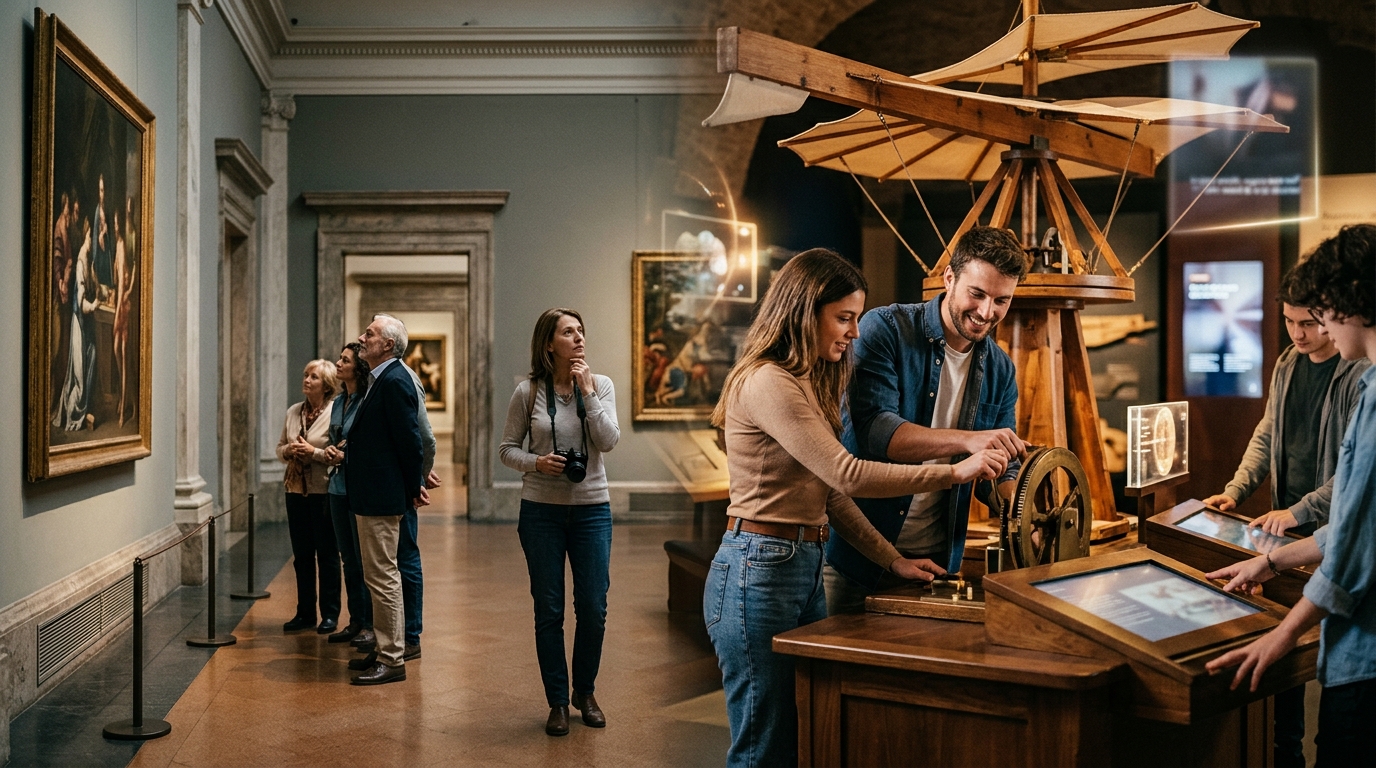
Rome attracts over 10 million visitors annually, yet the modern traveler increasingly seeks immersive engagement over passive observation. Recent tourism data shows that interactive exhibits drive higher dwell times and deeper educational retention than static displays. This shift is particularly evident in how museums interpret historical figures like Leonardo da Vinci. The Museo Leonardo da Vinci in Piazza del Popolo represents a pivotal evolution in cultural tourism, offering an underground vault experience that contrasts sharply with conventional gallery models. (Museo Leonardo da Vinci)
The Interactive Approach
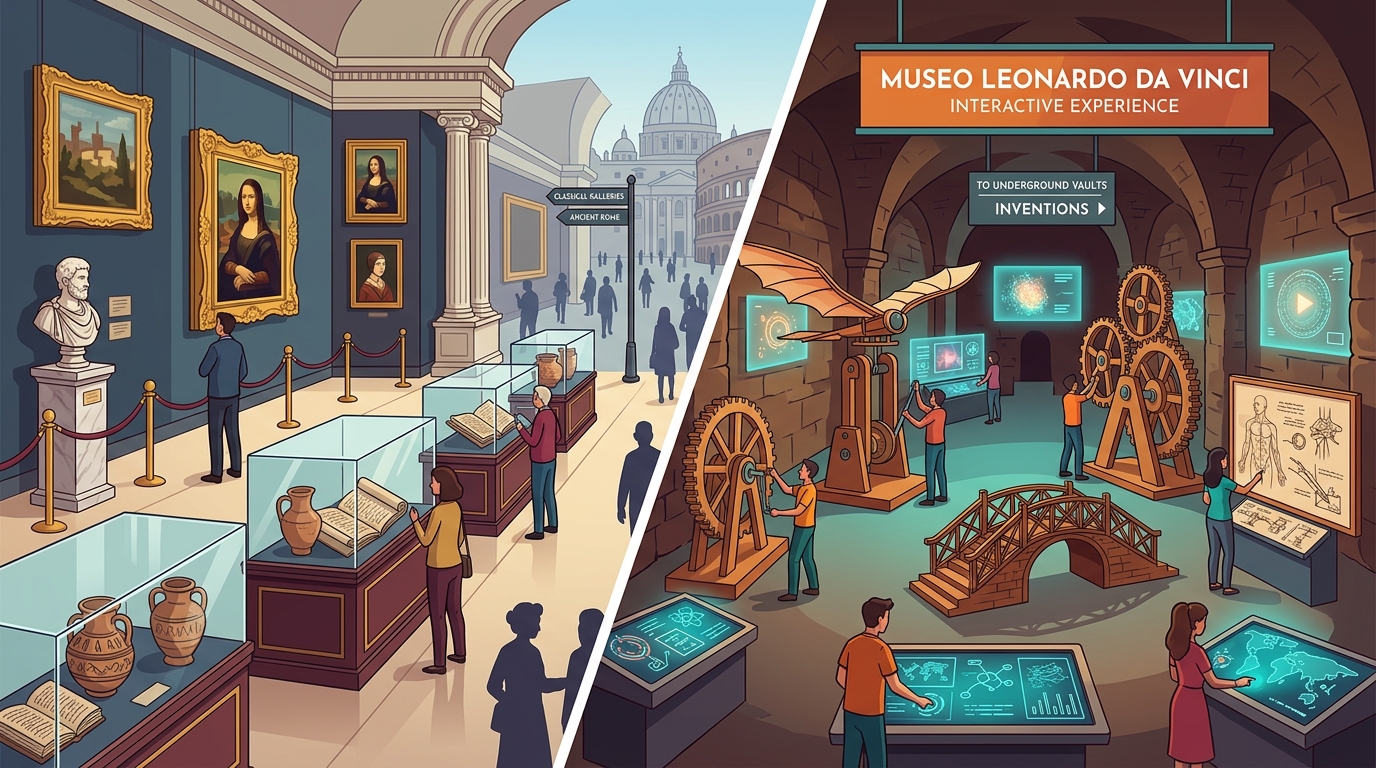
Interactive museums prioritize sensory engagement and active participation. At the Museo Leonardo da Vinci, visitors explore the passions and studies of the genius within the underground vaults of the Basilica Santa Maria del Popolo. This setting creates an intimate atmosphere that static galleries often lack. The museum focuses on Leonardo's groundbreaking inventions, detailed anatomical sketches, and startling scientific discoveries. These elements are presented through models and interactive displays that allow guests to visualize his thought process.
Leonardo da Vinci is widely celebrated as a leading Renaissance painter and sculptor, but his work as an engineer and scientist remains equally significant. Historical records confirm that his notebooks contained designs for flying machines, war engines, and hydraulic systems centuries before they were practically realized. The museum brings these concepts to life, allowing visitors to understand the scope of his genius beyond just his art.
The experience is designed for all ages, making complex historical data accessible to families and students. By moving away from the "do not touch" mentality of traditional museums, this approach fosters a deeper connection to the subject matter. Visitors can trace the evolution of Leonardo's ideas from his early days in Florence to his later years in France.
Traditional Museum Contrast
Traditional museums in Rome, such as the Vatican Museums or the Borghese Gallery, primarily focus on the display of original artifacts and masterpieces. While these institutions house unparalleled collections, the visitor experience is often defined by distance and restriction. Official Vatican guidelines emphasize the preservation of these works, which necessitates strict environmental controls and limited interaction.
In contrast, the Museo Leonardo da Vinci does not display original artworks. Instead, it reconstructs the world Leonardo inhabited. This distinction is crucial for understanding the value proposition of each type of museum. Traditional museums offer authenticity through the original object. Interactive museums offer authenticity through the reconstruction of the experience and the intellectual journey.
For many tourists, the lack of original paintings at the Leonardo museum is not a drawback but a feature. It allows for a narrative-driven tour that explains the "why" and "how" behind the art, rather than just presenting the final product. This educational depth is often missing in high-traffic traditional galleries where crowds limit individual engagement.
Location and Accessibility
The location of the Museo Leonardo da Vinci is a significant advantage for interactive tourism. Situated at the end of Via del Corso, it is only a five-minute walk from the Spanish Steps. This proximity to major landmarks makes it an ideal stop for tourists following a structured itinerary. Travel guides note that the Spanish Steps area is one of the most visited zones in Rome, drawing millions of foot traffic annually.
The museum is located in the underground vaults of the Basilica Santa Maria del Popolo. This basilica is a major papal church, second only in importance to St. Peter's Basilica. It is one of the seven pilgrim churches in Rome. Combining a visit to the museum with the basilica allows guests to explore original Caravaggio paintings from the 1600s and the Chigi Chapel. This synergy between the interactive museum and the historic church creates a comprehensive cultural experience.
Accessibility is further enhanced by the museum's compact yet immersive layout. Unlike sprawling traditional museums that require hours of walking, the underground setting allows for a focused, manageable tour. This is particularly beneficial for families with young children or elderly visitors who may find large galleries exhausting.
Comparative Analysis
When comparing interactive museums to traditional ones, several key factors emerge. The following table summarizes the differences based on visitor experience, content focus, and educational value.
| Feature | Interactive Museum (Leonardo da Vinci) | Traditional Museum (e.g., Vatican/Borghese) |
|---|---|---|
| Primary Content | Models, sketches, and reconstructed inventions | Original paintings and sculptures |
| Engagement Level | High (sensory and intellectual interaction) | Low to Moderate (visual observation) |
| Location | Underground vaults, Basilica Santa Maria del Popolo | Various historic palaces and churches |
| Target Audience | Families, students, and curious travelers | Art historians and serious collectors |
| Duration | Approximately 1 to 1.5 hours | 3 to 6+ hours |
The choice between these options often depends on the visitor's prior knowledge and interests. Those seeking to understand the mind of Leonardo will find the interactive approach more rewarding. Those seeking to see the Mona Lisa or The Last Supper must visit their respective locations in Milan and Florence, as these originals are not available in Rome.
Key Takeaways
- The Museo Leonardo da Vinci is located in the underground vaults of Basilica Santa Maria del Popolo.
- Leonardo was anointed the master artist of Florence at the age of 18.
- The museum is the most popular dedicated Leonardo museum in Rome.
- Visitors can explore groundbreaking inventions and anatomical sketches not found in traditional galleries.
- The location is a five-minute walk from the Spanish Steps, offering high accessibility.
- Basilica Santa Maria del Popolo is one of the seven pilgrim churches in Rome.
- Interactive exhibits provide a deeper understanding of Leonardo's scientific genius.
Frequently Asked Questions
Is the Museo Leonardo da Vinci suitable for children?
Yes, the museum is designed to be engaging for all ages. The interactive displays and models help children visualize Leonardo's inventions, making it a great family activity.
Can I see the original Mona Lisa in Rome?
No, the original Mona Lisa is housed in the Louvre Museum in Paris. The Museo Leonardo da Vinci in Rome features models and studies related to the work, providing context for its creation.
How long does a visit to the museum take?
A typical visit lasts approximately one to one and a half hours. This duration allows enough time to explore the underground vaults and read the detailed information about Leonardo's life.
Is the museum located inside the Basilica Santa Maria del Popolo?
The museum is located in the underground vaults beneath the Basilica Santa Maria del Popolo. Visitors can access the museum separately from the basilica itself.
What is the difference between this museum and the Borghese Gallery?
The Borghese Gallery focuses on original sculptures and paintings by artists like Bernini and Caravaggio. The Museo Leonardo da Vinci focuses on interactive models and the scientific mind of Leonardo da Vinci.
Do I need to book tickets in advance?
It is highly recommended to book tickets in advance, especially during peak tourist seasons. This ensures entry and avoids long queues at the entrance.
Are there guided tours available?
Guided tours are often available in both Italian and English. These tours provide additional context and stories about Leonardo's life and work that enhance the self-guided experience.
Book Your Visit
Experience the genius of Leonardo da Vinci in the heart of Rome. The Museo Leonardo da Vinci offers a unique window into the mind of history's greatest polymath. Visit the official website to book your tickets and plan your itinerary. Do not miss this must-see stop on your Rome journey.