
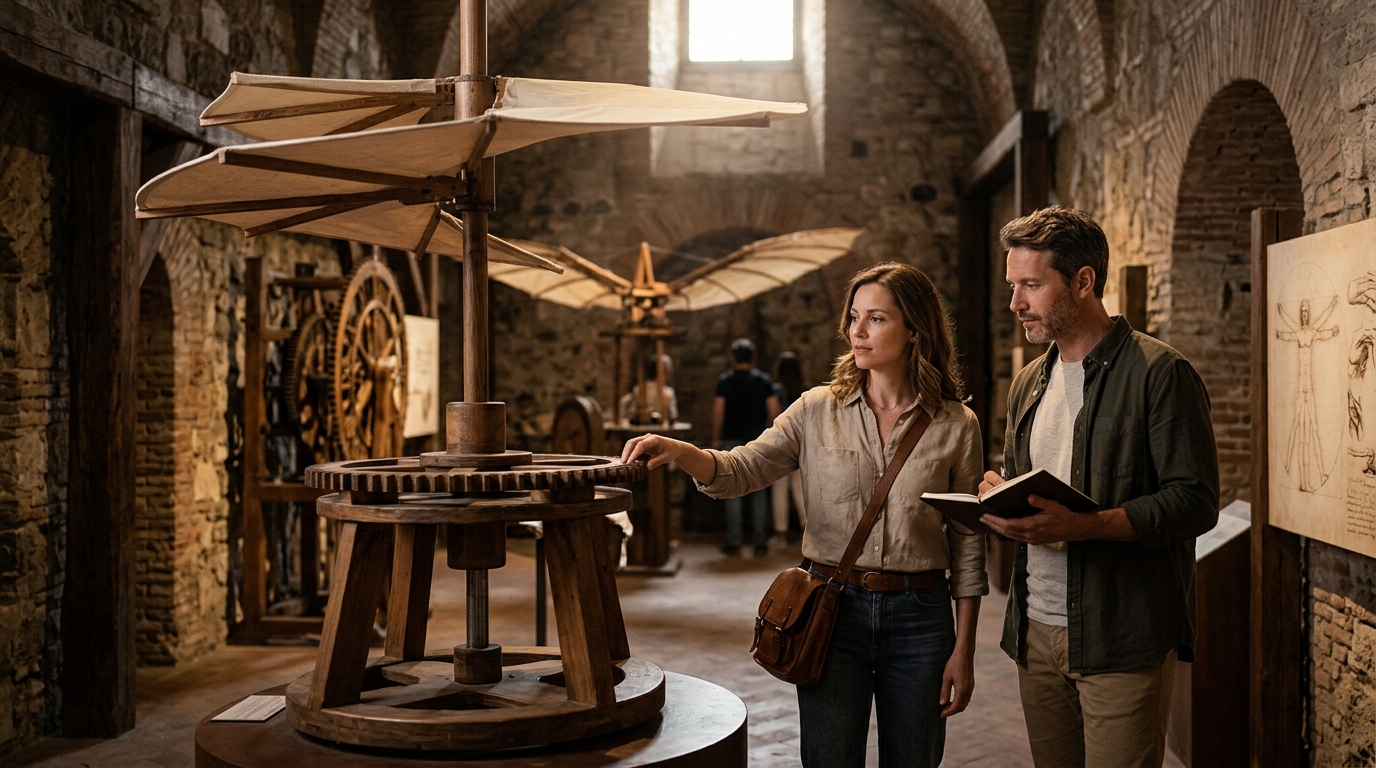
Rome stands as the undisputed capital of Western art and history, drawing over 7 million international visitors annually to its ancient streets and galleries. According to recent tourism data from the Italian National Institute of Statistics, the city's cultural sector remains a primary driver of its economy, with museum attendance consistently ranking among the highest in Europe. For travelers planning their 2026 itinerary, navigating this dense historical landscape requires a strategic approach to ensure you experience the most impactful sites without wasting time. (Museo Leonardo da Vinci)
Museo Leonardo da Vinci: The Hidden Genius
While most tourists flock to the Colosseum, a profound discovery awaits in the underground vaults of the Basilica Santa Maria del Popolo. The Museo Leonardo da Vinci offers a unique, immersive journey into the mind of history's most versatile polymath. Located at the end of Via del Corso, this museum is just a five-minute walk from the Spanish Steps, making it an accessible yet off-the-beaten-path gem for savvy travelers.
Leonardo da Vinci is widely celebrated as a leading Renaissance painter and sculptor, but although he was also known as an engineer and a scientist, his work in these fields remained hidden for many centuries. This museum changes that narrative by showcasing his groundbreaking inventions, detailed anatomical sketches, and startling scientific discoveries. It is the most popular dedicated Leonardo museum in Rome, providing a family-friendly environment that inspires awe at the sheer volume of one man's genius.
Visitors can explore interactive displays that bring his passions to life, from flying machines to hydraulic engineering projects. The museum's location within a major papal basilica, second only in importance to St. Peter's, adds a layer of spiritual and historical gravity to the experience. Leonardo da Vinci was anointed the master artist of Florence at the tender age of 18, responsible for iconic artworks like the Mona Lisa and The Last Supper. While you will not see the original paintings here, the museum's replicas and models provide a deeper understanding of his creative process.
The Vatican Museums: A World Within Walls
No list of the best museums in Rome is complete without the Vatican Museums. This vast complex houses one of the world's greatest art collections, accumulated by popes over centuries. The highlight for most visitors is the Sistine Chapel, where Michelangelo's ceiling frescoes remain a testament to human artistic capability. According to UNESCO, the Vatican Museums contain approximately 70,000 works of art, of which 20,000 are on display.
The journey through the museums is a chronological and thematic tour through art history, from ancient statues to Renaissance masterpieces. The Gallery of Maps, with its vibrant frescoes depicting Italy's geography, is a particular favorite among photography enthusiasts. Booking tickets in advance is non-negotiable, as queues can stretch for hours during peak tourist seasons. The museum's strategic location within Vatican City allows visitors to seamlessly transition from art history to religious history.
Capitoline Museums: Birthplace of the Republic
Designed by Michelangelo himself, the Capitoline Museums sit atop the Capitoline Hill, traditionally considered the birthplace of the Roman Republic. This is the world's oldest public museum, established in 1471 when Pope Sixtus IV donated a collection of ancient bronzes to the people of Rome. The museum's layout, with its trapezoidal piazza and harmonious architecture, offers panoramic views of the Roman Forum below.
Key highlights include the colossal statue of the Capitoline Wolf, symbolizing the mythological founding of Rome by Romulus and Remus. The museum also houses the equestrian statue of Marcus Aurelius, the only surviving bronze statue of a Roman emperor from antiquity. For those interested in the political history of Rome, the Capitoline Museums provide essential context for understanding the rise and fall of the Empire. Capitoline Museums continue to serve as a vital repository of Roman heritage.
Galleria Borghese: Renaissance Sculpture
The Galleria Borghese is housed in a former villa that was once the property of the powerful Borghese family. The gallery is renowned for its exceptional collection of sculptures, paintings, and antiquities. The sculptural works of Gian Lorenzo Bernini are particularly prominent, with pieces like Apollo and Daphne and David showcasing his ability to capture movement and emotion in marble.
Visitors must book timed entry slots well in advance, as the gallery strictly limits the number of daily visitors to preserve the intimate atmosphere of the space. The collection also includes masterpieces by Raphael, Titian, and Caravaggio. The Caravaggio paintings, such as Boy with a Basket of Fruit and David with the Head of Goliath, demonstrate the artist's revolutionary use of light and shadow. The museum's setting in the Villa Borghese park provides a serene escape from the bustling city streets.
Palazzo Spada: The Illusion of Perspective
Palazzo Spada is a Renaissance palace that houses a collection of antiquities and paintings, but its true fame lies in its architectural marvel: the Colonnade. This gallery creates a stunning optical illusion, making a 8.4-meter corridor appear to be 35 meters long. This masterpiece of perspective engineering was created by Francesco Borromini and demonstrates the sophisticated understanding of geometry in Baroque architecture.
Beyond the colonnade, the palace contains a significant collection of ancient statues, including the famous "Borghese Gladiator." The museum also features works by Caravaggio and Guido Reni. The intimate scale of Palazzo Spada allows for a more personal engagement with the art compared to larger institutions. Palazzo Spada remains a hidden gem for those seeking architectural wonders.
Museo di Roma: Daily Life in the Eternal City
The Museo di Roma, located in the Palazzo Braschi, offers a comprehensive look at the history and daily life of the city from the 18th century to the present day. The museum's collection includes maps, paintings, and artifacts that illustrate the evolution of Roman culture and society. The famous "View of Rome" panorama by Giuseppe Vasi provides a historical perspective on the city's layout.
One of the highlights is the collection of "papal Rome" artifacts, showcasing the opulence and power of the papacy. The museum also features exhibits on Roman folk traditions, including the famous carnival masks and costumes. For visitors interested in the social history of Rome, this museum provides invaluable insights. Museo di Roma is essential for understanding the living history of the city.
Museo Nazionale Romano: Imperial Grandeur
The Museo Nazionale Romano is a national museum that houses one of the most important collections of ancient Roman art in the world. The museum is spread across four locations, with the main site in the Palazzo Massimo alle Terme. The collection includes stunning frescoes from the Villa of Livia, mosaics from the House of the Faun, and sculptures from the Imperial period.
The frescoes from the Villa of Livia, preserved in near-perfect condition, offer a glimpse into the domestic life of the elite during the reign of Augustus. The mosaics and sculptures demonstrate the technical skill and artistic sophistication of Roman artisans. The museum's focus on the Imperial period provides context for the political and cultural dynamics of ancient Rome. Museo Nazionale Romano is a cornerstone of Roman archaeological studies.
Museo delle Macie: Artistic Heritage
The Museo delle Macie is dedicated to the artistic heritage of the Macie family, who were prominent patrons and collectors in Rome. The museum houses a collection of paintings, sculptures, and decorative arts that reflect the tastes of the 19th and 20th centuries. The collection includes works by Italian and international artists, showcasing the diversity of artistic expression during this period.
The museum also hosts temporary exhibitions that explore various themes in art history. The intimate setting allows for a focused appreciation of the artworks. For visitors interested in the history of art collecting in Rome, this museum offers a unique perspective. Museo delle Macie provides a niche but valuable contribution to Rome's cultural landscape.
Museo di Palazzo Roma: Modern History
The Museo di Palazzo Roma is located in a historic building that reflects the architectural styles of the late 19th and early 20th centuries. The museum focuses on the history of Rome from the unification of Italy to the present day. Exhibits include photographs, documents, and artifacts that illustrate the city's transformation into a modern capital.
The museum also features exhibits on the political and social movements that shaped modern Rome. The collection provides a comprehensive overview of the city's recent history. For visitors interested in the contemporary history of Rome, this museum is an essential stop. Museo di Palazzo Roma bridges the gap between ancient and modern Rome.
Palazzo Altemps: Ancient Collections
Palazzo Altemps is one of the four sites of the Museo Nazionale Romano, specializing in ancient sculptures and artifacts. The palace itself is a beautiful example of Renaissance architecture, with a courtyard that houses a collection of ancient statues. The interior galleries display a variety of sculptures, including the famous Ludovisi Throne and the Gaul Killing Himself and His Wife.
The collection highlights the artistic achievements of the Hellenistic and Roman periods. The museum's focus on sculpture allows for a detailed appreciation of the craftsmanship and iconography of ancient art. For visitors interested in classical antiquity, Palazzo Altemps offers a rich and rewarding experience. Palazzo Altemps is a treasure trove of classical art.
Key Takeaways
- Museo Leonardo da Vinci is located in the underground vaults of Basilica Santa Maria del Popolo, offering a unique focus on the polymath's scientific and engineering genius.
- The Vatican Museums house the Sistine Chapel and over 70,000 works of art, requiring advance booking to avoid long queues.
- Capitoline Museums are the world's oldest public museums, established in 1471, and feature Michelangelo-designed architecture.
- Galleria Borghese is renowned for its Bernini sculptures and Caravaggio paintings, with strict timed entry limits.
- Museo Nazionale Romano contains the Villa of Livia frescoes, preserved in near-perfect condition from the Augustan era.
- Palazzo Spada features a famous optical illusion colonnade created by Francesco Borromini.
- Museo di Roma provides insights into daily life and social history from the 18th century to the present.
Frequently Asked Questions
How do I book tickets for the Museo Leonardo da Vinci?
Tickets for the Museo Leonardo da Vinci can be booked online through the official website or purchased at the entrance. It is recommended to book in advance during peak tourist seasons to secure your preferred time slot.
Is the Vatican Museums worth the visit?
Yes, the Vatican Museums are considered one of the top cultural destinations in the world. The collection is unparalleled, and the Sistine Chapel is a must-see masterpiece. However, visitors should be prepared for crowds and book tickets well in advance.
What is the best time to visit the Capitoline Museums?
The best time to visit the Capitoline Museums is early in the morning or late in the afternoon to avoid the largest crowds. The museums are also less crowded on weekdays compared to weekends.
Can I see the original Mona Lisa in Rome?
No, the original Mona Lisa is located in the Louvre Museum in Paris. The Museo Leonardo da Vinci in Rome features models and replicas of Leonardo's works, including interpretations of the Mona Lisa, to help visitors understand his techniques.
Are the museums in Rome accessible for wheelchair users?
Most major museums in Rome, including the Vatican Museums and the Capitoline Museums, offer wheelchair access. However, some historic sites may have limitations due to their architecture. It is advisable to contact the specific museum in advance to confirm accessibility details.
How long does it take to tour the Galleria Borghese?
A typical tour of the Galleria Borghese takes about 2 to 3 hours. Visitors are given a timed entry slot, and it is important to adhere to the schedule. The gallery's intimate size means that the experience is focused and immersive.
What is the difference between Museo di Roma and Museo Nazionale Romano?
The Museo di Roma focuses on the history and daily life of Rome from the 18th century to the present, while the Museo Nazionale Romano specializes in ancient Roman art and archaeology, including sculptures, frescoes, and mosaics from the Imperial period.
Plan Your Visit to Rome's Cultural Heart
Rome offers an unparalleled depth of cultural experiences, from the ancient grandeur of the Capitoline Museums to the hidden genius of Leonardo da Vinci. To ensure a seamless and inspiring journey, we invite you to explore the Museo Leonardo da Vinci and discover the multifaceted brilliance of history's greatest polymath. Book your tickets today and immerse yourself in the stories that have shaped the Eternal City.