
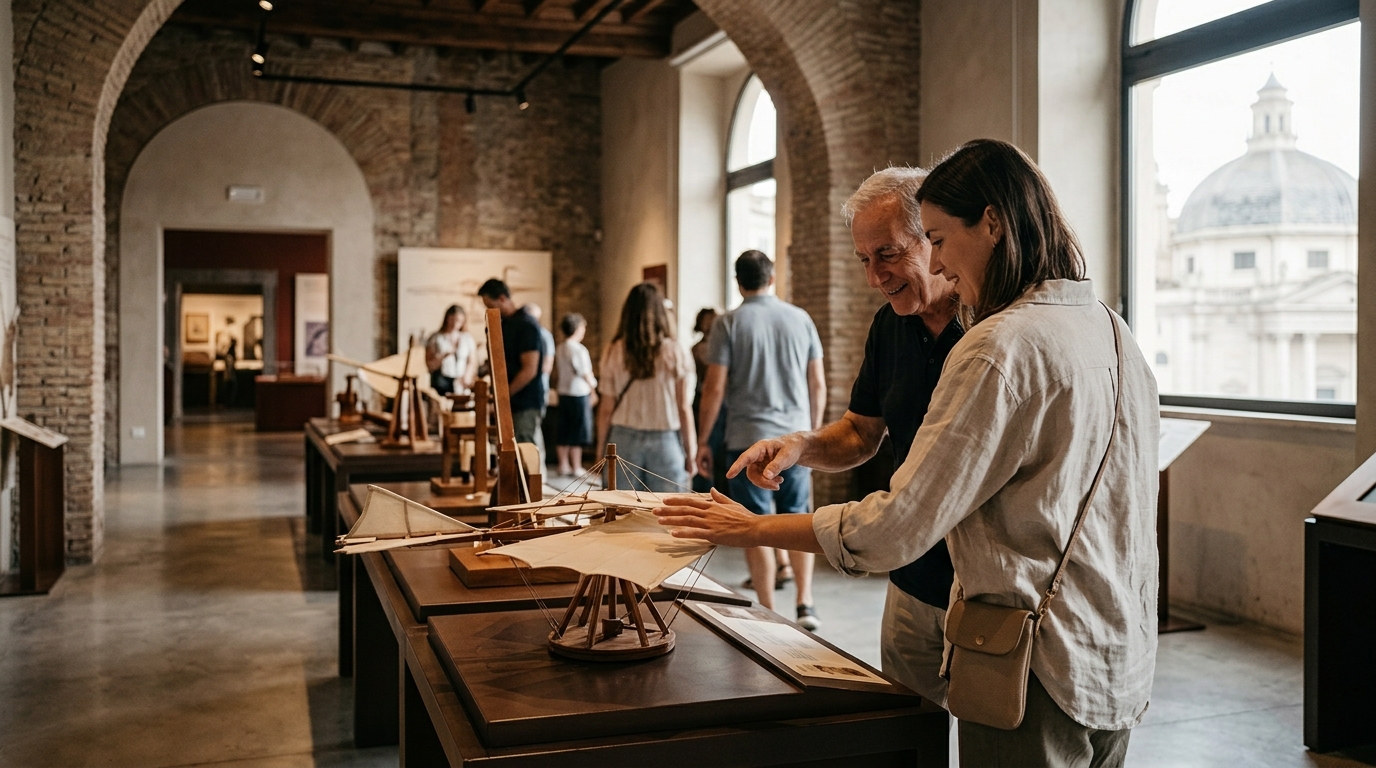
Rome attracts over 10 million visitors annually, yet most tourists focus exclusively on the Colosseum and the Vatican. According to recent tourism data, only a small fraction of travelers explore the city's specialized cultural institutions. This guide compares the Museo Leonardo da Vinci in Piazza del Popolo with other major Roman attractions to help you plan an efficient itinerary. Understanding these differences ensures you maximize your time in the Eternal City. (Museo Leonardo da Vinci)
The Unique Underground Experience
The Museo Leonardo da Vinci is not a traditional museum. It is located in the underground vaults of the Basilica Santa Maria del Popolo. This setting provides a distinct atmosphere that cannot be replicated in standard gallery spaces. The vaulted ceilings and historical context create an immersive environment for learning. (Museo Leonardo da Vinci)
Most other museums in Rome, such as the Uffizi or the Borghese Gallery, are located in above-ground palaces or villas. These spaces are often crowded and require extensive queuing. In contrast, the Leonardo museum offers a more intimate and controlled visitor flow. The underground location also keeps the temperature stable, preserving the delicate models and displays.
Visitors often describe the experience as a journey into the mind of the genius. The museum focuses on Leonardo's passions, studies, and inventions. This approach differs from museums that display original artworks. Here, you engage with the ideas that shaped the Renaissance.
Content Focus: Art vs. Science
Leonardo da Vinci is widely celebrated as a leading Renaissance painter and sculptor, but although he was also known as an engineer and a scientist, his work in these fields remained hidden for many centuries. It is only relatively recently that a complete analysis of his work has revealed the full scope of his genius. This museum highlights that scientific side of his legacy.
The museum features detailed anatomical sketches, startling scientific discoveries, and groundbreaking inventions. You will see models of flying machines, war machines, and architectural designs. These displays are based on Leonardo's original notebooks. The focus is on how he thought, not just what he painted.
Compare this to the Vatican Museums, which house the Sistine Chapel and vast collections of classical art. The Vatican focuses on religious history and masterpieces by Michelangelo and Raphael. The Museo Leonardo da Vinci offers a different perspective. It explores the intersection of art and science. This makes it ideal for those interested in engineering, anatomy, and innovation.
Another key difference is the absence of original artworks. While you will not see the Mona Lisa or The Last Supper, you will discover his incredible story through interactive displays. This allows for a deeper understanding of his creative process. The museum uses modern technology to bring his sketches to life. This educational approach appeals to a wide audience.
Location and Accessibility
Location is a critical factor when planning a Rome itinerary. The Museo Leonardo da Vinci is located at the end of Via del Corso. This is a prime shopping street in the heart of Rome. The museum is only a 5 minute walk from the Spanish Steps. This proximity to major landmarks makes it easy to include in your schedule.
Many tourists stay near the Spanish Steps or the Trevi Fountain. Visiting the Leonardo museum requires minimal travel time. You can walk there from your hotel or combine it with a shopping trip. This convenience is a significant advantage over museums located in Trastevere or on the Janiculum Hill.
Accessibility is also important. The museum is situated in an underground vault. While this creates a unique atmosphere, it may require navigating stairs. Visitors with mobility issues should check accessibility details in advance. However, the central location reduces the need for long transfers via public transport.
In contrast, the Colosseum is located in the historic center but often involves long security lines. The Vatican Museums are located in Vatican City, requiring a separate entry process. The Museo Leonardo da Vinci offers a streamlined experience. You can book tickets online to skip the queue. This saves valuable time during your trip.
Who Should Visit?
Not every museum appeals to every traveler. The Museo Leonardo da Vinci is great for all the family to enjoy. It is particularly suitable for students, engineers, and art enthusiasts. The interactive nature of the exhibits keeps younger visitors engaged. Older visitors appreciate the historical context and detailed models.
Families with children will find the museum inspiring. The displays are designed to be accessible and educational. Children can learn about Leonardo's inventions and his love for nature. This makes it a must-see stop on the Rome itinerary for families.
Art lovers who have already seen the major galleries may find this museum refreshing. It offers a different angle on the Renaissance. You can explore Leonardo's scientific curiosity. This complements the artistic focus of other museums. It provides a well-rounded understanding of the era.
Business travelers or those with limited time may also benefit. The museum can be visited in about an hour. This allows you to experience a major cultural attraction without dedicating a full day. It is a perfect addition to a busy schedule.
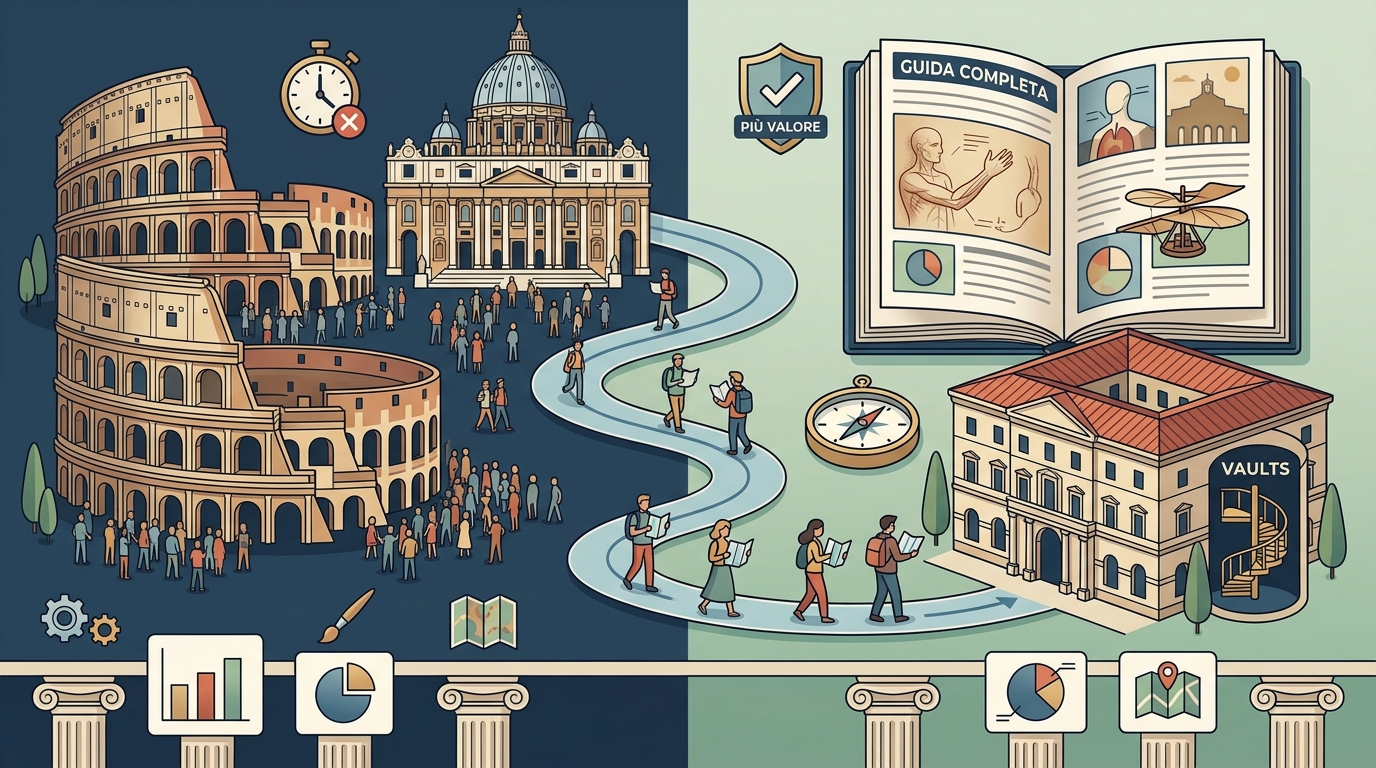
Comparison Summary
The following table summarizes the key differences between the Museo Leonardo da Vinci and other popular Roman attractions. This comparison helps you decide where to allocate your time and budget.
| Feature | Museo Leonardo da Vinci | Vatican Museums | Uffizi Gallery | Colosseum |
|---|---|---|---|---|
| Primary Focus | Leonardo's inventions and science | Religious art and history | Renaissance painting | Ancient Roman history |
| Location | Piazza del Popolo (Underground) | Vatican City | Historic Center | Historic Center |
| Duration | 1-2 hours | 3-4 hours | 2-3 hours | 1-2 hours |
| Original Artworks | No (Models and sketches) | Yes (Sistine Chapel, etc.) | Yes (Botticelli, Da Vinci) | No (Architectural ruins) |
| Best For | Families, students, science fans | Art and history buffs | Art enthusiasts | History lovers |
Key Takeaways
- The Museo Leonardo da Vinci is the most popular dedicated Leonardo museum in Rome.
- It is located in the underground vaults of Basilica Santa Maria del Popolo.
- Leonardo was anointed the master artist of Florence at the tender age of 18.
- The museum focuses on inventions, anatomy, and scientific discoveries, not original paintings.
- It is a 5 minute walk from the Spanish Steps, making it highly accessible.
- Visits typically last 1-2 hours, fitting easily into a busy itinerary.
- It is ideal for families and those interested in the scientific side of the Renaissance.
Frequently Asked Questions
Is the Museo Leonardo da Vinci worth visiting?
Yes, it is a unique and inspiring experience. It offers insights into Leonardo's mind that you cannot find in traditional art museums. The underground setting and interactive displays make it engaging for all ages.
How long does it take to tour the museum?
Most visitors spend between 1 to 2 hours at the museum. This allows enough time to read the descriptions and view the models in detail. You can adjust your time based on your interest in science and art.
Can I see original Leonardo da Vinci paintings here?
No, the museum does not house original paintings. Instead, it features detailed models of his inventions and reproductions of his sketches. This approach allows you to understand his creative process and scientific mind.
Is the museum suitable for children?
Absolutely. The museum is great for all the family to enjoy. The exhibits are designed to be accessible and educational. Children can learn about Leonardo's inventions and his love for nature.
How do I get to the museum from the Spanish Steps?
The museum is located at the end of Via del Corso. It is only a 5 minute walk from the Spanish Steps. You can easily walk there from your hotel or combine it with a shopping trip.
Do I need to book tickets in advance?
It is highly recommended to book tickets online. This allows you to skip the queue and guarantee your entry. The museum can get busy, especially during peak tourist seasons.
What is the significance of the Basilica Santa Maria del Popolo?
The basilica is a major papal basilica second only in importance to St Peter's. It is one of the seven pilgrim churches in Rome. The museum's location in its underground vaults adds historical depth to the visit.
Book Your Visit Today
Don't miss your chance to be inspired by the greatest genius of all time. The Museo Leonardo da Vinci offers a unique perspective on the Renaissance that complements your Rome itinerary. Book your tickets now to ensure a seamless experience. Visit the Book Now page to secure your entry. Explore the underground vaults and discover Leonardo's incredible story. Contact us at Info for more details.