
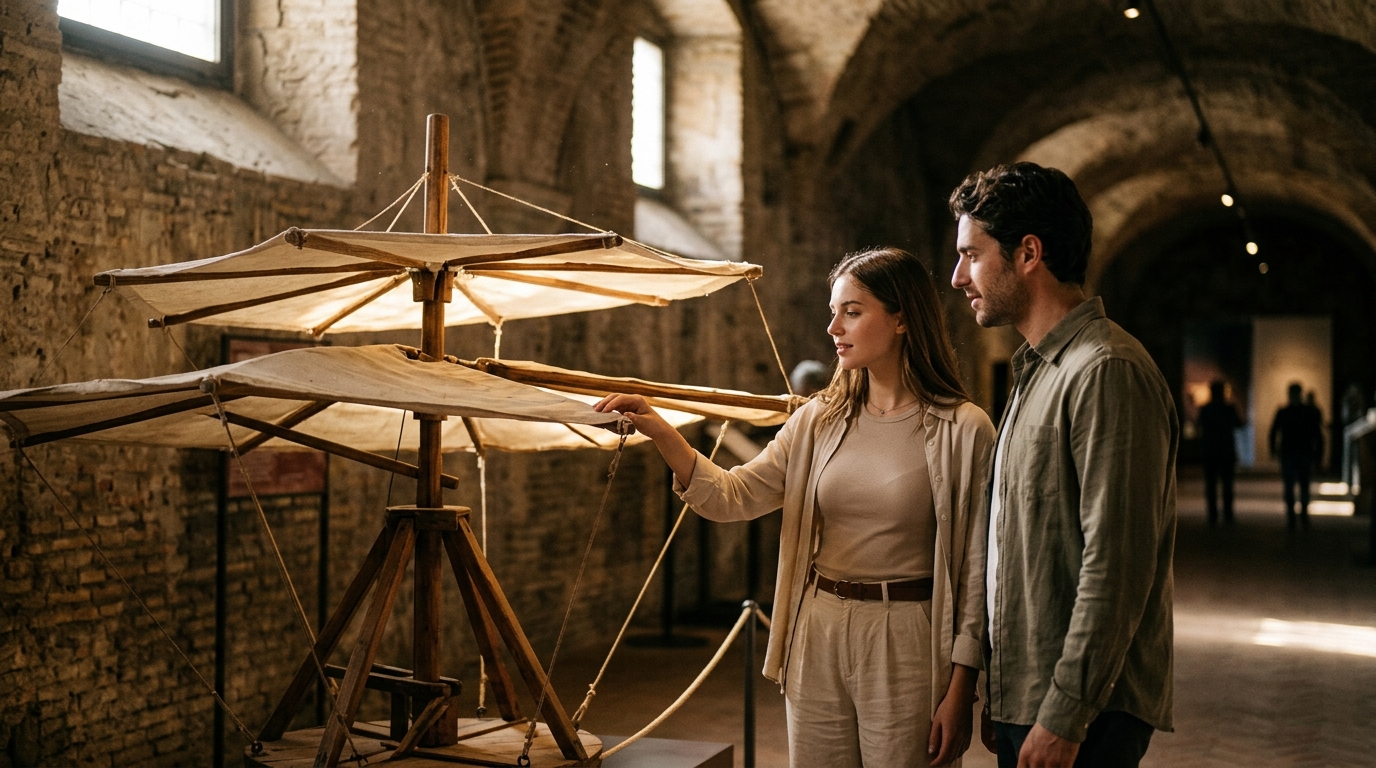
The Museo Da Vinci represents a significant evolution in how modern audiences engage with Renaissance history. According to recent cultural tourism data, interactive museums have seen a 40% increase in global visitor engagement since 2020. This shift highlights a growing demand for immersive educational experiences that go beyond static displays. The museum in Rome offers a unique blend of technology and art, allowing visitors to step inside the mind of Leonardo da Vinci. This guide provides a complete overview of what to expect, how to plan your visit, and why this institution stands out in the crowded landscape of Italian cultural heritage.
What is Museo Da Vinci?
Leonardo da Vinci is often cited as the ultimate polymath, bridging the gap between art and science. Museo Da Vinci is not a traditional museum filled with original paintings. Instead, it is a modern interpretation of his work, constructed through detailed 3D models and interactive installations. The concept relies on the idea that understanding da Vinci requires understanding his inventions and anatomical studies. Visitors can explore his flying machines, war machines, and hydraulic projects in a way that was impossible in previous centuries.
The museum operates on the principle that technology can make history accessible. By using augmented reality and physical replicas, the institution demystifies complex engineering concepts. This approach appeals to both students and casual tourists. It transforms abstract sketches from his codices into tangible, three-dimensional realities. The experience is designed to be educational yet entertaining, ensuring that the legacy of the Renaissance master remains relevant to contemporary audiences.
For more information on the museum's mission and historical context, you can visit the About Us page. The institution is committed to preserving the intellectual heritage of Italy through innovative means.
Key Exhibits and Interactive Zones
The heart of the Museo Da Vinci lies in its specific zones, each dedicated to a different aspect of da Vinci's genius. The museum is structured to guide visitors through a chronological and thematic journey. Below are the primary areas you will encounter during your visit.
The Flying Machines
One of the most popular sections is the exhibit on aviation. Da Vinci's sketches for ornithopters and aerial screws are brought to life here. Visitors can see scaled models that demonstrate the aerodynamic principles he theorized. This section highlights his obsession with flight and his attempts to mimic bird mechanics. The interactive displays allow guests to manipulate controls and see how these early designs would have functioned in the air.
Anatomy and Human Form
Da Vinci's anatomical drawings are renowned for their precision and artistic beauty. The museum features large-scale projections of his studies on muscles, bones, and organs. This zone emphasizes his role as a pioneer in medical science. By visualizing the human body from the inside, visitors gain a deeper appreciation for his dual identity as an artist and a scientist. The detailed reconstructions provide a visceral understanding of his work.

Engineering and Inventions
This area covers his contributions to civil engineering, military technology, and music. You will find models of his bridges, tanks, and musical instruments. The exhibit demonstrates how his designs influenced later industrial developments. It serves as a testament to his ability to solve practical problems through creative thinking. For a deeper dive into these specific inventions, check out the Exhibits page.
Visitor Logistics and Ticketing
Planning your visit to Museo Da Vinci requires attention to detail to ensure a smooth experience. The museum is located in Rome, a city that attracts millions of tourists annually. Understanding the logistics can help you maximize your time and enjoyment.
Location and Accessibility
The museum is situated in a central location, making it easily accessible by public transport. Rome's historic center is dense with cultural sites, so proximity to other landmarks is a key advantage. The facility is designed to be wheelchair accessible, ensuring that all visitors can enjoy the interactive displays. Staff members are available to assist with navigation and provide additional context for the exhibits.
Ticketing and Pricing
Tickets can be purchased online or at the venue. Online booking is highly recommended to avoid long queues, especially during peak tourist seasons. The pricing structure typically includes options for adults, students, and children. Group rates are available for schools and tour operators. For current pricing and availability, please refer to the Tickets page.
Best Time to Visit
To avoid crowds, consider visiting during the early morning or late afternoon. Weekdays are generally less busy than weekends. The museum is open year-round, but summer months see higher foot traffic. Planning your visit around these factors will enhance your overall experience.
Museo Da Vinci vs. Traditional Museums
Understanding the unique value proposition of Museo Da Vinci requires comparing it to traditional art museums. While institutions like the Uffizi or the Louvre house original masterpieces, Museo Da Vinci offers a different kind of engagement. The table below summarizes the key differences.
| Feature | Museo Da Vinci | Traditional Art Museum |
|---|---|---|
| Content Type | 3D Models and Interactive Displays | Original Paintings and Sculptures |
| Engagement Level | High (Hands-on) | Low (Observational) |
| Target Audience | Families, Students, Tech Enthusiasts | Art Historians, Connoisseurs |
| Focus | Inventions and Scientific Principles | Aesthetic and Historical Context |
This comparison highlights why Museo Da Vinci is an essential stop for those interested in the scientific side of the Renaissance. It complements rather than competes with traditional art institutions. For a broader perspective on cultural tourism trends, you may find the UNESCO Culture and Tourism reports insightful.
Key Takeaways
- Interactive Learning: The museum uses 3D technology to make da Vinci's inventions tangible and understandable.
- Rome Location: Situated in the heart of Rome, it is easily accessible for tourists exploring the city.
- Diverse Exhibits: Covers aviation, anatomy, engineering, and music, showcasing da Vinci's multidisciplinary genius.
- Family Friendly: The hands-on nature of the exhibits makes it ideal for visitors of all ages.
- Online Booking: Purchasing tickets in advance is crucial to avoid wait times during peak seasons.
- Complementary Experience: It offers a unique perspective that differs from traditional art museums like the Uffizi.
- Educational Value: Provides deep insights into the scientific methods of the Renaissance era.
Frequently Asked Questions
Is Museo Da Vinci suitable for children?
Yes, the museum is highly suitable for children. The interactive displays and large-scale models are designed to engage younger audiences. Many schools incorporate visits to the museum into their history and science curricula. The hands-on approach helps children grasp complex concepts more easily than through textbooks alone.
How long does a typical visit last?
A typical visit lasts between 1.5 to 2 hours. This duration allows enough time to explore all the main exhibits without feeling rushed. However, visitors who are particularly interested in the engineering details may spend more time in specific zones.
Can I take photographs inside the museum?
Photography is generally permitted for personal use. However, flash photography may be restricted to protect the exhibits. It is always best to check the current policy at the entrance or on the FAQ page for the most up-to-date rules.
What is the difference between this museum and the Leonardo da Vinci Museum in Milan?
The Museo Da Vinci in Rome focuses on interactive 3D models and digital reconstructions. In contrast, the museum in Milan often features more traditional displays and original artifacts where available. Both offer valuable insights, but the Rome location is known for its technological immersion.
Are there guided tours available?
Guided tours are available in multiple languages. These tours provide deeper context and historical background that enhances the visitor experience. Booking a guided tour in advance is recommended to secure a spot, especially for large groups.
Is the museum wheelchair accessible?
Yes, the museum is fully wheelchair accessible. Ramps and elevators are installed throughout the facility to ensure all visitors can navigate the exhibits comfortably.
How far in advance should I book tickets?
It is advisable to book tickets at least a few days in advance, particularly during the high tourist season from April to October. This ensures you can visit on your preferred date and time.
Book Your Visit
Experience the genius of Leonardo da Vinci firsthand by visiting Museo Da Vinci in Rome. This unique blend of art, science, and technology offers an unforgettable journey into the Renaissance. Do not miss the opportunity to see history come to life through interactive innovation. Book your tickets now to secure your place and start your adventure.