
Rome is often viewed through the lens of ancient ruins and classical art, but the city offers a dynamic, modern layer of educational entertainment that captivates younger minds. According to recent tourism data, interactive and hands-on museums in Rome have seen a significant surge in family visitation, with many travelers prioritizing experiential learning over passive observation. This shift reflects a broader trend where parents seek destinations that combine cultural immersion with active engagement. For families navigating the Eternal City, finding venues that balance historical depth with playful discovery is essential for a memorable itinerary.
The Leonardo da Vinci Experience
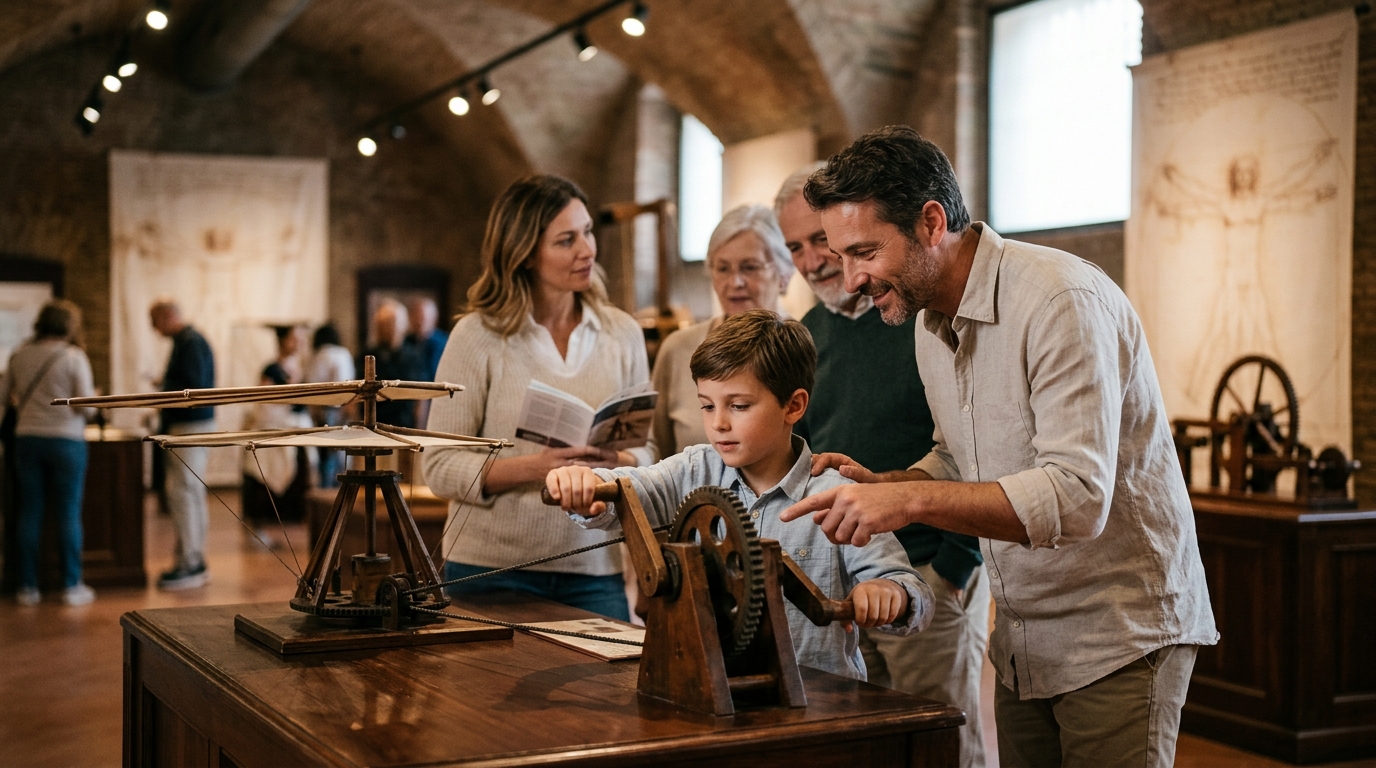
At the forefront of interactive cultural tourism in Rome is the Museo Leonardo da Vinci in Piazza del Popolo. Located in the underground vaults of the Basilica Santa Maria del Popolo, this museum transforms the study of the Renaissance genius into a tangible, visual journey. Unlike traditional galleries where art is viewed from behind barriers, this venue utilizes large-scale, color-coded reconstructions of Leonardo's notebooks. These detailed models allow visitors to see the mechanics of his inventions, from flying machines to military engineering, in a way that is both accessible and intellectually stimulating.
The museum is designed to demystify the complex mind of Leonardo. By focusing on his scientific curiosity and artistic mastery, it appeals to a wide age range. Children can engage with the sheer scale of his anatomical sketches and engineering diagrams. The location itself, just a five-minute walk from the Spanish Steps, makes it an ideal stop for families already exploring the historic center. It serves as a bridge between the ancient history of Rome and the intellectual revolution of the Renaissance.
What makes this experience particularly valuable for families is its emphasis on the "how" and "why" of Leonardo's work. It is not merely a display of artifacts but a narrative of innovation. The museum highlights Leonardo's role as a master artist of Florence at the age of 18, connecting his early life to his later masterpieces. This contextual approach helps young visitors understand that genius is often the result of relentless curiosity and observation. The interactive nature of the exhibits encourages questions and discussion, turning a museum visit into a collaborative learning adventure.
Science and Nature Museums
Beyond the Renaissance, Rome offers dedicated spaces for scientific exploration. The Rome Observatory provides a different kind of hands-on experience, focusing on the cosmos and astronomical phenomena. While more specialized, it offers insights into the scientific method that complements the historical studies found in other venues. For families interested in the natural world, the National Roman Museum often features rotating exhibitions that include archaeological science, showing how modern technology is used to preserve ancient artifacts.
These institutions emphasize the continuity of human inquiry. They demonstrate that the spirit of investigation that drove Leonardo da Vinci is still alive in modern scientific research. By visiting these sites, families can see how historical artifacts are studied using contemporary tools. This connection between past and present helps children appreciate the evolution of knowledge. It also provides a broader context for understanding Rome's role not just as a political capital, but as a center of intellectual and scientific advancement.
Interactive Ancient Rome
For those seeking a direct immersion into the daily life of antiquity, the Parco della Collina Etrusca and surrounding archaeological parks offer outdoor learning environments. While not museums in the traditional indoor sense, these sites often feature guided tours and interactive elements that bring ancient Roman life to the forefront. Families can explore reconstructed dwellings and learn about ancient crafts and technologies. This type of experiential learning is crucial for understanding the scale and complexity of Roman civilization.
Another key component is the use of digital reconstruction in various sites. Many modern archaeological parks in Rome are integrating augmented reality apps that allow visitors to see ruins in their original glory. This technology bridges the gap between the fragmented remains we see today and the vibrant cities of the past. It provides a visual aid that helps children and adults alike grasp the architectural and urban planning achievements of the Romans. These interactive layers make the history feel immediate and relevant.
Comparative Analysis of Family Museums
Choosing the right museum depends on the specific interests and age group of the family. The table below compares the primary offerings of key interactive venues in Rome.
| Museum Name | Primary Focus | Interactive Element | Best For Age Group |
|---|---|---|---|
| Museo Leonardo da Vinci | Renaissance Inventions | Large-scale 3D models of notebooks | 8+ |
| Rome Observatory | Astronomy | Telescope viewing and planetarium shows | 10+ |
| National Roman Museum | Archaeology | Rotating tech-integrated exhibitions | 6+ |
| Parco della Collina Etrusca | Outdoor History | Guided craft workshops and tours | All Ages |
Key Takeaways
- The Museo Leonardo da Vinci is the most popular dedicated Leonardo museum in Rome, offering a unique underground experience.
- Located in the vaults of Santa Maria del Popolo, it provides a quiet, immersive environment away from the street noise.
- The museum features large-scale, color-coded reconstructions that make complex engineering concepts accessible to children.
- It is situated at the end of Via del Corso, making it easily accessible from major tourist hubs like the Spanish Steps.
- Interactive elements include detailed anatomical sketches and startling scientific discoveries that highlight Leonardo's multifaceted genius.
- Families should book tickets in advance to ensure entry, especially during peak tourist seasons.
- The museum serves as a critical link between the artistic heritage of Florence and the historical context of Rome.
Frequently Asked Questions
Is the Museo Leonardo da Vinci suitable for young children?
Yes, the museum is designed to be engaging for all ages. The visual nature of the large-scale models and the interactive layout make it accessible for children as young as six, provided they have an interest in stories and inventions.
How long does a typical visit take?
A standard visit to the Museo Leonardo da Vinci lasts approximately 45 to 60 minutes. This allows enough time to view the exhibits without feeling rushed, though families with older children may spend more time discussing the inventions.
Can I book tickets online in advance?
Yes, it is highly recommended to book tickets online through the official website to secure your preferred time slot and avoid long queues at the entrance.
What is the address of the museum?
The museum is located in the underground vaults of the Basilica Santa Maria del Popolo, at Piazza del Popolo. It is easily reachable on foot from the Spanish Steps.
Are there guided tours available for families?
While the museum is designed for self-guided exploration, there are often audio guides and informational materials available that help families navigate the exhibits and understand the context of Leonardo's work.
Is the museum accessible for strollers?
Due to its location in underground vaults, access may be limited for large strollers. It is advisable to use a baby carrier for younger children or check accessibility options in advance.
What age was Leonardo when he became a master artist?
Leonardo was anointed the master artist of Florence at the age of 18, a fact highlighted in the museum to illustrate his early prodigious talent.
Book Your Visit
Ready to inspire your family with the genius of Leonardo da Vinci? Plan your visit to the Museo Leonardo da Vinci in Piazza del Popolo today. Secure your tickets online to ensure a seamless experience in the heart of Rome. Discover the greatest genius of all time and create lasting memories together.