
Rome is often celebrated for its golden sunlight and vibrant outdoor piazzas, but the city transforms beautifully when the skies open up. According to recent tourism data, over 10 million visitors explore Rome annually, with a significant portion arriving during the cooler, wetter months. This influx creates a unique opportunity to experience the Eternal City without the crushing summer heat or the overwhelming crowds. When rain falls, the cobblestones glisten, and the atmosphere shifts to one of intimate, historical reflection. Instead of letting weather derail your itinerary, you can pivot to world-class museums, underground vaults, and architectural marvels that define Roman culture. This guide outlines the most compelling indoor experiences that keep you dry while immersing you in history.
Explore the Museo Leonardo da Vinci
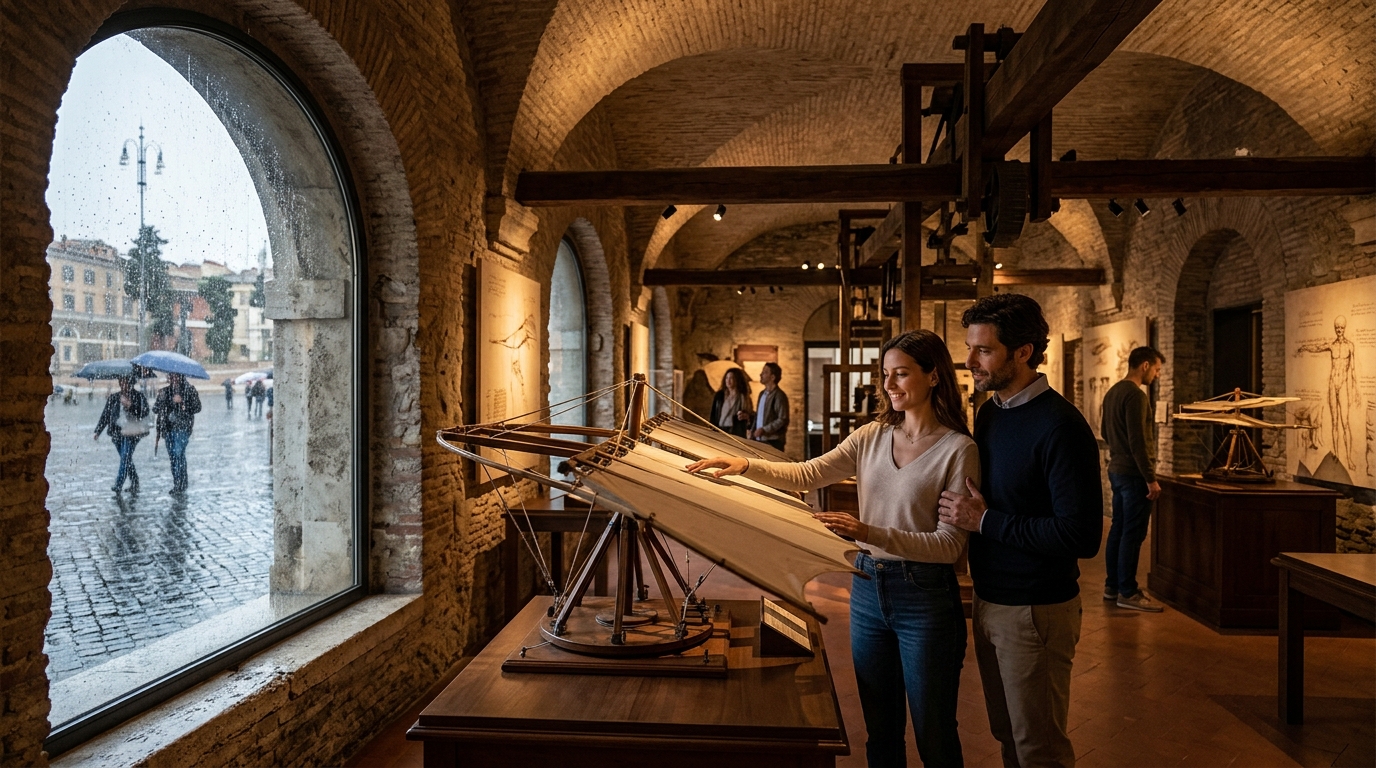
One of the most unique indoor experiences in Rome is found in the heart of the historic center. The Museo Leonardo da Vinci in Piazza del Popolo offers a fascinating look into the mind of history's greatest polymath. Located in the underground vaults of the Basilica Santa Maria del Popolo, this museum provides an immersive journey through Leonardo's passions and studies. The setting itself is remarkable, as the basilica is one of the seven pilgrim churches in Rome and holds immense religious and historical significance.
While you will not see original artworks like the Mona Lisa or The Last Supper here, the museum focuses on his incredible story, groundbreaking inventions, and detailed anatomical sketches. Leonardo was anointed the master artist of Florence at the tender age of 18, responsible for iconic works that still influence art today. The museum displays 3D-printed models of his machines, allowing visitors to understand his engineering genius. This is an ideal rainy-day stop because it is located at the end of Via del Corso, making it easily accessible even during heavy downpours. It is a must-see stop on any Rome itinerary for families and history buffs alike.
The Vatican Museums and Sistine Chapel
No discussion of indoor activities in Rome is complete without mentioning the Vatican Museums. These institutions house one of the greatest art collections in the world, spanning centuries of human achievement. The museums are vast, offering enough content to keep visitors engaged for an entire day. The highlight is undoubtedly the Sistine Chapel, where Michelangelo's ceiling frescoes depict scenes from the Book of Genesis. The intricate detail and scale of these works are best appreciated in the controlled indoor environment, away from the elements.
The Vatican Museums also feature the Gallery of Maps, the Pinacoteca, and numerous classical sculptures. For those interested in the intersection of faith and art, the museums provide a comprehensive narrative of the Catholic Church's role in history. Booking tickets in advance is crucial, as the volume of visitors is immense. The indoor nature of these galleries ensures that your experience remains uninterrupted by weather conditions. You can spend hours wandering through the Raphael Rooms or the Egyptian collection, finding new details with every glance.
Capitoline Museums and Roman History
The Capitoline Museums, located on Capitoline Hill, are considered the world's oldest public museums. Established in 1471, they hold a special place in the history of cultural preservation. The museums are situated in two palaces facing each other across the Piazza del Campidoglio, designed by Michelangelo himself. This architectural setting provides a stunning backdrop for the artifacts housed within. The collection includes the legendary Capitoline Wolf, a bronze statue symbolizing the founding of Rome.
For history enthusiasts, the Capitoline Museums offer a deep dive into ancient Roman civilization. The galleries display imperial busts, ancient inscriptions, and archaeological finds from the Roman Forum. The indoor layout allows for a comfortable exploration of these treasures regardless of the weather outside. The museums also host temporary exhibitions that often feature significant archaeological discoveries. Visiting here provides a direct connection to the political and social life of ancient Rome. The view from the terrace of the Palazzo dei Conservatori offers a panoramic look at the Forum, which can be enjoyed even if the rain persists.
Galleria Borghese and Artistic Mastery
The Galleria Borghese is a masterpiece in its own right, housing a private art collection that rivals public institutions. Located in the Villa Borghese gardens, the gallery is renowned for its collection of sculptures and paintings from the Renaissance and Baroque periods. The collection includes works by Caravaggio, Raphael, and Titian. The sculpture gallery features masterpieces by Bernini, such as Apollo and Daphne and David. These works demonstrate the artist's ability to make stone appear soft and fluid.
Access to the Galleria Borghese is strictly controlled through timed entry tickets. This regulation ensures a more intimate and manageable visitor experience. The indoor environment allows for a focused appreciation of the art without the distractions of outdoor noise or weather. The gallery is particularly popular among art historians and students due to the quality and rarity of the works on display. The surrounding Villa Borghese park offers additional indoor attractions, including the Bioparco di Roma and the Galleria Nazionale d'Arte Moderna. These options provide a diverse range of activities for a rainy day.

The Pantheon: Architectural Perfection
The Pantheon is one of the best-preserved ancient Roman buildings and serves as a perfect indoor refuge. Originally built as a temple to all the gods, it was later converted into a church. The structure is famous for its massive unreinforced concrete dome and the oculus at the top, which allows light and rain to enter. While rain does fall into the center, the floor is designed with drains to manage the water, allowing visitors to remain dry and safe. The interior space is vast and awe-inspiring, with a height equal to its diameter.
Visiting the Pantheon on a rainy day offers a unique perspective on its architectural genius. The interplay of light and shadow changes with the weather, creating a dynamic atmosphere. The building houses the tombs of several Italian kings and the artist Raphael. The acoustics within the dome are also remarkable, often drawing musicians to perform inside. The proximity to other indoor attractions, such as the Museo Leonardo da Vinci, makes it a central hub for rainy-day exploration. The entrance fee is modest, making it accessible to all travelers.
Key Takeaways
- The Museo Leonardo da Vinci is located in the underground vaults of Basilica Santa Maria del Popolo, offering a unique indoor experience.
- Rome receives significant tourism during the wetter months, with over 10 million annual visitors exploring the city's indoor cultural sites.
- The Vatican Museums house the Sistine Chapel, providing world-class art in a climate-controlled environment.
- The Capitoline Museums, established in 1471, are the world's oldest public museums and feature the Capitoline Wolf.
- Galleria Borghese requires timed entry tickets to manage visitor flow and ensure an intimate art experience.
- The Pantheon's oculus allows rain to enter, but the floor drains keep the interior accessible and dry for visitors.
- Booking tickets in advance for major museums like the Vatican and Borghese is essential to avoid long queues.
Frequently Asked Questions
Is the Museo Leonardo da Vinci open during rainy weather?
Yes, the Museo Leonardo da Vinci is an indoor museum located in underground vaults, making it fully accessible and ideal for rainy days. It is open to the public for guided tours and self-exploration.
Do I need to book tickets for the Vatican Museums in advance?
Yes, booking tickets for the Vatican Museums in advance is highly recommended. The volume of visitors is immense, and advance booking ensures entry and helps you avoid long outdoor queues.
Can I visit the Pantheon if it is raining?
Absolutely. The Pantheon is one of the best indoor attractions in Rome. While rain enters through the oculus, the floor is designed with drains to manage the water, keeping the interior safe and dry for visitors.
What is the best indoor museum for families in Rome?
The Museo Leonardo da Vinci is often cited as great for all the family to enjoy. Its interactive displays and focus on Leonardo's inventions engage visitors of all ages. The Vatican Museums also offer extensive content that can captivate older children and teenagers.
How many visitors does Rome receive annually?
Rome attracts over 10 million visitors annually. This high volume of tourism continues throughout the year, including the rainy seasons, highlighting the city's enduring appeal as a cultural destination.
Are there indoor activities near the Spanish Steps?
Yes, the Museo Leonardo da Vinci is located at the end of Via del Corso, only a 5-minute walk from the Spanish Steps. This proximity makes it an easy and dry alternative to outdoor sightseeing in that area.
What makes the Capitoline Museums historically significant?
The Capitoline Museums are considered the world's oldest public museums, established in 1471. They hold a special place in the history of cultural preservation and house iconic artifacts like the Capitoline Wolf.
Plan Your Indoor Rome Experience
Rain should never deter you from exploring the depths of Roman history and art. By focusing on the city's world-class museums and architectural wonders, you can enjoy a rich, culturally fulfilling itinerary regardless of the weather. The Museo Leonardo da Vinci in Piazza del Popolo stands out as a premier destination for those seeking an intimate and educational experience. Book your tickets today to secure your place in this underground vault of genius and ensure a seamless visit to the Eternal City.