
How to Plan Your Visit to Museo Leonardo da Vinci in Piazza del Popolo
Planning a trip to Rome requires precise coordination, especially when targeting high-traffic cultural landmarks. Museo Leonardo da Vinci stands as a premier destination for understanding the polymath's genius, yet its location within the historic underground vaults of the Basilica Santa Maria del Popolo demands specific preparation. Recent data indicates that over 4 million tourists visit Rome annually, creating intense competition for entry to exclusive sites like this one. Securing your spot in advance is not merely a convenience; it is a logistical necessity to avoid long queues and ensure access to the interactive exhibits.
Location and Accessibility Details
The museum occupies a unique spatial position within the heart of Rome. It is located at the end of Via del Corso, placing it in immediate proximity to the Spanish Steps. This central positioning makes it an ideal anchor point for a walking itinerary. The entrance is situated within the underground vaults of the Basilica Santa Maria del Popolo. This architectural choice creates a distinct atmospheric experience, separating the visitor from the bustling street level and immersing them in a quieter, more contemplative environment.
Accessibility is a critical component of modern tourism planning. The museum is designed to accommodate families and individuals with varying mobility needs. However, because the venue is housed in a historic basilica, some structural limitations may exist. It is advisable to contact the museum directly via their official info page if you require specific assistance or have mobility concerns. The staff is accustomed to assisting international visitors and can provide precise guidance on elevator access and wheelchair routes.
Understanding the geography of the area enhances the visit. The museum is just a five-minute walk from the Spanish Steps. This proximity allows visitors to combine their cultural experience with other iconic Roman landmarks. The area is well-served by public transportation, including bus lines that stop nearby. Planning your arrival during off-peak hours, typically early morning or late afternoon, can reduce exposure to the midday heat and crowd density.
Strategic Booking and Ticketing
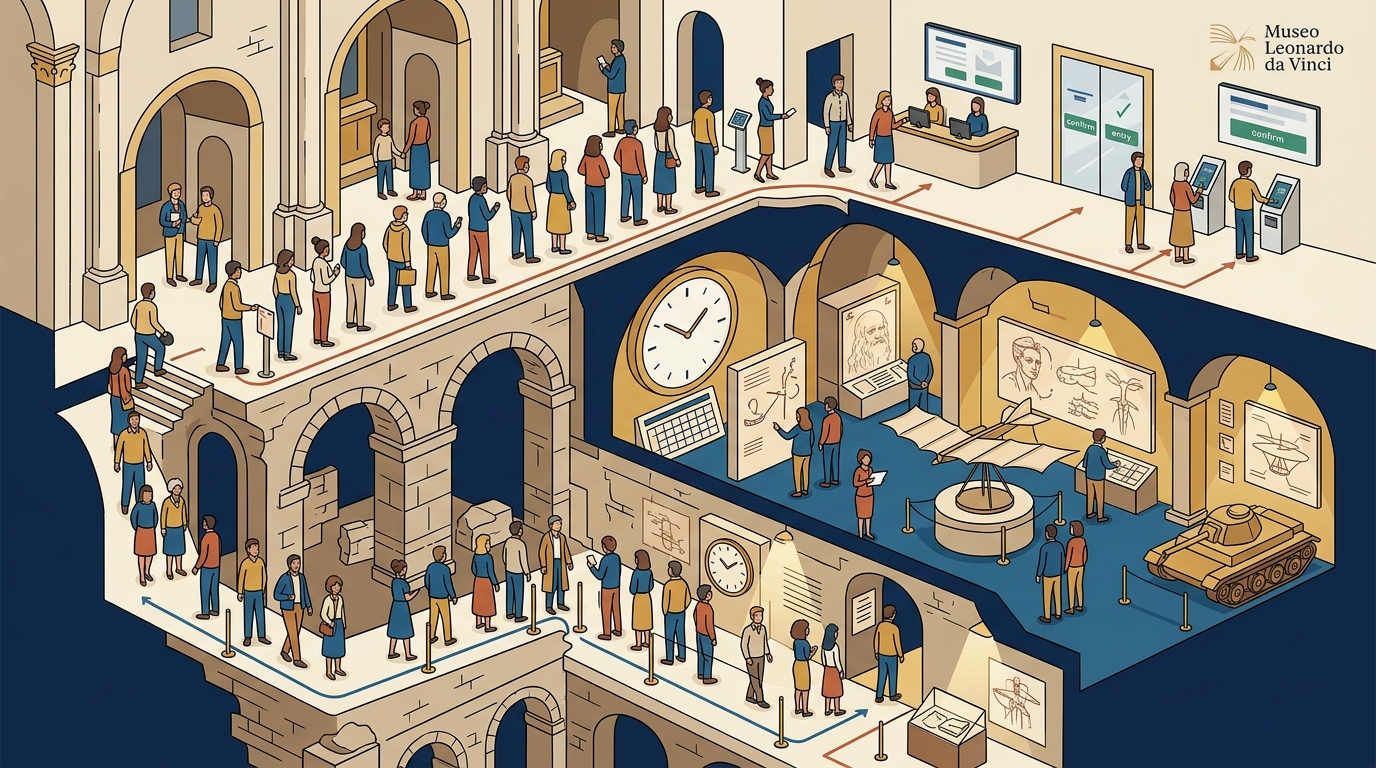
One of the most common pitfalls for tourists is arriving without a reservation. The museum is the most popular dedicated Leonardo museum in Rome. This status results in high demand, particularly during the peak tourist seasons of spring and summer. Booking tickets online in advance is the most reliable method to guarantee entry. Walk-in visitors often face extended wait times or may be turned away if capacity limits are reached.
The ticketing process is straightforward and digital. Visitors can select their desired date and time slot through the official website. This system helps manage the flow of people through the underground vaults, ensuring a comfortable experience for all guests. It is recommended to book at least a few days in advance, if not weeks, depending on the time of year. This proactive approach eliminates the stress of uncertainty and allows you to focus on the content of the visit.
Consider the duration of your visit when booking. The museum offers an immersive journey through Leonardo's passions and studies. While the core exhibits can be viewed in approximately 60 to 90 minutes, many visitors find themselves lingering to engage with the interactive displays. Allocating a full two-hour window allows for a thorough exploration without feeling rushed. This pacing also provides time to absorb the historical context provided by the surrounding architecture.
Navigating the Interactive Exhibits
Leonardo da Vinci is widely celebrated as a leading Renaissance painter and sculptor. However, his contributions to engineering and science were largely hidden for centuries. The museum addresses this historical gap by showcasing his groundbreaking inventions and detailed anatomical sketches. The exhibits are designed to be interactive, allowing visitors to engage directly with the concepts that defined his genius. This approach transforms passive observation into active learning.
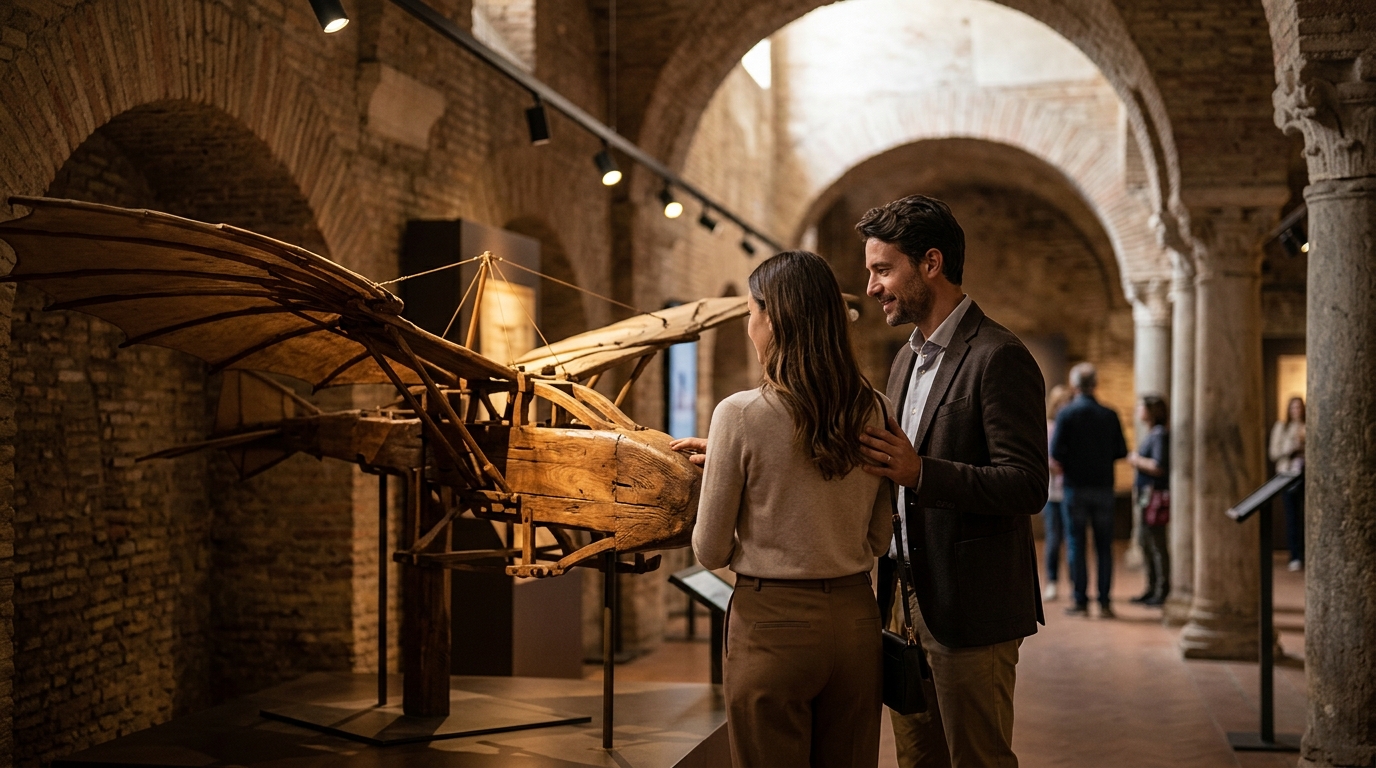
The collection includes models of his flying machines, war engines, and hydraulic projects. These displays are accompanied by detailed explanations that connect his theoretical work to modern engineering principles. Exploring the gallery reveals the meticulous nature of his studies. Visitors can appreciate the precision of his drawings and the foresight of his designs. The museum does not house original artworks like the Mona Lisa. Instead, it focuses on the intellectual framework that produced those masterpieces.
Anatomical sketches form another critical component of the collection. Leonardo's dissections provided him with an unparalleled understanding of human physiology. The museum displays replicas of these sketches, allowing visitors to study his observations on muscles, bones, and organs. This scientific rigor is a testament to his role as a thinker who transcended the boundaries of art. The interactive elements help clarify complex anatomical relationships, making the content accessible to all ages.
Combining with Basilica Santa Maria del Popolo
A visit to the museum is incomplete without acknowledging its host, the Basilica Santa Maria del Popolo. This major papal basilica is second only in importance to St. Peter's Basilica. It is one of the seven pilgrim churches in Rome. The church itself is a treasure trove of Renaissance and Baroque art. Combining your museum visit with a tour of the basilica provides a comprehensive understanding of the era's cultural landscape.
The basilica houses original paintings by Caravaggio from the 1600s. These works are among the most significant in the world. The Chigi Chapel, built and decorated by the legendary Raphael, is another highlight. The architectural grandeur of the church contrasts with the intimate, scholarly atmosphere of the museum. This juxtaposition enhances the overall experience, offering both spiritual and intellectual stimulation.
Santa Maria del Popolo is also the burial site of six popes. Legend suggests that the emperor Nero is buried deep below the church. These historical layers add depth to the visit. Understanding the significance of the location enriches the context of Leonardo's work. He lived and worked in a city steeped in religious and political history. The museum leverages this setting to create a narrative that connects the artist to his environment.
Essential Visitor Tips and Etiquette
Respect for the site is paramount. The museum is located within a functioning religious building. Visitors should maintain a quiet and respectful demeanor. Photography policies may vary, so it is important to check the current guidelines before taking any pictures. Flash photography is typically prohibited to protect the exhibits and the historic fabric of the building.
Dress code is another consideration. While the museum is modern in its approach, the basilica remains a sacred space. Modest attire is recommended for both the church and the museum. This shows respect for the religious significance of the location and aligns with general Italian cultural norms. Comfortable shoes are essential, as the visit involves walking on stone floors and navigating stairs.
Language support is available to enhance the experience. The museum offers materials in both Italian and English. This accessibility ensures that international visitors can fully engage with the content. Audio guides or digital apps may be available for rent. These tools provide additional context and historical background. Utilizing these resources can deepen your understanding of Leonardo's life and work.
Key Takeaways
- The museum is located in the underground vaults of Basilica Santa Maria del Popolo, near the Spanish Steps.
- Advance online booking is strongly recommended due to high demand and limited capacity.
- Leonardo was anointed the master artist of Florence at the age of 18.
- The exhibits focus on his inventions, anatomical sketches, and scientific discoveries, not original paintings.
- The basilica houses Caravaggio paintings and the Chigi Chapel by Raphael.
- The museum is the most popular dedicated Leonardo museum in Rome.
- Contact the museum directly for specific accessibility and mobility assistance.
Frequently Asked Questions
How long does a typical visit last?
A typical visit lasts between 60 and 90 minutes. However, visitors who wish to engage deeply with the interactive exhibits and read all informational panels may spend up to two hours. Taking your time allows for a more meaningful connection with the material.
Is the museum suitable for children?
Yes, the museum is excellent for families. The interactive nature of the exhibits engages younger visitors. The content is presented in a way that is accessible to all ages. It serves as an educational tool that sparks curiosity about science and art.
Can I visit the basilica and the museum together?
Absolutely. The museum is located within the basilica. Many visitors choose to explore the church's art and architecture before or after the museum tour. This combination provides a holistic view of the site's historical and artistic significance.
What is the best time to visit to avoid crowds?
Early morning or late afternoon slots are generally less crowded. Weekdays are also preferable to weekends. Booking in advance ensures you can secure a time that fits your schedule, regardless of the day.
Are there audio guides available?
Audio guides or digital resources are typically available to assist visitors. These tools provide detailed commentary in multiple languages. They enhance the experience by offering deeper insights into the exhibits and Leonardo's life.
Is the museum wheelchair accessible?
The museum strives to be accessible, but historic buildings can present challenges. Elevator access is available, but it is advisable to contact the museum in advance to confirm specific routes and assistance. The staff is committed to accommodating all visitors.
Do I need to dress formally?
While formal attire is not required, modest dress is recommended out of respect for the religious setting of the basilica. Comfortable clothing and shoes are the most practical choices for a day of exploration.
Plan Your Visit Today
Experiencing the genius of Leonardo da Vinci in the heart of Rome is a transformative opportunity. The museum offers a unique window into the mind of a man who shaped the Renaissance. By planning your visit carefully, you ensure a seamless and enriching experience. Book your tickets now to secure your place in this extraordinary journey. Do not miss the chance to be inspired by the greatest inventor, artist, scientist, and thinker of all time.