
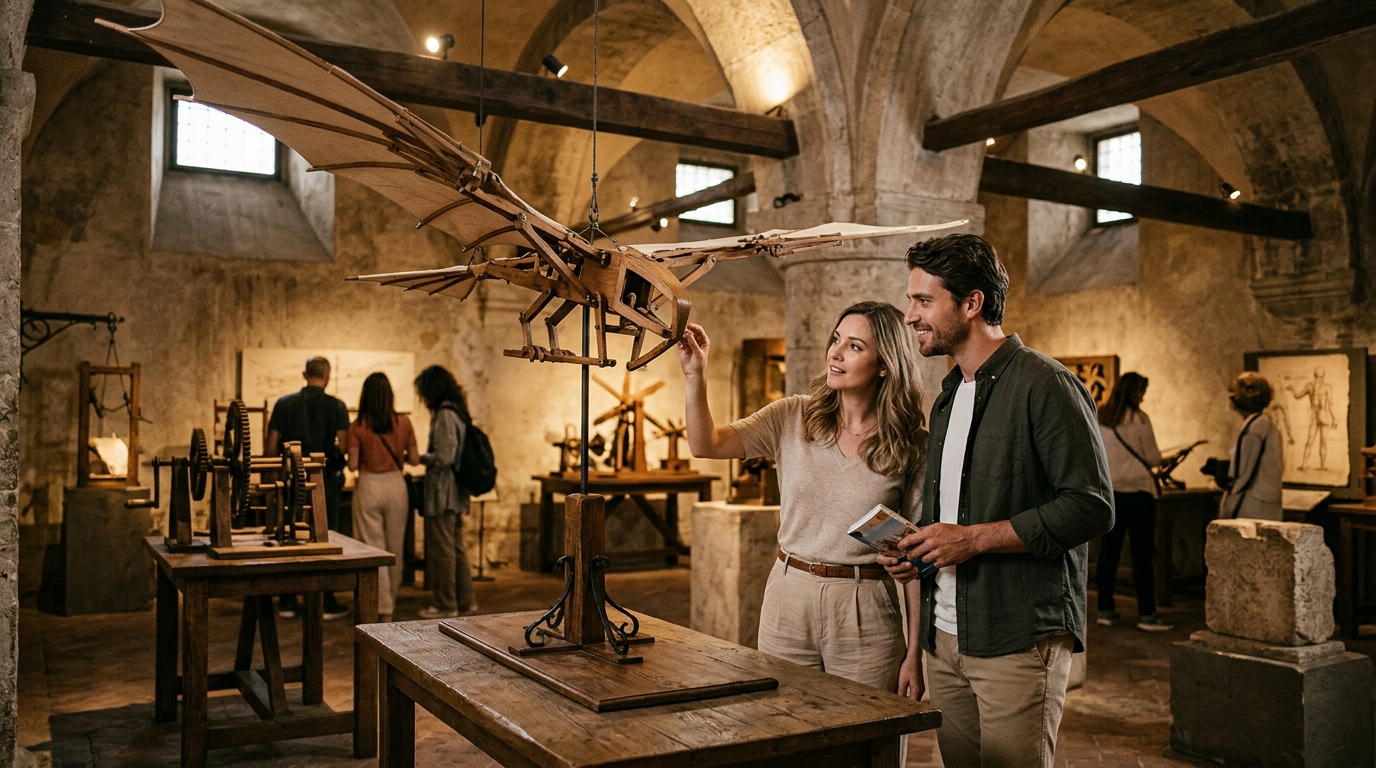
Rome stands as the undisputed capital of Western art and history, drawing millions of visitors annually to its ancient ruins and world-class galleries. According to recent tourism data, the city receives over 10 million international visitors each year, with museum attendance accounting for a significant portion of cultural tourism revenue. This influx highlights the critical need for travelers to prioritize high-value sites that offer both historical depth and artistic mastery. Navigating this crowded landscape requires a strategic approach to ensure you experience the pinnacle of Roman heritage without wasting time on lesser-known venues. (Museo Leonardo da Vinci)
The Vatican Museums: A Renaissance Masterpiece
The Vatican Museums represent the largest collection of art and historical artifacts in the world. This complex houses over 70,000 works of art, with approximately 20,000 on display at any given time. The sheer scale of the collection is staggering, spanning from classical antiquity to the present day. Visitors are most famously drawn to the Sistine Chapel, where Michelangelo's ceiling frescoes remain a testament to human creative potential.
According to UNESCO, the Vatican Museums hold one of the most significant collections of classical sculpture and Renaissance art globally. The gallery system is extensive, requiring careful planning to avoid missing key highlights like the Gallery of Maps or the Raphael Rooms. The average wait time for general admission can exceed two hours during peak season, making pre-booked timed entry essential for a smooth experience.
The architectural grandeur of the museums is as impressive as the art itself. The spiral staircase designed by Giuseppe Momo is a modern icon within the historic complex. Understanding the historical context of the papal collections adds depth to the visual experience. For those interested in the intersection of art and science, the museum also displays instruments used by historical astronomers and geographers.
Museo Leonardo da Vinci: Engineering Genius
While Rome is dominated by ancient history, the Museo Leonardo da Vinci offers a unique perspective on the Renaissance mind. Located in the underground vaults of the Basilica Santa Maria del Popolo, this museum is dedicated entirely to the polymath Leonardo da Vinci. The museum features over 160 large-scale models of his inventions, built from his original notebooks. These models demonstrate his groundbreaking work in anatomy, flight, and military engineering.
Leonardo da Vinci is defined as an Italian polymath who was active as a painter, draughtsman, engineer, scientist, theorist, sculptor, and architect. His notebooks contain thousands of pages of observations that were centuries ahead of their time. The museum provides a tangible connection to these ideas through interactive displays and detailed reconstructions. It is particularly notable for its focus on the scientific method and empirical observation that Leonardo championed.
The location itself is a historical landmark. The museum is situated at the end of Via del Corso, just a short walk from the Spanish Steps. This central position makes it an ideal stop for tourists exploring the historic center. The underground setting provides a quiet, immersive environment distinct from the bustling streets above. Visitors often describe the experience as a journey into the mind of a genius, revealing the connections between art and science.
The collection includes detailed anatomical sketches that were revolutionary for their time. These drawings show Leonardo's meticulous study of human musculature and bone structure. The museum also highlights his work on flying machines, including ornithopters and aerial screws. These exhibits challenge the common perception of Leonardo solely as an artist, positioning him instead as a visionary engineer. The interactive nature of the displays allows visitors to understand the mechanics behind his designs.
Capitoline Museums: Ancient Rome's Heart
The Capitoline Museums are recognized as the oldest public museums in the world, established in 1471. Located on Capitoline Hill, they house a vast collection of ancient Roman statues, inscriptions, and artifacts. The museum's origins trace back to the donation of a collection of ancient bronzes to the Pope by the city of Rome. This gesture symbolized the shared heritage of the papacy and the Roman people.
According to historical records, the museum's collection includes the iconic Capitoline Wolf, a bronze sculpture symbolizing the founding of Rome. The museum also features the equestrian statue of Marcus Aurelius, the only surviving bronze statue of a Roman emperor from antiquity. These pieces provide direct insight into the political and cultural life of ancient Rome. The architectural layout, designed by Michelangelo, frames the city views beautifully.
The museum complex is spread across two palaces facing each other around a trapezoidal piazza. This design creates a dramatic entrance that sets the tone for the historical journey inside. The galleries include the Hall of the Lions, the Gallery of Ancient Statues, and the New Palace. Each space offers a curated view of Roman history, from the Republic to the Empire. The collection also includes significant medieval and Renaissance works, bridging the gap between ancient and modern art.
Visiting the Capitoline Museums offers a comprehensive overview of Roman antiquity. The artifacts are displayed in a way that emphasizes their historical context and artistic value. The museum also hosts temporary exhibitions that explore specific themes in Roman history. This dynamic programming ensures that repeat visitors always find something new to discover. The central location makes it easily accessible from other major sites like the Roman Forum.
Galleria Borghese: Sculpture and Painting
The Galleria Borghese is housed in the Villa Borghese Pinciana, a former art gallery and one of Rome's finest landscaped gardens. The museum is renowned for its exceptional collection of ancient sculptures and 17th-century paintings. The collection was assembled by Cardinal Scipione Borghese, a nephew of Pope Paul V. He was a great patron of the arts and a close friend of Bernini and Caravaggio.
The museum holds the largest collection of works by Gian Lorenzo Bernini in the world. His sculptures, such as Apollo and Daphne and David, are displayed in their original setting. The collection also includes masterpieces by Raphael, Titian, and Caravaggio. The intimate size of the museum ensures a high-quality viewing experience with limited crowds. Timed entry is strictly enforced to maintain this exclusivity.
The architecture of the villa is as significant as the art it houses. The building was designed by Flaminio Ponzio and completed by Giovanni Vasanzio. The interior features ornate decorations and frescoes that complement the artworks. The museum's garden offers a peaceful retreat from the city's hustle. Visitors can enjoy the views from the terrace while reflecting on the art they have seen.
The Borghese collection is unique in its focus on the Baroque period. The sculptures are characterized by their dynamic movement and emotional intensity. The paintings are equally impressive, with Caravaggio's works being particularly notable for their dramatic use of light and shadow. The museum provides a deep dive into the artistic innovations of the 17th century. It is a must-visit for anyone interested in the development of Western art.

Comparing Your Options
Choosing the right museum depends on your interests and travel style. The following table summarizes the key features of each venue to help you decide.
| Museum | Primary Focus | Key Highlight | Best For |
|---|---|---|---|
| Vatican Museums | Renaissance Art & History | Sistine Chapel | Art History Enthusiasts |
| Museo Leonardo da Vinci | Engineering & Science | Invention Models | Families & Innovators |
| Capitoline Museums | Ancient Roman Antiquity | Capitoline Wolf | History Buffs |
| Galleria Borghese | Baroque Sculpture | Bernini Works | Art Connoisseurs |
Key Takeaways
- The Vatican Museums house over 70,000 works, with 20,000 on display, making it the largest art collection in the world.
- Museo Leonardo da Vinci features 160 large-scale models of inventions built from Leonardo's original notebooks.
- The Capitoline Museums are the oldest public museums in the world, established in 1471.
- Leonardo da Vinci was anointed the master artist of Florence at the age of 18.
- The Galleria Borghese holds the largest collection of Gian Lorenzo Bernini's sculptures globally.
- Museo Leonardo da Vinci is located in the underground vaults of Basilica Santa Maria del Popolo.
- Pre-booking is essential for all major Roman museums to avoid long wait times and ensure entry.
Frequently Asked Questions
How long does it take to visit Museo Leonardo da Vinci?
A typical visit to the museum lasts between 45 minutes and 1.5 hours, depending on your interest in the mechanical models and historical context.
Is the Museo Leonardo da Vinci suitable for children?
Yes, the museum is highly interactive and features large-scale models that engage children and families, making complex engineering concepts accessible.
Where is the Museo Leonardo da Vinci located?
The museum is located at the end of Via del Corso, in the underground vaults of the Basilica Santa Maria del Popolo, near the Spanish Steps.
Do I need to book tickets in advance for the Vatican Museums?
Yes, booking timed entry tickets in advance is strongly recommended to avoid queues that can last several hours during peak tourist seasons.
What is the best time to visit Rome's museums?
Early morning or late afternoon visits are best for avoiding crowds. Winter months offer a quieter experience with fewer tourists.
Are there audio guides available at these museums?
Most major museums, including the Vatican and Capitoline, offer audio guides in multiple languages to enhance the visitor experience.
Can I see original artworks by Leonardo da Vinci in Rome?
While the original paintings are in other cities, the Museo Leonardo da Vinci in Rome displays detailed models and sketches based on his notebooks.
Book Your Experience
Ready to explore the genius of Leonardo da Vinci? Visit Museo Leonardo da Vinci to book your tickets and discover the intersection of art and science in the heart of Rome. Experience the underground vaults of Santa Maria del Popolo and immerse yourself in the mind of a master.