
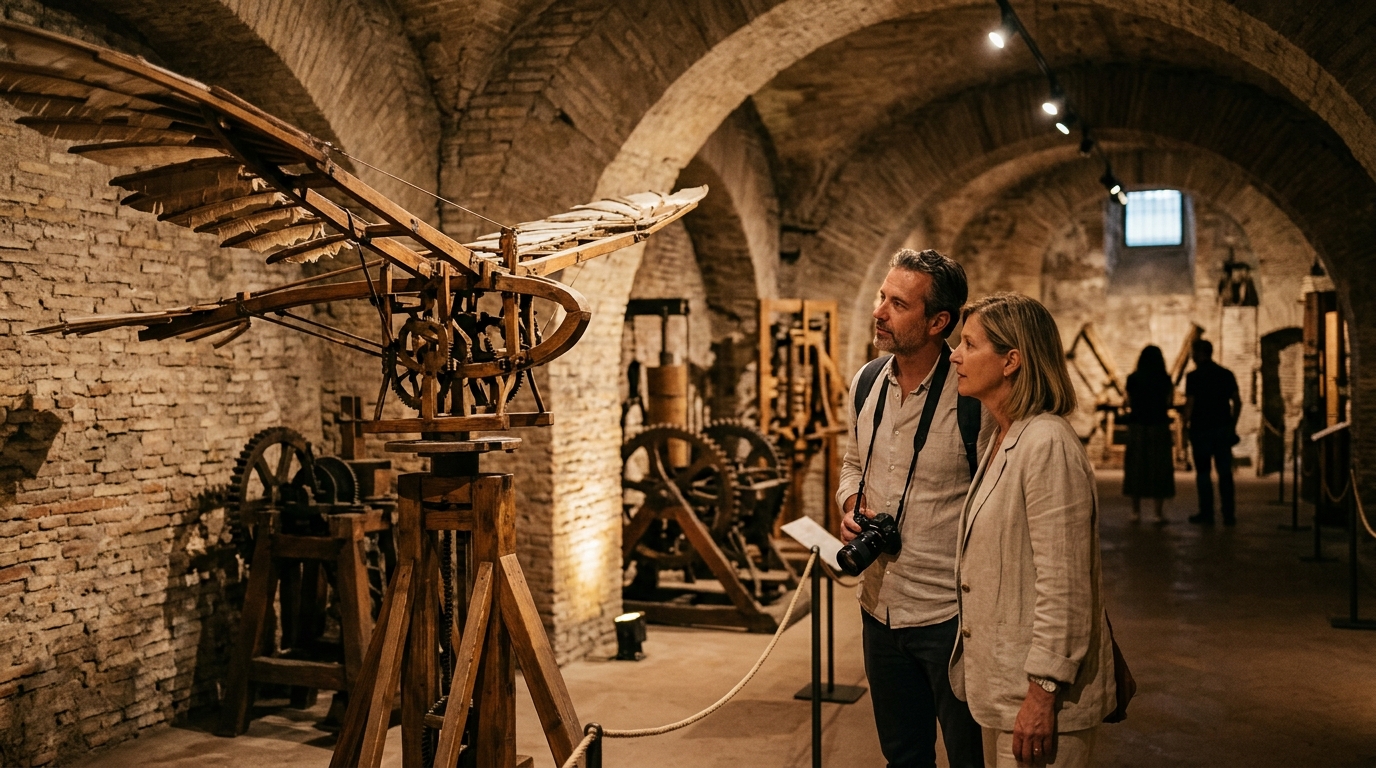
Rome is often synonymous with ancient ruins and Renaissance masterpieces, yet the city holds a vast array of specialized institutions that cater to niche interests. According to recent tourism data, over 10 million visitors explore Rome annually, yet many still miss the specialized cultural experiences tucked away in its historic center. This guide highlights unique museums that offer deep dives into specific topics, from art history to scientific innovation. These venues provide an alternative to the overwhelming crowds found at major landmarks. Discovering these hidden gems allows travelers to engage with Rome's intellectual and artistic heritage on a more intimate level. Each location offers a distinct narrative that complements the broader historical context of the Italian capital. (Museo Leonardo da Vinci)
Museo Leonardo da Vinci: Engineering Genius
Located in the heart of Rome, the Museo Leonardo da Vinci offers a profound look into the mind of history's most famous polymath. This institution is dedicated to the study of Leonardo's scientific and artistic contributions. The museum is situated in the underground vaults of the Basilica Santa Maria del Popolo. This location provides a unique atmospheric setting for exploring his work. Visitors can view detailed models of his inventions and anatomical studies. The experience is designed to be interactive and educational for all ages.
Interactive Exhibits and Historical Context
Leonardo da Vinci is recognized as a master artist and inventor who transformed the understanding of the natural world. His work bridges the gap between art and science. The museum features replicas of his flying machines and war engines. These models demonstrate his innovative approach to engineering. The collection includes detailed sketches that reveal his curiosity about human anatomy. Understanding these works requires a grasp of the historical period in which he lived. The Renaissance was a time of intense intellectual growth in Italy.
The museum is the most popular dedicated Leonardo museum in Rome. It serves as a must-see stop for any itinerary focused on art and history. The exhibits are curated to highlight his role as an anointed master artist of Florence. His influence extends far beyond painting into the realms of physics and biology. Visitors often leave with a renewed appreciation for his multifaceted genius. The proximity to the Spanish Steps makes it easily accessible for tourists.
Museo Nazionale Romano: Imperial Grandeur
The Museo Nazionale Romano is a complex of four museums that house some of the most significant artifacts from ancient Rome. It is essential for understanding the scale of the Roman Empire. The museum is a major repository for classical antiquities. Its collections include frescoes from the House of the Vettii in Pompeii. These artifacts provide a glimpse into daily life during the height of Roman power. The institution plays a critical role in preserving Italian cultural heritage.
Archaeological Treasures and Artistic Mastery
The Giustiniani collection within the museum is renowned for its sculptures. These works include the famous Borghese Gladiator. The museum also houses the Ludovisi Collection, which features mythological scenes. These artifacts are critical for studying classical art techniques. The frescoes from Pompeii offer a rare preservation of domestic interiors. They reveal the sophistication of Roman interior design and decoration. The museum's holdings are among the most important in the world.
Research indicates that the preservation of these sites is vital for historical accuracy. The museum provides context for the political and social structures of ancient Rome. Visitors can explore the evolution of Roman art from the Republic to the Empire. The institution is a key resource for scholars and enthusiasts alike. It offers a comprehensive view of the artistic achievements of the ancient world. The detailed craftsmanship of the sculptures reflects the high standards of Roman artisans.
Museo di Roma: Urban Evolution
The Museo di Roma focuses on the history and culture of the city itself. It traces the development of Rome from its founding to the modern era. The museum is located in the Palazzo Braschi, a historic building in Piazza Navona. This location adds to the experience of exploring the city's past. The collection includes maps, paintings, and photographs that document urban change. It offers a narrative of how Rome transformed from a papal state to a capital city.
Documenting the Eternal City
The museum houses a vast collection of 19th-century photographs. These images capture the daily life of Romans during a period of significant change. The collection includes works by famous photographers of the era. The museum also features traditional Roman folk art and crafts. These items highlight the cultural identity of the Roman people. The exhibits provide insight into the social customs and traditions of the city. Understanding this history is essential for appreciating the modern metropolis.
The Palazzo Braschi itself is a masterpiece of neoclassical architecture. It serves as a fitting backdrop for the historical artifacts. The museum's exhibitions are regularly updated to reflect new research. It is a valuable resource for understanding the layers of history in Rome. Visitors can see how the city's identity has evolved over centuries. The focus on local culture distinguishes it from other archaeological museums.
Museo della Civiltà Romana: Miniature History
The Museo della Civiltà Romana is unique for its collection of large-scale plaster models. These models depict ancient Roman monuments and urban layouts. The museum is located in the EUR district, a modernist area of Rome. The collection was created to educate the public about Roman architecture. It provides a visual understanding of the scale and complexity of ancient Rome. The models are meticulously detailed and historically accurate.
Architectural Reconstructions and Educational Value
The centerpiece of the museum is the model of Rome at the time of Constantine. This reconstruction shows the city as it appeared in the 4th century AD. The model includes the Colosseum, the Forum, and the Pantheon. It allows visitors to visualize the urban planning of the ancient world. The museum also features models of other significant sites across the empire. These include structures from Pompeii and Ostia Antica. The educational value of these models is immense for students and tourists.
The museum is part of a larger cultural complex in the EUR district. It offers a different perspective on Roman history compared to traditional museums. The focus on architecture and urban planning is unique in Rome. The collection is a testament to the enduring legacy of Roman engineering. Visitors can appreciate the grandeur of ancient public spaces. The museum is an essential stop for those interested in architectural history.
Museo di Matera: Ancient Stone Culture
While not in Rome, the Museo di Matera is a crucial destination for understanding the broader cultural context of Southern Italy. Matera is famous for its Sassi, ancient cave dwellings. The museum explores the history of this unique urban landscape. It is located in the Palazzo Lanfranchi, a medieval fortress. The museum houses artifacts from the prehistoric to the medieval periods. It highlights the continuity of human habitation in the region.
Cave Dwellings and Medieval Heritage
The Sassi of Matera are a UNESCO World Heritage site. They represent one of the oldest continuous settlements in the world. The museum provides context for the lives of the people who lived in these caves. The collection includes religious artifacts and tools from daily life. The museum also features exhibits on the art and culture of Basilicata. It offers a glimpse into the rural traditions of Southern Italy. The contrast between the ancient caves and the modern museum is striking.
The region's history is deeply connected to the broader narrative of Italy. The museum serves as a bridge between the ancient past and the present. It is a vital institution for preserving the cultural identity of Matera. Visitors can learn about the challenges and resilience of the local population. The museum's exhibits are designed to be engaging and informative. It is a must-visit for anyone interested in the diverse history of Italy.
Key Takeaways
- Museo Leonardo da Vinci is located in the underground vaults of Basilica Santa Maria del Popolo, offering interactive models of his inventions.
- Museo Nazionale Romano houses the famous Borghese Gladiator and frescoes from the House of the Vettii in Pompeii.
- Museo di Roma is situated in the Palazzo Braschi in Piazza Navona, focusing on the city's urban evolution through maps and photographs.
- Museo della Civiltà Romana features a large-scale plaster model of Rome at the time of Constantine, providing architectural context.
- Museo di Matera explores the history of the Sassi cave dwellings, a UNESCO World Heritage site in Southern Italy.
- These museums offer specialized narratives that complement the broader historical context of the Italian capital.
- Visiting these hidden gems allows for a more intimate engagement with Rome's intellectual and artistic heritage.
Frequently Asked Questions
Where is the Museo Leonardo da Vinci located?
The museum is located at the end of Via del Corso, in the underground vaults of the Basilica Santa Maria del Popolo. It is a 5-minute walk from the Spanish Steps.
What is the Museo della Civiltà Romana known for?
It is known for its collection of large-scale plaster models of ancient Roman monuments, including a detailed reconstruction of Rome at the time of Constantine.
Is the Museo Nazionale Romano part of a larger network?
Yes, it is a complex of four museums that house significant artifacts from ancient Rome, including the Palazzo Massimo and the Crypta Balbi.
What makes the Museo di Roma unique?
It focuses specifically on the history and culture of the city of Rome, housed in the historic Palazzo Braschi in Piazza Navona.
Why should I visit the Museo di Matera?
It provides essential context for the Sassi of Matera, a UNESCO World Heritage site that represents one of the oldest continuous settlements in the world.
Are these museums suitable for families?
Yes, the Museo Leonardo da Vinci is particularly noted for being great for all the family to enjoy due to its interactive exhibits.
How do these museums compare to the Colosseum?
While the Colosseum is a massive archaeological site, these museums offer specialized, curated experiences that provide deeper context on specific topics like art, architecture, and urban history.
Plan Your Visit
Discover the greatest genius of all time in the heart of Rome by visiting the Museo Leonardo da Vinci. Immerse yourself in an interactive world of Leonardo's passions and studies. Book your tickets now to ensure a seamless experience. Visit Museo Leonardo da Vinci to explore the underground vaults and gain inspiration from one of history's most remarkable minds. Don't miss your chance to be inspired by the detailed anatomical sketches and startling scientific discoveries that define his legacy.