
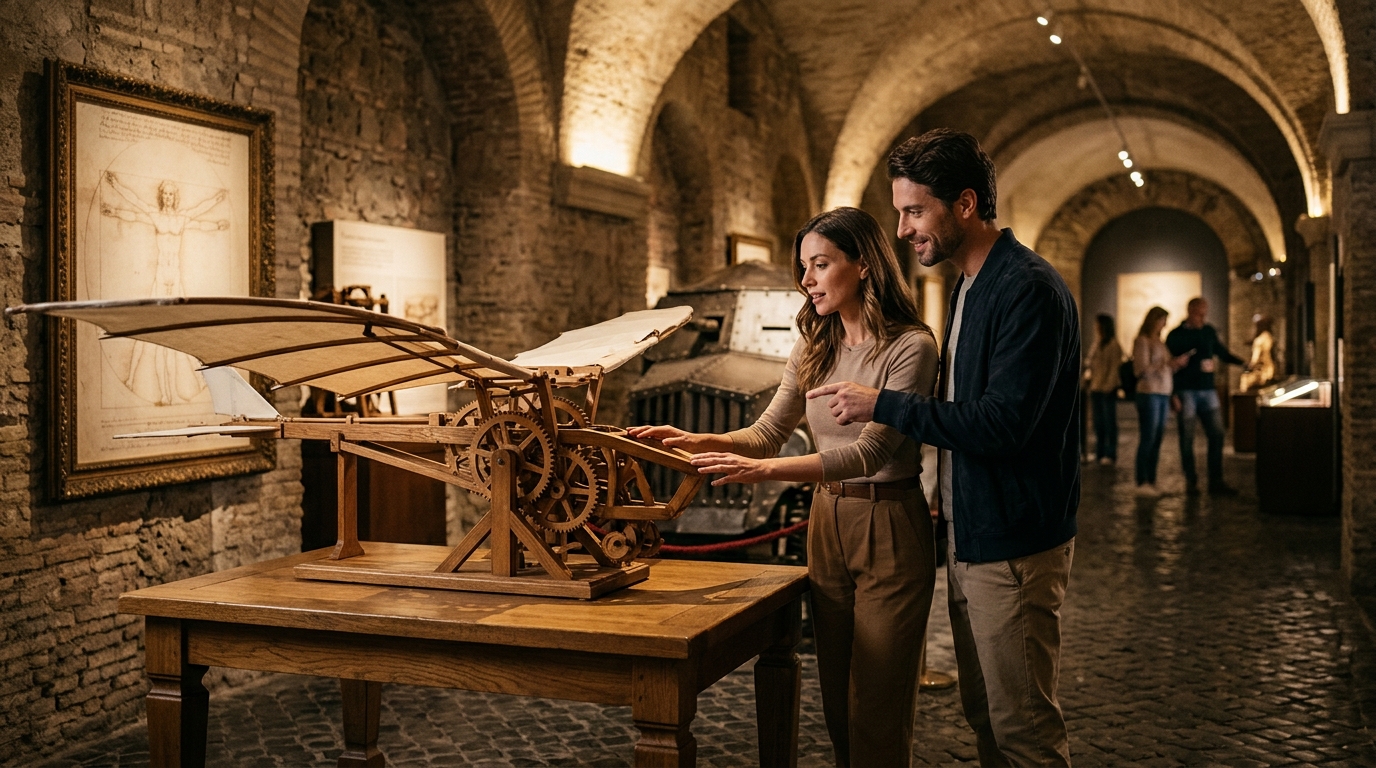
Rome is globally recognized as the eternal city of ancient history, yet it holds a profound secret regarding the Renaissance. According to recent tourism data, over 7 million visitors explore the city annually, with a significant portion seeking cultural depth beyond the Colosseum. The Museo Leonardo da Vinci in Piazza del Popolo stands as the premier destination for those wishing to understand the mind of history's most versatile genius. This guide details exactly where this museum is located, what you will see, and how to plan your visit effectively. (Museo Leonardo da Vinci)
Location and Accessibility
The Museo Leonardo da Vinci is situated in the heart of Rome, specifically in the prestigious Piazza del Popolo area. It is located at the end of Via del Corso, making it easily accessible for tourists navigating the city center. The museum is embedded within the underground vaults of the Basilica Santa Maria del Popolo, a major papal basilica that ranks second in importance only to St. Peter's Basilica.
This unique location places the museum just a five-minute walk from the Spanish Steps. For visitors staying in the historic center, the proximity to major landmarks like the Trevi Fountain and the Pantheon makes it a convenient addition to any itinerary. The entrance is discreet, blending into the historic architecture while offering a modern, immersive experience below ground.
Accessibility is a key consideration for many travelers. The museum is designed to accommodate families and individuals with varying mobility needs. However, because it is located in underground vaults, visitors should be aware of the specific entry points. Detailed directions are available on the museum info page to ensure a smooth arrival.
What to Expect Inside
Upon entering the museum, visitors are transported into an interactive world dedicated to Leonardo's passions. The exhibits are not static displays but rather dynamic reconstructions of his studies. The museum focuses on the breadth of his intellect, covering his work as an artist, engineer, anatomist, and scientist.
One of the core highlights is the detailed anatomical sketches. Leonardo's dissections were revolutionary for their time, providing insights into human physiology that were decades ahead of medical science. The museum presents these sketches in a way that highlights their artistic beauty and scientific accuracy. Visitors can explore high-fidelity models of his inventions, from flying machines to war engines, which bring his notebooks to life.
The gallery section of the museum offers a curated journey through his most famous concepts. You will see reconstructions of the Mona Lisa and The Last Supper, not as original paintings, but as interpretive models that explain his techniques. This approach allows visitors to understand the "why" and "how" behind his masterpieces without the crowds of Milan or Paris.
Interactive Learning Zones
The museum utilizes modern technology to engage visitors of all ages. Interactive stations allow guests to manipulate virtual versions of Leonardo's notebooks. This hands-on approach helps demystify his complex engineering designs. Children and adults alike can appreciate the sheer volume of his output. It is widely regarded as one of the most popular dedicated Leonardo museums in Rome for this reason.
The Historical Context
Understanding Leonardo's connection to Rome adds depth to the visit. Although he spent much of his career in Florence and Milan, his later years were influenced by the political and artistic shifts in Rome. The museum contextualizes his life within the broader Renaissance timeline. It explains how his work in Florence, where he was anointed a master artist at age 18, set the stage for his global influence.
The choice of venue, the Basilica Santa Maria del Popolo, is significant. This church is one of the seven pilgrim churches in Rome and houses tombs of notable Renaissance figures. By placing the museum here, the institution bridges the gap between the sacred architecture of the past and the scientific inquiry of the Renaissance. This juxtaposition creates a unique atmosphere that respects both art and history.
For those interested in the broader historical narrative, the about section provides detailed insights into the museum's mission to preserve and disseminate Leonardo's legacy. It emphasizes the importance of studying his interdisciplinary approach in modern education.
Museum vs. Original Art
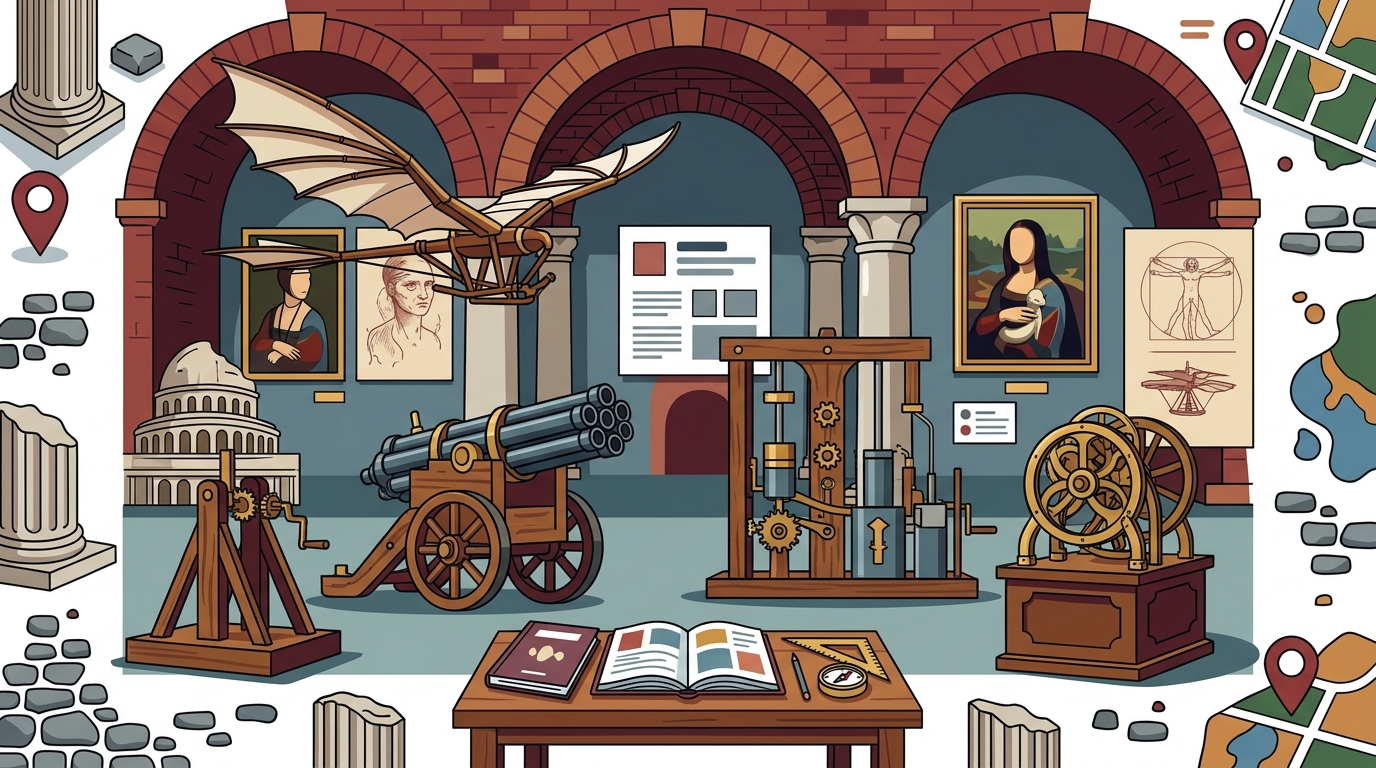
A common question among tourists is whether they will see original paintings. It is crucial to clarify that the Museo Leonardo da Vinci does not house original artworks. The Mona Lisa is in the Louvre, and The Last Supper is in Milan. This museum focuses on the process of creation rather than the final product.
This distinction is vital for managing expectations. The value of this museum lies in its educational depth. It allows visitors to see the sketches, models, and studies that are rarely displayed together. While other museums show the result, this museum shows the mind. This makes it an essential stop for anyone serious about understanding the Renaissance.
Comparing Rome's Cultural Offerings
| Attraction Type | Focus | Best For | Location |
|---|---|---|---|
| Leonardo da Vinci Museum | Interactive models and sketches | Understanding his genius and inventions | Piazza del Popolo |
| Uffizi Gallery | Original Renaissance paintings | Art history enthusiasts | Florence |
| Colosseum | Ancient Roman architecture | History and antiquity | City Center |
| Vatican Museums | Papal art and Sistine Chapel | Religious and classical art | Vatican City |
As noted by cultural historians, the integration of science and art in Leonardo's work is unique. This museum captures that synergy better than any other institution in Rome. It provides a holistic view of his contributions to humanity.
Planning Your Visit
Visiting the museum requires some planning to ensure a smooth experience. The museum is open to the public, but tickets are highly recommended. Due to its popularity, walk-in visitors may face long wait times. Booking in advance allows you to secure a specific entry time and skip the queue.
The ideal time to visit is during the early morning or late afternoon. These times offer a quieter atmosphere, allowing for a more immersive experience. The underground location keeps the temperature cool, which is a welcome relief during the hot Roman summers. Visitors should wear comfortable shoes, as the exploration involves walking through various levels of the vaults.
For families, the museum is an excellent educational tool. The interactive elements keep children engaged while teaching them about history and science. It is a must-see stop on any Rome itinerary that includes cultural or educational goals. The info page provides current opening hours and ticket prices.
Key Takeaways
- The museum is located in the underground vaults of the Basilica Santa Maria del Popolo.
- It is situated at the end of Via del Corso, a five-minute walk from the Spanish Steps.
- The museum features interactive models of Leonardo's inventions and anatomical sketches.
- It does not display original paintings like the Mona Lisa or The Last Supper.
- It is considered the most popular dedicated Leonardo museum in Rome.
- Advance booking is recommended to avoid long wait times.
- The museum is suitable for all ages, with a strong focus on family education.
Frequently Asked Questions
Where exactly is the Leonardo da Vinci museum in Rome?
The museum is located in the underground vaults of the Basilica Santa Maria del Popolo, at the end of Via del Corso in the Piazza del Popolo area.
Can I see the original Mona Lisa here?
No, the original Mona Lisa is housed in the Louvre Museum in Paris. This museum features interactive models and sketches related to the painting.
How long does a visit typically last?
Most visitors spend between 60 to 90 minutes exploring the exhibits and interacting with the displays.
Is the museum suitable for children?
Yes, the museum is highly interactive and educational, making it an excellent choice for families and children.
Do I need to book tickets in advance?
It is highly recommended to book tickets online in advance to secure your entry time and avoid long queues.
Is the museum accessible for people with disabilities?
The museum strives to be accessible, but due to its location in historic vaults, visitors should check the accessibility information for specific details.
What is the best time of day to visit?
Early morning or late afternoon visits are recommended to avoid crowds and enjoy a more peaceful experience.
Book Your Experience
Don't miss the opportunity to explore the mind of the greatest genius in history. The Museo Leonardo da Vinci offers a unique window into the Renaissance that you won't find anywhere else in Rome. Secure your tickets today and immerse yourself in a world of innovation and art.
Click here to book your visit now and start your journey through the life and work of Leonardo da Vinci.