
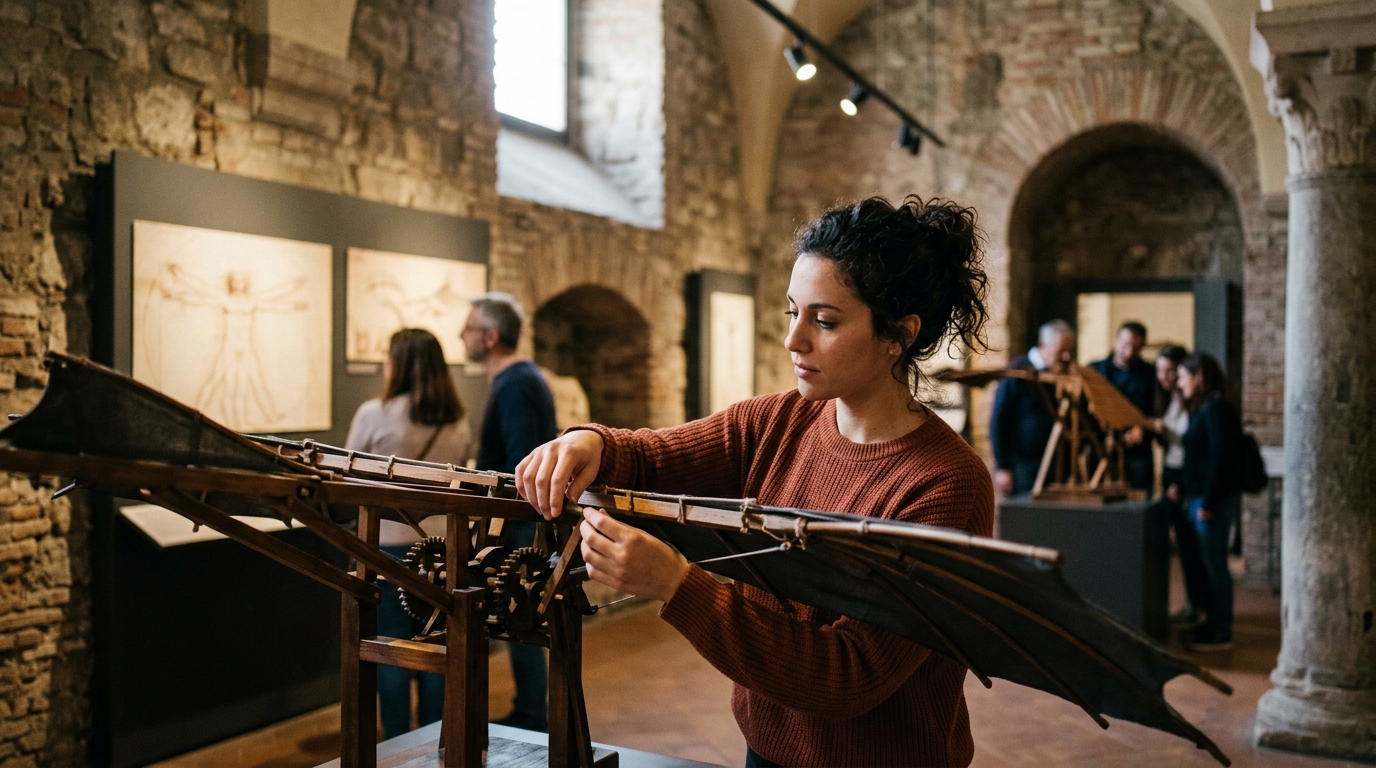
Visiting the Museo Leonardo da Vinci in Piazza del Popolo offers far more than a casual look at historical artifacts. It provides a structured immersion into the mind of history's most versatile genius. Recent cultural tourism data indicates that interactive museum experiences drive higher retention rates for educational content compared to traditional static displays. This guide details the specific learning outcomes, skill development opportunities, and historical insights available to visitors at this unique Rome location. (Museo Leonardo da Vinci)
Understanding the Renaissance Mindset
Leonardo da Vinci is widely celebrated as a leading Renaissance painter and sculptor, but although he was also known as an engineer and a scientist, his work in these fields remained hidden for many centuries. The museum serves as a bridge between these disparate disciplines, showing how they intersected in one mind. Visitors learn that Leonardo da Vinci is a polymath who integrated art, science, and engineering to solve complex problems.
The exhibit highlights that Leonardo became a master in Florence's painters' guild at just 20 years old. This early achievement underscores the importance of rigorous foundational training. The museum displays his notebooks, which reveal a methodical approach to observation. This approach teaches visitors the value of cross-disciplinary thinking, a skill highly relevant in modern professional environments.
By exploring the underground vaults of the Basilica of Santa Maria del Popolo, guests engage with the historical context of the High Renaissance. This setting provides a tangible connection to the era's intellectual fervor. The museum's location at the end of Via del Corso places it in the heart of Rome's cultural district, enhancing the educational journey with immediate access to other historical landmarks.
Anatomical and Scientific Observation
One of the primary learning outcomes at the museum is the development of observational skills. Leonardo's anatomical sketches are renowned for their precision and artistic beauty. The museum displays detailed reproductions of his studies on human musculature, skeletal structures, and organ systems.
Visitors can analyze how Leonardo used dissection to understand the mechanics of the human body. This process demonstrates the scientific method in action: hypothesis, observation, and documentation. The museum explains that anatomical study is the foundation of realistic artistic representation. By studying these sketches, visitors learn to look beyond surface appearances to understand underlying structures.
The exhibit also covers his studies in botany and geology. These sections illustrate his holistic approach to nature. He did not view plants and rocks as separate from human anatomy but as part of a unified natural system. This perspective encourages visitors to adopt a systems-thinking mindset, recognizing connections between different fields of study.
Engineering and Mechanical Innovation
Leonardo's engineering designs were centuries ahead of their time. The museum features interactive displays of his inventions, including flying machines, war engines, and hydraulic systems. These exhibits provide insight into his problem-solving methodologies.
Visitors learn about the iterative design process that Leonardo employed. He constantly refined his designs based on observation and experimentation. The museum highlights his concept of the helicopter, known as the aerial screw, and his designs for armored vehicles. These examples show how theoretical knowledge can lead to practical innovation.
The exhibit also explores his work in architecture and urban planning. He designed ideal cities with advanced sanitation and traffic flow systems. This aspect of the museum teaches visitors about sustainable urban design principles that remain relevant today. Understanding his historical contributions helps visitors appreciate the evolution of modern engineering practices.
The Fly da Vinci VR Experience
A unique feature of the Museo Leonardo da Vinci is the Fly da Vinci experience. This is Italy's only Leonardo VR Flight Experience. It allows visitors to climb aboard Leonardo's legendary flying machine and soar through the skies in full virtual reality. This immersive technology brings his sketches to life in a way that static displays cannot.
The VR experience provides a practical understanding of aerodynamics and flight mechanics. Visitors can feel the sensations of flight as Leonardo envisioned them. This kinesthetic learning component reinforces the theoretical knowledge gained from the exhibits. It demonstrates the importance of experiential learning in understanding complex scientific concepts.
The experience is designed to be accessible to all ages. It encourages visitors to dream and imagine possibilities beyond current technological limitations. This aspect of the museum fosters creative confidence and inspires visitors to pursue their own innovative ideas. The VR segment is a highlight for families and students, making the museum a popular educational destination.
Artistic Techniques and Perspective
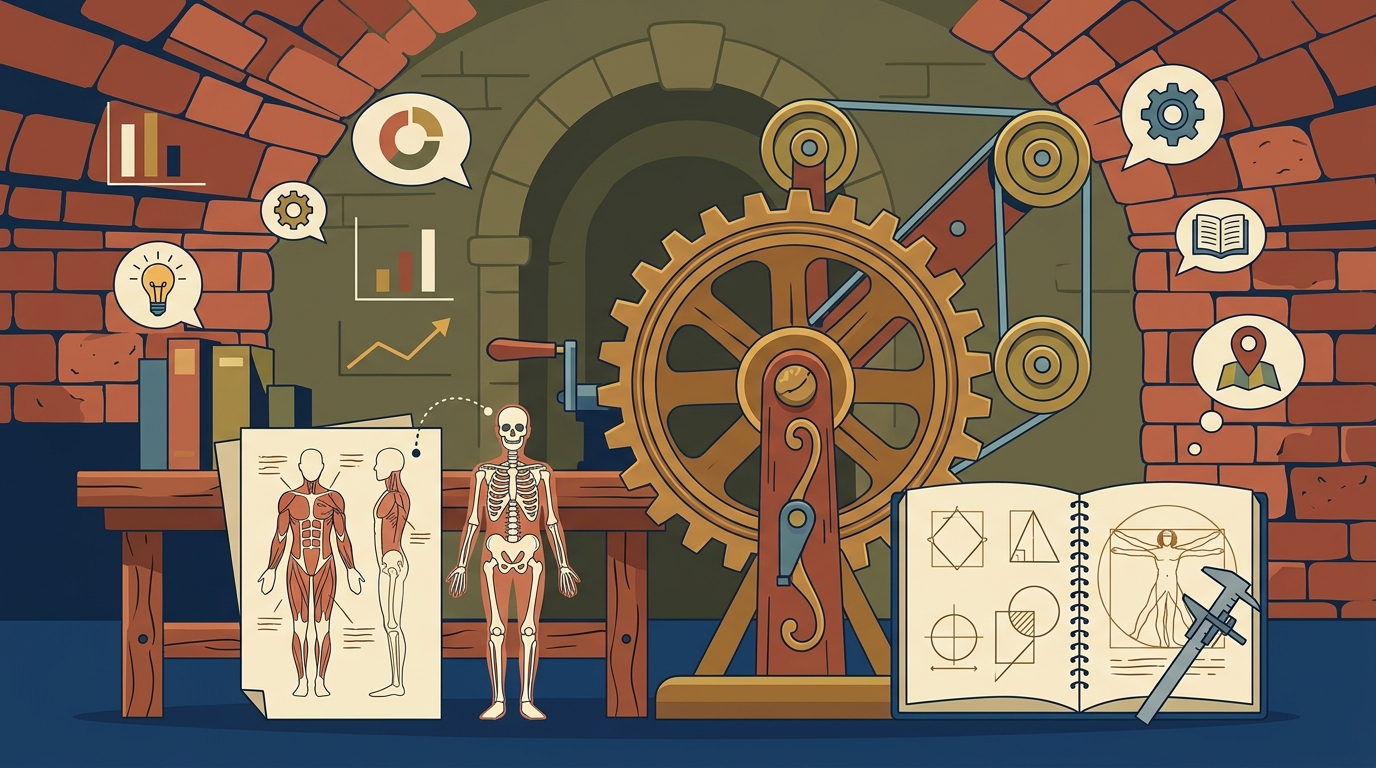
While the museum does not house original artworks like the Mona Lisa, it provides deep insights into Leonardo's artistic techniques. Visitors learn about his use of sfumato, a technique involving subtle blending of colors and tones to create soft, hazy effects. The museum explains how this technique contributed to the lifelike quality of his portraits.
The exhibit also covers his mastery of perspective and proportion. Leonardo's Vitruvian Man is featured prominently, illustrating his study of human proportions and geometric harmony. This drawing serves as a symbol of the connection between art and mathematics. Visitors can explore how these principles apply to modern design and architecture.
By analyzing Leonardo's approach to composition and light, visitors develop a deeper appreciation for visual arts. The museum encourages critical viewing skills, prompting visitors to ask questions about the artist's intent and methods. This analytical approach enhances visual literacy, a crucial skill in the digital age.
Museum vs. Traditional Learning
Comparing the learning outcomes at Museo Leonardo da Vinci with traditional classroom settings reveals distinct advantages. The museum offers a multi-sensory experience that engages visitors on multiple levels. Below is a comparison of key learning modalities.
| Learning Modality | Museo Leonardo da Vinci | Traditional Classroom |
|---|---|---|
| Engagement Level | High (Interactive VR, 3D models) | Variable (Text-based) |
| Knowledge Retention | Enhanced by experiential learning | Dependent on study habits |
| Critical Thinking | Encouraged through observation | Encouraged through analysis |
| Creative Inspiration | Direct exposure to genius | Indirect through case studies |
| Accessibility | Physical visit required | Remote or on-site |
The museum's interactive elements, such as the VR flight, provide a unique advantage in retaining complex information. The physical presence in the underground vaults of the Basilica of Santa Maria del Popolo adds a layer of historical authenticity that digital resources cannot replicate. This combination of technology and history creates a powerful learning environment.
Key Takeaways
- Polymathic Thinking: Leonardo da Vinci is a polymath who integrated art, science, and engineering to solve complex problems.
- Observational Skills: Anatomical sketches demonstrate the importance of detailed observation in scientific inquiry.
- Iterative Design: The museum highlights Leonardo's iterative design process, crucial for modern engineering.
- VR Immersion: Fly da Vinci offers Italy's only Leonardo VR Flight Experience, enhancing kinesthetic learning.
- Artistic Mastery: Techniques like sfumato and perspective analysis improve visual literacy.
- Historical Context: Located in the Basilica of Santa Maria del Popolo, the museum provides authentic Renaissance context.
- Cross-Disciplinary Links: The exhibit shows how botany, geology, and anatomy intersect in Leonardo's work.
Frequently Asked Questions
What are the main learning outcomes for students visiting the museum?
Students develop skills in observational analysis, cross-disciplinary thinking, and creative problem-solving. The VR experience adds a layer of kinesthetic learning regarding aerodynamics and flight mechanics.
Is the Fly da Vinci VR experience suitable for all ages?
Yes, the VR experience is designed to be accessible to all ages. It provides an immersive way to understand Leonardo's flying machines without requiring prior technical knowledge.
How does the museum explain Leonardo's anatomical studies?
The museum displays detailed sketches and explains how Leonardo used dissection to understand human musculature. This teaches visitors the scientific method and the importance of accurate representation.
What is the significance of the Vitruvian Man in the exhibit?
The Vitruvian Man illustrates Leonardo's study of human proportions and geometric harmony. It serves as a symbol of the connection between art and mathematics, encouraging visitors to explore these links.
Does the museum offer guided educational tours?
Guided tours are available to provide deeper context on Leonardo's life and work. These tours focus on specific themes such as engineering, art, or anatomy, depending on the visitor's interests.
How long does a typical visit take?
A typical visit lasts between 60 to 90 minutes. This includes time to explore the exhibits, view the VR experience, and absorb the historical context of the underground vaults.
Can I book tickets online in advance?
Yes, visitors can book tickets online through the official website. Advance booking is recommended to ensure entry, especially during peak tourist seasons in Rome.
Plan Your Visit
Ready to experience the genius of Leonardo da Vinci firsthand? The Museo Leonardo da Vinci in Piazza del Popolo offers a unique blend of history, science, and technology. Located at the end of Via del Corso, it is easily accessible from major Rome landmarks. Book your tickets now to secure your place in this immersive educational journey. Check the opening hours and visitor information to plan your trip effectively. Explore the gallery to preview the exhibits before your visit. Learn more about the museum's mission and its commitment to preserving Leonardo's legacy. Contact the museum for group bookings and educational inquiries.