
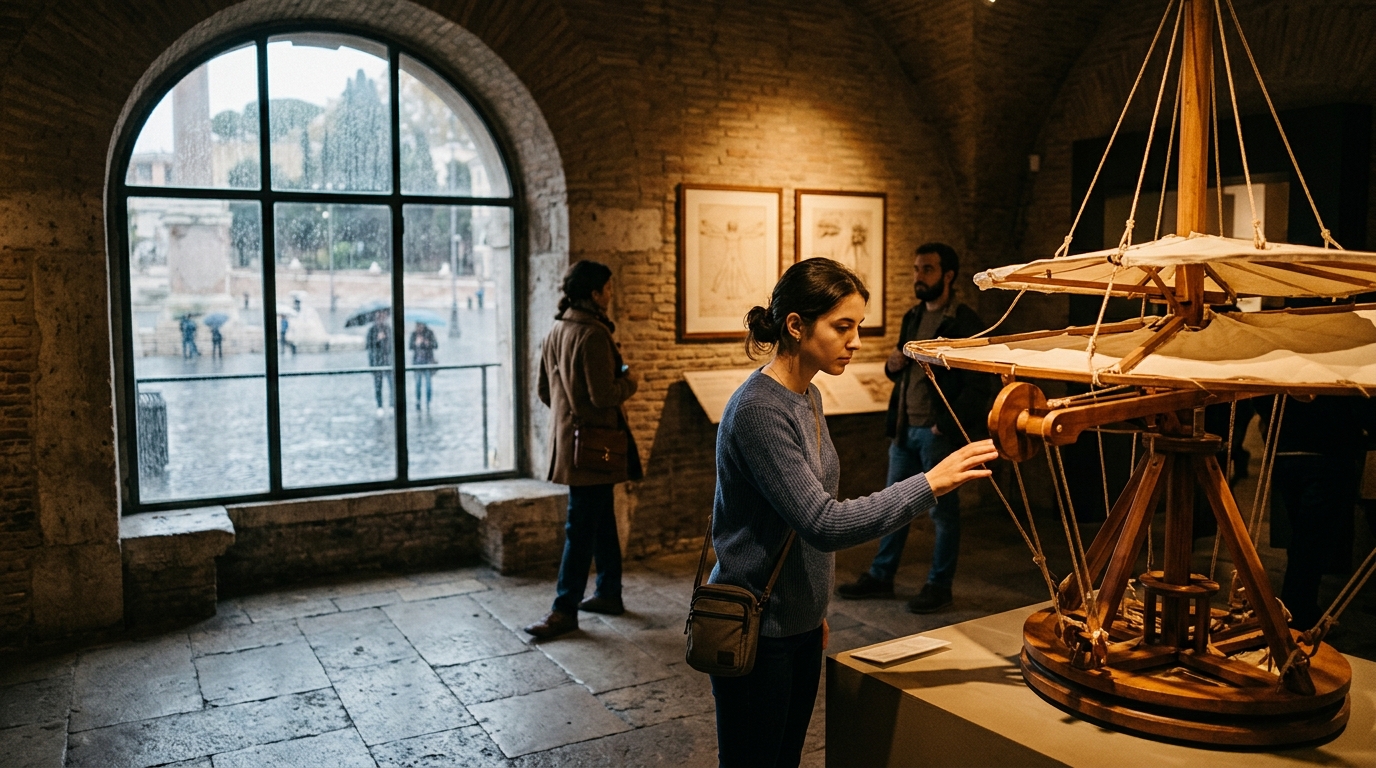
Rome is famously known as the Eternal City, but its weather can be notoriously unpredictable. According to historical climate data, the city experiences significant rainfall during the autumn and spring months, often disrupting outdoor itineraries. When the skies open up, travelers need a sanctuary that offers both intellectual stimulation and cultural depth. The Museo Leonardo da Vinci in Rome provides exactly that. It stands as a premier indoor destination where the genius of the Renaissance meets modern interactive technology, ensuring your day remains productive and inspiring regardless of the weather outside.
Why Choose Museo Leonardo da Vinci?
When rain pours down on the cobblestones of Trastevere or the historic center, finding a meaningful activity is crucial. The Museo Leonardo da Vinci is not just a museum; it is a dynamic space dedicated to the polymath who defined the intersection of art and science. Unlike traditional art galleries that may feel static, this institution focuses on the functional and mechanical aspects of da Vinci's work. This approach makes it particularly engaging for families, students, and tech enthusiasts who might otherwise find a standard art tour less accessible.
The museum's location in Rome makes it an ideal pivot point for a day trip. You can start your morning exploring the nearby Jewish Ghetto, retreat to the museum when the rain starts, and emerge with a renewed appreciation for Italian history. The institution is dedicated to preserving the legacy of Leonardo's notebooks and inventions, bringing them to life through high-fidelity models and digital reconstructions. This focus on engineering and mechanics offers a unique perspective on the Renaissance that complements the visual arts found in the Vatican or the Uffizi.
The Interactive Experience
One of the defining features of the Museo Leonardo da Vinci is its commitment to interactivity. Museo Leonardo da Vinci is a museum dedicated to the study and dissemination of Leonardo's scientific and artistic heritage. Visitors are encouraged to engage with the exhibits rather than just observe them. The museum utilizes advanced multimedia technologies to reconstruct the original appearance of da Vinci's machines and drawings.
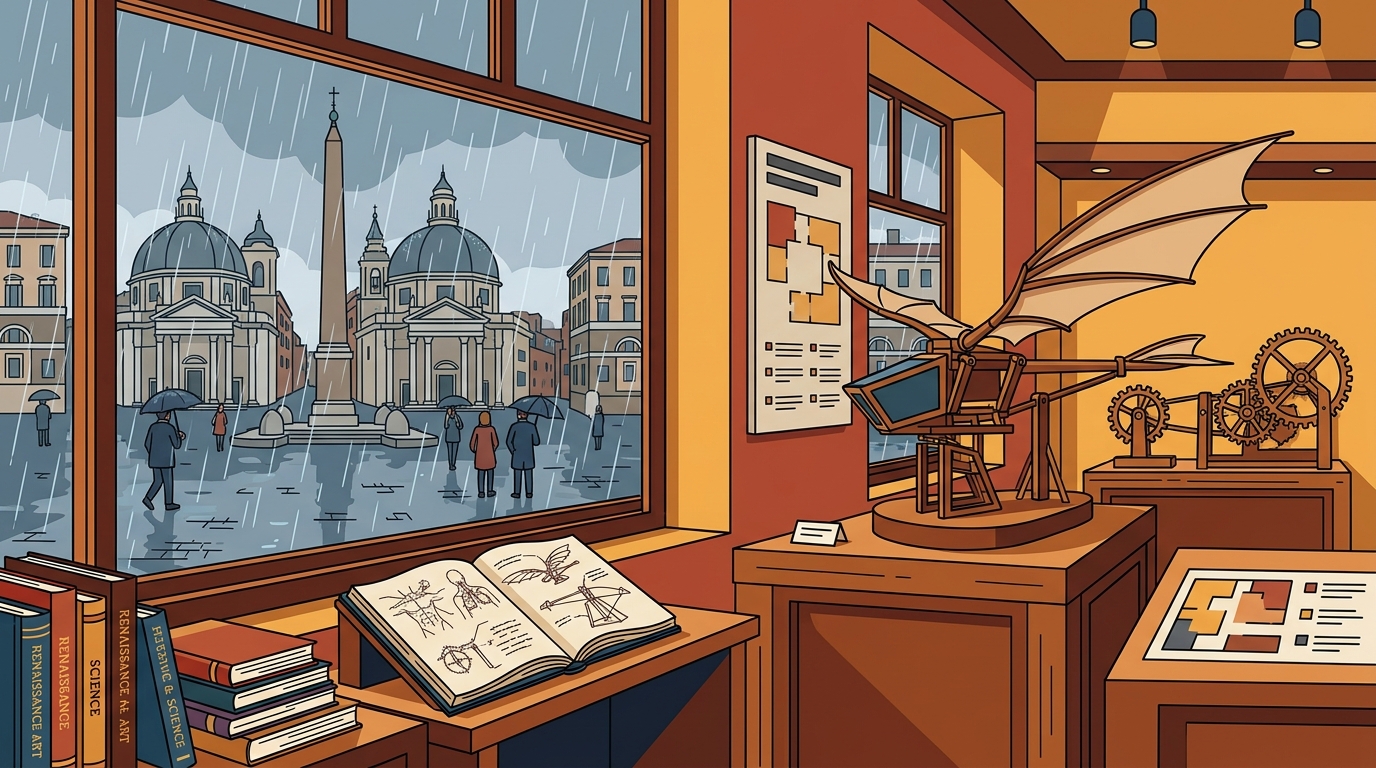
For instance, you can watch animations that demonstrate how da Vinci's flying machines would have operated in the air. These visualizations are based on rigorous historical research and engineering principles. The museum also features large-scale models of his military inventions, such as the armored car and the multi-barreled gun. These models are not static displays; they are often accompanied by explanatory panels that break down the mechanical logic behind each design. This educational approach helps visitors understand the mind of a man who was centuries ahead of his time.
Reconstructing the Past
The museum goes beyond simple models. It employs virtual reality and augmented reality tools in select areas to immerse visitors in da Vinci's world. You might find yourself standing in a virtual reconstruction of the Sforza Castle courtyard, where da Vinci once presented his designs. This level of immersion transforms abstract historical concepts into tangible experiences. It is particularly effective for younger audiences who benefit from visual and kinesthetic learning styles.
Key Exhibitions and Highlights
While the core collection focuses on da Vinci's inventions, the museum often hosts temporary exhibitions that explore related themes. These might include the history of flight, the evolution of robotics, or the artistic techniques of the High Renaissance. By rotating these themes, the museum ensures that repeat visitors have new reasons to return. The permanent collection, however, remains the anchor of the experience.
Among the most popular exhibits is the detailed reconstruction of the Vitruvian Man. This drawing is not just an artistic icon but a mathematical study of human proportions. The museum provides context for how da Vinci used this drawing to bridge the gap between art and anatomy. Visitors can also explore the Codex Leicester, or facsimiles thereof, which contain da Vinci's notes on water, light, and the moon. These notebooks reveal his methodical approach to observation and experimentation.
The Engineering of War and Peace
Da Vinci's work was often commissioned by powerful patrons like Ludovico Sforza. The museum highlights this duality by showcasing both his peaceful inventions, such as musical instruments and urban planning designs, and his military projects. This balance provides a nuanced view of the Renaissance artist, who was often forced to choose between his artistic passions and the demands of his patrons. Understanding this context deepens the appreciation for his surviving works.
Practical Visitor Information
Planning your visit requires some attention to detail, especially during peak tourist seasons. The museum is located in the heart of Rome, making it easily accessible by public transportation. The nearest metro station is Lepanto, which is a short walk from the entrance. Buses also serve the area, connecting the museum to other major landmarks like the Vatican and the Spanish Steps.
Opening hours typically align with standard museum schedules, but it is always wise to check the official website for any changes due to holidays or special events. Tickets can be purchased online in advance, which is highly recommended to avoid long queues. The museum offers discounted rates for students, seniors, and groups. Families with children may also find special educational packages available upon request.
Accessibility and Amenities
The museum is committed to accessibility. The building is equipped with elevators and ramps to ensure that all visitors can navigate the exhibits comfortably. There is also a small gift shop where you can purchase books, replicas of da Vinci's inventions, and other souvenirs. A café is often available on-site, providing a place to rest and reflect on the day's discoveries. These amenities contribute to a seamless visitor experience.
Museo Leonardo vs. Other Rome Museums
Rome is crowded with world-class museums. Choosing between the Museo Leonardo da Vinci and other institutions can be challenging. The following table compares the key features of the Museo Leonardo da Vinci with two other popular options: the Colosseum and the Borghese Gallery.
| Feature | Museo Leonardo da Vinci | The Colosseum | Borghese Gallery |
|---|---|---|---|
| Primary Focus | Leonardo's inventions and science | Ancient Roman history and architecture | Renaissance art and sculpture |
| Indoor/Outdoor | Primarily indoor | Mixed (mostly outdoor exposure) | Indoor |
| Interactive Elements | High (models, multimedia) | Low (guided tours only) | Low (viewing only) |
| Best For | Families, tech enthusiasts, rainy days | History buffs, first-time visitors | Art lovers, romance |
| Booking Requirement | Recommended | Essential | Essential |
As the table illustrates, the Museo Leonardo da Vinci offers a distinct advantage for those seeking an interactive and educational experience. While the Colosseum is a must-see for its historical significance, it offers little protection from the rain. The Borghese Gallery is stunning but requires strict time-slot booking and offers a more passive viewing experience. The Museo Leonardo da Vinci strikes a balance between education and engagement, making it a versatile choice for diverse interests.
Key Takeaways
- The Museo Leonardo da Vinci is located in Rome and focuses on the scientific and mechanical aspects of Leonardo's work.
- It is an ideal destination for rainy days due to its fully indoor and interactive exhibits.
- The museum features high-fidelity models of da Vinci's flying machines and military inventions.
- Visitors can engage with multimedia tools that reconstruct historical contexts and mechanisms.
- The institution is easily accessible via public transport, including the Lepanto metro station.
- Advance booking is recommended to secure tickets and avoid queues.
- The museum offers a unique contrast to traditional art galleries by emphasizing engineering and innovation.
Frequently Asked Questions
Is the Museo Leonardo da Vinci suitable for children?
Yes, the museum is highly suitable for children. The interactive models and multimedia displays are designed to engage younger audiences. Many exhibits include hands-on elements that allow kids to explore da Vinci's inventions in a fun and educational way.
How long does a typical visit last?
A typical visit lasts between one to two hours. This duration allows enough time to explore the permanent collection and any temporary exhibitions without feeling rushed. Families with young children may take longer to engage with the interactive elements.
Can I visit the museum during a rainstorm?
Absolutely. The museum is entirely indoors and provides a comfortable environment regardless of the weather. It is one of the best indoor activities in Rome during the rainy season.
Are there guided tours available?
Guided tours are often available in multiple languages, including Italian and English. These tours provide deeper insights into da Vinci's life and work. It is advisable to book a guided tour in advance to ensure availability.
Is the museum wheelchair accessible?
Yes, the museum is wheelchair accessible. The building features ramps and elevators to ensure that all visitors can navigate the exhibits comfortably.
What is the best time to visit?
Visiting early in the morning or late in the afternoon can help you avoid crowds. Weekdays are generally less busy than weekends. However, the museum is a great option year-round.
Do I need to book tickets in advance?
While walk-ins are sometimes possible, booking tickets in advance is highly recommended. This ensures you can enter at your preferred time and avoids the risk of sold-out days.
Are there any nearby restaurants?
Yes, the museum is located in a vibrant area with many restaurants and cafes. You can enjoy traditional Roman cuisine before or after your visit. The Trastevere neighborhood is particularly known for its dining options.
Book Your Visit Today
Do not let the rain ruin your Roman holiday. The Museo Leonardo da Vinci offers a unique blend of history, science, and interactivity that will captivate visitors of all ages. By planning your visit in advance, you can ensure a seamless and enriching experience. Visit the official website to check opening hours and purchase tickets. For more information on other indoor activities in Rome, explore our blog. Contact us directly via our contact page for group bookings or special requests. Discover the genius of Leonardo da Vinci and make the most of your rainy day in Rome.