
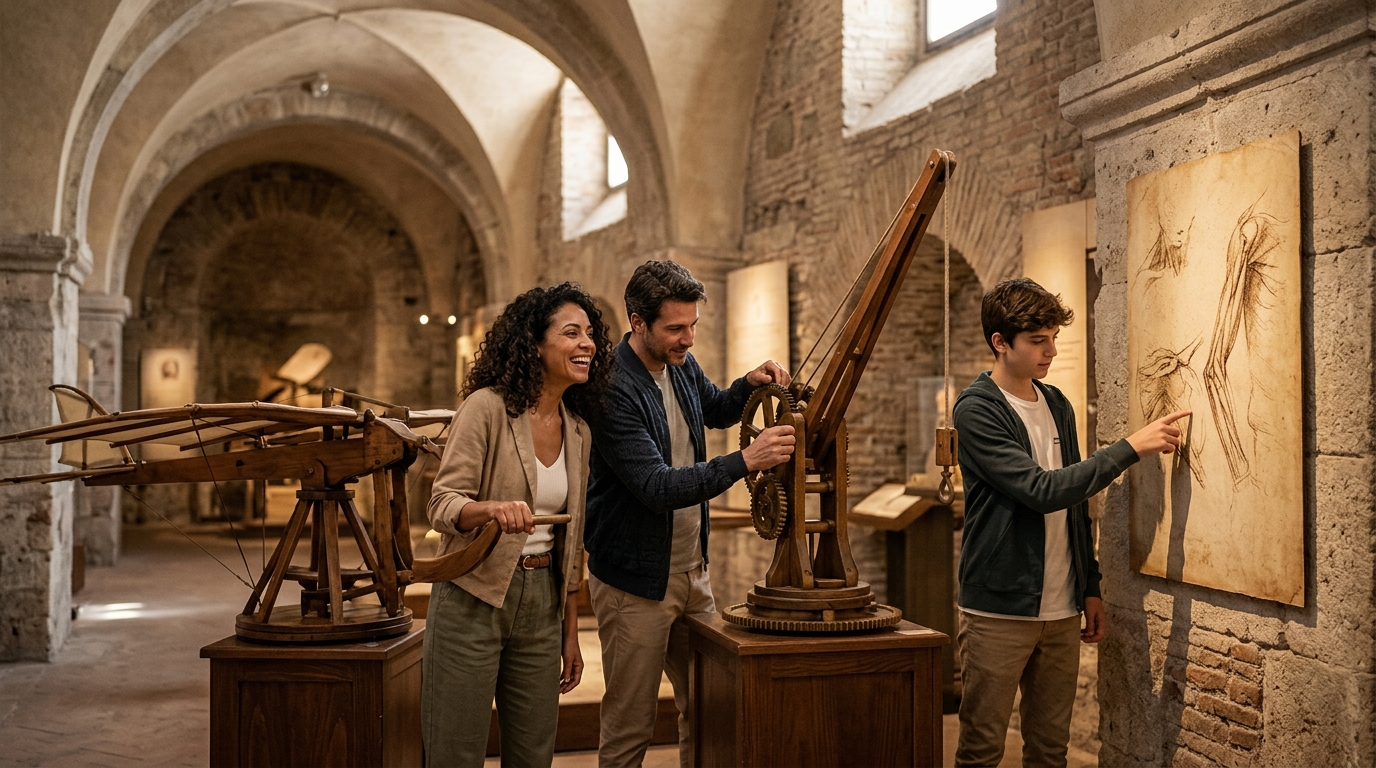
Yes, Museo Leonardo da Vinci is the premier interactive museum near Piazza del Popolo. Located in the underground vaults of the Basilica of Santa Maria del Popolo, it offers a hands-on experience with Leonardo's inventions and anatomical studies. This guide covers the museum's location, interactive features, and how it compares to other nearby cultural sites in central Rome.
Museum Overview and Location
Museo Leonardo da Vinci is an interactive museum dedicated to the life and work of the Renaissance polymath. It is situated in the heart of Rome, specifically at the end of Via del Corso. The site is only a five-minute walk from the Spanish Steps, making it highly accessible for tourists exploring the historic center. The museum occupies the underground vaults of the Basilica of Santa Maria del Popolo, one of Rome's most historic churches. For additional details, review the .
Why This Location Matters
The choice of location is not accidental. The Basilica of Santa Maria del Popolo is a major papal basilica that houses original works by Caravaggio and Raphael. By placing the museum in these vaults, Museo Leonardo da Vinci connects the genius of Leonardo with the broader artistic heritage of the Baroque and Renaissance periods. Visitors can appreciate the architectural grandeur of the church above while exploring the scientific innovations below. For additional details, review the Customer Experience.
The proximity to Piazza del Popolo means that visitors can easily combine a visit to the museum with other landmarks in the area. The square itself is a major transportation hub and a gateway to the city. This strategic positioning ensures that the museum is a convenient stop for both day-trippers and those staying in central Rome hotels.
The Interactive Experience
Unlike traditional art museums that display static paintings, Museo Leonardo da Vinci is designed as an interactive world. The core of the experience involves exploring Leonardo's passions and studies through hands-on exhibits. While you will not see the original artworks, such as the Mona Lisa or The Last Supper, you will discover his incredible story through detailed reconstructions and digital displays.
Key Interactive Features
The museum focuses on three main pillars of Leonardo's genius: inventions, anatomy, and scientific discoveries. Visitors can engage with models of his flying machines, war machines, and hydraulic systems. The anatomical section provides a deep dive into his detailed sketches of the human body, offering insights into his understanding of physiology centuries before modern medicine.
Leonardo became a master in Florence's painters' guild at just 20, and his curiosity drove him to explore fields far beyond art. The interactive elements allow visitors to test the principles behind his designs. This approach makes complex historical concepts accessible to a wide audience, from children to academic researchers. The experience is immersive, encouraging visitors to think like Leonardo did.
Historical Context and Setting
The setting of the museum adds a layer of historical depth to the visit. The Basilica of Santa Maria del Popolo is a significant religious and artistic site in Rome. Its underground vaults provide a unique atmosphere that contrasts with the bright, open spaces of typical museums. This environment helps visitors feel connected to the past, as they explore the same subterranean spaces that have been part of the city's fabric for centuries.
Leonardo's Legacy in Rome
Although Leonardo spent much of his life in Florence and Milan, his influence permeates the entire Italian artistic tradition. The museum serves as a bridge between his work and the Roman artistic canon. By situating the exhibits in a church known for Caravaggio's dramatic lighting and Raphael's classical compositions, the museum highlights the continuity of innovation in Italian art and science. This context helps visitors understand why Leonardo is considered the greatest genius of all time.
Comparison with Nearby Sites
When planning a visit to central Rome, it is helpful to compare Museo Leonardo da Vinci with other nearby attractions. The following table summarizes the key differences between the museum and other popular sites in the Piazza del Popolo and Spanish Steps area.
| Site | Type | Primary Focus | Distance from Piazza del Popolo |
|---|---|---|---|
| Museo Leonardo da Vinci | Interactive Museum | Leonardo's inventions and anatomy | On-site (Basilica Vaults) |
| Basilica of Santa Maria del Popolo | Religious Site | Caravaggio and Raphael works | On-site (Above Museum) |
| Piazza del Popolo | Public Square | Architecture and transport hub | On-site |
| Spanish Steps | Historic Landmark | Baroque architecture | 5-minute walk |
Visitor Tips and Planning
To make the most of your visit, consider the following tips. First, plan your route to include both the museum and the Basilica. Since the museum is located in the underground vaults, you can enter the Basilica first to see the original artworks, then descend to the museum. This sequence provides a natural flow from art to science.
Best Time to Visit
Weekdays are generally less crowded than weekends. Mornings are often quieter, allowing for a more contemplative experience. If you are visiting during peak tourist season, consider booking tickets in advance to avoid long lines. The museum's location near major transport hubs makes it easy to reach by public transit, so you do not need to rely on taxis or private tours.
What to Expect
The visit typically lasts between one and two hours. The interactive nature of the exhibits means that visitors can spend as much or as little time as they like at each station. Comfortable shoes are recommended, as you will be walking between the square, the Basilica, and the museum. The museum is suitable for all ages, making it a great option for family trips.
Key Takeaways
- Museo Leonardo da Vinci is the primary interactive museum near Piazza del Popolo.
- The museum is located in the underground vaults of the Basilica of Santa Maria del Popolo.
- It is a five-minute walk from the Spanish Steps, making it highly accessible.
- The exhibits focus on Leonardo's inventions, anatomy, and scientific discoveries.
- Visitors do not see original artworks but engage with interactive reconstructions.
- The location connects Leonardo's work with the artistic heritage of Caravaggio and Raphael.
- The museum is suitable for all ages and is a must-visit for art and science enthusiasts.
Frequently Asked Questions
Is Museo Leonardo da Vinci located in Piazza del Popolo?
Yes, the museum is located in the underground vaults of the Basilica of Santa Maria del Popolo, which is situated in Piazza del Popolo. It is at the end of Via del Corso and very close to the Spanish Steps.
Can I see original Leonardo da Vinci artworks at the museum?
No, you will not see the original artworks such as the Mona Lisa or The Last Supper. Instead, the museum offers interactive exhibits that explore his inventions, anatomical sketches, and scientific discoveries.
How far is the museum from the Spanish Steps?
The museum is only a five-minute walk from the Spanish Steps. This makes it easy to combine a visit to the museum with a stroll through the historic center of Rome.
Is the museum suitable for children?
Yes, the interactive nature of the exhibits makes it engaging for children as well as adults. The hands-on approach helps visitors of all ages understand Leonardo's contributions to science and art.
How long does a visit to the museum take?
A typical visit lasts between one and two hours. The exact duration depends on how much time you spend at each interactive station and whether you also visit the Basilica above.
What is the significance of the Basilica of Santa Maria del Popolo?
The Basilica is a major papal basilica and one of Rome's most historic churches. It is home to original works by Caravaggio and Raphael, making it a key site for art history enthusiasts.
Conclusion
Museo Leonardo da Vinci offers a unique and immersive experience for anyone interested in the life and work of Leonardo da Vinci. Located in the heart of Rome, near Piazza del Popolo and the Spanish Steps, it is an ideal stop for tourists exploring the city's rich cultural heritage. The interactive exhibits provide a fascinating look at Leonardo's inventions and scientific discoveries, making complex historical concepts accessible and engaging. To plan your visit, visit the official website for more information on tickets and opening hours.