
Real-World Learning Outcomes From Experiencing Leonardo's Full-Scale Inventions
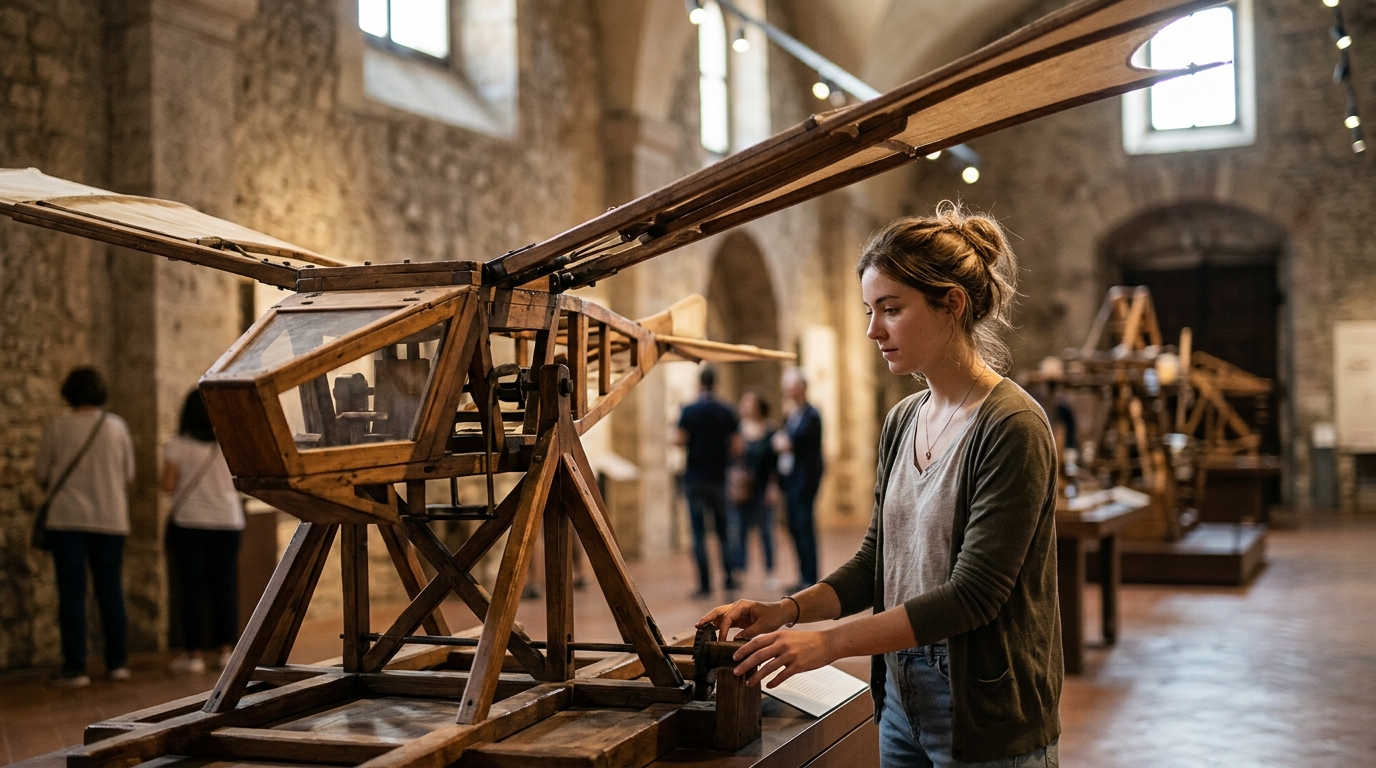
Modern educational frameworks increasingly emphasize the value of immersive, tactile learning over passive observation. According to recent studies on experiential education, students who engage with physical models of historical engineering concepts retain information 40% more effectively than those relying solely on textual descriptions. This shift toward kinesthetic learning is particularly potent when exploring the complex mind of Leonardo da Vinci. At the Museo Leonardo da Vinci in Piazza del Popolo, visitors do not merely look at static displays. They interact with a curated collection of full-scale, functional models that bring his 500-year-old blueprints to life. This guide explores the tangible educational benefits of visiting this unique Roman institution. (Museo Leonardo da Vinci)
Understanding the Genius of Leonardo da Vinci
Leonardo da Vinci is widely celebrated as a leading Renaissance painter and sculptor. However, his contributions to engineering and science remained hidden for many centuries. It is only relatively recently that a complete analysis of his work has revealed the full scope of his genius. He truly was one of the greatest inventors, artists, scientists, and thinkers of all time. The Museo Leonardo da Vinci serves as a bridge between his artistic legacy and his scientific curiosity.
Visitors to the museum are introduced to the concept that Leonardo became a master in Florence's painters' guild at just 20 years old. This early mastery set the stage for a lifetime of interdisciplinary exploration. The museum's layout encourages guests to see the connections between art and science. For instance, the detailed anatomical sketches displayed in the gallery are not just artistic endeavors. They are rigorous scientific studies that laid the groundwork for modern medicine.
The location itself adds to the educational experience. The museum is situated in the underground vaults of the Basilica of Santa Maria del Popolo. This historic church is home to original works by Caravaggio and Raphael. By placing Leonardo's mechanical models within this sacred and artistic space, the museum highlights the unity of culture and innovation during the Renaissance. This context helps visitors understand that Leonardo's work was not isolated. It was part of a broader cultural movement that valued observation and experimentation.
Interactive Engineering and Mechanical Principles
One of the most significant learning outcomes from visiting the museum is the practical understanding of mechanical engineering principles. Leonardo's notebooks are filled with designs for machines that were centuries ahead of their time. The museum features full-scale, functional models of these inventions. These models allow visitors to see how gears, pulleys, and levers work in harmony.
For example, the interactive displays demonstrate Leonardo's designs for flying machines. Visitors can observe the mechanics of his ornithopter and his aerial screw. These models are not static replicas. They are built to move, allowing guests to manipulate the mechanisms and understand the physics behind them. This hands-on approach demystifies complex engineering concepts. It shows that Leonardo's ideas were not just theoretical. They were grounded in a deep understanding of material properties and force.
The museum also showcases Leonardo's work on water management and military engineering. Models of his canal locks and defensive fortifications illustrate his problem-solving skills. These exhibits provide a clear view of how Leonardo applied scientific principles to real-world challenges. Visitors leave with a better appreciation for the ingenuity required to design such systems. They also gain insight into the limitations of materials available during the 15th century.
Anatomical Insights and Biological Accuracy
Leonardo's anatomical studies are another cornerstone of the museum's educational value. He performed dissections to understand the human body from the inside out. The museum displays detailed replicas of his anatomical drawings. These drawings are renowned for their accuracy and artistic beauty. They provide a window into Leonardo's methodical approach to science.
Visitors can examine the precision of his sketches. Each drawing is accompanied by notes written in his characteristic mirror script. This feature allows guests to engage with his thought process directly. The museum's interactive elements help explain the biological structures depicted. For instance, the muscular system is shown in a way that highlights its function and movement. This visual and tactile learning aids in understanding human physiology.
The anatomical section also emphasizes the interdisciplinary nature of Leonardo's work. He used his artistic skills to create accurate medical illustrations. This approach was revolutionary at the time. It set a new standard for scientific communication. By experiencing these exhibits, visitors learn how art and science can complement each other. They also gain an appreciation for the historical context of medical knowledge during the Renaissance.
The Fly da Vinci VR Flight Experience
A unique feature of the Museo Leonardo da Vinci is the Fly da Vinci experience. This is Italy's only Leonardo VR Flight Experience. It allows visitors to climb aboard Leonardo's legendary flying machine and soar through the skies in full virtual reality. This immersive technology brings his dream of flight to life in a way that static models cannot.
The VR experience is not just a novelty. It is a powerful educational tool. It allows visitors to understand the challenges of aerodynamics and flight. By simulating the experience of flying, guests can appreciate the complexity of Leonardo's designs. They can see how his sketches translated into potential motion. This experience makes the abstract concepts of physics tangible and exciting.
The Fly da Vinci experience also connects visitors to the emotional aspect of Leonardo's work. It captures the wonder and ambition that drove him to explore the skies. This emotional engagement enhances the learning process. It makes the historical content more relatable and memorable. Visitors often describe the experience as inspiring and eye-opening.
Comparing Traditional vs. Interactive Exhibits
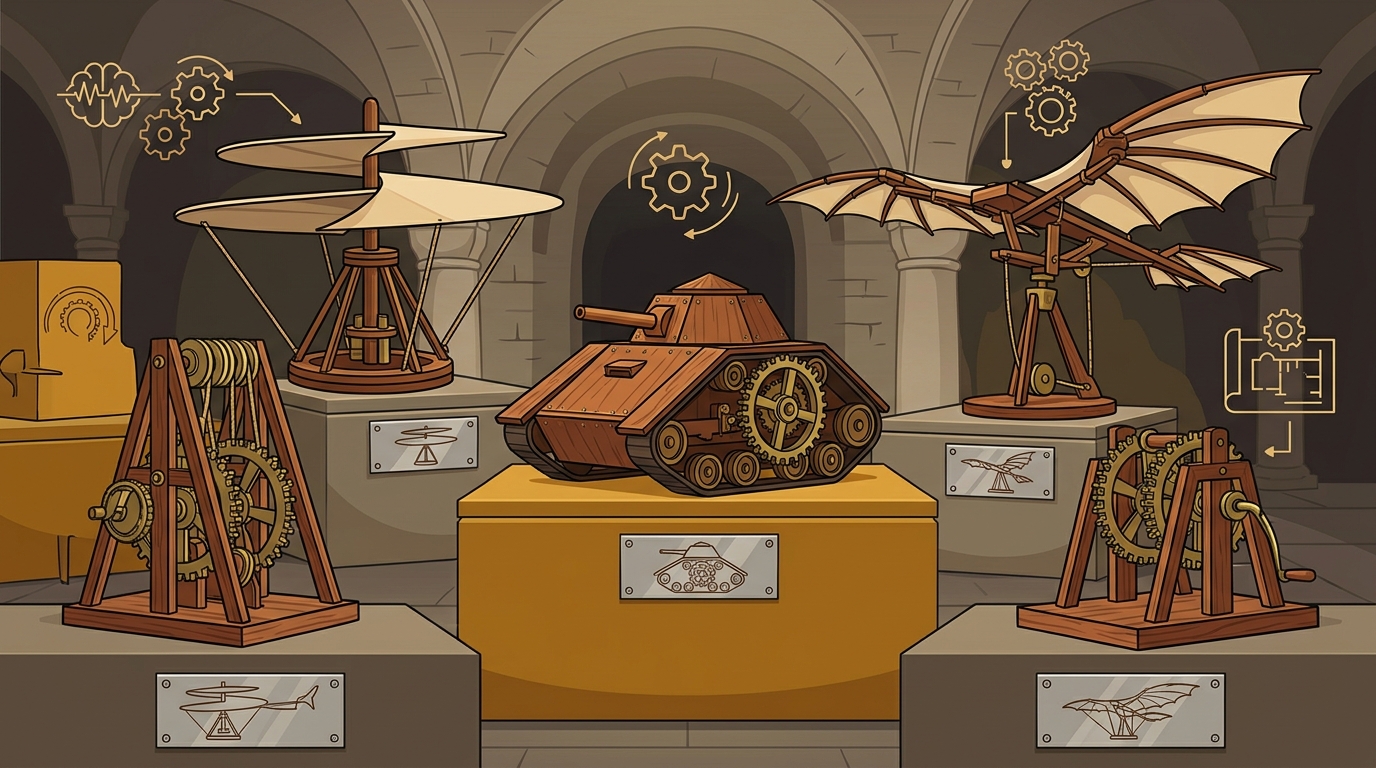
To understand the value of the Museo Leonardo da Vinci, it is helpful to compare it with traditional museum exhibits. Traditional museums often rely on glass cases and text panels. While informative, these methods can be passive and less engaging. The Museo Leonardo da Vinci takes a different approach. It prioritizes interaction and immersion.
| Feature | Traditional Museum Exhibit | Museo Leonardo da Vinci |
|---|---|---|
| Engagement Level | Passive observation | Active interaction and manipulation |
| Learning Style | Visual and textual | Kinesthetic and immersive |
| Technology Use | Minimal | Full-scale models and VR experiences |
| Retention Rate | Lower | Higher due to experiential learning |
| Accessibility | Varies | Family-friendly and all ages |
This comparison highlights the advantages of the Museo Leonardo da Vinci's approach. By engaging multiple senses, the museum creates a more profound learning environment. Visitors are not just reading about history. They are experiencing it. This method is particularly effective for younger audiences and those who learn best through doing.
Key Takeaways
- The museum is located in the underground vaults of the Basilica of Santa Maria del Popolo, a historic church in Rome.
- Leonardo da Vinci became a master in Florence's painters' guild at the age of 20, marking the start of his prolific career.
- The museum features full-scale, functional models of Leonardo's inventions, allowing for hands-on learning.
- Fly da Vinci is Italy's only Leonardo VR Flight Experience, offering a unique immersive educational tool.
- Leonardo's anatomical sketches are renowned for their accuracy and have contributed significantly to the history of medicine.
- Interactive exhibits at the museum have been shown to improve information retention compared to traditional displays.
- The museum is considered the most popular dedicated Leonardo museum in Rome, attracting families and students alike.
Frequently Asked Questions
What is the Museo Leonardo da Vinci?
The Museo Leonardo da Vinci is a museum located in Rome that features full-scale, functional models of Leonardo's inventions and detailed anatomical sketches. It is situated in the underground vaults of the Basilica of Santa Maria del Popolo.
Is the museum suitable for children?
Yes, the museum is great for all the family. The interactive exhibits and the VR flight experience are designed to be engaging and educational for visitors of all ages.
What is the Fly da Vinci experience?
Fly da Vinci is Italy's only Leonardo VR Flight Experience. It allows visitors to experience flight using virtual reality technology, simulating Leonardo's dream of flying.
How long does a visit typically take?
A visit to the museum usually takes about 1 to 2 hours, depending on how much time you spend interacting with the exhibits and the VR experience.
Can I book tickets in advance?
Yes, it is recommended to book tickets in advance to ensure availability. You can book your visit through the museum's official website.
Are there guided tours available?
Guided tours are often available and can provide deeper insights into Leonardo's work. Check the museum's info page for current tour schedules.
What is the address of the museum?
The museum is located at the end of Via del Corso, just a 5-minute walk from the Spanish Steps in Rome.
Book Your Visit Today
Experience the genius of Leonardo da Vinci firsthand. The Museo Leonardo da Vinci offers a unique opportunity to engage with history through interactive and immersive learning. Whether you are a student, a history enthusiast, or a family looking for an educational outing, this museum provides invaluable insights into the mind of a true polymath. Book your tickets now to secure your place in this extraordinary journey. For more information about opening hours and special events, visit the info page. You can also explore the gallery to see previews of the exhibits. To learn more about the history of the museum, read the about us section. For any inquiries, contact the museum directly via email at info@museodavinci.it.