
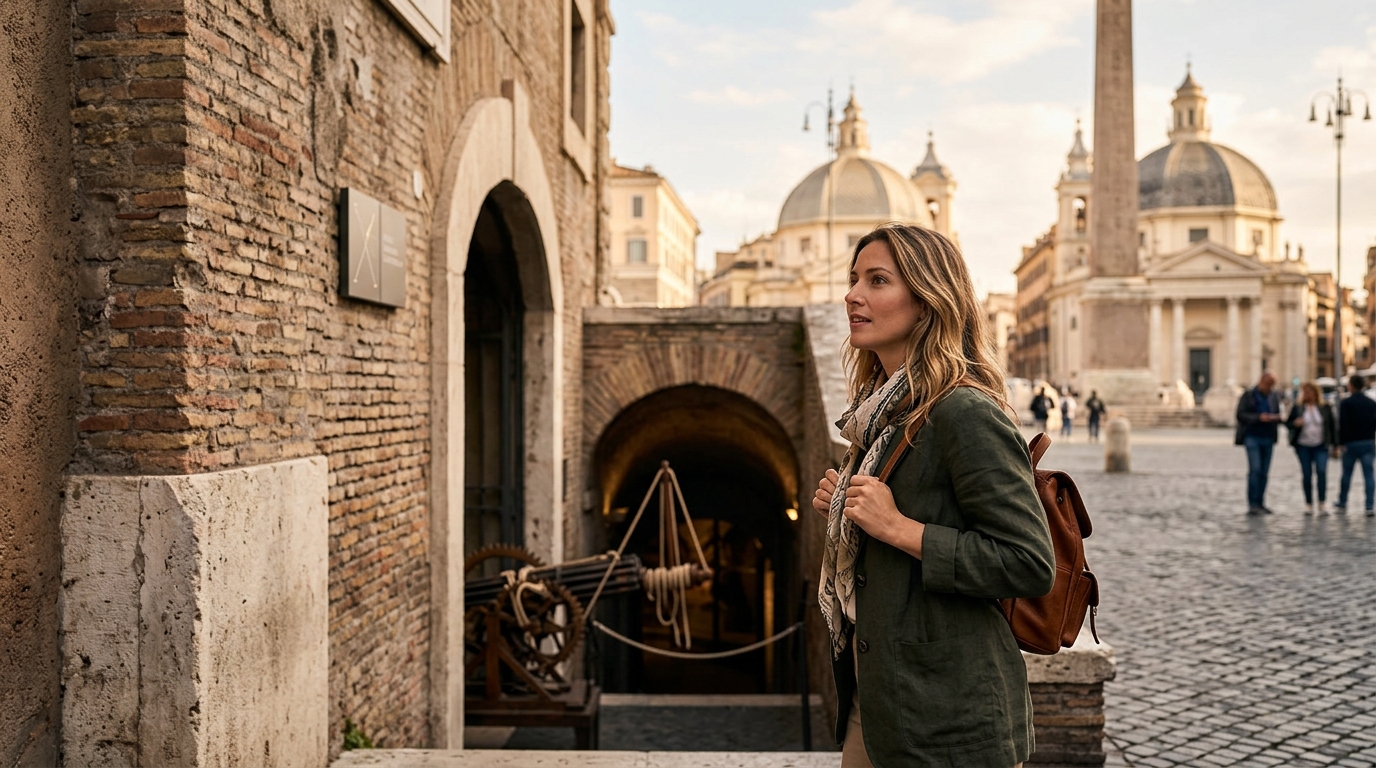
Piazza del Popolo stands as the northern gateway to Rome, serving as a monumental threshold between the ancient city and the modern world. This vast elliptical square is not merely a traffic circle but a historic gathering place that has hosted everything from papal processions to revolutionary uprisings. For travelers arriving by train or bus, this is often their first impression of the Eternal City. The area is densely packed with artistic masterpieces, baroque architecture, and vibrant cultural institutions. Understanding how to navigate this hub efficiently can transform a chaotic transit stop into the highlight of your Roman holiday. We will explore the immediate landmarks, the hidden underground treasures, and the nearby neighborhoods that define this unique district. (Museo Leonardo da Vinci)
The Leonardo da Vinci Museum Experience
One of the most compelling reasons to visit this specific corner of Rome is the interactive museum dedicated to the polymath himself. Located in the underground vaults of the Basilica Santa Maria del Popolo, the Museo Leonardo da Vinci offers a unique perspective on the genius of Leonardo. While you cannot see the original Mona Lisa here, the museum provides a deep dive into his scientific and artistic mind through detailed models and sketches.
Leonardo da Vinci is widely celebrated as a leading Renaissance painter and sculptor, but although he was also known as an engineer and a scientist, his work in these fields remained hidden for many centuries. The museum allows visitors to explore his groundbreaking inventions, detailed anatomical sketches, and startling scientific discoveries. It is the most popular dedicated Leonardo museum in Rome and is great for all the family to enjoy. The interactive nature of the exhibits helps demystify how one person could create so much in one lifetime. For a complete analysis of his work, this museum reveals the full scope of his genius as one of the greatest inventors, artists, scientists, and thinkers of all time.
Visiting this site requires a bit of planning, as it is situated in a historic papal basilica. The museum is open to the public, but checking the current opening hours and ticket availability is essential to avoid disappointment. The experience is designed to inspire awe, showing the connections between art and science that defined the Renaissance era.
Basilica of Santa Maria del Popolo
Adjacent to the museum lies the Basilica Santa Maria del Popolo, a major papal basilica second only in importance to St Peter's and one of the seven pilgrim churches in Rome. This church is a treasure trove of High Renaissance art. Inside, you will find original Caravaggio paintings from the 1600s, including the stunning "Crucifixion of Saint Peter" and "Conversion of Saint Paul." These works are not just religious artifacts but masterpieces of chiaroscuro that changed the course of art history.
The church also houses the magnificent Chigi Chapel, built and decorated by the legendary Raphael. Santa Maria is the burial site of 6 popes, adding a layer of historical gravity to the visit. Legend also has it that the cruel and debaucherous Nero, the infamous emperor who played the violin while Rome burned, is buried deep below the church. Exploring the basilica provides a direct link to the religious and political power structures of the Renaissance.
For those interested in the architectural evolution of Rome, the basilica represents a blend of Gothic and Renaissance styles. The interior is richly decorated with frescoes and marble work. It is highly recommended to spend at least 45 minutes here to appreciate the details. The history of the museum and its connection to the church is well documented on their official site, providing context for the artifacts displayed in the underground vaults.
The Pincio Hill and Gardens
Rising directly behind the basilica is the Pincio Hill, a public garden that offers one of the best panoramic views of Rome. The Pincio is a favorite spot for both locals and tourists to relax and watch the sunset. The hill is terraced, with wide walkways and manicured gardens that provide a green escape from the bustling city below.
The view from the top encompasses the historic center, including the dome of St. Peter's Basilica in the distance. This vantage point is particularly romantic and photogenic. The gardens are well-maintained and offer benches where you can sit and people-watch. It is a perfect place to take a break after walking through the crowded streets of the historic center.
Historically, the Pincio was part of the Villa Borghese grounds. The gardens were opened to the public in the 19th century and have since become a staple of Roman leisure culture. The area is also home to several notable monuments, including the Egyptian Obelisk and the Flaminio Obelisk, which stand as silent witnesses to the square's long history. The gallery of images from the museum can give you a preview of the artistic treasures you will encounter in the basilica below.
Shopping on Via del Corso
Just a short walk from the piazza is Via del Corso, one of Rome's main shopping streets. This avenue connects Piazza del Popolo to Piazza Venezia and is lined with historic buildings, cafes, and retail stores. It is a vibrant artery of commerce and social life in Rome.
Shoppers will find a mix of high-end fashion boutiques, souvenir shops, and historic department stores. The street is pedestrian-friendly for the most part, making it easy to browse at your own pace. The architecture along the corso is impressive, with facades that date back to the Renaissance and Baroque periods.
For dining, there are numerous options ranging from casual gelaterias to upscale restaurants. The area is particularly busy in the evening when locals come out for the passeggiata, or evening stroll. It is a great place to experience the social rhythm of Rome. The visitor information page for the Leonardo museum often includes tips on nearby amenities and transportation options.
Nearby Attractions and Walking Routes
The Piazza del Popolo is strategically located for exploring other major sites. The Spanish Steps are only a 5-minute walk away, leading up to the Trinità dei Monti church. This area is famous for its fountain and the historic cafes that line the base of the steps.
From there, you can walk to the Villa Borghese park, a large landscaped garden that houses the Galleria Borghese. The gallery is home to an impressive collection of sculptures and paintings by Bernini, Caravaggio, and Raphael. Reservations are required for entry, so planning ahead is crucial.
Another nearby highlight is the Ara Pacis, an altar dedicated to peace built by Augustus. The modern glass and travertine structure designed by Richard Meier houses the ancient altar, creating a striking contrast between old and new. The area is also close to the Jewish Ghetto, known for its authentic Roman-Jewish cuisine and historic synagogues.
For those interested in the broader context of Rome's history, the area around Piazza del Popolo was once the starting point for triumphal processions. The Flaminio Obelisk, located in the center of the piazza, marks the end of the ancient Via Flaminia, which connected Rome to Rimini. This historical layering adds depth to the visitor experience. The official website provides detailed maps and guides to help navigate these connections.
Key Takeaways
- The Museo Leonardo da Vinci is located in the underground vaults of the Basilica Santa Maria del Popolo.
- Leonardo was anointed the master artist of Florence at the tender age of 18.
- The basilica contains original Caravaggio paintings from the 1600s.
- The Pincio Hill offers panoramic views of Rome and is a popular sunset spot.
- Via del Corso is the main shopping street connecting the piazza to the city center.
- The museum is the most popular dedicated Leonardo museum in Rome.
- Visiting the area allows for easy access to the Spanish Steps and Villa Borghese.
Frequently Asked Questions
How long does it take to visit the Museo Leonardo da Vinci?
Most visitors spend between 45 minutes to an hour exploring the interactive exhibits and models in the underground vaults.
Is the Basilica Santa Maria del Popolo free to enter?
Entry to the basilica is generally free, but there may be a small fee for accessing the museum or specific chapels.
What is the best time to visit the Pincio Hill?
The late afternoon to sunset is the most popular time, offering the best light for photography and cooler temperatures.
Can I walk from Piazza del Popolo to the Spanish Steps?
Yes, it is a pleasant 5-minute walk through the historic center, passing by several notable landmarks.
Are there restrooms available near the museum?
Restrooms are available within the basilica complex and in nearby public facilities along Via del Corso.
Is the museum suitable for children?
Yes, the interactive nature of the exhibits makes it engaging for children and families.
What is the address of the Museo Leonardo da Vinci?
The museum is located at Piazza del Popolo, in the underground vaults of the Basilica Santa Maria del Popolo.
Plan Your Visit
Ready to explore the genius of Leonardo and the beauty of Piazza del Popolo? Book your tickets now to ensure entry to the Museo Leonardo da Vinci. Experience the intersection of art, science, and history in the heart of Rome. For more information on hours and tickets, visit the info page or contact the museum directly.