
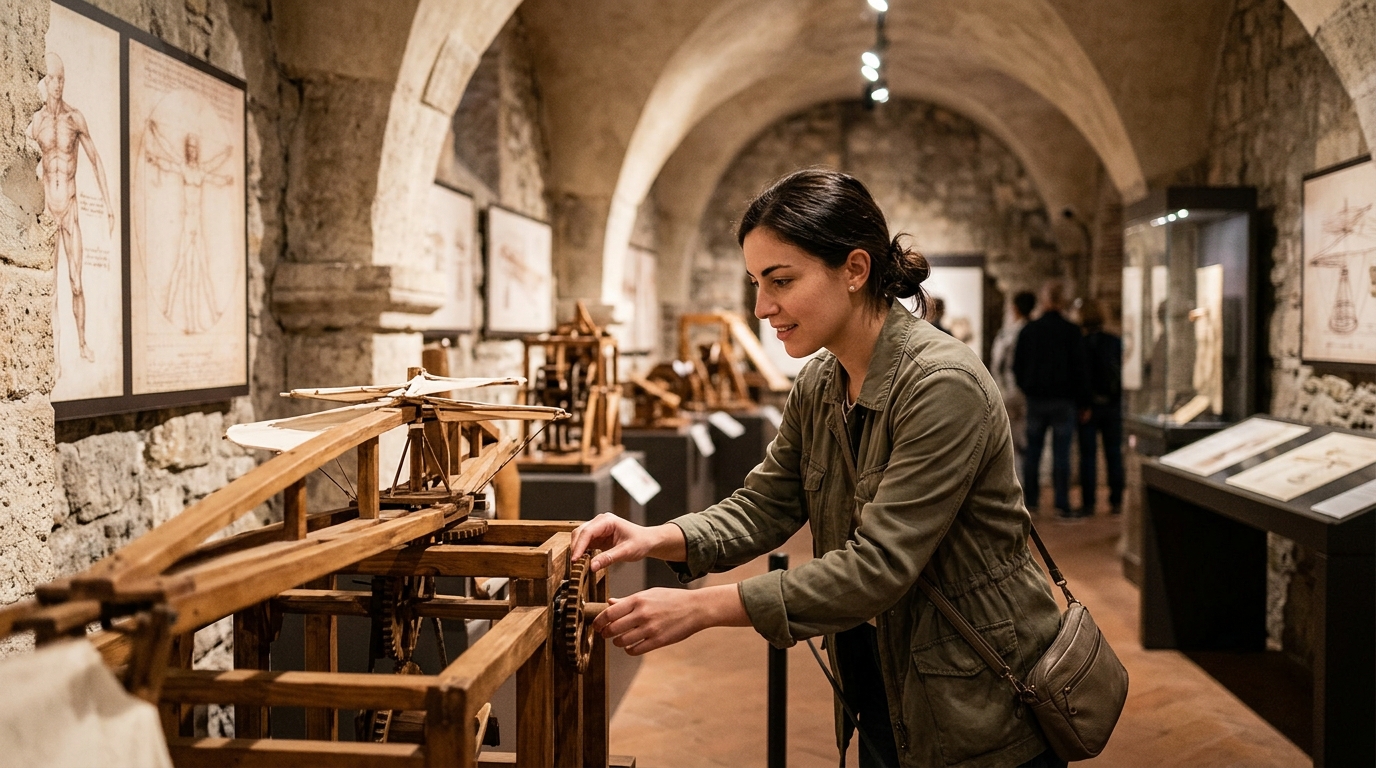
Rome is globally recognized as the eternal city of ancient history and Renaissance papal power, yet many travelers overlook its dedicated tribute to one of history's most brilliant minds. The Museo Leonardo da Vinci in Piazza del Popolo stands as the most popular dedicated Leonardo museum in Rome, offering an immersive journey into the genius of the Italian polymath. Located in the underground vaults of the Basilica Santa Maria del Popolo, this institution provides a unique opportunity to explore his inventions, anatomical studies, and artistic theories without the crowds of the Uffizi or the Louvre. This guide details everything you need to know about visiting this extraordinary site. (Museo Leonardo da Vinci)
Location and Accessibility
The museum occupies a striking position at the end of Via del Corso, placing it in the heart of Rome's historic center. It is situated just a five-minute walk from the Spanish Steps, making it an ideal stop for tourists navigating the city's main attractions. The entrance is located within the Basilica Santa Maria del Popolo, a major papal basilica that holds significant religious and artistic importance. This basilica is second only in importance to St. Peter's Basilica and is one of the seven pilgrim churches in Rome. Visitors descend into the underground vaults to access the exhibition spaces, which are designed to feel like a hidden sanctuary dedicated to scientific and artistic discovery.
Accessibility is a key consideration for many travelers. The museum is generally accessible to families and individuals with mobility concerns, though the underground nature of the venue requires navigating stairs. It is recommended to check the info page for specific accessibility details before your visit. The location ensures that you can easily combine a visit to the museum with other nearby landmarks such as the Pantheon or Trevi Fountain.
Exhibition Highlights
While you will not see the original artworks like the Mona Lisa or The Last Supper at this museum, the experience is far from lacking. The exhibitions focus on Leonardo's incredible story, his groundbreaking inventions, and his detailed anatomical sketches. The museum utilizes interactive displays to bring his scientific discoveries to life, allowing visitors to understand the mechanics behind his visionary designs. From flying machines to military engineering, the exhibits showcase the breadth of his intellect.
The anatomical studies are particularly compelling, offering a glimpse into Leonardo's rigorous scientific method. His startling scientific discoveries are presented in a way that highlights his role as a pioneer in multiple fields. The museum is designed to leave you amazed that one person could create so much in one lifetime. The interactive world of Leonardo's passions and studies is curated to engage both adults and children, making it a must-see stop on the Rome itinerary for all the family to enjoy.
Historical Context
Leonardo da Vinci was anointed the master artist of Florence at the tender age of 18. His early training and subsequent work in Florence laid the foundation for his iconic artworks, including the Mona Lisa, The Last Supper, and The Vitruvian Man. Although he spent much of his later life in Milan and France, his connection to Rome remains strong through the legacy of his work and the institutions dedicated to preserving it.
The Museo Leonardo da Vinci serves as a bridge between his Florentine origins and his universal impact on art and science. By situating the museum within a historic basilica, the institution emphasizes the intertwining of faith, art, and science during the Renaissance. This context helps visitors understand the environment in which Leonardo operated and how his work challenged and expanded the boundaries of knowledge in the 15th and 16th centuries.
Museo Leonardo da Vinci vs. Other Sites
Travelers often wonder how this museum compares to other Leonardo-related sites in Italy. Unlike the museums in Milan or Paris that house original masterpieces, the Museo Leonardo da Vinci in Rome focuses on the reconstruction and interpretation of his work. This approach allows for a more dynamic and educational experience, particularly for those new to his life and work.
| Feature | Museo Leonardo da Vinci (Rome) | Leonardo Museum (Paris) | Leonardo da Vinci Museum (Milan) |
|---|---|---|---|
| Primary Focus | Interactive inventions and anatomical studies | Reconstructions of machines | Original manuscripts and codices |
| Location | Underground vaults of Santa Maria del Popolo | Palais de la Découverte | Castello Sforzesco |
| Best For | Families and first-time visitors | Technical enthusiasts | Art historians and scholars |
| Original Artworks | No | No | No |
Planning Your Visit
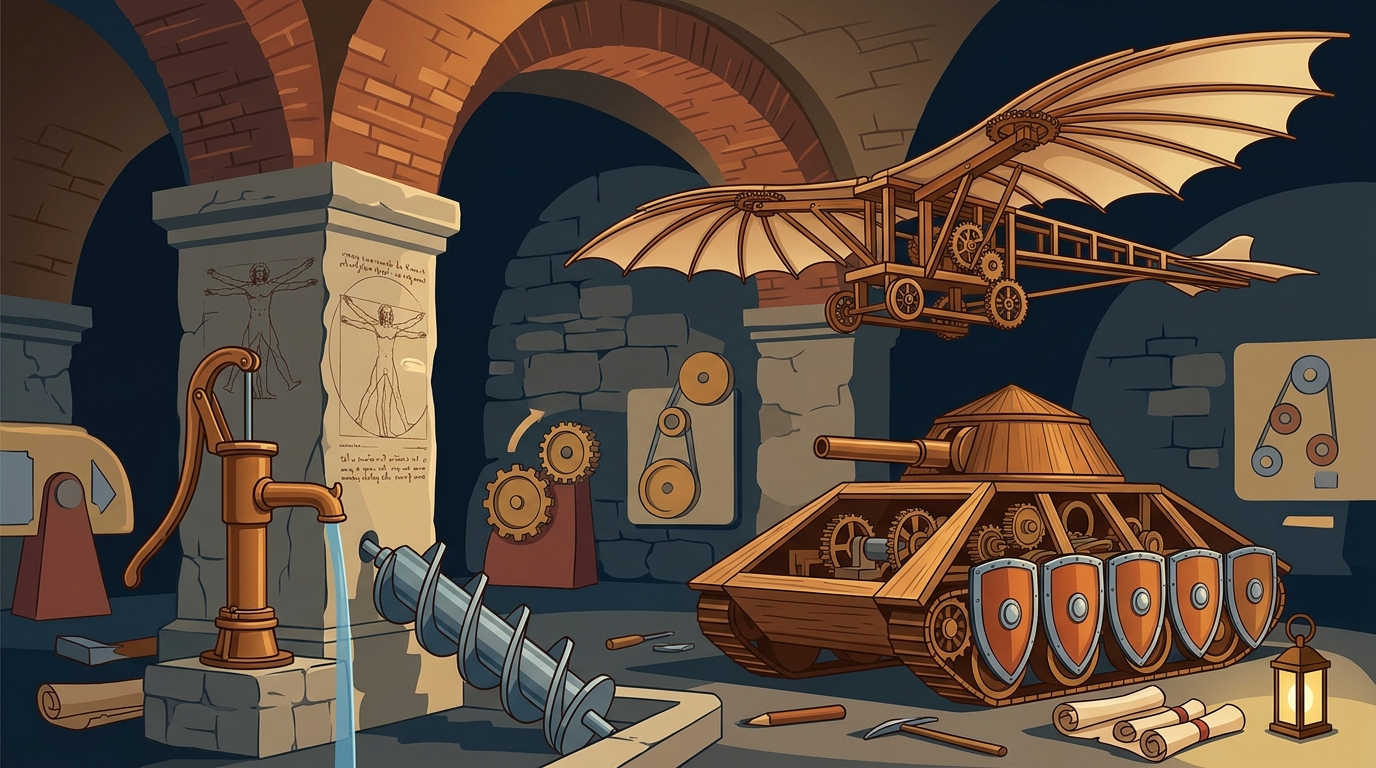
Planning your visit to the Museo Leonardo da Vinci requires some foresight to ensure a smooth experience. The museum is open to the public, but tickets can be purchased online to skip the line. It is advisable to book your tickets in advance, especially during peak tourist seasons. The Book Now page on the official website provides the most up-to-date information on hours and availability.
Visitors should allocate approximately one to two hours for the exhibition. The interactive nature of the displays encourages a slower pace, allowing you to engage deeply with the content. The museum is also available for educational groups and private tours, which can be arranged through the About section of the website. The staff is knowledgeable and passionate about Leonardo's legacy, providing valuable insights during your visit.
Key Takeaways
- The Museo Leonardo da Vinci is the most popular dedicated Leonardo museum in Rome.
- It is located in the underground vaults of the Basilica Santa Maria del Popolo.
- The museum is a five-minute walk from the Spanish Steps.
- Exhibits focus on interactive displays of inventions and anatomical studies.
- Leonardo was anointed master artist of Florence at age 18.
- The basilica is one of the seven pilgrim churches in Rome.
- Tickets should be booked in advance via the official website.
Frequently Asked Questions
Is the Museo Leonardo da Vinci in Rome open to the public?
Yes, the museum is open to the public and welcomes visitors from around the world. It is a key cultural attraction in Rome's historic center.
How long does it take to tour the museum?
Most visitors spend between one and two hours exploring the interactive exhibits and learning about Leonardo's life and work.
Can I see original paintings by Leonardo at this museum?
No, the museum does not house original paintings. Instead, it features detailed reconstructions and interactive displays of his inventions and studies.
Is the museum suitable for children?
Absolutely. The interactive nature of the exhibits makes it a great experience for families and children, offering an engaging introduction to the Renaissance.
How do I get to the museum from the Spanish Steps?
The museum is located at the end of Via del Corso, just a five-minute walk from the Spanish Steps. Follow the street towards the Piazza del Popolo.
Do I need to book tickets in advance?
It is highly recommended to book tickets in advance, especially during peak season, to ensure entry and avoid long queues.
What is the address of the museum?
The museum is located in the underground vaults of the Basilica Santa Maria del Popolo in Piazza del Popolo, Rome.
Book Your Experience
Discover the greatest genius of all time in the heart of Rome. Do not miss your chance to be inspired by the incredible story of Leonardo da Vinci. Visit the Book Now page to secure your tickets and plan your visit to the Museo Leonardo da Vinci in Piazza del Popolo today.