
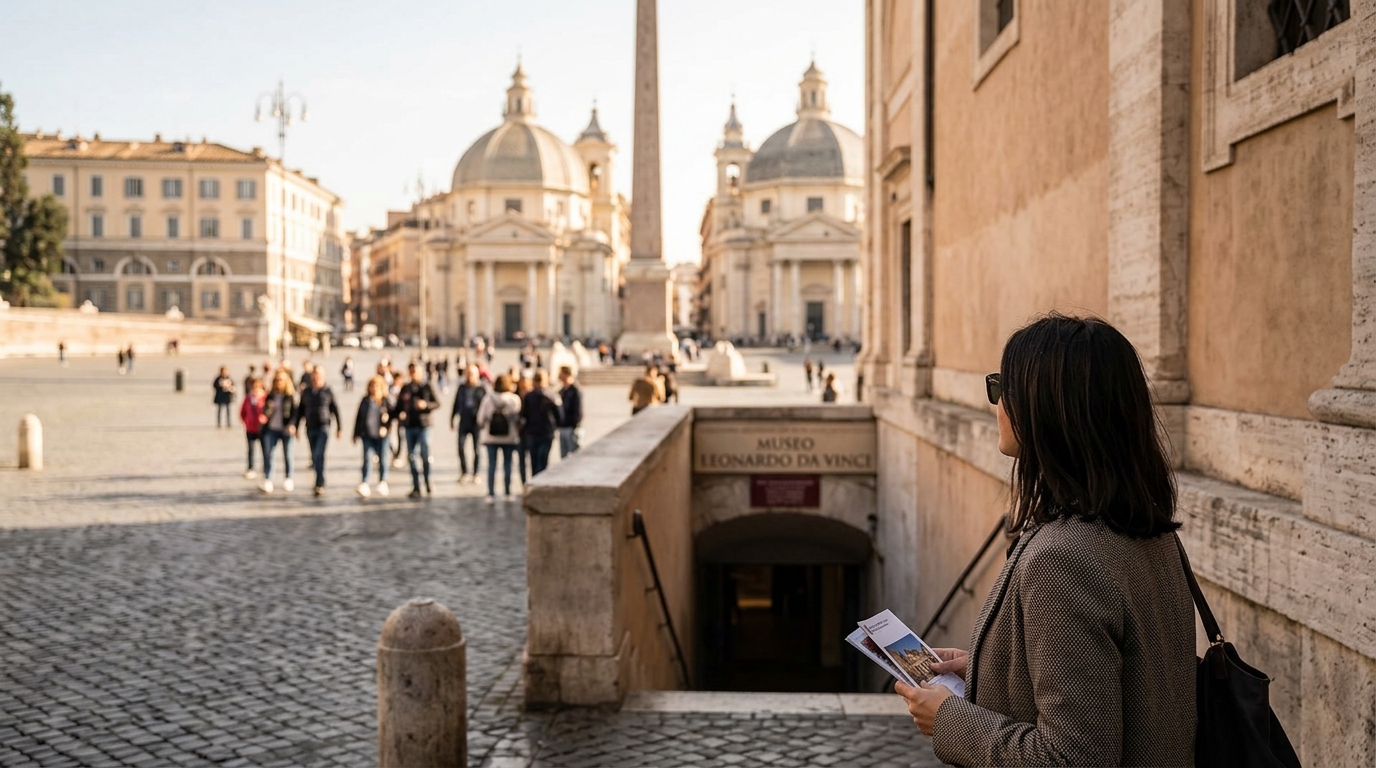
Piazza del Popolo serves as the grand northern gateway to Rome, welcoming millions of visitors who arrive by train or bus from the historic center. This expansive square is not merely a transit point but a vibrant cultural hub surrounded by baroque architecture, bustling cafes, and immediate access to some of the city's most significant landmarks. According to recent tourism data, the area sees over 10 million annual visitors, making it one of the most densely trafficked public spaces in Italy. Understanding how to navigate this zone efficiently can transform a rushed stopover into a memorable cultural experience. (Museo Leonardo da Vinci)
Explore the Gardens of Monte Pincio
Directly behind the Piazza del Popolo rises the Gianicolo Hill, locally known as Monte Pincio. This elevated park offers one of the most panoramic views in Rome, stretching from the Vatican to the Colosseon on clear days. The gardens are a serene escape from the urban noise, featuring manicured lawns, historic statues, and the famous Pincio Terrace.
The terrace is particularly famous for its sunset views. As the sun dips below the horizon, the square below transforms into a sea of lights, providing a romantic and photogenic backdrop for visitors. The park itself is free to enter, making it an accessible luxury for budget-conscious travelers. The greenery here was originally designed in the 19th century to provide a natural buffer between the city and the northern entrance, a concept that remains effective today.
Visit Basilica Santa Maria del Popolo
Located on the eastern side of the square, the Basilica di Santa Maria del Popolo is a minor papal basilica and one of the seven pilgrim churches of Rome. Its importance is second only to St. Peter's Basilica in terms of historical and artistic significance within the city's ecclesiastical hierarchy. The church houses two of the most important Caravaggio paintings in existence: The Conversion of Saint Paul and The Crucifixion of Saint Peter.
These masterpieces are housed in the Cerasi Chapel, which also features works by Annibale Carracci. The basilica is not just a religious site but a museum of Renaissance and Baroque art. The architecture itself, designed by Bramante and Raphael, reflects the high artistic standards of the late 15th and early 16th centuries. Visitors should allocate at least 45 minutes to appreciate the chapels, including the Chigi Chapel designed by Raphael.
Discover the Museo Leonardo da Vinci
For those fascinated by the mind of the ultimate Renaissance man, the Museo Leonardo da Vinci offers a unique underground experience. Located in the vaults beneath the Basilica Santa Maria del Popolo, this museum is dedicated to the inventions, anatomical studies, and scientific discoveries of Leonardo da Vinci. It is the most popular dedicated Leonardo museum in Rome, offering an immersive journey into his genius.
While the museum does not display original artworks, it features detailed 3D models and interactive displays that bring Leonardo's sketches to life. Visitors can explore his designs for flying machines, war tanks, and anatomical drawings that were centuries ahead of their time. The museum provides a tangible connection to the intellectual curiosity that defined the Renaissance era. It is an essential stop for families and students alike, offering a hands-on approach to history.
Book tickets for the Museo Leonardo da Vinci in advance to ensure entry, as capacity in the underground vaults is limited. The museum is located at the end of Via del Corso, making it easily accessible from the square. Check the official info page for current opening hours and guided tour options.
Stroll Down Via del Corso
Extending south from the Piazza del Popolo is Via del Corso, one of Rome's main shopping streets. This avenue connects the northern gate to the heart of the city, passing through the historic center. The street is lined with historic palaces, high-end fashion boutiques, and traditional Italian cafes.
Shopping here offers a mix of luxury brands and local artisan shops. The architecture along the street reflects centuries of Roman urban development, with facades dating back to the Renaissance and Baroque periods. At the southern end of the street, Via del Corso meets Piazza Colonna, home to the Column of Marcus Aurelius. This walk provides a direct route to the Pantheon and the Trevi Fountain, making it a practical path for tourists.
Understand the Square's History
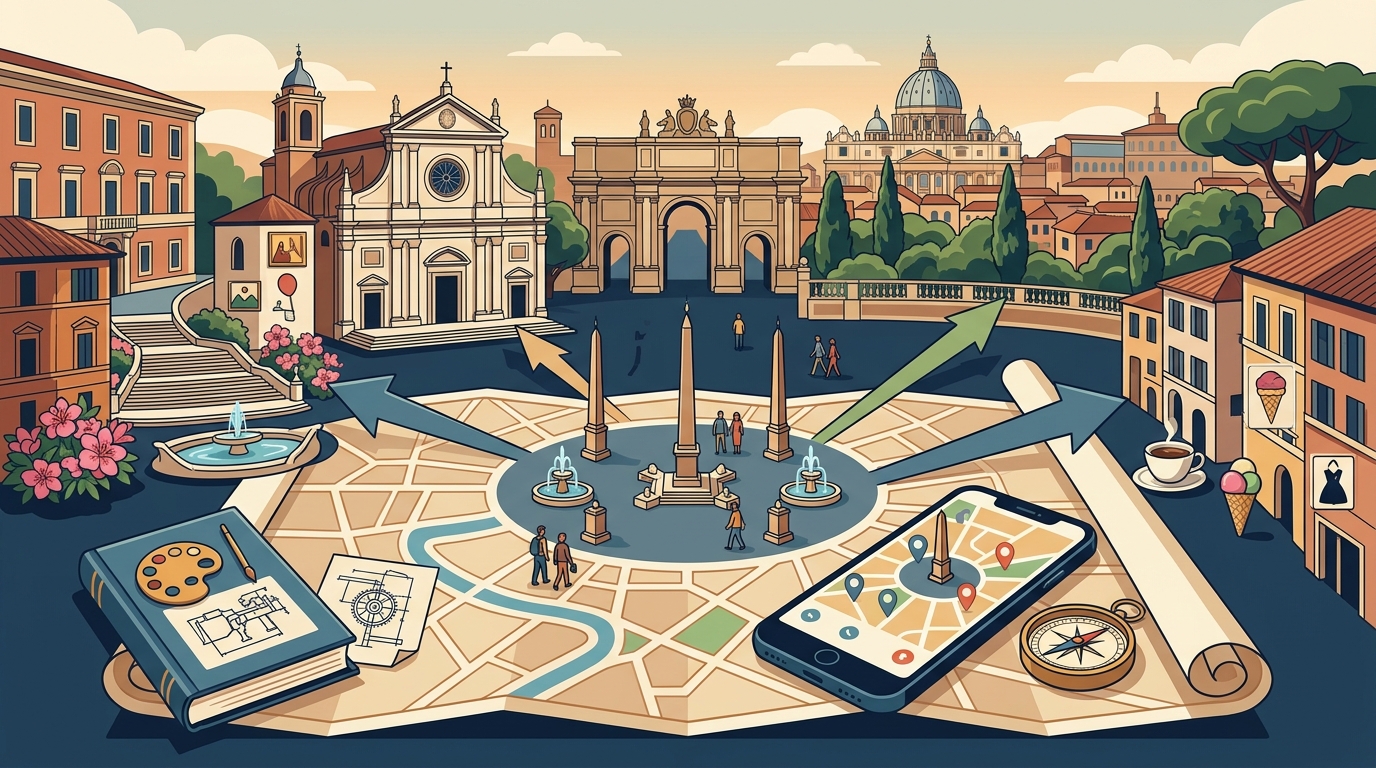
The Piazza del Popolo has evolved significantly over the centuries. Originally known as the Circus Flaminius, it was a public space for games and gatherings in ancient Rome. In the 17th century, Pope Sixtus V redesigned the square, adding the obelisk and the twin churches of Santa Maria dei Miracoli and Santa Maria in Montesanto.
The current layout was largely finalized in the 19th century by the architect Giuseppe Valadier, who introduced the fan-shaped layout and the twin staircases leading down to the square. This design was intended to create a monumental approach to the city, emphasizing the grandeur of Rome. The square has hosted numerous historical events, including papal inaugurations and public celebrations.
Key Takeaways
- Strategic Location: Piazza del Popolo is the northern entrance to Rome, offering immediate access to major attractions like the Vatican and the historic center.
- Artistic Treasures: The Basilica Santa Maria del Popolo houses two Caravaggio masterpieces, making it a critical stop for art enthusiasts.
- Unique Museum: The Museo Leonardo da Vinci provides an interactive look at the inventor's mind, located uniquely in underground vaults.
- Panoramic Views: The Monte Pincio gardens offer some of the best sunset views in Rome, free of charge.
- Shopping and Dining: Via del Corso provides a direct route to the city center with extensive shopping and dining options.
- Historical Depth: The square's design by Valadier and its ancient roots make it a layer of Roman history.
- Accessibility: The area is well-connected by public transport, making it easy to reach from Fiumicino and Ciampino airports.
Frequently Asked Questions
How far is Piazza del Popolo from the Colosseum?
The distance is approximately 2.5 kilometers. Walking takes about 30 to 40 minutes through the historic center. Taking a bus or taxi is faster, usually under 15 minutes depending on traffic.
Is the Museo Leonardo da Vinci worth visiting?
Yes, it is highly recommended for those interested in science, history, and the Renaissance. The interactive exhibits provide a unique perspective on Leonardo's inventions that cannot be found in traditional art museums.
What is the best time to visit the Pincio Terrace?
The best time is during sunset. The lighting is ideal for photography, and the atmosphere is vibrant as locals and tourists gather to watch the day end. Arriving 30 minutes before sunset ensures a good spot.
Are there parking facilities near Piazza del Popolo?
Parking is limited and often expensive. There are several paid parking lots nearby, such as Parcheggio Piazza del Popolo. However, using public transport is generally more convenient and cost-effective.
Can I see the Caravaggio paintings for free?
No, entry to the Basilica Santa Maria del Popolo requires a ticket. The fee covers access to the basilica and its chapels, including the Cerasi Chapel where the Caravaggios are located.
What is the significance of the obelisk in the square?
The obelisk, known as the Flaminio Obelisk, was brought to Rome by Emperor Augustus. It was erected in the center of the square in the 18th century and serves as a focal point for the fan-shaped design by Valadier.
Is the area safe at night?
The Piazza del Popolo is generally safe, but like any major tourist area, it is advisable to remain aware of your surroundings. The area is well-lit and patrolled, with many restaurants and bars open late.
Plan Your Visit Today
Whether you are drawn to the artistic depths of the Museo Leonardo da Vinci or the panoramic heights of Monte Pincio, Piazza del Popolo offers a rich tapestry of experiences. Start your Roman adventure at this northern gateway and explore the wonders that await. Book your tickets to the Museo Leonardo da Vinci now to secure your place in history.