
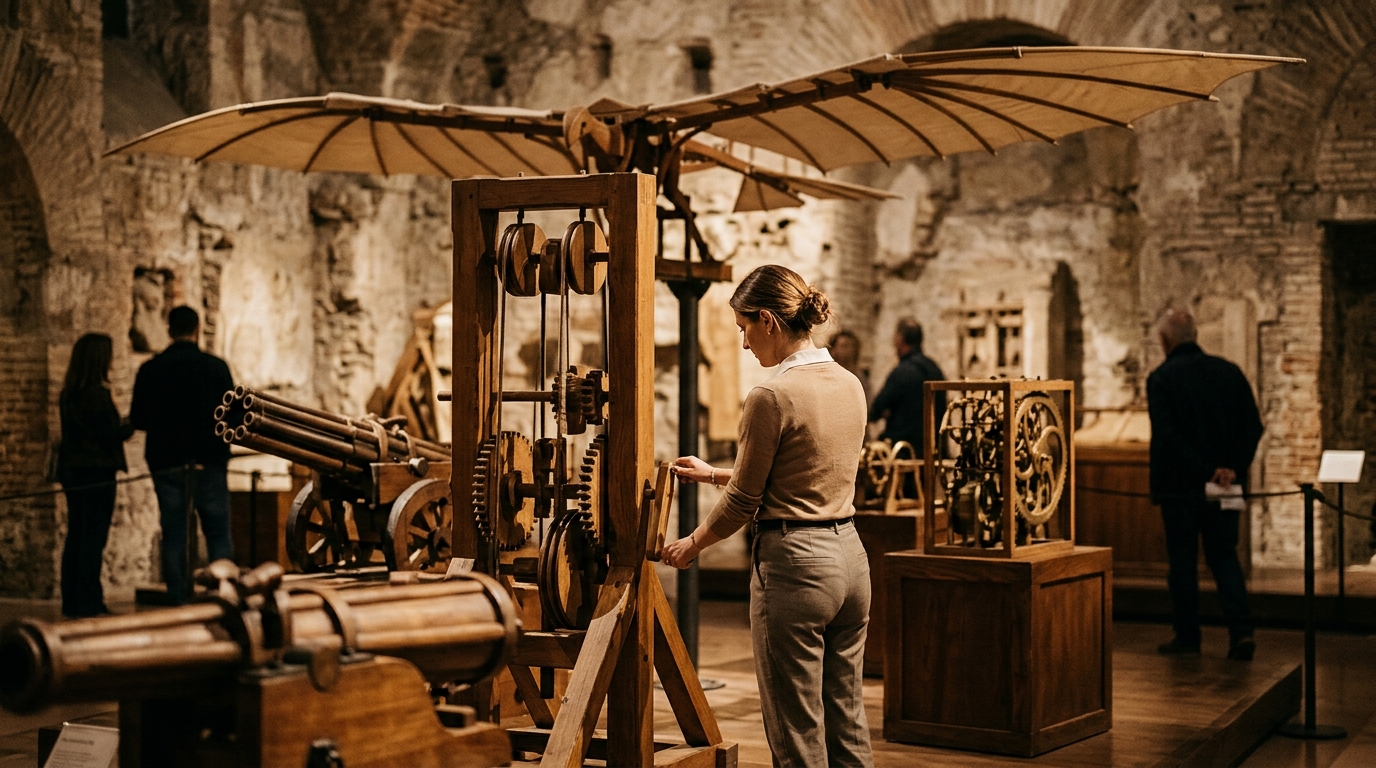
Leonardo da Vinci remains the ultimate symbol of the Renaissance mind, bridging the gap between artistic mastery and scientific inquiry. While his original paintings are scattered across major global museums, his mechanical genius is preserved in detailed codices and physical reconstructions. According to recent tourism data, over 10 million visitors explore Rome annually, with a significant portion seeking cultural landmarks like the Leonardo da Vinci legacy. This guide details exactly where you can view his inventions, from full-scale working models to original manuscript pages.
Rome: The Interactive Museum Experience
For travelers in Italy, the most accessible and immersive way to see Leonardo's machines is in Rome. The Museo Leonardo da Vinci in Piazza del Popolo offers a unique underground experience located within the vaults of the Basilica Santa Maria del Popolo. This location is not merely a gallery but an interactive journey through the inventor's mind.
The museum features full-scale working models of Leonardo's most famous mechanical designs. Visitors can observe the mechanics of his flying machines, including the aerial screw and the ornithopter. These are not static displays but functional replicas that demonstrate the engineering principles Leonardo sketched centuries ago. The museum is situated at the end of Via del Corso, making it a convenient stop for those exploring the historic center. It is described as the most popular dedicated Leonardo museum in Rome, offering a family-friendly environment that breaks down complex engineering concepts into understandable visual narratives.
Leonardo was anointed the master artist of Florence at the tender age of 18, responsible for the iconic artworks of the Mona Lisa, The Last Supper and The Vitruvian Man. While the original artworks are elsewhere, this museum focuses entirely on his scientific and mechanical output. The underground setting provides a distinct atmosphere, separating the modern world from the historical context of the Renaissance. You will discover his incredible story, groundbreaking inventions, detailed anatomical sketches, startling scientific discoveries and much more that will leave you amazed that one person could create so much in one lifetime.
Milan: The Sforza Castle Collection
Milan holds a special place in Leonardo's career, as he spent over two decades serving the Sforza family. The Sforza Castle (Castello Sforzesco) houses the Codex Trivulziana and other significant collections related to his time in the city. While the castle primarily focuses on art and history, it frequently hosts exhibitions dedicated to his engineering works.
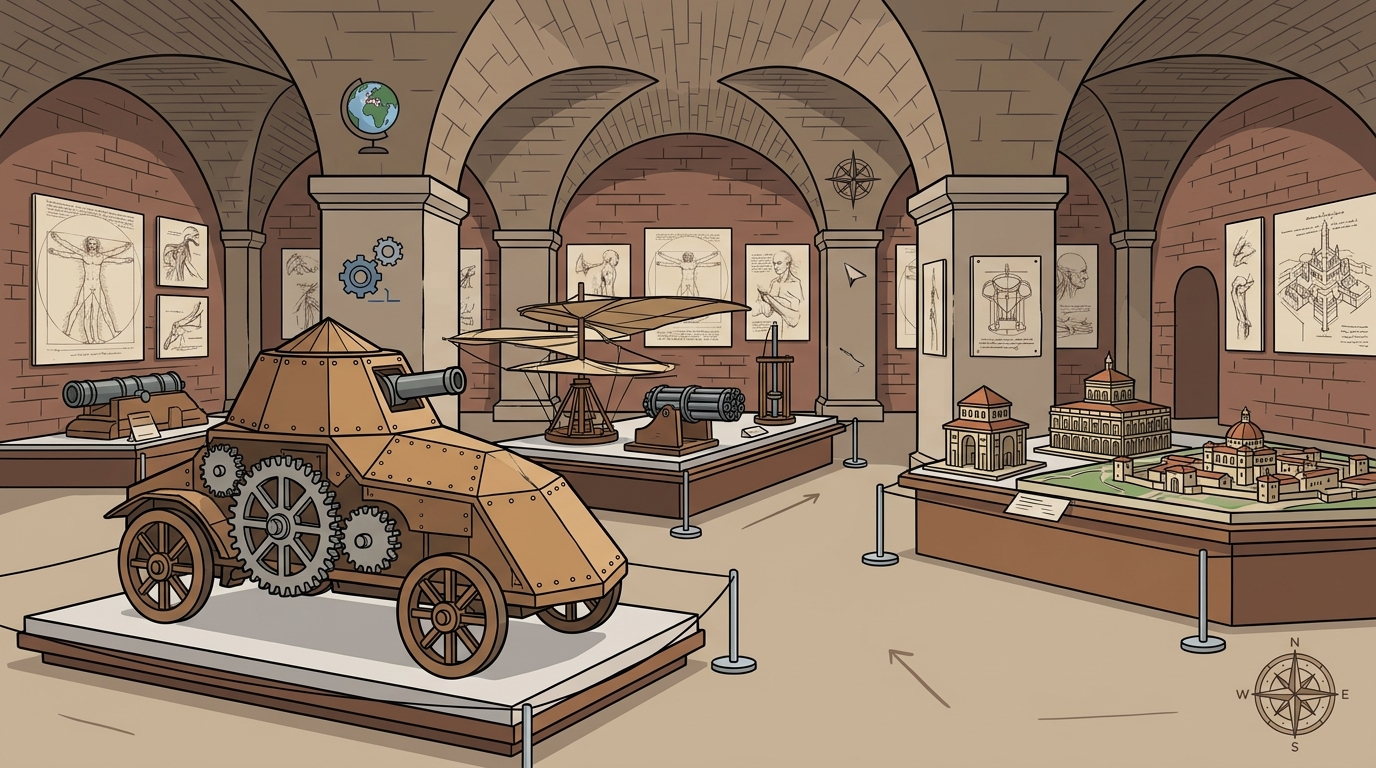
The Castello Sforzesco is one of the most important historical monuments in Milan. It was the residence of the Sforza dukes, who were Leonardo's primary patrons during his first period in the city. Here, he designed fortifications, military machines, and urban planning projects. The museum often displays replicas of his war machines, including the famous multi-barreled gun and the armored tank. These exhibits provide context for how Leonardo applied his scientific knowledge to practical, often military, problems.
Visiting Milan allows you to trace the physical spaces where Leonardo worked. The city's architecture and urban layout were influenced by his designs. The Milan tourism board highlights the connection between the city's Renaissance heritage and Leonardo's engineering genius. For those interested in the intersection of art and architecture, Milan offers a deeper dive into the practical applications of his theories.
Château de Clos Lucé: The Final Years
For a comprehensive view of Leonardo's later life and inventions, the Château de Clos Lucé in Amboise, France, is the definitive destination. King Francis I invited Leonardo to France in 1516, where he spent his final three years. The château now houses the world's largest collection of Leonardo's mechanical models.
The park surrounding the château features a series of full-scale working models of Leonardo's inventions. These include the helicopter, the tank, the bridge, and the flying machine. The models are constructed according to Leonardo's original sketches, allowing visitors to see the mechanics in motion. The Clos Lucé official website provides detailed information on these exhibits and the historical context of Leonardo's stay in France.
The Château de Clos Lucé is part of the Royal Château d'Amboise complex. It is a UNESCO World Heritage site, reflecting the global importance of Leonardo's contributions to human knowledge. The museum also displays the death mask of Leonardo, providing a tangible connection to the man himself. The site is particularly significant for understanding how Leonardo's ideas were received and implemented in France. The UNESCO World Heritage listing for the Château d'Amboise highlights the cultural exchange between Italy and France during the Renaissance.
Viewing Original Codices
While models provide a tangible experience, the original source of Leonardo's inventions are his codices. These handwritten notebooks contain thousands of pages of sketches, notes, and diagrams. Viewing these originals requires visiting specific libraries and museums that hold them.
The British Library in London holds the Codex Forster, which contains detailed studies of flight and water movement. The Biblioteca Marciana in Venice holds the Codex Arundel, another crucial collection of his scientific notes. The Royal Collection Trust in the UK also holds significant portions of his work, including the Codex Forster.
These manuscripts are rarely on permanent display due to their fragility. However, they are periodically exhibited in major museums around the world. For example, the Victoria and Albert Museum in London has hosted exhibitions featuring Leonardo's drawings. The Metropolitan Museum of Art in New York also holds significant Leonardo manuscripts. Checking the exhibition schedules of these institutions is essential for planning a visit to see the original documents.
Venue Comparison and Recommendations
Choosing the right venue depends on your location and specific interests. The table below summarizes the key features of each major location.
| Location | Type of Inventions | Key Feature | Best For |
|---|---|---|---|
| Rome (Piazza del Popolo) | Working Models | Interactive underground experience | First-time visitors in Italy |
| Milan (Sforza Castle) | Replicas & Exhibitions | Historical context of Sforza patronage | History and architecture enthusiasts |
| Amboise (Clos Lucé) | Full-Scale Working Models | Largest collection of models | Engineering and mechanics focus |
| London (British Library) | Original Manuscripts | Authentic codices | Academic and manuscript research |
Key Takeaways
- The Museo Leonardo da Vinci in Rome offers the most accessible interactive experience for visitors in Italy.
- Château de Clos Lucé in France houses the world's largest collection of full-scale working models.
- Original manuscripts are held in the British Library, Biblioteca Marciana, and Royal Collection Trust.
- Milan's Sforza Castle provides historical context for Leonardo's military and urban engineering projects.
- Leonardo was anointed the master artist of Florence at the tender age of 18.
- The museum in Rome is located in the underground vaults of Basilica Santa Maria del Popolo.
- Visiting multiple venues provides a comprehensive understanding of his mechanical genius.
Frequently Asked Questions
Can I see the original Mona Lisa in these museums?
No, the original Mona Lisa is housed exclusively in the Louvre Museum in Paris. The museums listed here focus on Leonardo's inventions, manuscripts, and working models.
Are the models in Rome functional?
Yes, the Museo Leonardo da Vinci in Piazza del Popolo features full-scale working models that demonstrate the mechanics of his designs, such as the flying machines and bridges.
Which museum has the most inventions?
The Château de Clos Lucé in Amboise, France, has the largest collection of full-scale working models of Leonardo's inventions, including the helicopter and the tank.
Do I need to book tickets in advance?
It is highly recommended to book tickets in advance for all major venues, especially during peak tourist seasons. The Rome museum and Clos Lucé often require online reservations.
Are these museums suitable for children?
Yes, the interactive nature of the models in Rome and Amboise makes them highly engaging for children and families. The museums are designed to be educational and accessible to all ages.
Where can I see Leonardo's anatomical sketches?
Original anatomical sketches are held in the Royal Collection Trust in the UK and the Biblioteca Marciana in Venice. They are occasionally exhibited in major museums worldwide.
How long does it take to visit the Rome museum?
A typical visit to the Museo Leonardo da Vinci in Piazza del Popolo takes approximately 1 to 2 hours, depending on your interest in the interactive exhibits.
Plan Your Visit
Witnessing Leonardo da Vinci's inventions in person offers a profound connection to the Renaissance mind. Whether you choose the interactive underground museum in Rome, the historic castle in Milan, or the expansive grounds of Clos Lucé in France, each location provides unique insights into his genius. Start planning your journey to explore these mechanical marvels today. Book your tickets to the Museo Leonardo da Vinci in Rome to begin your exploration of the greatest genius of all time.