
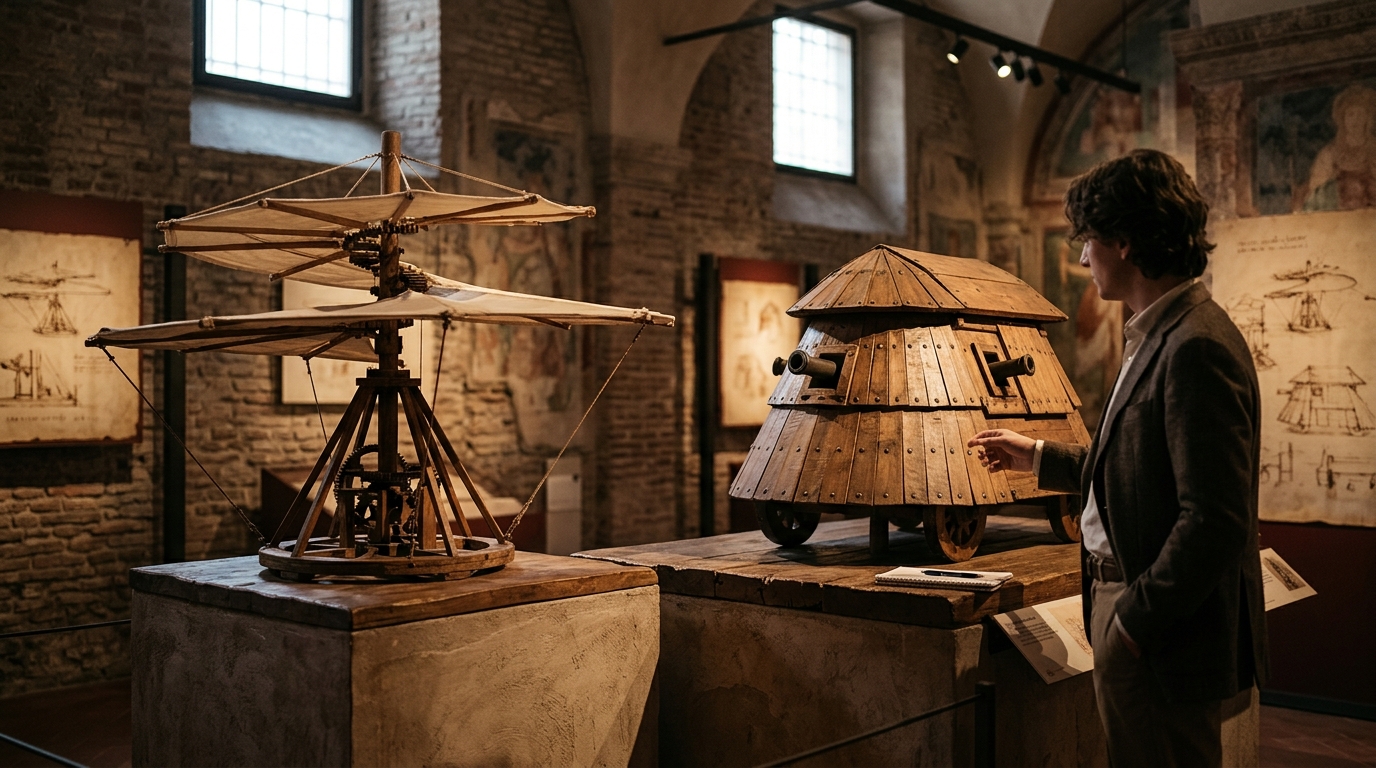
Visitors to Rome often underestimate the sheer scale of Leonardo da Vinci's engineering output. According to historical records, Leonardo produced over 13,000 pages of notes and sketches during his lifetime. This massive archive reveals a mind that was centuries ahead of its time. The Museo Leonardo da Vinci in Piazza del Popolo brings these abstract concepts to life through detailed scale models. Understanding the differences between these models helps visitors appreciate the breadth of his genius. (Museo Leonardo da Vinci)
Understanding the Museum Context
The Museo Leonardo da Vinci is located in the underground vaults of the Basilica Santa Maria del Popolo. This unique setting provides a quiet, immersive environment for studying complex mechanical devices. The museum is widely recognized as the most popular dedicated Leonardo museum in Rome. It serves as a critical educational resource for understanding the transition from Renaissance art to modern engineering. (Museo Leonardo da Vinci)
Leonardo da Vinci is widely celebrated as a leading Renaissance painter and sculptor, but although he was also known as an engineer and a scientist, his work in these fields remained hidden for many centuries. The models displayed here are not mere replicas. They are carefully constructed interpretations based on his original codices. These codices are the primary sources of his technical knowledge. Historical analysis confirms that his designs were often theoretical, lacking the materials technology to build them at the time.
The Flying Machine: Early Aviation
One of the most compelling exhibits is the model of Leonardo's ornithopter. This device was designed to mimic the flight of birds. The mechanism relies on the operator pumping levers to flap large wings. This concept represents the earliest attempt at human flight. It demonstrates Leonardo's deep study of avian anatomy and aerodynamics.
The ornithopter is a mechanical device designed to achieve flight by flapping wings. Leonardo studied the flight patterns of birds to understand lift and drag. His designs were ambitious but ultimately impractical due to the weight of the materials available in the 15th century. Despite this, the model illustrates his foundational understanding of aerodynamics. Aviation experts note that his observations were remarkably accurate for the era.
The Aerial Screw: Helicopter Origins
2Another iconic model is the Aerial Screw, often cited as the precursor to the modern helicopter. This device features a large, spiral-shaped linen screw. The design intended for the screw to be rotated rapidly to push against the air. The goal was to lift the entire apparatus vertically into the sky.
The aerial screw is a conceptual design for a vertical takeoff aircraft. Leonardo sketched this device in his Codex MR. The mechanism relies on compressing air rather than generating lift through wings. While the model in the museum demonstrates the mechanical principle, it highlights the limitations of his time. Historical records indicate that Leonardo never built a full-scale version. The model serves as a testament to his visionary thinking.
Armor and Warfare Innovations
Leonardo's work in military engineering is often overshadowed by his art. However, the museum features models of his defensive armor and offensive machines. He designed a suit of armor that was both lightweight and highly protective. The model showcases the intricate interlocking plates that allowed for mobility.
Leonardo da Vinci served as a military architect and engineer for various patrons. His designs for tanks and siege engines were revolutionary. The museum displays these models to show the duality of his genius. He sought peace but was hired for war. Museum studies highlight how his military work funded his artistic pursuits. The armor model demonstrates his understanding of material strength and human ergonomics.
Anatomical and Mechanical Studies
Beyond flying machines, the museum houses models based on Leonardo's anatomical sketches. He believed that understanding the human body was key to understanding mechanics. The models include detailed representations of the heart, muscles, and skeletal structure.
Anatomical study is the scientific investigation of the structure of organisms. Leonardo's dissections were illegal but necessary for his accuracy. The museum models translate his 2D sketches into 3D reality. This allows visitors to see the complexity of his medical insights. Scientific historians agree that his anatomical drawings were centuries ahead of medical science.
Comparison Summary
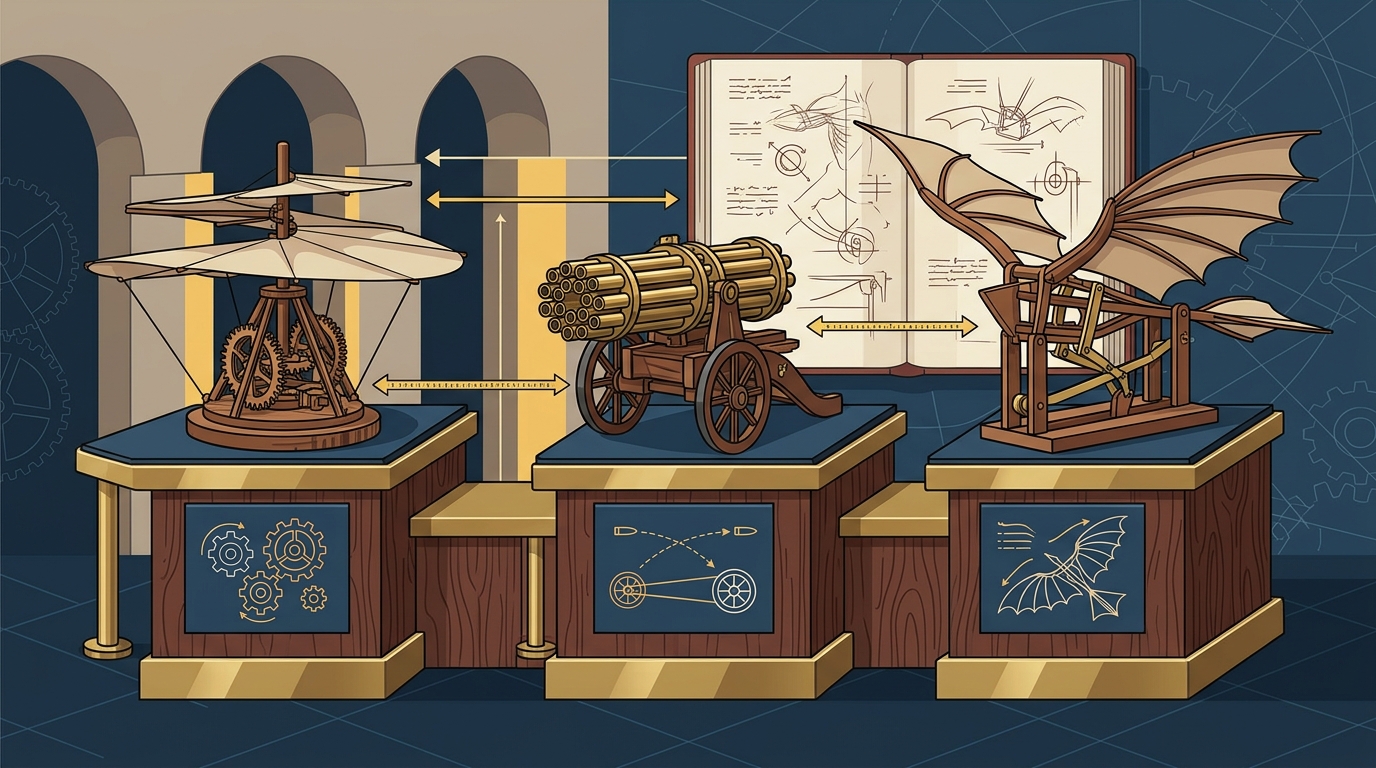
Comparing these models reveals the versatility of Leonardo's mind. Each device addresses a different problem: flight, defense, and biological understanding. The following table summarizes the key differences and similarities.
| Model Type | Primary Function | Key Mechanism | Historical Impact |
|---|---|---|---|
| Ornithopter | Human Flight | Flapping Wings | Foundation of Aerodynamics |
| Aerial Screw | Vertical Lift | Spiral Compression | Precursor to Helicopters |
| Armor Suit | Protection | Interlocking Plates | Advancement in Metallurgy |
| Anatomical Models | Medical Study | Structural Replication | Revolutionized Anatomy |
Key Takeaways
- Leonardo da Vinci produced over 13,000 pages of technical notes.
- The Museo Leonardo da Vinci is located in the Basilica Santa Maria del Popolo.
- The ornithopter model mimics bird flight using flapping wings.
- The aerial screw is considered the first helicopter design.
- Leonardo's military work funded his artistic career.
- Anatomical models in the museum are based on illegal dissections.
- His designs were often theoretical due to material limitations.
Frequently Asked Questions
What is the Museo Leonardo da Vinci?
The Museo Leonardo da Vinci is a museum in Rome dedicated to the life and work of Leonardo da Vinci. It features detailed models of his inventions and studies.
Where is the museum located?
The museum is located in the underground vaults of the Basilica Santa Maria del Popolo in Piazza del Popolo, Rome.
Can I see the original artworks at this museum?
No, the museum does not house original artworks. It focuses on the scientific and engineering aspects of Leonardo's work through models and notes.
How long does a visit take?
A typical visit lasts between 45 minutes to an hour. The interactive nature of the exhibits encourages a slower pace.
Are the models accurate to Leonardo's designs?
Yes, the models are constructed based on Leonardo's original codices and sketches. They represent the most accurate interpretations available.
Is the museum suitable for children?
Yes, the museum is great for all the family to enjoy. The visual nature of the models engages younger visitors.
How do I book tickets?
Tickets can be booked online through the official booking page. Advance booking is recommended.
Plan Your Visit
Experience the genius of Leonardo da Vinci firsthand. The Museo Leonardo da Vinci offers a unique perspective on the Renaissance master's engineering prowess. Visit the museum to explore the underground vaults and discover his groundbreaking inventions. Book your tickets now to secure your place in history.