
Navigating Museo Leonardo da Vinci's Interactive Invention Exhibits at Piazza del Popolo
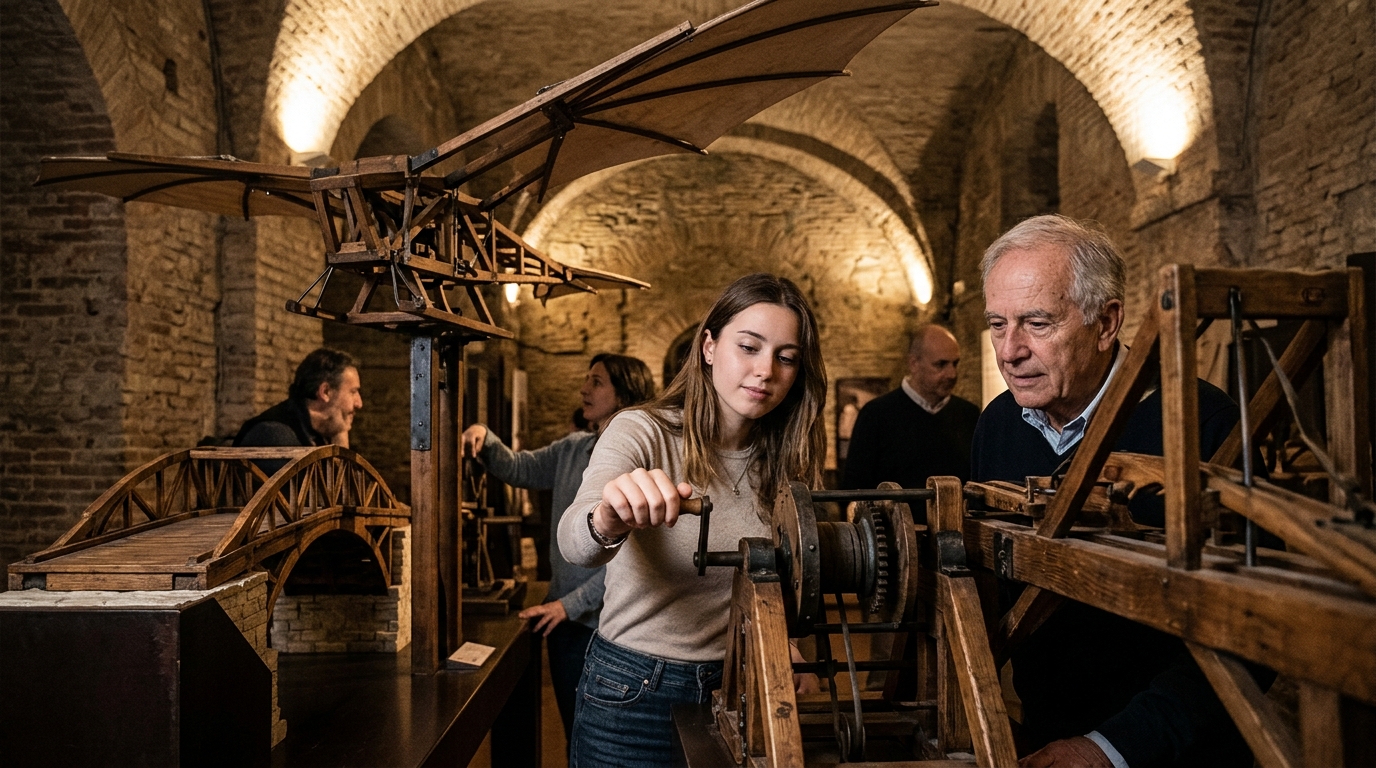
Visiting the Museo Leonardo da Vinci in Piazza del Popolo offers a unique opportunity to engage with the mind of history's most versatile genius. Located in the underground vaults of the Basilica Santa Maria del Popolo, this museum provides an immersive experience that bridges the gap between Renaissance art and modern engineering. Leonardo da Vinci is widely celebrated as a leading Renaissance painter and sculptor, but his work as an engineer and scientist remains equally profound. Recent analyses of his notebooks reveal that his mechanical designs were centuries ahead of their time, influencing modern robotics and aerodynamics. This guide will help you navigate the specific interactive zones within the museum to maximize your understanding of his inventions. (Museo Leonardo da Vinci)
Preparation and Ticketing Strategy
Before you enter the underground vaults, it is crucial to understand the logistical layout of the museum. The museum is situated at the end of Via del Corso, just a five-minute walk from the Spanish Steps. This central location in Rome makes it a popular stop for tourists, meaning crowds can form quickly during peak hours. Rome tourism data indicates that booking tickets in advance significantly reduces wait times and ensures entry during your preferred time slot. The museum operates on a timed-entry system to protect the delicate historical environment of the basilica.
Upon arrival, you will pass through the security checkpoint and enter the main gallery space. The layout is designed to guide visitors through a chronological and thematic journey. Do not rush the entrance; take a moment to orient yourself with the large-scale models that greet you. The museum is the most popular dedicated Leonardo museum in Rome, offering a comprehensive look at his life's work. Encyclopedia Britannica notes that Leonardo's notebooks contain over 13,000 pages of notes and drawings, covering everything from flying machines to musical instruments. Your navigation strategy should prioritize the interactive mechanical models, as these are the core of the educational experience.
Exploring the Anatomy and Mechanics Zone
The first major section of the museum focuses on Leonardo's anatomical studies and their direct application to his mechanical inventions. Leonardo da Vinci is defined as the pioneer of modern anatomy due to his detailed dissections and sketches of the human body. In this zone, you will find large-scale, working models of his anatomical studies. These are not static displays; they are interactive mechanisms that demonstrate how he understood muscle movement and joint articulation.
To navigate this area effectively, focus on the mechanical dolls and articulated skeletons. These models show how Leonardo applied his knowledge of human physiology to create automata. Smithsonian Institution research highlights that Leonardo's anatomical drawings were so accurate that they were not surpassed for over a century. Pay close attention to the gear systems that drive these models. They reveal his understanding of leverage and force transmission. Use the provided informational plaques to connect the anatomical theory with the mechanical output. This connection is vital for understanding how he viewed the human body as a machine.
Navigating the Flight and Aerial Inventions
The flight section is often the most crowded part of the museum, yet it is essential for understanding Leonardo's visionary status. Leonardo da Vinci is recognized as a visionary engineer who studied bird flight to design human-powered flying machines. This area features full-scale models of his ornithopters, aerial screws, and parachutes. These models are constructed to demonstrate the principles of aerodynamics that Leonardo observed in nature.
When navigating this zone, start with the ornithopter models. Observe the wing flapping mechanisms and how they attempt to mimic the motion of birds. NASA historical archives confirm that Leonardo's sketches of the aerial screw laid the conceptual groundwork for the modern helicopter. Move next to the parachute models. These demonstrate his understanding of air resistance and gravity. The interactive nature of these exhibits allows you to see the structural integrity of his designs. Take time to read the technical explanations regarding the materials he proposed, such as starched linen and wire. This context helps you appreciate the ingenuity of his engineering solutions.
Understanding the Military Engineering Displays
Leonardo spent a significant portion of his career working as a military engineer for various Italian rulers. This section of the museum showcases his defensive and offensive designs. Leonardo da Vinci is defined as a master military engineer who designed fortifications, cannons, and siege weapons. The displays here include large-scale models of his tank, the crossbow, and various artillery pieces.
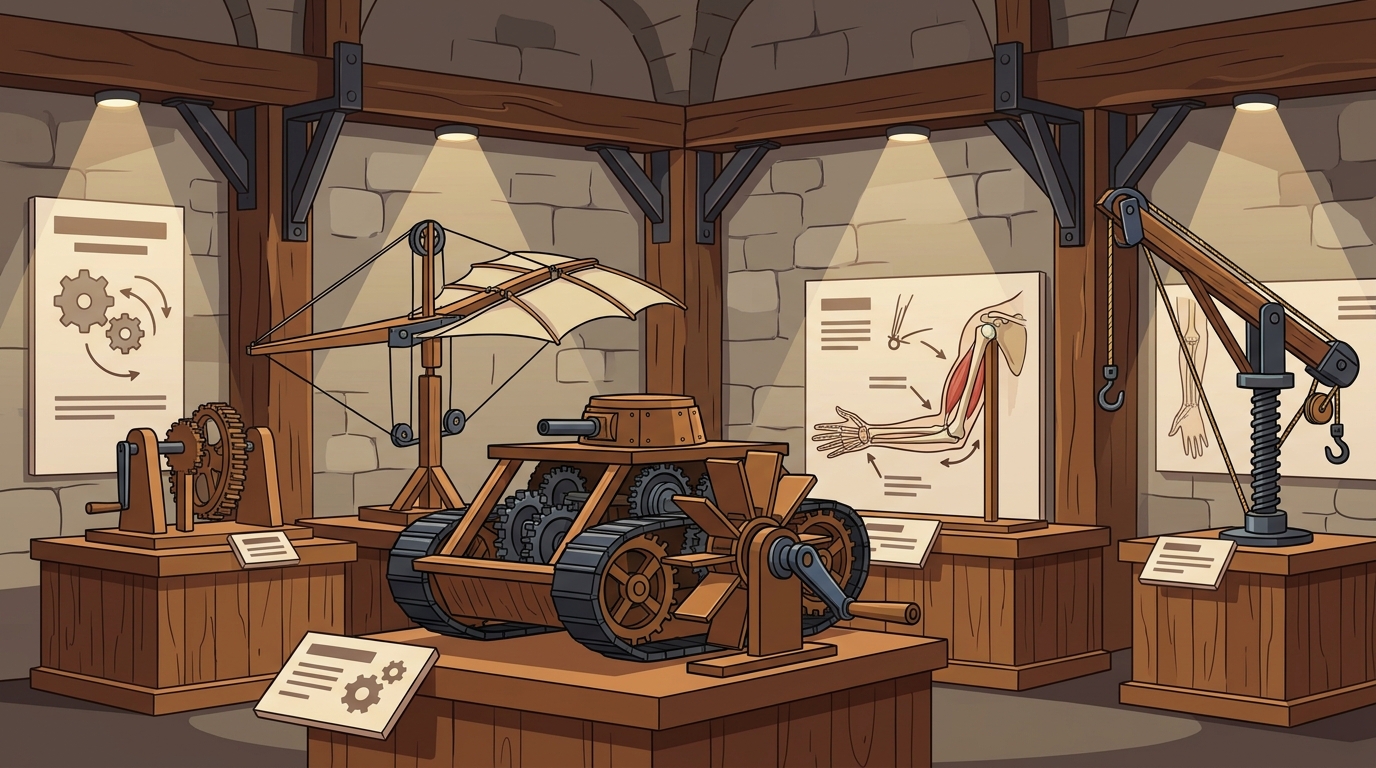
Navigate this area by focusing on the mechanical complexity of the weapons. The tank model, for instance, demonstrates his use of gears and cranks to propel a heavy armored vehicle. History Channel reports that Leonardo's military designs were often ahead of their time, utilizing concepts that would not be implemented for centuries. Pay attention to the defensive walls and bastions depicted in the models. These show his strategic thinking in urban defense. The interactive elements here often allow you to see how the gears interlock. This visual aid is crucial for understanding the sheer scale of his engineering ambitions.
Walking Through Urban Planning Models
The final major section of the museum deals with Leonardo's work in urban planning and hydraulics. Leonardo da Vinci is acknowledged as an urban planner who designed ideal cities with advanced sanitation and traffic systems. This area features models of his canal systems, bridges, and city layouts. These models demonstrate his desire to improve the quality of life through engineering.
When exploring this zone, look for the double-decker bridge models. These structures show his understanding of load distribution and material strength. Architectural Digest notes that Leonardo's bridge designs were so efficient that they are still studied by engineers today. Focus on the hydraulic models that show how he planned to divert rivers and manage water flow. These designs were intended to prevent flooding and improve agriculture. The interactive displays here often include water flow simulations. Use these to understand the practical applications of his theoretical knowledge. This section provides a comprehensive view of his holistic approach to engineering.
Key Takeaways for Visitors
- The museum is located in the underground vaults of the Basilica Santa Maria del Popolo, offering a unique historical context for the exhibits.
- Leonardo da Vinci is defined as a polymath whose work in engineering was as significant as his contributions to art and science.
- Interactive models of his anatomical studies demonstrate the connection between human physiology and mechanical movement.
- The flight section features working models of ornithopters and aerial screws, illustrating his pioneering work in aerodynamics.
- Military engineering displays include detailed models of his tank and artillery, showcasing his strategic design capabilities.
- Urban planning models highlight his innovative approaches to sanitation, traffic, and hydraulic management in ideal cities.
- Booking tickets in advance is recommended to avoid long queues and ensure a smooth entry into the museum.
Frequently Asked Questions
How long does it take to navigate the interactive exhibits?
Most visitors spend between 60 to 90 minutes exploring the museum. This time allows for a thorough examination of the interactive models and detailed reading of the informational plaques. The museum is the most popular dedicated Leonardo museum in Rome, so allocating sufficient time is essential for a complete experience.
Are the interactive exhibits suitable for children?
Yes, the museum is great for all the family to enjoy. The interactive nature of the exhibits, particularly the mechanical models, engages younger visitors by making abstract engineering concepts tangible. The museum is a must-see stop on the Rome itinerary for families interested in history and science.
Can I take photographs inside the museum?
Photography is generally permitted for personal use, but flash photography is prohibited to protect the exhibits. Visitors should check the current policy at the entrance, as rules may change based on special exhibitions or conservation needs.
What is the best time to visit to avoid crowds?
Early morning or late afternoon visits are typically less crowded. TripAdvisor travel guides suggest that visiting during off-peak hours enhances the ability to interact with the exhibits without obstruction. The museum is located at the end of Via del Corso, making it easily accessible from major tourist hubs.
Does the museum offer guided tours in English?
Guided tours are often available in multiple languages, including English. It is advisable to book these tours in advance to secure a spot. The guides provide deeper insights into the historical context of Leonardo's inventions and their modern relevance.
Is the museum accessible for visitors with mobility issues?
The museum is located in underground vaults, which may present accessibility challenges. Visitors with mobility issues should contact the museum directly to inquire about specific accommodations. The museum is situated in a historic building, so structural limitations may apply.
What are the main differences between this museum and others?
This museum is unique in its focus on the interactive reconstruction of Leonardo's mechanical inventions. While other museums may display art or manuscripts, this institution emphasizes the engineering genius of Leonardo da Vinci. The interactive models provide a hands-on understanding of his work that is rare in other institutions.
Plan Your Visit to Museo Leonardo da Vinci
Navigating the Museo Leonardo da Vinci in Piazza del Popolo requires a strategic approach to fully appreciate the depth of his engineering genius. By focusing on the interactive exhibits in the anatomy, flight, military, and urban planning zones, you can gain a comprehensive understanding of his contributions to science and technology. The museum offers a unique window into the mind of one of history's greatest innovators. Book your tickets now to secure your place in this immersive historical experience. Do not miss the opportunity to be inspired by the greatest genius of all time.