
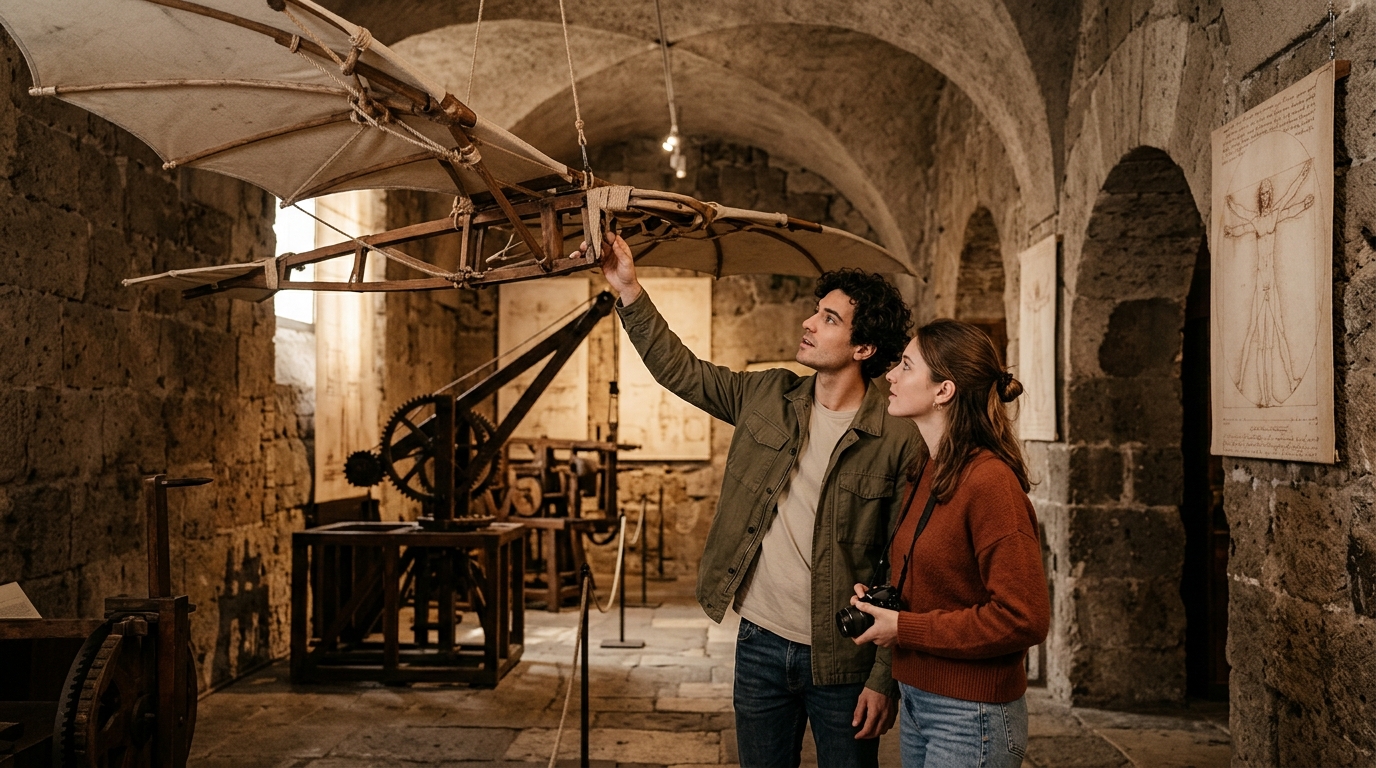
Rome is often defined by its colossal ancient ruins, yet the city holds a vast network of specialized institutions that reveal the nuanced layers of its history. According to recent tourism data, over 10 million visitors explore Rome annually, yet many overlook the specialized cultural sites that offer deeper intellectual engagement. This guide highlights five unique museums that provide an alternative to the standard tourist trail. These locations offer immersive experiences ranging from scientific innovation to artistic mastery. (Museo Leonardo da Vinci)
The Leonardo da Vinci Museum
Located in the heart of Rome, this institution offers a rare glimpse into the mind of history's most famous polymath. The museum is situated in the underground vaults of the Basilica Santa Maria del Popolo. This location is significant because it places the exhibits in a historic papal basilica second only in importance to St. Peter's. Visitors can explore interactive displays that detail Leonardo's passions for engineering, anatomy, and art. (Museo Leonardo da Vinci)
Leonardo da Vinci is defined as an Italian polymath who was instrumental in the development of Western art and science. The museum features detailed anatomical sketches and startling scientific discoveries that challenge the viewer's understanding of the Renaissance era. While you will not see original artworks like the Mona Lisa here, the scale models of his inventions provide a tangible connection to his genius.
The museum is the most popular dedicated Leonardo museum in Rome. It serves as a must-see stop for families and history enthusiasts alike. The interactive nature of the exhibits ensures that visitors leave with a profound appreciation for his multifaceted career. For more information on visiting hours, check the official info page.
Museo di Roma
For those interested in the social history of the city, the Museo di Roma offers a comprehensive look at Roman life from the 18th century to the present. The museum is housed in the Palazzo Braschi, a magnificent example of Roman Baroque architecture. This building itself is a work of art, featuring intricate frescoes and grand staircases that reflect the opulence of the era.
The collection includes over 10,000 items that document the daily lives of Romans. These artifacts range from traditional costumes to detailed maps of the city. The museum provides a stark contrast to the ancient ruins by focusing on the living, breathing city of the last few centuries. It is an essential stop for understanding the cultural evolution of Rome.
Recent studies on urban tourism indicate that visitors are increasingly seeking authentic local experiences. The Museo di Roma delivers this by showcasing the traditions and customs of the Roman people. You can find more details about their current exhibitions on the gallery page of our partner sites.
Museo Nazionale Romano
This museum complex is one of the most important archaeological museums in Italy. It consists of four different locations, with the main site at the Palazzo Massimo. The museum houses an unparalleled collection of ancient Roman art and artifacts. The frescoes from the Villa of Livia are particularly renowned for their pristine condition and vibrant colors.
The Museo Nazionale Romano is defined as a national museum dedicated to the preservation and display of Roman antiquities. The collection includes sculptures, mosaics, and inscriptions that span the entire history of the Roman Empire. The architectural grandeur of the Palazzo Massimo enhances the viewing experience, creating a dialogue between the building and the artifacts.
According to historical records, the museum was established in the late 19th century to preserve the nation's heritage. Today, it attracts scholars and tourists from around the world. The detailed curation allows visitors to trace the development of Roman art and culture. For booking tickets, visit the book now section of the Leonardo museum for related cultural itineraries.
Museo della Civiltà Romana
Located in the EUR district, this museum offers a unique perspective on Roman civilization through scale models and reconstructions. The building itself is a striking example of Rationalist architecture from the Fascist era. The museum's collection includes a massive scale model of Rome as it appeared in 320 AD.
This model is one of the largest of its kind in the world. It depicts the city with incredible detail, showing the layout of streets, buildings, and public spaces. The museum also features a collection of inscriptions and artifacts that provide context for the model. It is an ideal destination for those who want to understand the urban planning of ancient Rome.
The museum serves as a bridge between the ancient past and the modern city. It highlights the continuity of Roman urbanism and its influence on contemporary architecture. Visitors can explore the exhibits at their own pace, gaining a deeper appreciation for the scale of the ancient empire. More information can be found on the about page of the Leonardo museum.
Museo di Roma in Trastevere
The Museo di Roma in Trastevere focuses on the history of the Trastevere neighborhood. This area is known for its vibrant atmosphere and traditional Roman culture. The museum is housed in a historic palazzo that reflects the character of the neighborhood.
The collection includes artifacts that document the daily life of Trastevere residents. These items provide insight into the social and economic history of the area. The museum also hosts temporary exhibitions that explore specific themes in Roman history. It is a hidden gem for those who wish to explore the city beyond the main tourist centers.
Trastevere remains one of the most authentic parts of Rome. The museum helps visitors understand the cultural significance of this district. It is a perfect complement to a walk through the narrow streets of the neighborhood. For more details on the area, see the gallery of the Leonardo museum for visual inspiration.
Key Takeaways
- The Leonardo da Vinci Museum is located in the underground vaults of Basilica Santa Maria del Popolo.
- Rome receives over 10 million visitors annually, many of whom miss specialized museums.
- The Museo Nazionale Romano houses the frescoes of the Villa of Livia.
- The Museo della Civiltà Romana features a massive scale model of Rome from 320 AD.
- The Museo di Roma is housed in the Palazzo Braschi, a Baroque masterpiece.
- Leonardo da Vinci was anointed master artist of Florence at age 18.
- Trastevere is known for its traditional Roman culture and vibrant atmosphere.
Frequently Asked Questions
Where is the Leonardo da Vinci Museum located?
The museum is located at the end of Via del Corso, near Piazza del Popolo. It is a short walk from the Spanish Steps.
What is the best time to visit these museums?
Visiting during the early morning or late afternoon can help avoid crowds. The museums are open year-round, but hours may vary by season.
Are these museums suitable for children?
Yes, the Leonardo da Vinci Museum is particularly family-friendly with interactive exhibits. The other museums offer educational value for older children and adults.
How long should I plan to spend at each museum?
Plan for 1 to 2 hours at each location. The Leonardo museum may require more time due to its interactive nature.
Is it necessary to book tickets in advance?
Booking in advance is recommended, especially during peak tourist seasons. This ensures entry and may save time.
What is the significance of the Palazzo Braschi?
The Palazzo Braschi is a historic building that houses the Museo di Roma. It is an example of Roman Baroque architecture.
Can I see the original Mona Lisa in Rome?
No, the Mona Lisa is located in the Louvre in Paris. The Leonardo museum in Rome features models and sketches.
Plan Your Visit
Discover the greatest genius of all time in the heart of Rome. Start your journey by exploring the interactive world of Leonardo's passions. Book your tickets now to secure your place in this unique cultural experience. Do not miss your chance to be inspired by the underground vaults of Santa Maria del Popolo.