
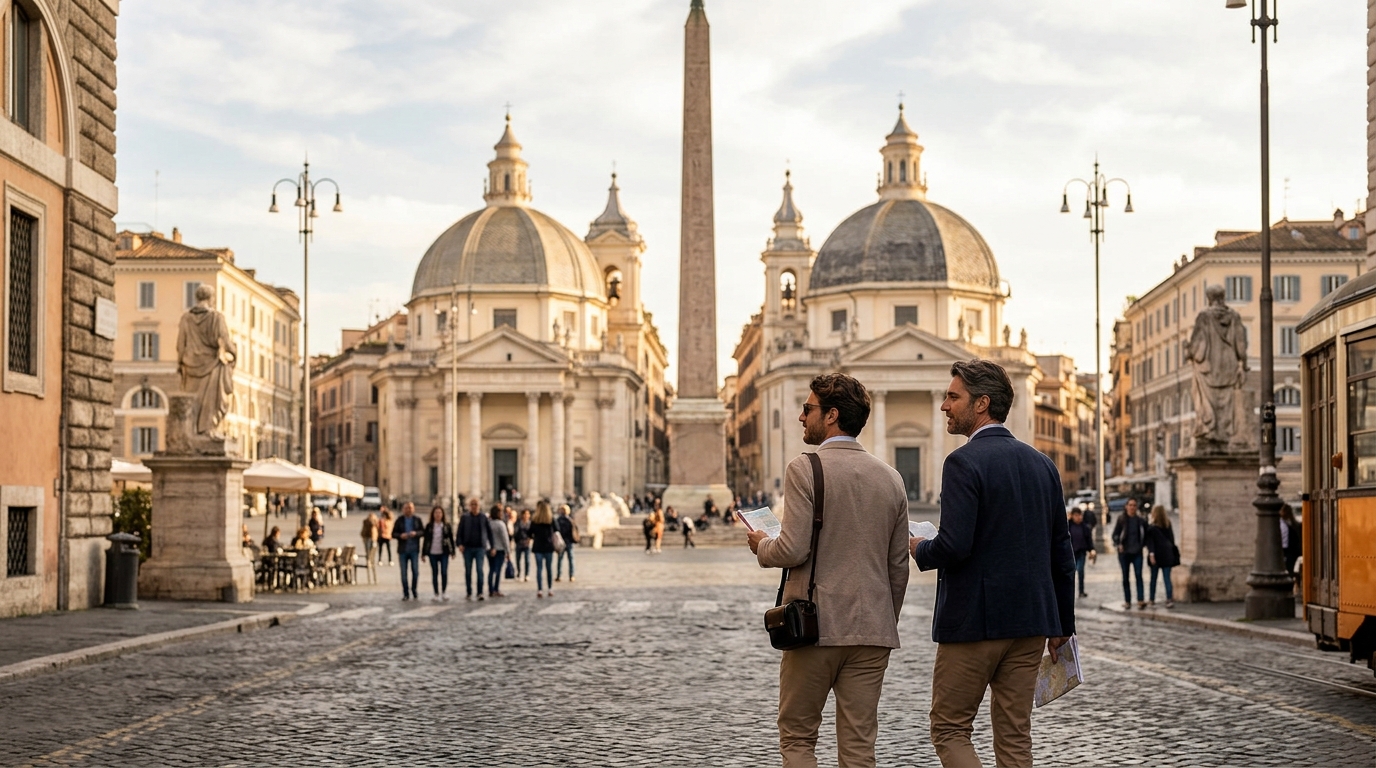
Piazza del Popolo stands as the northern gateway to Rome, serving as a critical transit hub and cultural landmark for millions of visitors annually. According to recent tourism data, this expansive square attracts over 10 million visitors yearly, making it one of the most accessible and high-traffic areas in the Italian capital. The square's strategic location at the end of Via del Corso allows travelers to seamlessly transition from modern shopping districts to ancient historical sites. Understanding the geography and key attractions surrounding this piazza is essential for optimizing your Rome itinerary. This guide details the most significant landmarks, museums, and experiences within walking distance, ensuring you maximize your time in this vibrant neighborhood. (Museo Leonardo da Vinci)
The Flaminio Gate and Villa Borghese
The northern exit of Piazza del Popolo leads directly to the Flaminio Gate, a monumental entrance designed by Giuseppe Valadier in the early 19th century. This gate serves as the threshold to Villa Borghese, Rome's largest public park. The park spans 80 hectares and contains numerous museums, gardens, and cultural institutions. Visitors often use the piazza as a starting point for a morning walk through the park's manicured lawns and classical sculptures.
Villa Borghese is home to the Galleria Borghese, which houses an impressive collection of Caravaggio, Raphael, and Bernini works. The park itself is a designated protected area, reflecting the historical importance of green spaces in urban planning. The connection between the piazza and the park creates a natural flow for tourists moving from the city center to recreational areas. This proximity makes the area ideal for families and photographers seeking both historical context and open space.
Church Architecture and Equestrian Statues
The architectural symmetry of Piazza del Popolo is defined by two identical churches facing each other across the square. These structures are Santa Maria dei Miracoli and Santa Maria in Montesanto. The design creates a visual corridor that draws the eye toward the obelisk in the center of the piazza. This obelisk, known as the Flaminio Obelisk, was erected by Pharaoh Nectanebo I in Egypt before being brought to Rome by Emperor Augustus.
At the base of the obelisk stand four large bronze statues of lions. These lions were added in the 19th century to support the obelisk and enhance the monumental scale of the square. The architectural harmony of the churches and the central obelisk exemplifies the Neoclassical style that dominates this part of Rome. Understanding this layout helps visitors appreciate the deliberate design choices made by urban planners to create a grand entrance to the city.
Museo Leonardo da Vinci Experience
Located in the underground vaults of Basilica Santa Maria del Popolo, the Museo Leonardo da Vinci offers a unique immersive experience dedicated to the life and work of Leonardo da Vinci. This museum is the most popular dedicated Leonardo museum in Rome, providing an interactive exploration of his passions and studies. The venue is situated at the end of Via del Corso, making it a convenient stop for those exploring the piazza area.
Leonardo da Vinci is an Italian polymath who was anointed the master artist of Florence at the age of 18. His contributions to art, science, and engineering remain foundational to Western culture. The museum displays detailed anatomical sketches, scientific discoveries, and models of his groundbreaking inventions. While the original artworks are housed in other locations, this museum provides a comprehensive narrative of his genius. The underground setting adds a layer of mystery and intimacy to the visitor experience.
The museum is designed to be accessible to all ages, making it a family-friendly destination. It serves as a must-see stop on any Rome itinerary focused on Renaissance history. The interactive nature of the exhibits allows visitors to engage with Leonardo's thought processes in a tangible way. This approach to historical education distinguishes the museum from traditional static displays.
Via del Corso Shopping District
Via del Corso is one of Rome's main shopping streets, extending south from the piazza. This avenue connects the historic center to the Spanish Steps, creating a direct pedestrian route for shoppers and tourists. The street is lined with major international brands, historic department stores, and boutique shops. The architectural facades along the street reflect centuries of Roman urban development.
Shopping in this district offers a blend of luxury goods and traditional Italian crafts. The proximity to Piazza del Popolo makes it easily accessible for visitors arriving by public transport. The area is particularly busy during the day, with crowds moving between the major attractions. Understanding the flow of foot traffic can help visitors plan their shopping visits during less crowded hours.
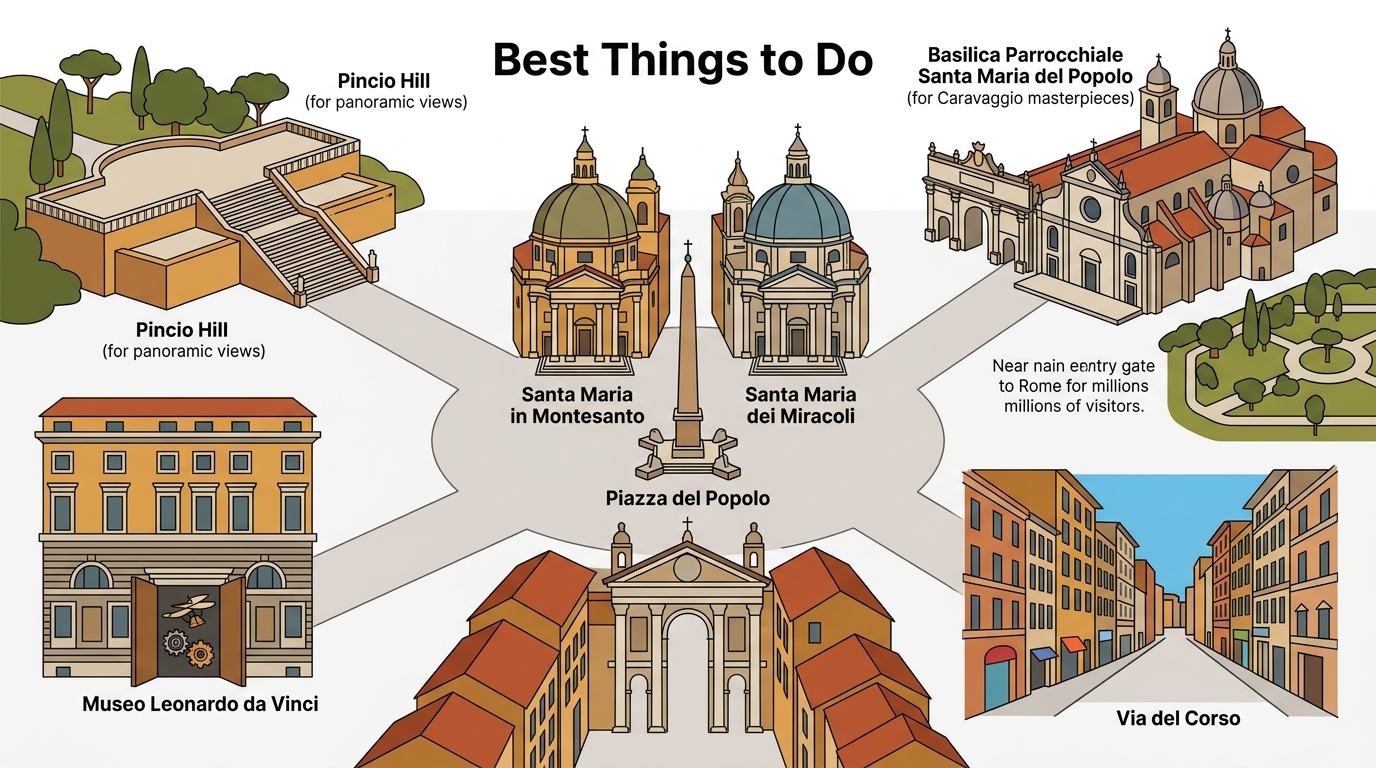
Panoramic Views from Pincio Terrace
The Pincio Terrace, located at the edge of Villa Borghese, offers one of the best panoramic views of Rome. This elevated platform provides a direct vista of Piazza del Popolo and the historic center beyond. The terrace is a popular spot for sunset viewing, attracting photographers and romantics alike. The gardens surrounding the terrace are meticulously maintained, featuring fountains and classical statues.
The view from the Pincio is often cited as one of the most romantic in Rome. The architectural alignment of the piazza below creates a striking visual composition from this vantage point. Visitors can enjoy the scenery while resting from their walking tours. The terrace also hosts occasional cultural events and exhibitions, adding to its cultural significance.
Attraction Comparison and Logistics
Planning a visit to the Piazza del Popolo area requires understanding the logistics of each attraction. The following table compares key aspects of the major sites to help you prioritize your itinerary.
| Attraction | Primary Focus | Estimated Duration | Accessibility |
|---|---|---|---|
| Museo Leonardo da Vinci | Interactive History | 1-2 Hours | Underground Vault |
| Villa Borghese | Park and Museums | 3-4 Hours | Open Grounds |
| Churches | Architecture | 30-45 Mins | Ground Level |
| Via del Corso | Shopping | Variable | Pedestrian Street |
| Pincio Terrace | Views | 30 Mins | Elevated Terrace |
The Museo Leonardo da Vinci offers a concentrated historical experience, while Villa Borghese provides a broader recreational option. The churches are best visited for their architectural details, and Via del Corso is ideal for retail therapy. The Pincio Terrace serves as a perfect conclusion to a morning of sightseeing.
Key Takeaways
- The Museo Leonardo da Vinci is located in the underground vaults of Basilica Santa Maria del Popolo.
- Piazza del Popolo attracts over 10 million visitors annually, making it a critical transit hub.
- Villa Borghese is the largest public park in Rome, spanning 80 hectares.
- The Flaminio Obelisk was originally erected by Pharaoh Nectanebo I in Egypt.
- Leonardo da Vinci was anointed master artist of Florence at age 18.
- Via del Corso connects the piazza directly to the Spanish Steps.
- The Pincio Terrace offers the best panoramic views of the square.
Frequently Asked Questions
How far is the Museo Leonardo da Vinci from the piazza?
The museum is located at the end of Via del Corso, which is a short walk from the piazza. It is situated in the underground vaults of the Basilica Santa Maria del Popolo.
Is Villa Borghese free to enter?
The park itself is free to enter. However, specific museums within the park, such as the Galleria Borghese, require tickets and advance reservations.
What is the best time to visit the Pincio Terrace?
Sunset is the most popular time to visit the Pincio Terrace for the best lighting and atmosphere. However, early morning offers a quieter experience.
Can I walk from Piazza del Popolo to the Spanish Steps?
Yes, you can walk directly to the Spanish Steps via Via del Corso. The walk takes approximately 15 to 20 minutes.
Are there restrooms available in the area?
Public restrooms are available in the Villa Borghese park and near the major churches. The museum also has facilities for visitors.
Is the Museo Leonardo da Vinci suitable for children?
Yes, the museum is designed to be engaging for all ages, with interactive exhibits that appeal to younger visitors.
What is the historical significance of the obelisk?
The obelisk is one of the oldest monuments in Rome, dating back to ancient Egypt. It was moved to Rome during the reign of Emperor Augustus.
Plan Your Visit
Ready to explore the wonders of Rome? Start your journey at the northern gateway and discover the rich history and culture of the Piazza del Popolo area. Book your tickets to the Museo Leonardo da Vinci today to ensure a seamless experience. Visit our info page for detailed opening hours and directions. Contact us at info@museodavinci.it for further assistance.