
Piazza del Popolo stands as the northern gateway to Rome, serving as a critical hub for both tourists and locals. This vast elliptical square is not merely a transit point but a destination in itself, offering panoramic views and immediate access to some of the city's most significant cultural landmarks. According to recent tourism data, over 10 million visitors explore the historic center of Rome annually, with a significant portion starting their journey at this iconic plaza. Understanding the layout and the immediate surroundings of Piazza del Popolo is essential for maximizing your time in the Eternal City. (Museo Leonardo da Vinci)
Understanding the Square's Layout
Piazza del Popolo is a masterpiece of urban planning, originally designed by Giuseppe Valadier in the early 19th century. The square is shaped like an ellipse, flanked by two identical churches, Santa Maria dei Miracoli and Santa Maria in Montesanto. These twin churches create a symmetrical frame that draws the eye toward the obelisk in the center. This obelisk, known as the Flaminio Obelisk, was brought from Egypt by the Romans and stands as a testament to the city's ancient history.
The square serves as the terminus for Via del Corso, one of Rome's main shopping streets. This connection makes it a natural starting point for those wishing to explore the city's commercial and historical heart. The area is well-connected by public transport, including buses and the nearby Flaminio metro station, making it accessible from all parts of Rome. For visitors, the square offers a moment of calm before diving into the bustling streets that lead south toward the Spanish Steps and the Trevi Fountain.
Museo Leonardo da Vinci
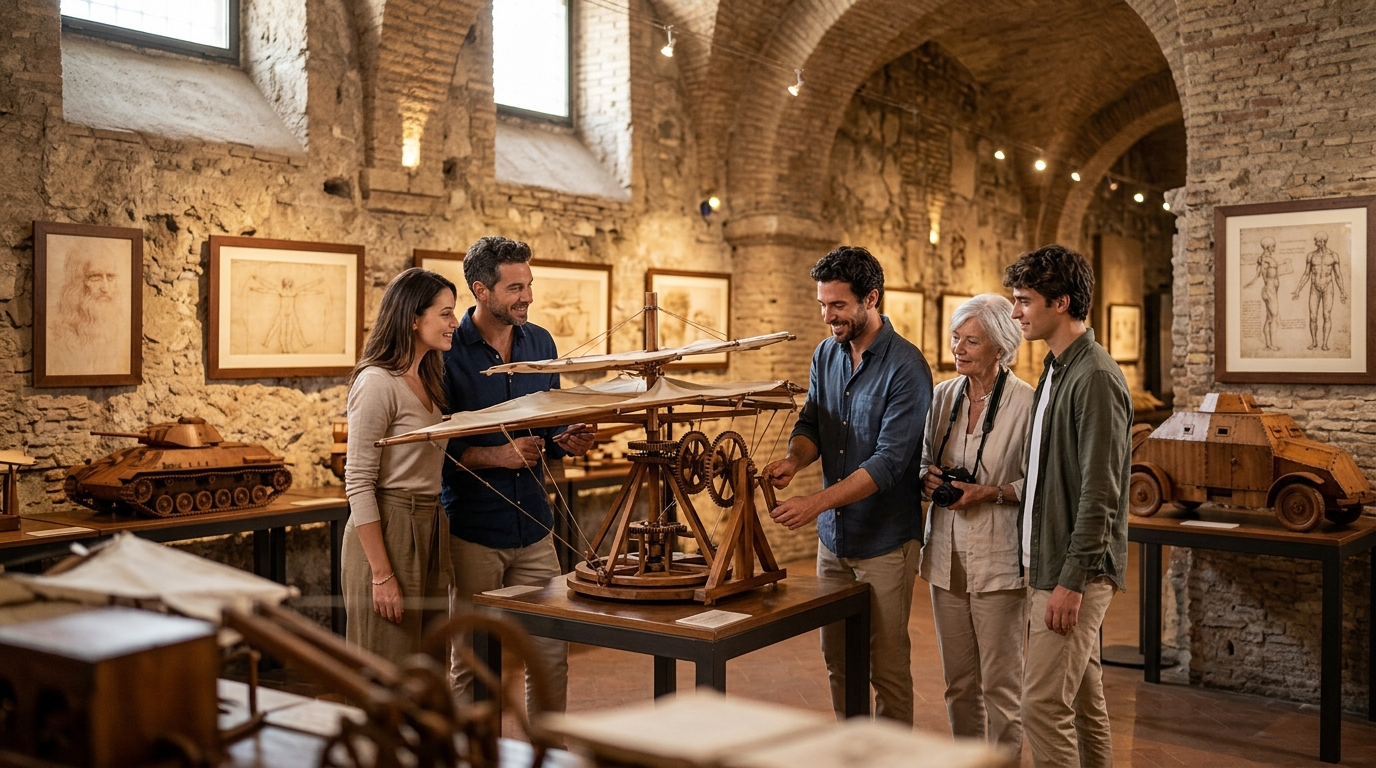
One of the most unique attractions located directly adjacent to Piazza del Popolo is the Museo Leonardo da Vinci. This museum is situated in the underground vaults of the Basilica Santa Maria del Popolo, providing a fascinating contrast between the grandeur of the Renaissance and the intimate study of Leonardo's genius. The museum is the most popular dedicated Leonardo museum in Rome, offering an immersive experience that goes beyond static displays.
Visitors can explore interactive exhibits that bring Leonardo's inventions to life. From flying machines to military engineering, the museum showcases the breadth of his intellect. Leonardo da Vinci is widely celebrated as a leading Renaissance painter and sculptor, but his work as an engineer and scientist remains equally impressive. The museum highlights his detailed anatomical sketches and scientific discoveries, which were often ahead of their time. While you will not see original artworks like the Mona Lisa here, the museum provides a deep dive into the mind of one of history's greatest polymaths.
The museum is an excellent stop for families and students alike. It offers a structured narrative that guides visitors through Leonardo's life and work. The location within the basilica's vaults adds a layer of historical context, connecting the artist's work to the religious and cultural environment of Renaissance Rome. For more information on exhibitions and opening hours, you can visit the official museum website.
Basilica Santa Maria del Popolo
Just steps from the museum lies the Basilica Santa Maria del Popolo, a major papal basilica second only in importance to St. Peter's among the seven pilgrim churches in Rome. This church is a treasure trove of art and history, housing some of the most significant works of the Baroque period. The interior is adorned with frescoes and paintings that tell the stories of saints and biblical figures.
Among the most notable works are the Cerasi Chapel and the Chigi Chapel. The Cerasi Chapel contains Caravaggio's "The Crucifixion of Saint Peter" and "The Conversion of Saint Paul," two masterpieces that demonstrate the artist's dramatic use of light and shadow. The Chigi Chapel, designed by Raphael, features stunning frescoes that depict the life of the prophet Habakkuk. These works are not only artistic triumphs but also historical documents of the Renaissance and Baroque periods.
The basilica is also the burial site of six popes, adding to its spiritual significance. Legend has it that the infamous emperor Nero is buried deep below the church, adding a layer of mystery to the site. For those interested in art history, a visit to this basilica is essential. You can find more details about the church's history and visiting times on Vatican State resources.
The Pincio Hills and Gardens
Behind the basilica lies the Pincio Hill, a public garden that offers some of the best views in Rome. The gardens are terraced, providing multiple levels from which to admire the cityscape. On clear days, you can see the dome of St. Peter's Basilica in the distance, as well as the rooftops of Rome's historic center. This vantage point is particularly popular at sunset, when the golden light bathes the city in a warm glow.
The Pincio is a favorite spot for locals and tourists alike. It is a place for relaxation, reading, and people-watching. The gardens are well-maintained, with fountains and statues that add to the aesthetic appeal. The area is also home to the Pincio Terrace, which is often used for cultural events and concerts during the summer months. For more information on events and garden hours, check Rome Tourism official site.
Walking Toward the Historic Center
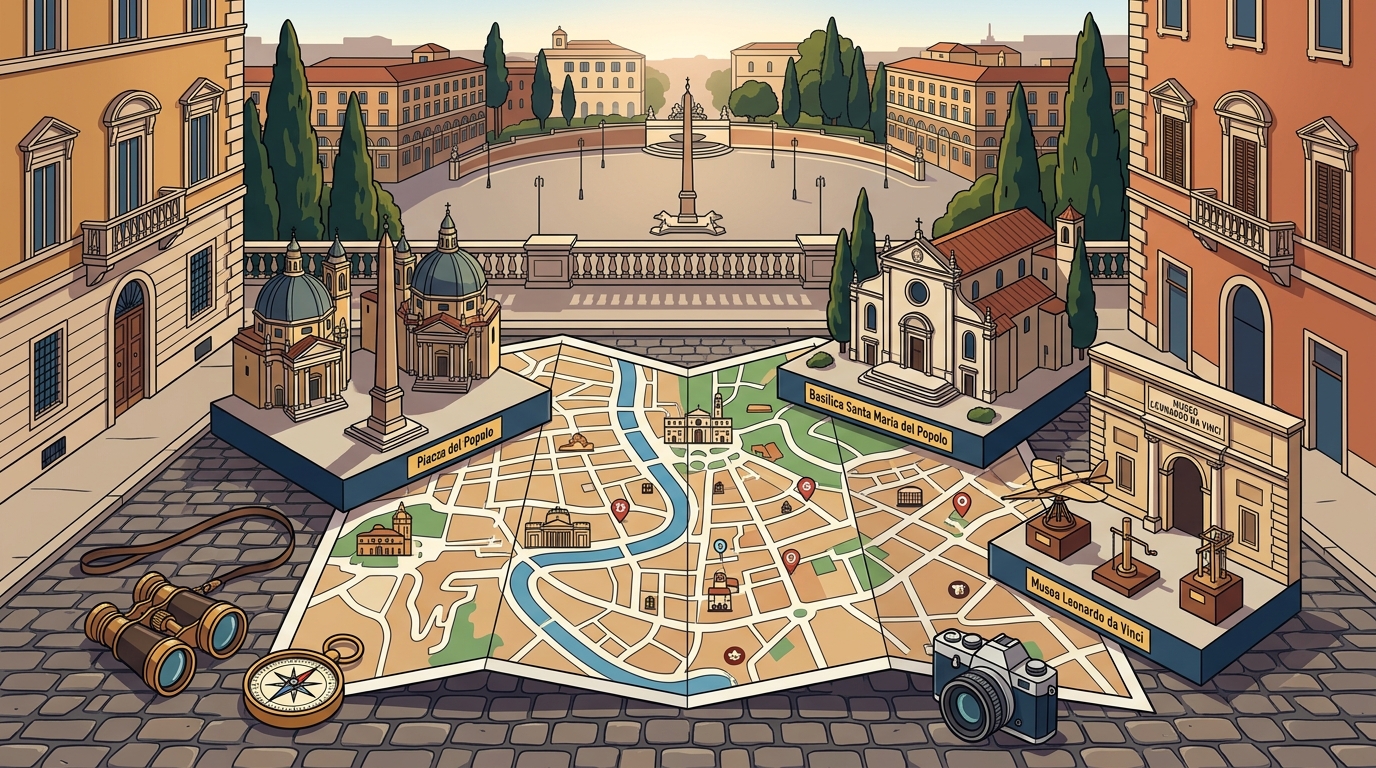
From Piazza del Popolo, the most direct route to the historic center is via Via del Corso. This street is lined with shops, cafes, and historic buildings. At the end of the street, you will find the Spanish Steps, a famous landmark that connects the Piazza di Spagna with the Trinità dei Monti church. The steps are a popular meeting point and offer a great place to sit and observe the flow of people.
Continuing from the Spanish Steps, you can walk to the Trevi Fountain, one of the most visited attractions in Rome. The fountain is a masterpiece of Baroque architecture, featuring intricate sculptures and a grand facade. It is also a place of tradition, where visitors toss coins to ensure their return to Rome. The area around the Spanish Steps and Trevi Fountain is bustling with activity, offering a vibrant atmosphere that captures the essence of Rome.
Another notable destination is the Villa Borghese, a large landscape garden in the naturalistic English manner. The park contains some of the most important collections of antiquities, paintings, and sculptures in Rome. The Borghese Gallery, located within the park, houses works by Caravaggio, Raphael, and Michelangelo. For those interested in art, a visit to the gallery is a must. You can book tickets and learn more at Galleria Borghese official site.
Attraction Comparison
Choosing between the various attractions near Piazza del Popolo can be challenging. The table below provides a quick comparison of the key sites to help you plan your itinerary.
| Attraction | Type | Key Feature | Best For |
|---|---|---|---|
| Museo Leonardo da Vinci | Museum | Interactive Inventions | History & Science Enthusiasts |
| Basilica Santa Maria del Popolo | Church | Caravaggio & Raphael Art | Art History Lovers |
| Pincio Gardens | Park | Panoramic Views | Relaxation & Photography |
| Villa Borghese | Park & Gallery | Borghese Collection | Art & Nature Lovers |
Key Takeaways
- Strategic Location: Piazza del Popolo is the northern entrance to Rome, offering easy access to Via del Corso and the Spanish Steps.
- Leonardo Museum: The Museo Leonardo da Vinci provides a unique underground experience focused on the inventor's life and works.
- Artistic Heritage: Basilica Santa Maria del Popolo houses masterpieces by Caravaggio and Raphael, essential for art enthusiasts.
- Scenic Views: The Pincio Gardens offer some of the best panoramic views of Rome, especially at sunset.
- Cultural Depth: The area is rich in history, from ancient obelisks to Renaissance churches and Baroque art.
- Accessibility: The square is well-connected by public transport, making it a convenient starting point for exploration.
- Family Friendly: The museum and gardens are suitable for visitors of all ages, including families with children.
Frequently Asked Questions
How long does it take to visit the Museo Leonardo da Vinci?
A typical visit to the Museo Leonardo da Vinci lasts between 45 minutes to an hour. The interactive exhibits allow for a self-paced exploration of Leonardo's inventions and scientific studies.
Is the Basilica Santa Maria del Popolo free to enter?
Entry to the Basilica Santa Maria del Popolo is generally free, but donations are appreciated. Some special exhibitions or guided tours may require a ticket.
What is the best time to visit the Pincio Gardens?
The best time to visit the Pincio Gardens is in the late afternoon or early evening. This is when the light is ideal for photography, and the views of the sunset over Rome are most spectacular.
Can I walk from Piazza del Popolo to the Trevi Fountain?
Yes, you can walk from Piazza del Popolo to the Trevi Fountain. The walk takes approximately 20 to 30 minutes, passing through the Spanish Steps and the historic center.
Are there guided tours available for the area?
Yes, there are numerous guided tours available that cover Piazza del Popolo, the Basilica, and the surrounding historic center. These tours often include skip-the-line access to major attractions.
Is the area safe for tourists?
Piazza del Popolo and the surrounding areas are generally safe for tourists. However, as with any major tourist destination, it is important to remain aware of your surroundings and watch for pickpockets in crowded areas.
What is the significance of the obelisk in the square?
The obelisk, known as the Flaminio Obelisk, is an ancient Egyptian monument that was brought to Rome by the Emperor Augustus. It stands in the center of the square and is a focal point of the urban design.
Book Your Experience
Ready to explore the wonders of Piazza del Popolo and its surroundings? Start your journey with a visit to the Museo Leonardo da Vinci, where you can delve into the genius of one of history's greatest minds. Book your tickets now to ensure a seamless and inspiring experience in the heart of Rome.