
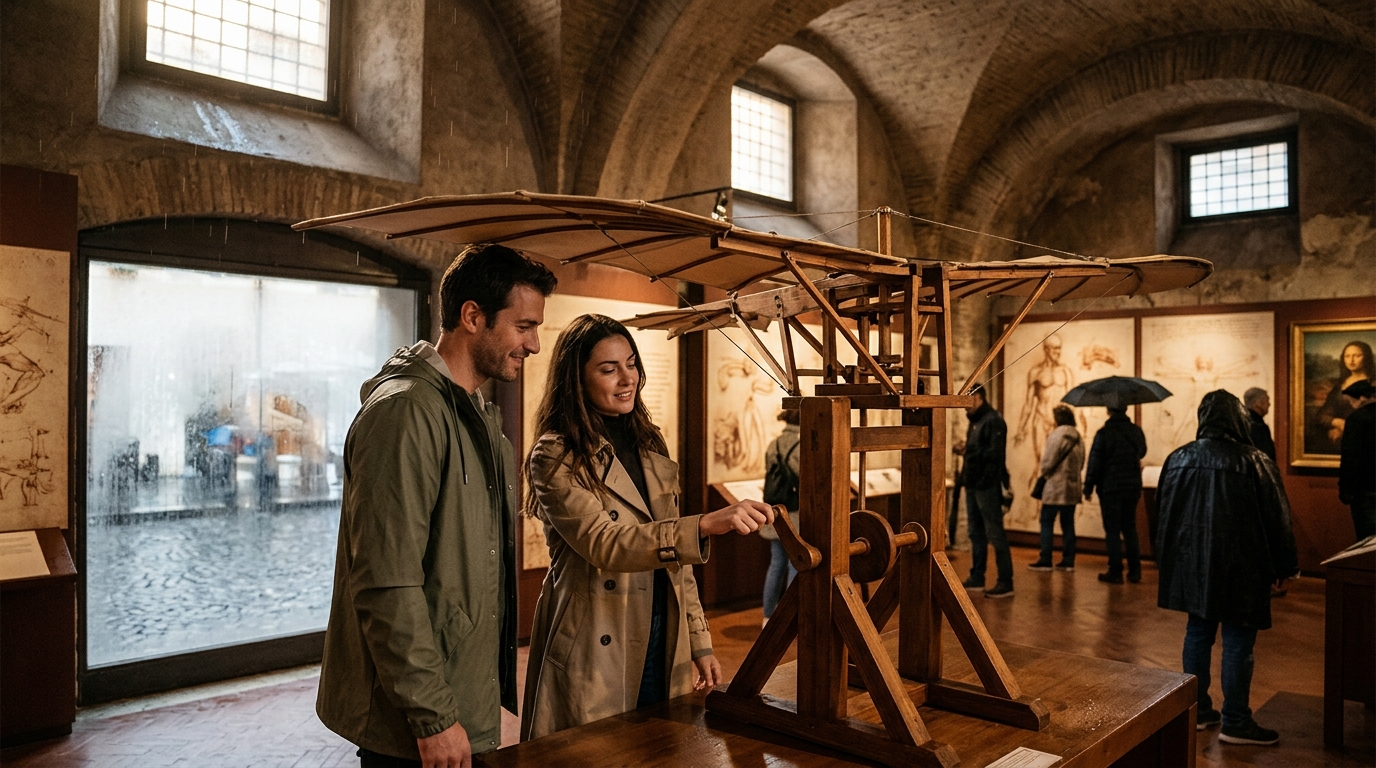
Rome is often celebrated for its golden sunlight and open-air piazzas, but the city transforms into a sanctuary of culture and history when the skies open up. According to recent tourism data, over 10 million international visitors explore Rome annually, with a significant portion of those trips occurring during the shoulder seasons of spring and autumn when rainfall is more frequent. This weather pattern does not diminish the city's appeal; instead, it offers a unique opportunity to dive deep into its world-class museums and historic vaults without the usual summer crowds. Whether you are seeking artistic inspiration or historical depth, Rome provides exceptional indoor experiences that keep travelers engaged and inspired regardless of the forecast. (Museo Leonardo da Vinci)
Explore the Museo Leonardo da Vinci
When rain pours down in the historic center, the most logical and inspiring destination is the Museo Leonardo da Vinci located in Piazza del Popolo. Situated at the end of Via del Corso, this museum offers a perfect refuge just a five-minute walk from the Spanish Steps. The museum is housed in the underground vaults of the Basilica Santa Maria del Popolo, a major papal basilica that is second only in importance to St. Peter's Basilica. This unique location provides a cool, dry environment to immerse yourself in the genius of Leonardo da Vinci.
Leonardo da Vinci is recognized as the master artist of Florence who was anointed at the tender age of 18. He is responsible for creating iconic artworks such as the Mona Lisa, The Last Supper, and The Vitruvian Man. While the original masterpieces are housed in other locations, this museum allows visitors to discover his incredible story through detailed anatomical sketches and startling scientific discoveries. The exhibits highlight his groundbreaking inventions and passions, leaving visitors amazed by the sheer volume of his contributions to science and art in one lifetime.
The museum is widely considered the most popular dedicated Leonardo museum in Rome. It is designed to be great for all the family to enjoy, making it an ideal stop on any Rome itinerary during inclement weather. The interactive nature of the displays ensures that both adults and children remain engaged with the content. By visiting this site, you gain access to a curated narrative of one of history's greatest minds, protected from the elements while you explore his legacy.
Navigate the Vatican Museums
No discussion of indoor activities in Rome is complete without mentioning the Vatican Museums. These institutions house one of the most extensive art collections in the world, spanning centuries of papal history and artistic achievement. The museums are located within the Vatican City state, which is an independent enclave within Rome. This geographical distinction allows for a unique cultural experience that blends Italian and Vatican heritage.
The Sistine Chapel, located within the Vatican Museums, is home to Michelangelo's famous ceiling frescoes. According to historical records, the painting of the ceiling took four years to complete, involving complex scaffolding and physical endurance. The chapel attracts millions of visitors each year, making it one of the most visited religious sites globally. During rainy days, the vast indoor corridors of the museums provide ample space to wander at your own pace, away from the rain.
Other highlights include the Gallery of Maps, which features detailed cartographic illustrations of Italy, and the Pinacoteca, which displays paintings from various eras. The sheer scale of the collection means that even if you visit multiple times, there is always new content to discover. The indoor nature of the Vatican Museums makes them a reliable option for any weather condition, ensuring that your cultural education continues uninterrupted.
Discover the Capitoline Museums
The Capitoline Museums, located on Capitoline Hill, are considered the oldest public museums in the world. Established in 1471 when Pope Sixtus IV donated a collection of ancient bronzes to the people of Rome, these museums hold a significant place in art history. The complex is situated in the Piazza del Campidoglio, designed by Michelangelo himself. This central location makes it easily accessible even during heavy rainfall, as the surrounding architecture provides sheltered walkways.
The museums house a vast collection of ancient Roman sculptures, including the iconic Capitoline Wolf, a bronze statue that symbolizes the founding myth of Rome. The statue depicts the she-wolf suckling the twin brothers Romulus and Remus. This artifact is a powerful symbol of the city's identity and is displayed prominently for visitors to view. The indoor galleries also feature works by Renaissance masters such as Caravaggio and Raphael, offering a comprehensive look at the evolution of Western art.
Visiting the Capitoline Museums allows you to experience the heart of ancient Rome from a comfortable, dry perspective. The elevated position of the museums offers panoramic views of the Roman Forum, which can be appreciated through large windows when the rain is too heavy to venture outside. The combination of historical significance and artistic excellence makes this a top-tier choice for rainy-day exploration.
Visit the Galleria Borghese
The Galleria Borghese is a former art gallery housed in the Villa Borghese Pinciana, one of the largest and most impressive public parks in Rome. The villa itself is a masterpiece of Baroque architecture, designed by Flaminio Ponzio and Giovanni Vasanzio. Inside, the gallery houses a significant collection of sculptures, paintings, and antiquities assembled by Cardinal Scipione Borghese, a nephew of Pope Paul V. The collection is renowned for its high concentration of works by Bernini and Caravaggio.
Gian Lorenzo Bernini is a pivotal figure in Baroque sculpture, known for his ability to make marble appear soft and dynamic. His works, such as Apollo and Daphne, are displayed in the gallery and demonstrate his technical mastery. Caravaggio's paintings, including David with the Head of Goliath, are also featured prominently. The intimate size of the gallery means that visitors can view these masterpieces in a more personal setting compared to larger museums.
Access to the Galleria Borghese requires advance booking due to limited entry slots. This restriction ensures a more controlled and comfortable experience for visitors, which is particularly beneficial during rainy days when crowd management is crucial. The villa's location within the park provides a scenic approach, but the indoor experience is the primary draw. The combination of architectural beauty and artistic depth makes it a must-visit for art enthusiasts.

Tour the Palatine Hill
While the Roman Forum is largely an outdoor archaeological site, the Palatine Hill offers significant indoor experiences through its museum facilities. The Palatine Hill is one of the seven hills of Rome and is considered the oldest part of the city. It was the site of the first settlements and later became the location of imperial palaces. The museums on the hill provide detailed reconstructions and artifacts that help contextualize the ruins.
The House of Livia, located on the Palatine Hill, is a remarkably preserved ancient Roman house. The walls are adorned with frescoes that have survived for over two millennia. These paintings provide insight into the domestic life and artistic preferences of the Roman elite. The preservation of these interiors is a testament to the volcanic ash and earth that protected them over time. Visiting this site allows you to step back in time and experience the living spaces of ancient Romans.
The Palatine Hill also houses the Museum of Ancient Rome, which displays models and artifacts that help visitors understand the scale and complexity of the ancient city. The indoor exhibits provide a respite from the rain while offering educational content that enhances the outdoor exploration. The combination of indoor and outdoor elements on the Palatine Hill makes it a versatile destination for any weather condition.
Key Takeaways
- The Museo Leonardo da Vinci is located in the underground vaults of Basilica Santa Maria del Popolo, offering a dry and engaging experience.
- Rome receives significant rainfall during spring and autumn, making indoor museums a strategic choice for travelers.
- The Vatican Museums house the Sistine Chapel, which features Michelangelo's ceiling frescoes completed over a four-year period.
- The Capitoline Museums are the oldest public museums in the world, established in 1471.
- The Galleria Borghese requires advance booking and features key works by Bernini and Caravaggio.
- The House of Livia on the Palatine Hill preserves ancient Roman frescoes that have survived for over 2,000 years.
- Booking tickets in advance is recommended for all major museums to ensure entry and avoid long queues.
Frequently Asked Questions
Is the Museo Leonardo da Vinci open during rainy weather?
Yes, the museum is located in underground vaults, making it entirely protected from rain. It is an ideal destination for wet days.
Do I need to book tickets for the Vatican Museums in advance?
Yes, advance booking is highly recommended to secure entry and avoid long waiting times, especially during peak tourist seasons.
What is the best indoor museum for families in Rome?
The Museo Leonardo da Vinci is particularly well-suited for families due to its interactive displays and engaging content about Leonardo's life and inventions.
Can I visit the Galleria Borghese without a reservation?
No, access to the Galleria Borghese is strictly limited and requires a timed entry ticket booked well in advance.
Are there indoor activities near the Spanish Steps?
Yes, the Museo Leonardo da Vinci is located just a five-minute walk from the Spanish Steps, making it a convenient option for those in the area.
What historical period does the Capitoline Museum focus on?
The Capitoline Museums focus primarily on ancient Roman history, featuring sculptures, bronzes, and artifacts from the Roman Empire.
Is it safe to walk to these museums in the rain?
Yes, Rome has extensive covered walkways and the museums are easily accessible via public transport or short walks with appropriate rain gear.
Plan Your Rainy-Day Rome Experience
Do not let the weather dictate your itinerary. Rome offers a wealth of indoor cultural experiences that are both educational and inspiring. Start your journey by exploring the Museo Leonardo da Vinci to immerse yourself in the genius of one of history's greatest minds. Book your tickets today to ensure a seamless and enjoyable visit, regardless of the forecast.