
The Architectural Design of the Oculus
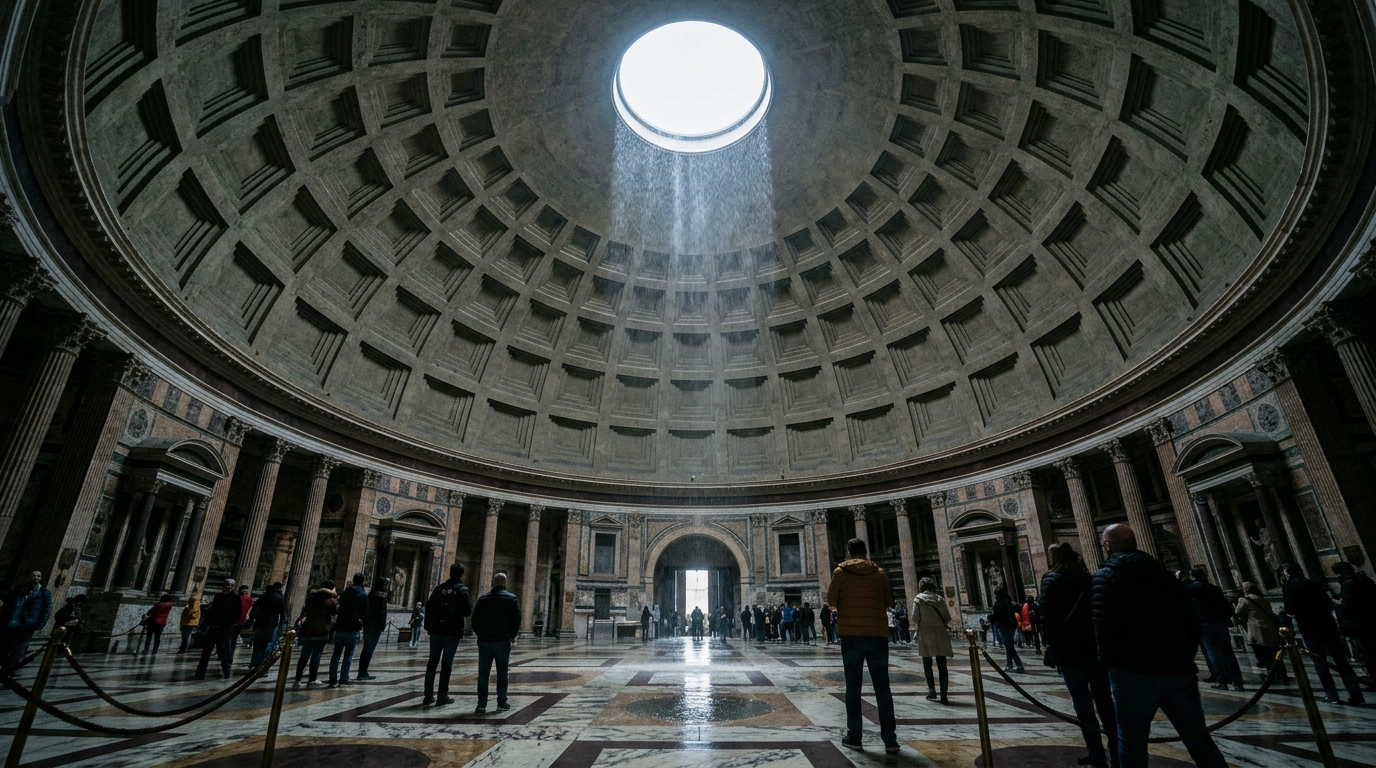
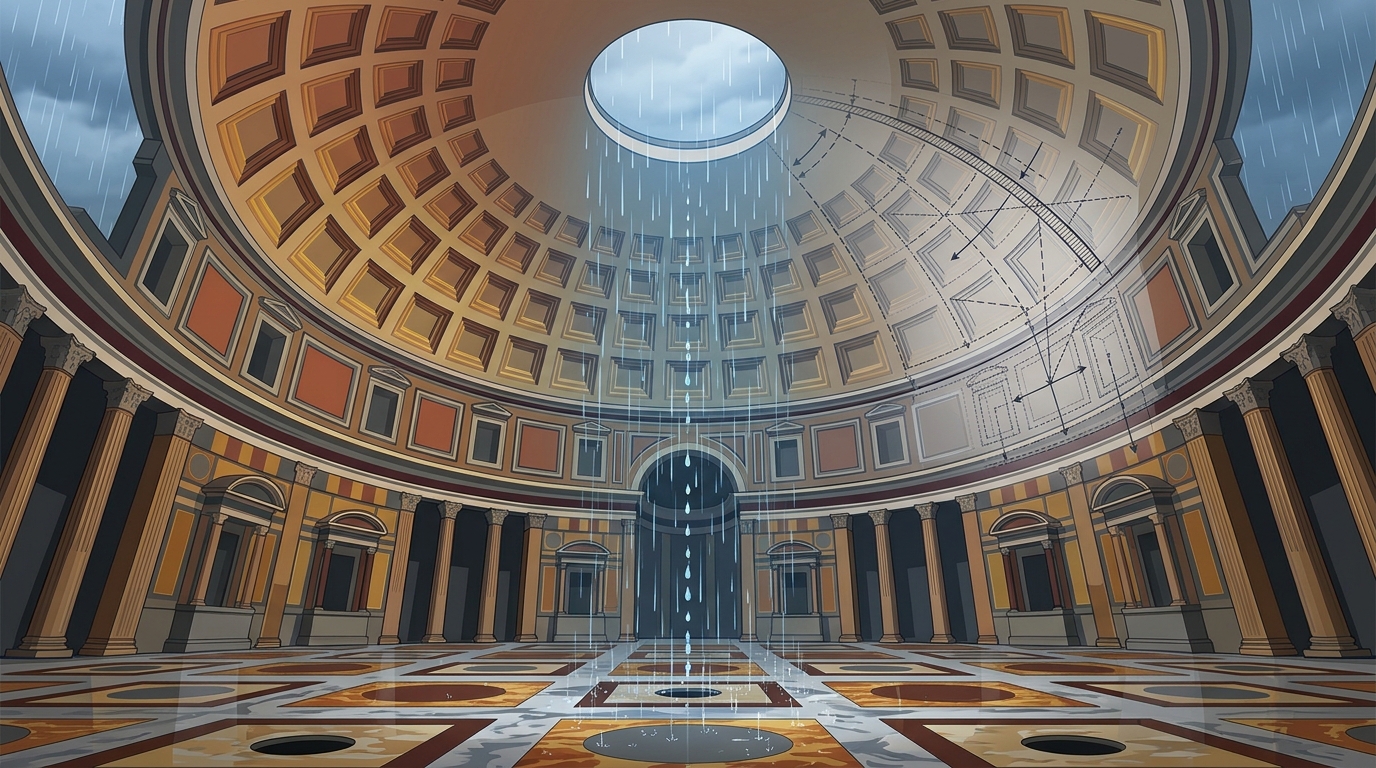
The dome is constructed from unreinforced concrete, a material that was revolutionary for its time. The thickness of the concrete decreases toward the top, reducing the weight on the structure. This engineering feat allows the dome to remain stable without internal support columns. The oculus is not merely a window but a functional element that balances the structural integrity of the building.
Historical Context
The original Pantheon was built during the reign of Emperor Hadrian, likely between 118 and 128 AD. It replaced an earlier temple dedicated to the gods of the Roman pantheon. The building was later converted into a Christian church, which helped preserve its structure through the centuries. Today, it stands as one of the best-preserved examples of ancient Roman architecture in the world.
The Rainy Day Experience
Many visitors report that the rainy day atmosphere feels more intimate and reflective. The absence of direct sunlight softens the contrast inside the building, allowing for a more contemplative experience. The sound of rain on stone is often described as meditative, providing a break from the noise of the city outside. This phenomenon is a key reason why many tourists specifically seek out the Pantheon during inclement weather.
Photographic Opportunities
For photography enthusiasts, the rainy day provides exceptional lighting conditions. The diffused light from the oculus creates soft shadows that highlight the texture of the marble and the depth of the coffers. Photographers often capture the contrast between the dark interior and the bright sky visible through the opening. These images convey the scale and grandeur of the space effectively.
Practical Considerations for Visitors
Visiting the Pantheon on a rainy day requires some practical planning. The floor inside the building can become wet and slippery near the oculus. Visitors should wear appropriate footwear to ensure safety while moving around the interior. The marble surfaces are polished, which can make them treacherous when wet. Taking care to walk slowly and carefully is essential to avoid accidents.
The building is open to the public, but there is no roof over the oculus. This means that rain will inevitably enter the space. Visitors should be prepared for the possibility of getting slightly wet if they stand directly under the opening. Bringing a small umbrella or a waterproof cover for personal items is advisable. The experience is worth the minor inconvenience for most travelers.
Accessibility and Comfort
The Pantheon is accessible to most visitors, but the wet conditions may pose challenges for those with mobility issues. The lack of handrails near the oculus area requires caution. Visitors with limited mobility should consider staying in the drier areas of the building to avoid slipping. The overall experience remains accessible, but safety should be the primary concern during wet weather.
Alternative Plans for Wet Weather
For those interested in the intersection of art and science, the Museo Leonardo da Vinci in Piazza del Popolo offers an interactive experience. Located near the Spanish Steps, this museum provides a unique glimpse into the life and work of Leonardo da Vinci. The underground vaults of the Basilica of Santa Maria del Popolo house exhibits that explore Leonardo's inventions and anatomical studies. This venue is an excellent alternative or complement to the Pantheon visit on a rainy day.
Combining Visits
Visitors can easily combine a trip to the Pantheon with a visit to the Museo Leonardo da Vinci. Both locations are in central Rome and are accessible by public transport or on foot. The Pantheon is located in Piazza della Rotonda, while the museum is in Piazza del Popolo. The distance between the two is manageable, allowing for a full day of cultural exploration. This combination provides a diverse range of experiences, from ancient architecture to Renaissance innovation.
Key Takeaways
- The Pantheon oculus creates a dramatic visual and auditory experience during rain.
- The building's design allows rain to fall through the opening, creating a unique atmosphere.
- Visitors should wear appropriate footwear to prevent slipping on wet marble floors.
- The rainy day experience is often more intimate and reflective than sunny days.
- Combining the Pantheon with other indoor attractions creates a balanced rainy day itinerary.
- Photographers benefit from the diffused light and soft shadows created by the oculus.
Frequently Asked Questions
Is the Pantheon open on rainy days?
Yes, the Pantheon is open on rainy days. The building is accessible to the public regardless of the weather. The oculus is open to the sky, so rain will enter the interior. Visitors should be prepared for wet conditions inside the building.
Can you get wet inside the Pantheon?
Yes, you can get wet inside the Pantheon if it is raining. Rain falls through the oculus and onto the floor. Standing directly under the opening will result in getting wet. Visitors should be cautious and avoid standing in the direct path of the rain.
Is the Pantheon slippery when it rains?
Yes, the marble floors can become slippery when it rains. The polished surfaces are treacherous when wet. Visitors should wear non-slip footwear and walk carefully to avoid accidents. Safety is the primary concern during wet weather.
What is the best time to visit the Pantheon on a rainy day?
The best time to visit is during light rain. Heavy rain can make the interior uncomfortable and difficult to navigate. Light rain provides the atmospheric effect without excessive wetness. Checking the weather forecast before visiting is recommended.
Are there other indoor activities in Rome?
Yes, Rome has many indoor activities for rainy days. Museums, galleries, and historical sites provide shelter and cultural enrichment. The Museo Leonardo da Vinci is a notable option in central Rome. Combining these activities with the Pantheon visit creates a full day of exploration.
Is the Pantheon free to enter?
Entry to the Pantheon is generally free, but donations are encouraged. Special events or guided tours may require a fee. Checking the official website for current admission policies is advisable. The building is open to the public as a church and a historical monument.
How long does a visit to the Pantheon take?
A typical visit to the Pantheon takes about 30 to 60 minutes. This allows time to explore the interior and appreciate the architectural details. Combining the visit with other nearby attractions can extend the time spent in the area. The experience is brief but impactful.