
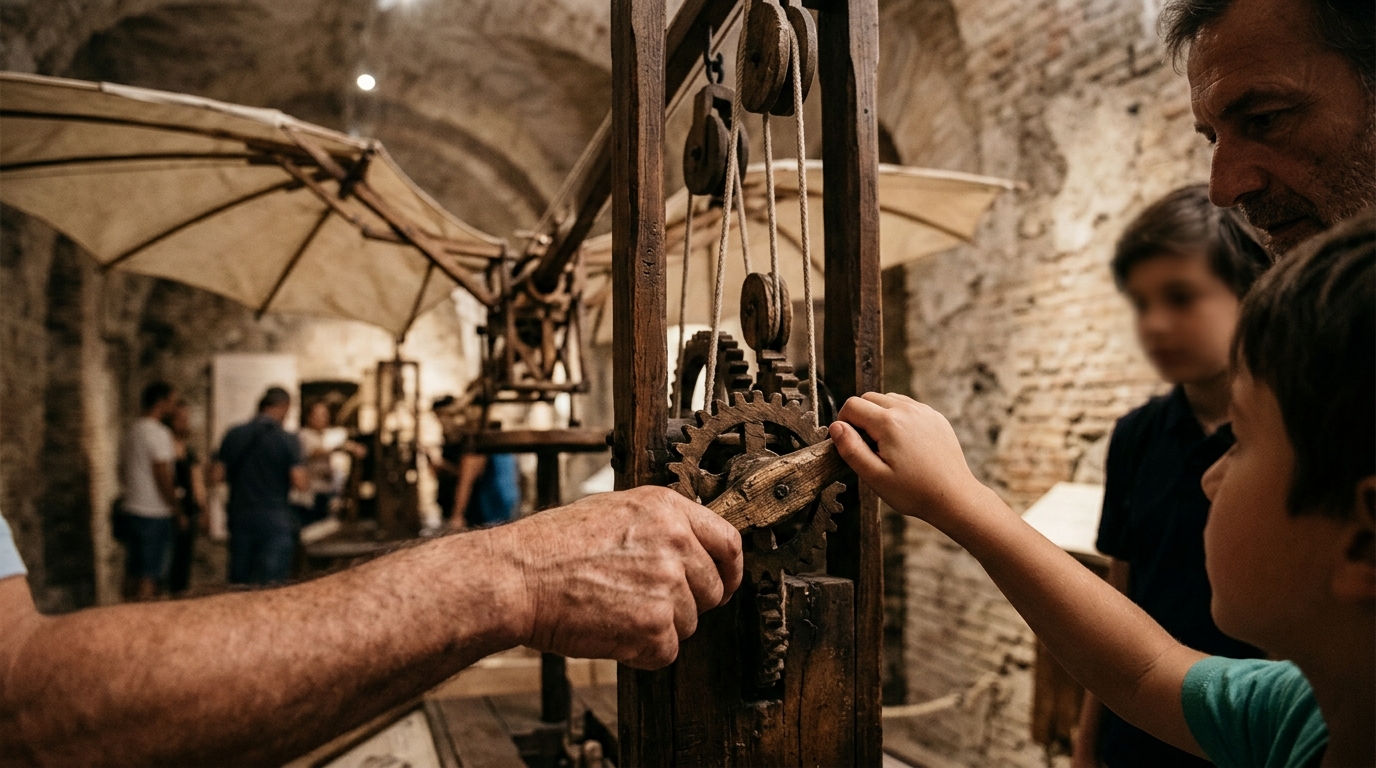
At the Museo Leonardo da Vinci in Piazza del Popolo, visitors can physically manipulate scaled models of flying machines, test anatomical muscle contractions, and operate mechanical warfare devices. This interactive approach transforms static historical sketches into tangible engineering experiences. Located in the underground vaults of the Basilica of Santa Maria del Popolo, the museum allows you to test the principles of flight, hydraulics, and anatomy directly.
The Power of Hands-On Mechanical Models
Traditional museums often display artifacts behind glass, creating a barrier between the viewer and the object. The Museo Leonardo da Vinci removes this barrier by offering functional replicas. An interactive exhibit is a display element that requires physical manipulation by the visitor to demonstrate a concept. By moving the gears and levers of Leonardo's designs, you gain an intuitive grasp of how they function. This tactile engagement is far more effective than reading a plaque.
One specific example is the replica of the armored car. Leonardo sketched this vehicle in the late 15th century for the Duke of Milan. The museum's model allows you to see how the tracks and wheels would have moved. You can observe the mechanical advantage of the design. This hands-on interaction reveals the practicality of his military concepts. The physical feedback from the model helps visitors understand the engineering logic behind the sketch.
Exploring the Mechanics of Flight
Leonardo's interest in flight is one of his most famous pursuits. He studied bird anatomy and aerodynamics extensively. The museum features interactive stations dedicated to his flying machines. Aerodynamic simulation is a method of testing how air moves over a surface to generate lift. Visitors can adjust the angle of wings on a model of the ornithopter. This demonstrates the challenges Leonardo faced in creating a human-powered aircraft.
The museum highlights the ornithopter, a machine designed to flap its wings like a bird. You can operate the mechanism to see the required force. This experience illustrates why the machine was never built. It also shows the sophistication of his understanding of physics. The interactive nature of this exhibit bridges the gap between artistic vision and engineering reality. It clarifies that while the design was brilliant, the materials of the time could not support the dynamic loads of flight.
Hydraulics and Water Management Systems
Leonardo was a master of hydraulics, designing systems for water management and irrigation. The museum includes displays that allow visitors to engage with these water-based mechanisms. Hydraulic engineering is the branch of physics that deals with the mechanical properties and behavior of liquids. By operating the valves and channels in the models, you can see how water pressure was harnessed. This section of the museum highlights his practical applications of fluid dynamics.
These displays often feature scaled models of pumps and water wheels. You can turn the handles to observe the flow and pressure changes. This hands-on approach makes complex scientific principles accessible to all ages. It demonstrates that Leonardo was not just an artist, but a practical engineer who solved real-world problems. The clarity of these models helps visitors appreciate the breadth of his scientific curiosity.
Anatomy and the Human Body
Leonardo's anatomical studies are among his most detailed and famous works. The museum offers interactive stations where visitors can test the principles of muscle contraction and movement. Anatomical simulation is a technique that uses models to demonstrate how the human body functions mechanically. By pulling on the strings or levers representing muscles, you can see how joints move. This provides a visceral understanding of the human form.
These exhibits often focus on the hand, the foot, and the heart. You can observe the intricate network of tendons and bones. This section of the museum connects his artistic skill with his scientific observation. It shows how his ability to draw with precision allowed him to understand the body in a way that was unprecedented for his time. The interactive elements make these complex biological structures easy to comprehend.
Warfare and Military Engineering
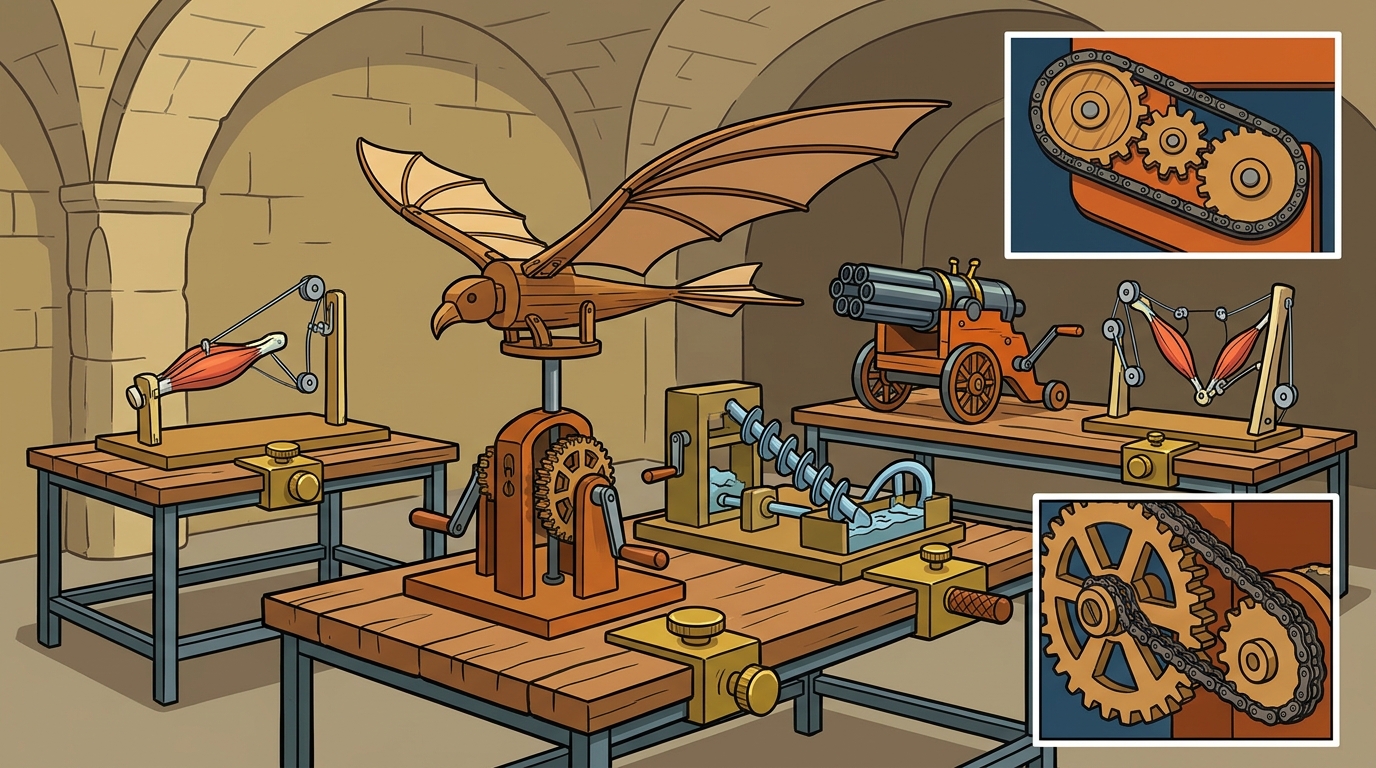
Leonardo spent significant time designing weapons and fortifications for various Italian rulers. The museum features interactive displays of these military inventions. Military engineering is the application of engineering principles to the design and construction of military equipment. Visitors can operate models of catapults, cannons, and armored vehicles. This section highlights the strategic thinking behind his designs.
One notable display is the model of the giant crossbow. You can load and fire the mechanism to see the power it would have generated. This hands-on experience provides insight into the scale of his ambitions. It also clarifies the historical context of his work. While many of these weapons were never built, the models demonstrate their potential effectiveness. This section of the museum is particularly engaging for visitors interested in history and strategy.
Key Takeaways
- The Museo Leonardo da Vinci in Rome offers functional replicas of Leonardo's machines, allowing for physical interaction.
- Visitors can operate models of flying machines, such as the ornithopter, to understand aerodynamic challenges.
- Hydraulic displays allow you to test water management systems and observe fluid dynamics in action.
- Anatomical stations let you manipulate muscle and joint models to see how the human body moves.
- Military engineering exhibits include operable models of weapons and armored vehicles from the 15th century.
- The museum is located in the underground vaults of the Basilica of Santa Maria del Popolo in Piazza del Popolo.
- These interactive exhibits transform static sketches into tangible engineering experiences, making complex concepts accessible.
Frequently Asked Questions
Can visitors actually touch the exhibits at the Museo Leonardo da Vinci?
Yes, the museum is designed for hands-on interaction. Visitors can physically manipulate scaled models of Leonardo's machines, including flying devices, hydraulic systems, and anatomical structures. This tactile approach is central to the museum's educational mission.
Where is the Museo Leonardo da Vinci located in Rome?
The museum is located in the underground vaults of the Basilica of Santa Maria del Popolo in Piazza del Popolo. It is situated at the end of Via del Corso and is only a five-minute walk from the Spanish Steps.
Does the museum display original artworks by Leonardo da Vinci?
No, the museum does not display original artworks. Instead, it focuses on interactive models and replicas of his inventions and studies. The goal is to demonstrate the mechanical logic and scientific principles behind his designs.
Is the museum suitable for children?
Yes, the interactive nature of the exhibits makes it highly suitable for families. Children can engage with the models and learn about engineering and science in a fun and accessible way. The hands-on approach helps maintain their interest and understanding.
How long does a visit to the museum typically take?
A typical visit takes about one to two hours, depending on how much time you spend interacting with each exhibit. The museum is compact, allowing for a focused and immersive experience without feeling rushed.
Are there guided tours available at the museum?
Guided tours may be available, providing additional context and insights into Leonardo's life and work. It is recommended to check the museum's official website for current tour schedules and availability.
Experience Leonardo's Legacy
The Museo Leonardo da Vinci offers a unique opportunity to engage with the genius of Leonardo da Vinci in a hands-on way. By interacting with functional models of his inventions, visitors gain a deeper understanding of his engineering and scientific contributions. Located in the historic heart of Rome, the museum is a must-visit for anyone interested in art, history, and science. To plan your visit, .