
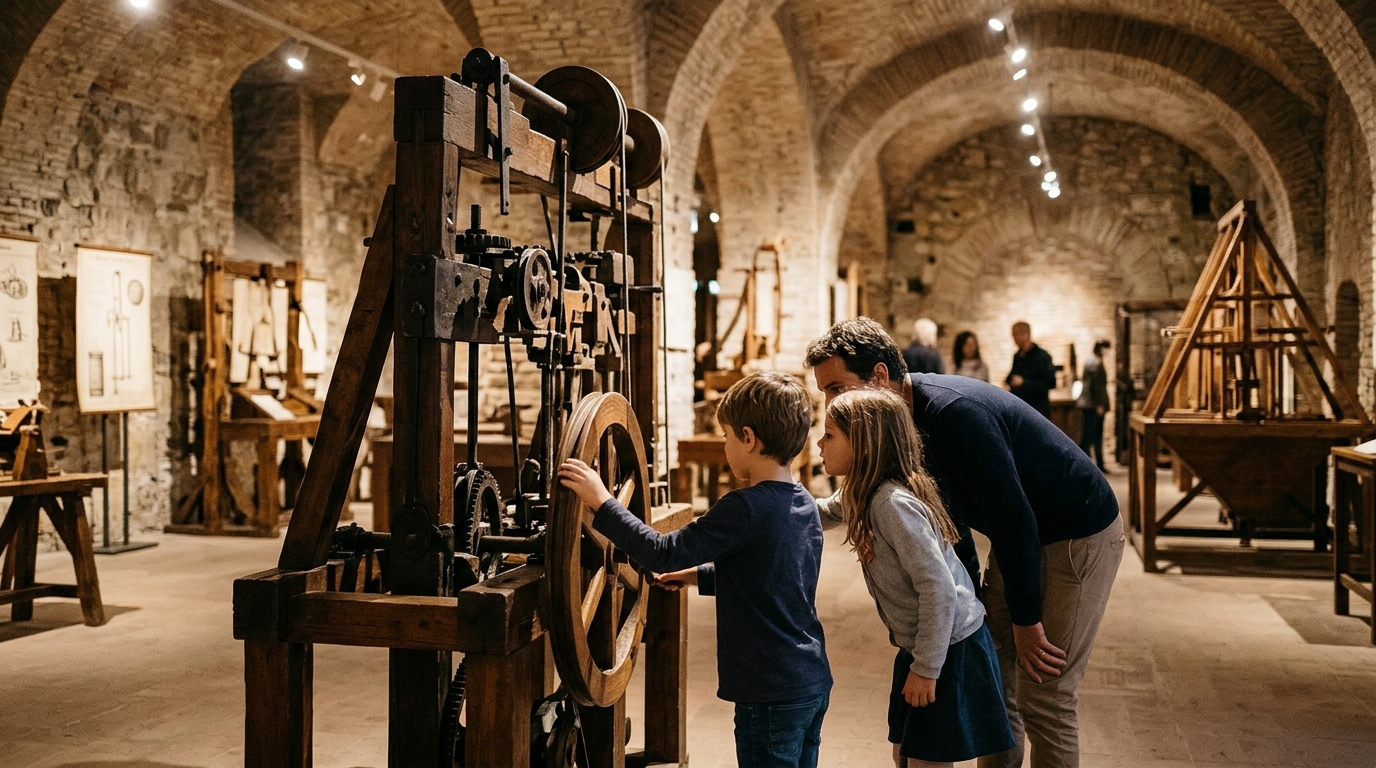
Interactive museums in Rome transform passive observation into active discovery, making complex history and science accessible to young minds. Museo Leonardo da Vinci offers a prime example of this approach, situated in the historic heart of the city. Before you visit, understanding the layout, age-appropriateness, and logistical needs of these venues ensures a smoother experience for your family. This guide covers essential preparation steps to maximize engagement and minimize stress during your trip.
Understanding the Interactive Museum Model
Interactive museum design is a pedagogical approach that prioritizes hands-on engagement over static display. Traditional galleries often rely on text-heavy plaques and glass cases, which can lose the attention of children under ten. In contrast, interactive spaces invite visitors to touch, build, and experiment. This shift in methodology changes the dynamic from teacher to student, allowing children to learn through curiosity rather than instruction.
For families, this model reduces the cognitive load of processing dense historical narratives. Instead of memorizing dates, children engage with the mechanics of an invention or the logic of a scientific principle. The Leonardo da Vinci Museum utilizes this framework by placing visitors in the underground vaults of the Basilica of Santa Maria del Popolo. The setting itself becomes part of the lesson, connecting the physical space to the historical context of the Renaissance.
The implication for parents is that you should prepare your children for participation rather than observation. Explain that they will be expected to try things, not just look at them. This mental shift helps manage expectations and keeps energy levels high throughout the visit.
Age Appropriateness and Cognitive Load
Age appropriateness is the alignment of exhibit complexity with the developmental stage of the visitor. Not all interactive exhibits are suitable for every age group. Toddlers may struggle with exhibits requiring fine motor skills or abstract reasoning, while teenagers might find overly simple activities boring. Understanding these thresholds helps you select the right venue for your specific family composition.
When visiting a museum like the one in Piazza del Popolo, consider the specific themes presented. Anatomical sketches and mechanical inventions require a certain level of abstract thinking to fully appreciate. For younger children, the visual spectacle and the opportunity to build simple models may be the primary draw. For older children, the historical significance of Leonardo’s scientific discoveries provides a richer layer of engagement.
It is crucial to manage cognitive load by limiting the scope of the visit. Attempting to see every exhibit can lead to fatigue and disengagement. Focus on two or three key areas that match your children’s interests. This focused approach allows for deeper understanding and more meaningful questions to ask during the experience.
Logistics: Location and Accessibility
The implication is that you should plan your route carefully. Arriving early allows you to settle in without the pressure of crowds. If you are traveling from other parts of Rome, factor in travel time and potential delays. A relaxed arrival sets a positive tone for the entire visit.
Managing Energy and Breaks
Energy management is the strategic planning of rest periods to sustain attention during a museum visit. Children have limited attention spans, and interactive environments, while engaging, can be overstimulating. Without planned breaks, excitement can quickly turn into frustration or exhaustion. Building in short, structured breaks helps reset attention and maintains a positive experience.
Prepare your children for these breaks by explaining the routine. Knowing that a break is coming helps them stay engaged during the active parts of the visit. This predictability reduces anxiety and behavioral issues, making the experience more enjoyable for everyone.
Pre-Visit Preparation and Engagement
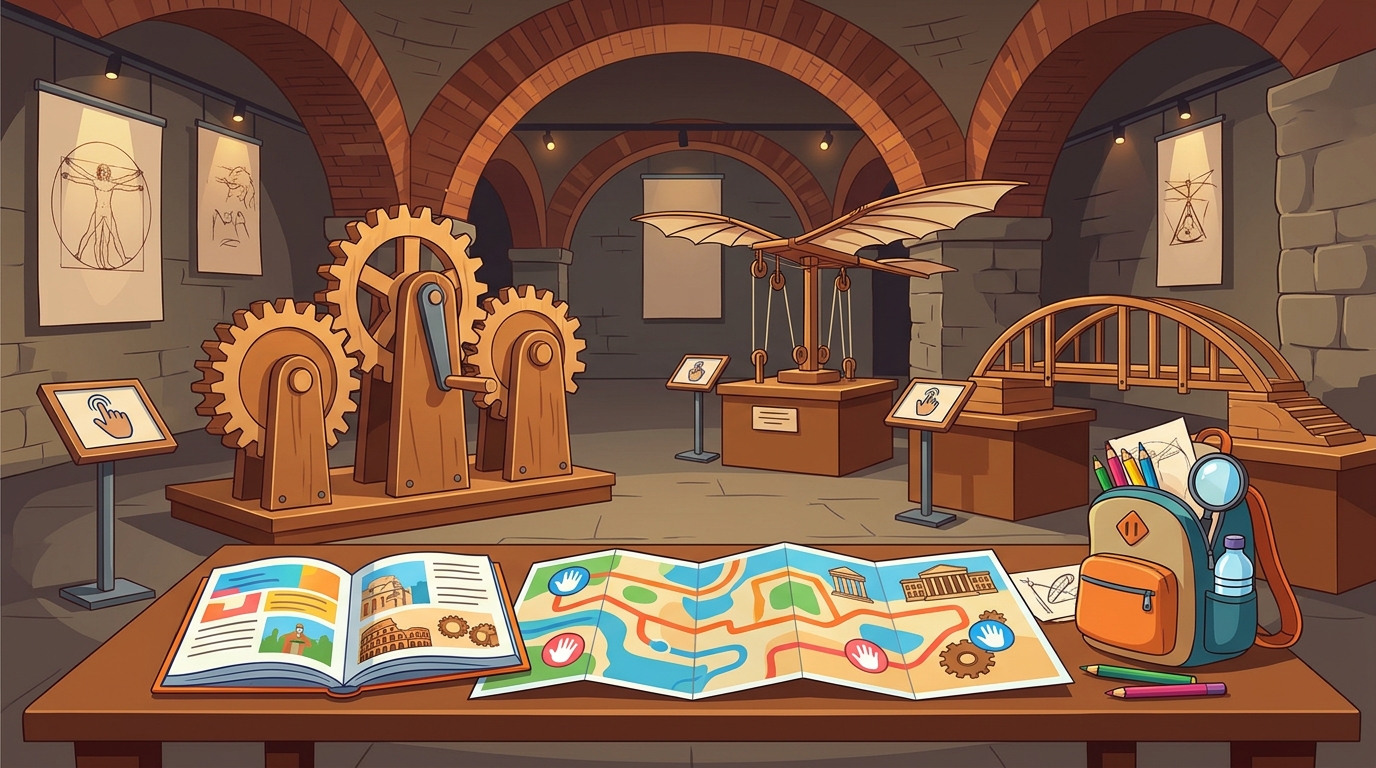
Pre-visit preparation is the act of familiarizing children with the museum’s themes before arriving. This step transforms the visit from a new, potentially overwhelming experience into a continuation of a familiar story. Use books, videos, or simple conversations to introduce the key figures or concepts you will encounter. For a Leonardo-themed museum, discussing his famous inventions or his love for nature can spark curiosity.
Engagement is maximized when children feel a sense of ownership over their learning. Ask them what they hope to see or do at the museum. This question gives them a goal and a reason to stay attentive. It also allows you to tailor the visit to their specific interests. If they are fascinated by flight, focus on the aviation exhibits. If they are interested in art, highlight the sketches and paintings.
The Museo Leonardo da Vinci provides a rich context for this preparation. By understanding the background, children can ask better questions and engage more deeply with the exhibits. This preparation turns the museum visit into a collaborative learning experience rather than a passive tour.
Key Takeaways
- Interactive museums prioritize hands-on learning, which suits children better than static displays.
- Match the exhibit complexity to your child’s developmental stage to avoid frustration.
- Plan your route carefully, considering the central location and accessibility of the venue.
- Build in short, structured breaks to manage energy and prevent overstimulation.
- Prepare your children by discussing the museum’s themes before you arrive.
- Focus on a few key exhibits rather than trying to see everything.
- Use the Museo Leonardo da Vinci as a model for high-quality interactive family experiences in Rome.
Frequently Asked Questions
What age is best for interactive museums in Rome?
Interactive museums are generally suitable for children aged four and up. Younger children may enjoy the visual aspects but might struggle with the interactive components. Older children and teenagers can engage more deeply with the historical and scientific content. The key is to match the specific exhibits to the child’s developmental stage.
How long should a museum visit last for children?
Aim for a visit of one to two hours. This duration is long enough to explore key exhibits but short enough to maintain attention. Break the visit into segments with short breaks in between. This approach helps manage energy levels and prevents fatigue.
Are interactive museums in Rome accessible for strollers?
Do I need to book tickets in advance?
It is recommended to book tickets in advance, especially during peak tourist seasons. Advance booking ensures entry and can help you secure a specific time slot that fits your schedule. Check the museum’s official website for booking options and availability.
What should I bring to an interactive museum with kids?
Bring water, light snacks, and a small notebook or tablet for sketching or taking notes. Comfortable shoes are essential for walking. A small reward or treat for completing the visit can also help maintain motivation. Avoid bringing large bags that may hinder movement in crowded spaces.
How can I make the visit more educational?
Encourage your children to ask questions and make observations. Use the exhibits as a starting point for broader discussions about history, science, or art. Ask them what they found most interesting and why. This reflective practice helps solidify the learning experience and makes the visit more memorable.
Conclusion
Taking kids to interactive museums in Rome is a rewarding experience that blends education with entertainment. By understanding the interactive model, managing logistics, and preparing your children in advance, you can create a positive and engaging visit. The Museo Leonardo da Vinci in Piazza del Popolo offers a unique opportunity to explore the genius of Leonardo da Vinci in a hands-on environment. Plan your visit carefully, and you will find that the experience is both educational and enjoyable for the whole family. To begin your planning, visit our official website to check opening hours and book your tickets.