
Experience Leonardo da Vinci's Inventions Through Interactive Exhibits
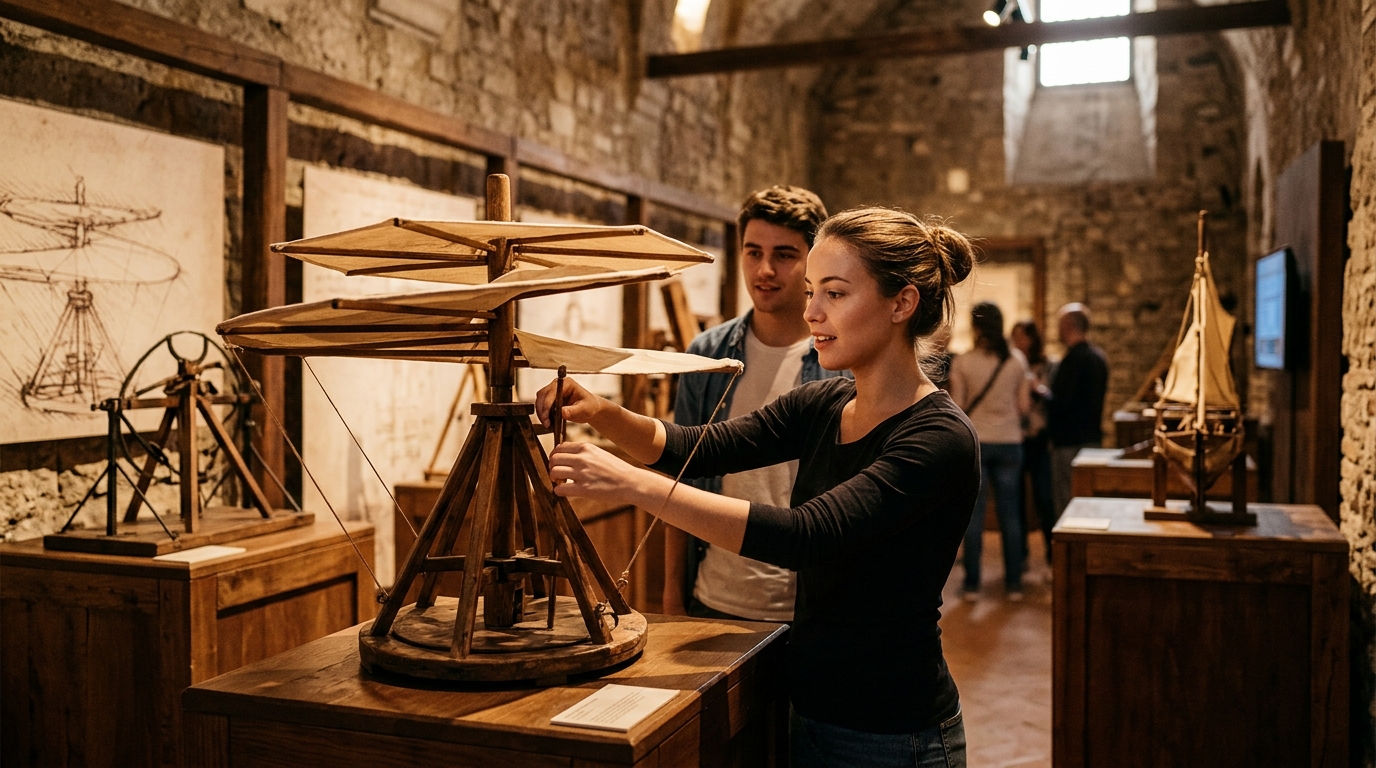
Interactive exhibits at the Museo Leonardo da Vinci allow visitors to physically engage with scaled models of Leonardo's machines. Located in the underground vaults of the Basilica of Santa Maria del Popolo in Rome, the museum transforms static historical sketches into tangible experiences. This approach helps visitors understand the mechanical logic behind the genius's designs. You can test the principles of flight, warfare, and hydraulics directly.
The Power of Hands-On Mechanical Models
Traditional museums often display artifacts behind glass, creating a barrier between the viewer and the object. The Museo Leonardo da Vinci removes this barrier by offering functional replicas. Interactive exhibit is a display element that requires physical manipulation by the visitor to demonstrate a concept. By moving the gears and levers of Leonardo's designs, you gain an intuitive grasp of how they function. This tactile engagement is far more effective than reading a plaque. For additional details, review the Frequently Asked Questions.
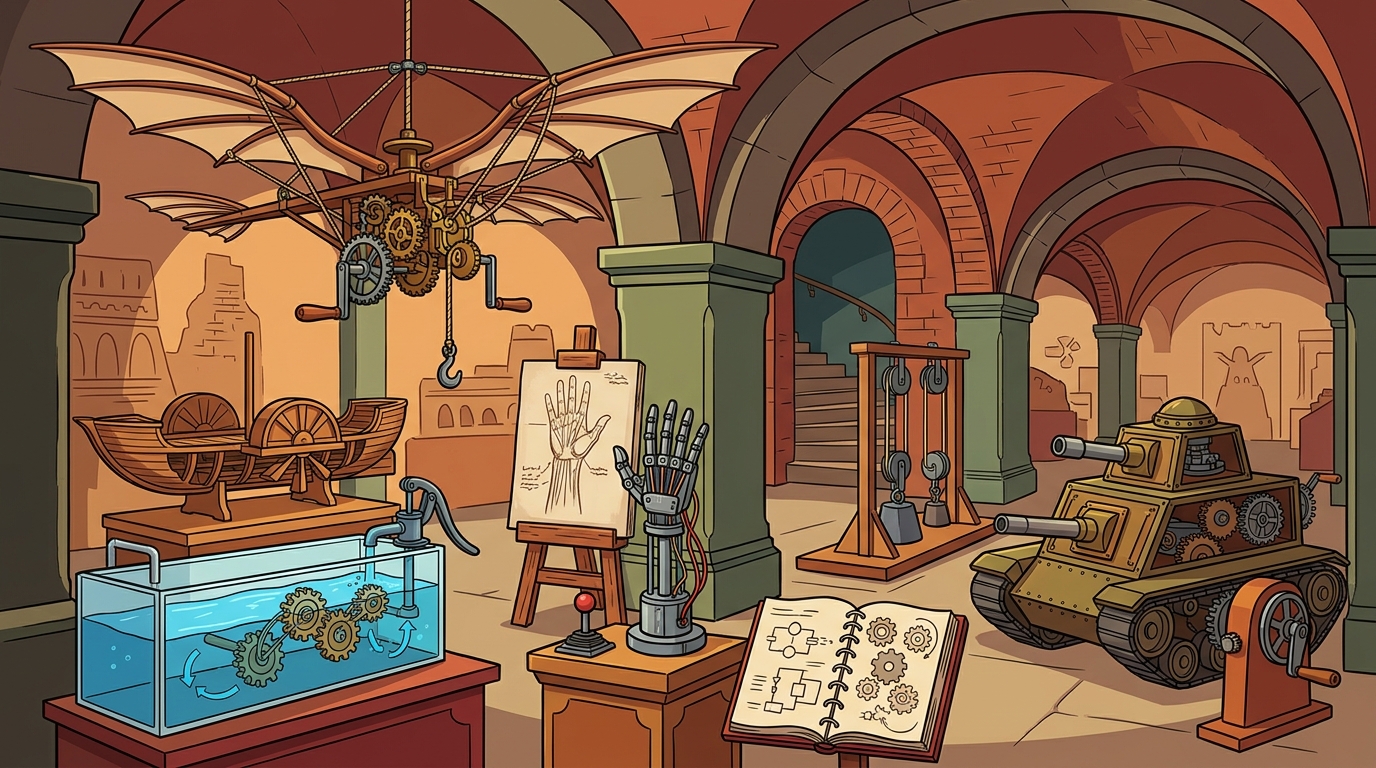
One specific example is the replica of the armored car. Leonardo sketched this vehicle in 1485 for the Duke of Milan. The museum's model allows you to see how the tracks and wheels would have moved. You can observe the mechanical advantage of the design. This hands-on interaction reveals the practicality of his military concepts.
Exploring the Mechanics of Flight
Leonardo's interest in flight is one of his most famous pursuits. He studied bird anatomy and aerodynamics extensively. The museum features interactive stations dedicated to his flying machines. Aerodynamic simulation is a method of testing how air moves over a surface to generate lift. Visitors can adjust the angle of wings on a model of the ornithopter. This demonstrates the challenges Leonardo faced in creating a human-powered aircraft.
The museum highlights the ornithopter, a machine designed to flap its wings like a bird. You can operate the mechanism to see the required force. This experience illustrates why the machine was never built. It also shows the sophistication of his understanding of physics. The interactive nature of this exhibit makes complex aerodynamics accessible to all ages.
Hydraulics and Water Management Systems
A notable example is the model of a canal system. Leonardo planned to redirect the Arno river to benefit Florence. The interactive model shows how water levels could be controlled. This exhibit connects his artistic vision with practical engineering. It highlights his role as a problem-solver for cities. Visitors can appreciate the scale of his ambitions.
Anatomy and the Human Body
While not a machine, Leonardo's anatomical studies are central to his legacy. The museum uses interactive displays to explore the human body. Anatomical visualization is the process of displaying the structure of the human body for educational purposes. You can rotate a 3D model of a heart to see its chambers. This helps you understand the detailed sketches Leonardo made from dissections.
Warfare and Military Engineering
Key Takeaways
- Interactive exhibits at the Museo Leonardo da Vinci allow physical engagement with scaled models of his inventions.
- The museum is located in the underground vaults of the Basilica of Santa Maria del Popolo in Rome.
- Hands-on manipulation of mechanical models provides a deeper understanding of Leonardo's engineering principles.
- Exhibits cover a wide range of topics, including flight, hydraulics, anatomy, and warfare.
- The interactive approach makes complex scientific concepts accessible to visitors of all ages.
- Functional replicas demonstrate the practicality and limitations of Leonardo's designs.
- The museum combines historical context with modern interactive technology to enhance the learning experience.
Frequently Asked Questions
Are the exhibits suitable for children?
Yes, the interactive exhibits are designed to be engaging for all ages. The hands-on nature of the displays makes them particularly appealing to children. The museum provides clear instructions to guide young visitors.
How long does it take to see the interactive exhibits?
Most visitors spend between one and two hours exploring the interactive sections. The time depends on how deeply you engage with each model. There is no strict time limit, allowing you to explore at your own pace.
Can I touch the models?
Yes, the interactive exhibits are designed to be touched and operated. This is the core feature of the museum. Please follow the instructions provided at each station to ensure the models are used correctly.
Is the museum accessible for people with disabilities?
Do I need to book in advance?
It is recommended to book your tickets in advance to avoid long lines. You can purchase tickets online through the official website. This ensures you have a guaranteed entry time.
Plan Your Visit to the Museo Leonardo da Vinci
The Museo Leonardo da Vinci offers a unique opportunity to engage with the genius of Leonardo. By interacting with his inventions, you gain a deeper appreciation for his contributions to science and art. The museum's location in Rome makes it a convenient stop for travelers. To plan your visit, book your tickets today and experience the interactive exhibits firsthand.