
Navigating Museo Leonardo da Vinci's Interactive Exhibits Near Piazza del Popolo
Visiting the heart of Rome requires more than just a map; it demands a strategy for experiencing its cultural depth. Museo Leonardo da Vinci stands as a premier destination for understanding the polymath's genius, located strategically at the end of Via del Corso. This guide provides a structured approach to navigating the museum's underground vaults, ensuring you maximize your engagement with the interactive models and historical context. By following this itinerary, you will transition from a casual observer to an informed explorer of Renaissance innovation.
Location and Access Logistics
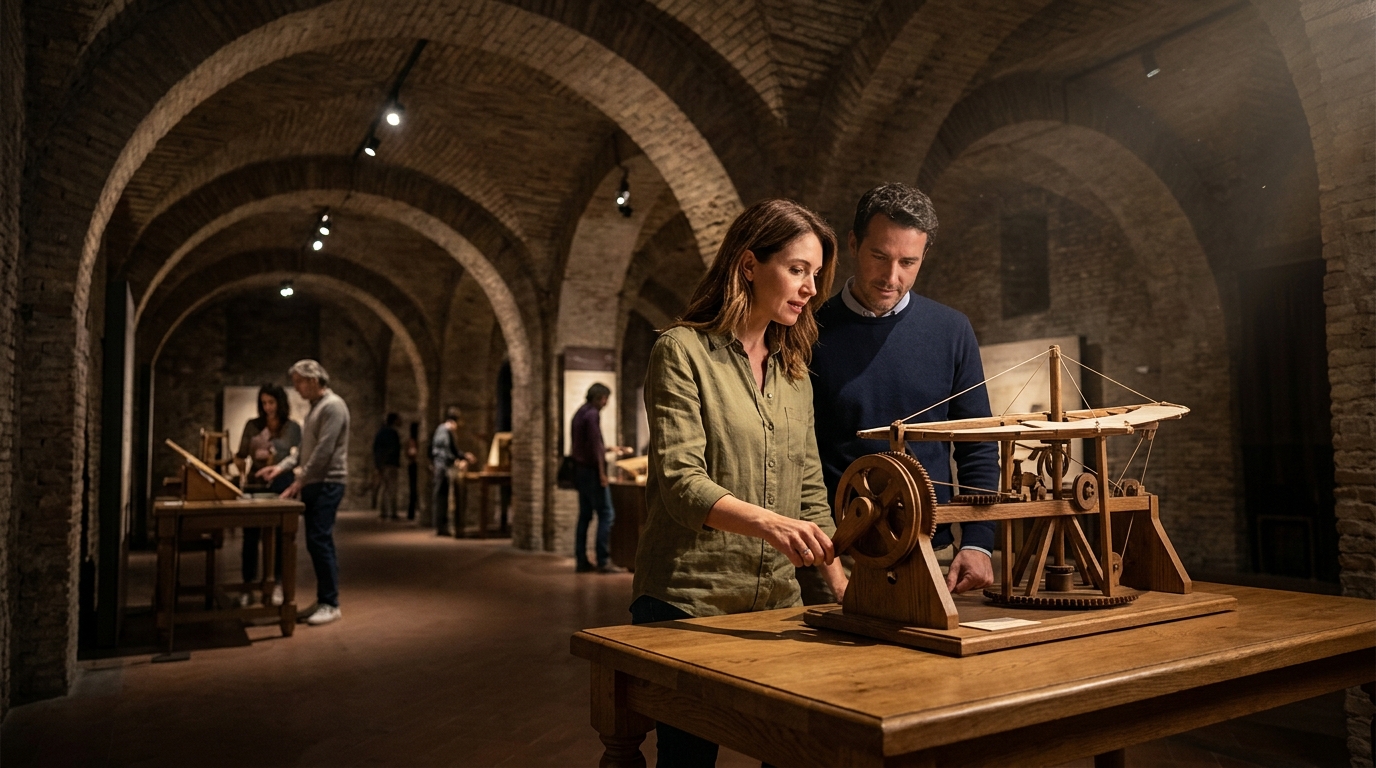
The museum's placement is a critical component of its accessibility and appeal. Situated in the underground vaults of the Basilica Santa Maria del Popolo, the venue offers a unique subterranean experience that contrasts with the bustling activity above. Piazza del Popolo serves as the northern gateway to Rome, making this location a natural stop for tourists exploring the city's historic center. The proximity to the Spanish Steps, which is approximately a five-minute walk, allows for seamless integration into a broader day of sightseeing. (Museo Leonardo da Vinci)
Accessing the museum requires navigating through the historic church structure. Visitors should look for signage directing them to the underground galleries. The environment is designed to be immersive, with lighting and acoustics carefully managed to highlight the mechanical models. It is advisable to allocate at least one hour for a thorough exploration of the exhibits. The museum is open to the public, but checking operating hours is recommended to avoid closure periods.
Understanding the Interactive Exhibits
The core of the museum's appeal lies in its collection of large-scale, functional models. These are not static displays but working replicas of Leonardo's inventions. Leonardo da Vinci is widely celebrated as a leading Renaissance painter and sculptor, but although he was also known as an engineer and a scientist, his work in these fields remained hidden for many centuries. The museum bridges this gap by allowing visitors to see his mechanical theories in motion.
Key interactive elements include:
- Flight Machines: Observe the mechanics of his ornithopter and aerial screw designs. These models demonstrate his understanding of aerodynamics long before the Wright brothers.
- War Machines: View the massive armored tank and multi-barreled gun. These exhibits highlight his strategic mind and the destructive potential of his engineering.
- Urban Planning: Explore models of his ideal city designs, which featured advanced sanitation and traffic flow concepts.
Engaging with these exhibits requires patience and observation. The mechanisms are often driven by hand-cranked systems or gravity. Visitors are encouraged to watch the gears turn and the levers move to understand the physics behind Leonardo's sketches. This tactile engagement transforms abstract drawings into tangible reality.
Anatomy and Engineering Focus
Leonardo's work was deeply interconnected. His understanding of human anatomy informed his engineering, and vice versa. The museum dedicates significant space to this duality. Leonardo da Vinci is anointed the master artist of Florence at the tender age of 18, responsible for the iconic artworks of the Mona Lisa, The Last Supper and The Vitruvian Man. However, his anatomical studies were equally rigorous.
The anatomical section features detailed sketches and models of the human body. These exhibits reveal his dissection practices and his quest to understand the mechanics of movement. The Vitruvian Man is not just a drawing but a conceptual framework for proportion that influenced both art and architecture. Understanding this connection helps visitors appreciate the breadth of his genius.
When viewing the anatomical models, pay attention to the precision of the joints and muscles. Leonardo's drawings are often more accurate than those of his contemporaries. This accuracy stems from his direct observation of cadavers, a practice that was rare and often controversial at the time. The museum presents these findings in a respectful and educational manner.
The Church Integration
The museum's location within the Basilica Santa Maria del Popolo adds a layer of historical depth to the visit. Combine your visit to Museo Leonardo da Vinci and Piazza del Popolo (The Peoples' Piazza) by exploring the incredible historic and stunning Basilica Santa Maria del Popolo. Discover original Caravaggio paintings from the 1600s and the magnificent Chigi Chapel, built and decorated by the legendary Raphael. This integration allows visitors to experience both the scientific and artistic heritage of Rome in a single journey.
Santa Maria is the burial site of 6 popes. Legend also has it that the cruel and debaucherous Nero - the infamous emperor who played the violin while Rome burned - is buried deep below the church. This historical context enriches the museum experience, connecting Leonardo's era with the broader tapestry of Roman history. The architecture of the vaults themselves is a testament to the engineering prowess of the Renaissance.
Comparison of Experience Types
Understanding the different ways to engage with the museum can enhance your visit. Below is a comparison of the primary experience modes available.
| Experience Type | Description | Best For | Duration |
|---|---|---|---|
| Self-Guided Tour | Explore the underground vaults at your own pace, focusing on specific exhibits of interest. | Independent travelers and photography enthusiasts. | 45-60 minutes |
| Guided Group Tour | Join a structured tour with a local expert who provides historical context and answers questions. | Families and first-time visitors to Rome. | 60-90 minutes |
| Church & Museum Combo | Visit both the museum and the Basilica Santa Maria del Popolo for a comprehensive historical experience. | History buffs and art lovers. | 2-3 hours |
Key Takeaways
- The museum is located in the underground vaults of Basilica Santa Maria del Popolo, offering a unique subterranean experience.
- Interactive models of Leonardo's inventions, including flight machines and war engines, are central to the exhibit.
- Leonardo was anointed the master artist of Florence at the tender age of 18, responsible for the iconic artworks of the Mona Lisa, The Last Supper and The Vitruvian Man.
- The museum is the most popular dedicated Leonardo museum in Rome, making it a high-traffic destination.
- Visitors can combine their museum visit with a tour of the Basilica, which houses works by Caravaggio and Raphael.
- The exhibits highlight the connection between Leonardo's anatomical studies and his engineering designs.
- Booking tickets in advance is recommended to secure entry, especially during peak tourist seasons.
Frequently Asked Questions
How long does it take to tour the museum?
Most visitors spend between 45 minutes and an hour exploring the interactive exhibits and anatomical displays. Allowing extra time for the adjacent church is advisable for a complete experience.
Is the museum suitable for children?
Yes, the museum is great for all the family to enjoy. The interactive nature of the mechanical models engages younger visitors, while the historical context appeals to older audiences.
Can I see the original Mona Lisa here?
No, while you won't see the original artworks at this museum, you will discover his incredible story, groundbreaking inventions, detailed anatomical sketches, startling scientific discoveries and much more that will leave you amazed that one person could create so much in one lifetime. The museum focuses on his engineering and scientific contributions.
How do I get to the museum from the Spanish Steps?
The museum is located at the end of Via del Corso and only a 5 minute walk from the Spanish Steps. Simply walk down Via del Corso towards Piazza del Popolo and look for the entrance to the Basilica.
Are there guided tours available?
Guided tours are often available, particularly for groups. It is best to check the info page for current schedules and booking options.
What is the significance of the location?
The museum is situated in the underground vaults of a major papal basilica, second only in importance to St Peter's and one of the seven pilgrim churches in Rome. This location connects Leonardo's work with the religious and political power of the Renaissance.
Is photography allowed inside?
Photography policies may vary. Generally, non-flash photography is permitted in the galleries. Please check with staff upon entry for the most current regulations regarding video recording and flash use.
Book Your Visit
Ready to explore the genius of Leonardo da Vinci in the heart of Rome? Don't miss your chance to be inspired. Book Now to secure your tickets and begin your journey through the underground vaults of Santa Maria del Popolo. Experience the intersection of art, science, and history in one of Rome's most unique cultural venues.