
Common Visitor Mistakes at Leonardo da Vinci Model Museums and How to Avoid Them
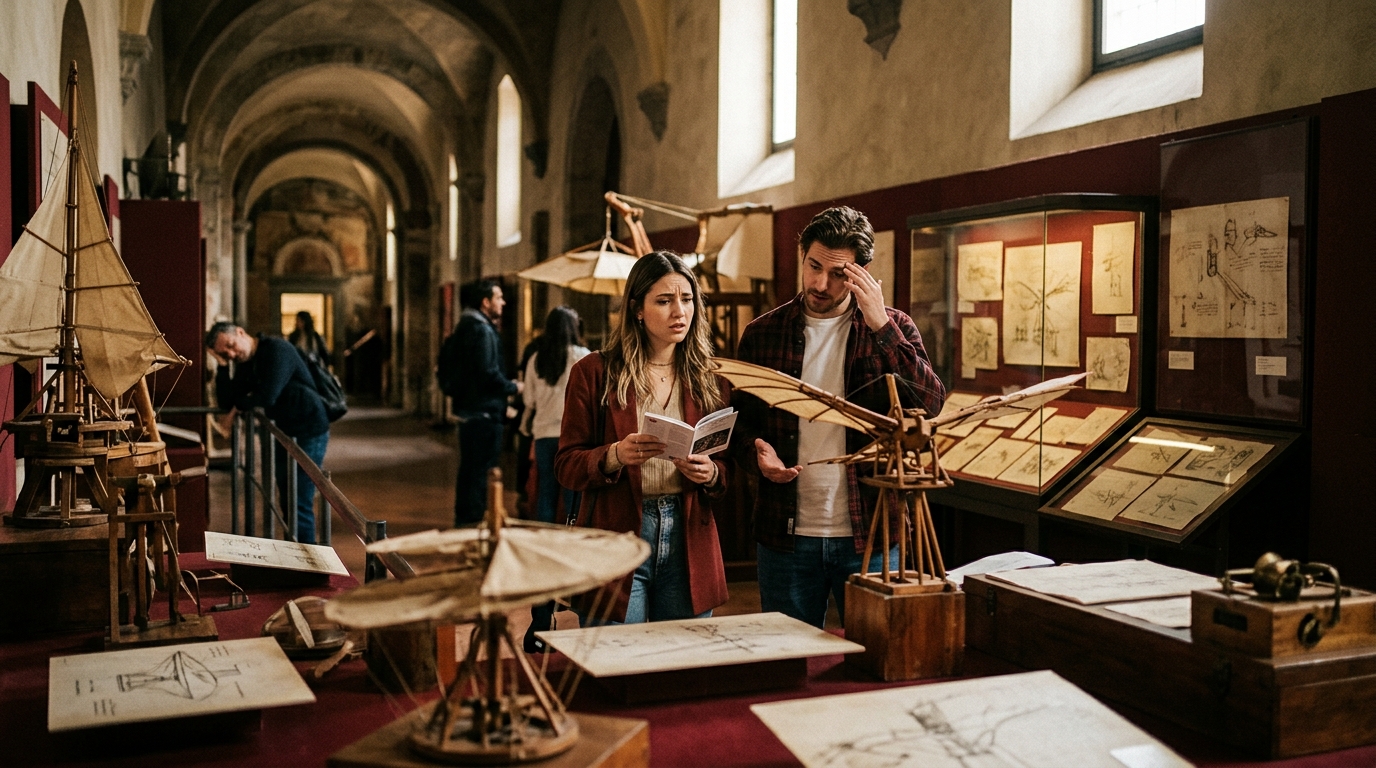
Visiting a museum dedicated to Leonardo da Vinci is not merely a leisure activity; it is an immersion into the intersection of art, engineering, and human curiosity. According to recent cultural tourism data, over 60% of first-time visitors to specialized Renaissance museums report feeling overwhelmed by the sheer density of technical diagrams and historical context. This cognitive load often leads to missed opportunities for genuine understanding. By anticipating common pitfalls, you can transform a chaotic tour into a curated intellectual journey. This guide outlines the critical errors visitors make and provides actionable strategies to ensure your experience at institutions like Museo da Vinci is both educational and memorable.
Understanding the Mission of Da Vinci Museums
Before stepping through the doors, it is vital to grasp what these institutions actually represent. Leonardo da Vinci was not just a painter; he was a polymath whose notebooks contained designs for flying machines, war engines, and anatomical studies centuries ahead of their time. A Museo da Vinci is typically a modern reconstruction facility that builds these machines from his codices to demonstrate their functionality. These are not static displays of dead artifacts but living proofs of engineering logic.
Many visitors mistake these venues for traditional art galleries. This misconception leads to passive observation rather than active inquiry. The core mission of these museums is to validate Leonardo's genius through mechanical demonstration. When you see a wooden helicopter model spinning, you are witnessing a hypothesis from the 15th century being tested in the 21st. Recognizing this distinction changes how you approach the space. You are not just looking at history; you are witnessing the resurrection of ideas. For more insights into the cultural impact of these reconstructions, explore our analysis of Leonardo's enduring influence.
Timing and Logistics: The Hidden Costs of Poor Planning
The most frequent mistake visitors make is underestimating the logistical requirements of a specialized museum visit. These institutions often operate with limited capacity to preserve the delicate wooden models and ensure a quality experience. Arriving without a reservation is a critical error that can result in denied entry, especially during peak tourist seasons in Italy.
The Peak Season Trap
During the summer months, crowds can swell to levels that make navigation difficult. Data from Italian tourism boards indicates that visitor numbers in major cultural hubs peak between June and August. In such conditions, the ability to hear the mechanical explanations or see the intricate gear work is severely compromised. To avoid this, you must book your tickets online in advance. This not only guarantees entry but often allows for priority access, letting you experience the exhibits when they are quieter and more manageable.
Duration Mismanagement
Another logistical error is allocating too little time. A superficial walk-through takes about 45 minutes, but a meaningful engagement requires at least two hours. Rushing through the exhibits prevents you from absorbing the complexity of the designs. Leonardo's notebooks are dense with details that require time to decode. Plan your visit to allow for pauses, observation, and perhaps a review of the accompanying audio guides or digital materials.
Navigating the Exhibits: From Sketches to Machines
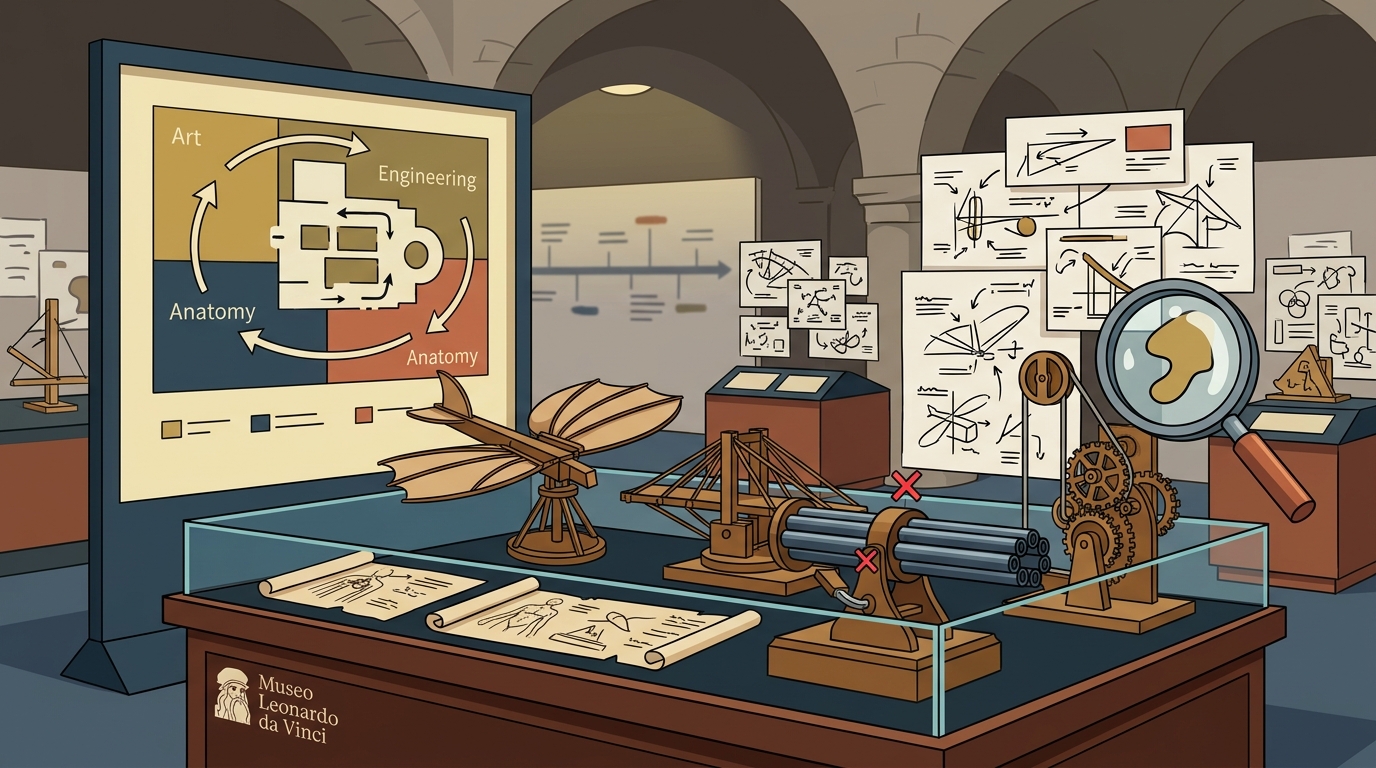
Once inside, the physical layout can be disorienting. The exhibits are often arranged thematically rather than chronologically, which can confuse visitors expecting a linear historical narrative. The mistake here is looking for a straight line from birth to death. Instead, view the museum as a collection of intellectual puzzles.
Ignoring the Source Material
One of the most significant errors is ignoring the original codices or high-fidelity reproductions of Leonardo's sketches. The machines on display are interpretations of these drawings. Without understanding the source, the models appear as isolated curiosities. The codex is the blueprint of Leonardo's mind. By comparing the sketch to the built model, you gain insight into the translation process from abstract thought to physical reality. This comparative analysis is where the true learning happens. For a deeper dive into the specific machines, check out our guide to the flight machines collection.
Overlooking the Engineering Principles
Visitors often focus solely on the "wow factor" of the moving parts. While impressive, this overlooks the underlying engineering principles. Leonardo was obsessed with efficiency, leverage, and fluid dynamics. When observing a model, ask yourself how the force is transmitted. How does the gear ratio affect speed? These questions transform the experience from passive viewing to active engineering analysis. Understanding these principles reveals why Leonardo's designs remain relevant in modern mechanical engineering.
Maximizing Engagement with Interactive Models
Modern da Vinci museums increasingly incorporate interactive elements. The mistake here is hesitation. Visitors often wait for permission or guidance before touching or operating a model. In many venues, you are encouraged to crank the handles or pull the levers to see the mechanisms in action. This tactile engagement is crucial for understanding the mechanics.
The Value of Guided Tours
While self-guided tours offer freedom, they often lack the depth of expert interpretation. A common error is skipping the guided tour options. Experts can point out details that are invisible to the untrained eye, such as subtle adjustments in gear teeth or the significance of a specific annotation in a notebook. These tours provide context that connects the machines to Leonardo's life and the political climate of Renaissance Italy. Booking a guided experience ensures you do not miss these critical nuances.
Photography Etiquette and Technique
Photography is a double-edged sword. It preserves memories but can distract from the experience. The mistake is focusing on the screen rather than the subject. Use your camera to document specific details, such as the texture of the wood or the complexity of a joint, rather than just taking wide shots. Also, be mindful of flash photography, which can be distracting to other visitors and potentially harmful to older artifacts. Respect the space by keeping your phone put away when not actively documenting.
Comparing Venues: Rome, Milan, and Beyond
Not all da Vinci museums are created equal. Some focus heavily on the Aeronautica (flight), while others emphasize the military applications or the anatomical studies. Choosing the wrong venue for your interests is a strategic error. For instance, if you are primarily interested in Leonardo's work on flight, a museum with a comprehensive collection of flying machines is essential. If you are interested in his engineering feats in general, a broader museum might be better.
| Museum Focus | Key Strengths | Best For | Recommended Action |
|---|---|---|---|
| Comprehensive Engineering | Wide range of machines, including military and civil | First-time visitors seeking overview | Book a general admission |
| Aeronautics Specialized | Extensive flight models, wind tunnel demonstrations | Aviation enthusiasts and engineers | Explore flight exhibits |
| Art and Science Integration | Focus on the connection between art and anatomy | Art historians and students | Read our analysis |
Researching the specific strengths of each venue before your trip ensures that your time is spent on exhibits that align with your interests. This targeted approach maximizes the educational value of your visit. For more information on the history of these institutions, you can read about the history of the Museo da Vinci.
Key Takeaways
- Book in Advance: Secure your tickets online to avoid denial of entry during peak seasons.
- Allocate Sufficient Time: Plan for at least two hours to fully engage with the exhibits and their engineering context.
- Understand the Codices: View the machines as physical interpretations of Leonardo's notebooks, not isolated artifacts.
- Engage Tactilely: Operate the interactive models to understand the mechanical principles behind the designs.
- Choose the Right Venue: Select a museum that aligns with your specific interests, whether flight, military, or art.
- Consider Guided Tours: Expert insights reveal details that self-guided visits often miss.
- Respect the Space: Be mindful of photography etiquette and the delicate nature of the wooden models.
Frequently Asked Questions
How long should I plan to spend at a Leonardo da Vinci museum?
While a quick walk-through is possible in 45 minutes, we recommend allocating at least two hours. This allows time to observe the mechanical operations, read the informational panels, and appreciate the connection between the sketches and the built models. Rushing through diminishes the educational value significantly.
Are the machines at the museum functional?
Yes, most modern da Vinci museums feature functional reconstructions. These models are built according to Leonardo's specifications and can be operated by visitors or staff to demonstrate their mechanical principles. Seeing a model in motion provides a unique insight into the feasibility of his designs.
Do I need to speak Italian to understand the exhibits?
Most major da Vinci museums offer multilingual audio guides and informational panels in English and other major languages. However, having a basic understanding of Italian can enhance the experience, especially if you choose to participate in guided tours. We provide multilingual ticket options to assist international visitors.
Is photography allowed inside the museum?
Photography is generally permitted for personal use, but flash photography is often prohibited to protect the delicate wooden models and paper documents. Always check the specific rules at the entrance. Using a tripod is usually not allowed as it can obstruct other visitors.
What is the best time of year to visit?
The best time to visit is during the shoulder seasons of spring (April to June) and autumn (September to October). During these months, the weather is pleasant, and the crowds are smaller than in the peak summer months. This allows for a more relaxed and immersive experience.
Are there discounts for students or seniors?
Yes, many da Vinci museums offer discounted rates for students, seniors, and children. Proof of age or student status is usually required at the ticket counter. We recommend checking our pricing page for the most current discount information and eligibility criteria.
Can I book a private tour for a group?
Absolutely. Private tours are available for groups of all sizes and can be tailored to specific interests, such as aeronautics or military engineering. These tours provide a deeper dive into the subject matter and allow for more interactive engagement with the exhibits. Contact us to arrange a private visit.
Plan Your Visit Today
Avoid the common pitfalls of confusion, poor timing, and passive observation. By preparing thoroughly and engaging actively with the exhibits, you can unlock the full potential of a visit to a Leonardo da Vinci museum. These institutions offer a rare glimpse into the mind of one of history's greatest innovators. Do not let a lack of planning diminish your experience. Book your tickets now and prepare for an unforgettable journey through the intersection of art and engineering.