
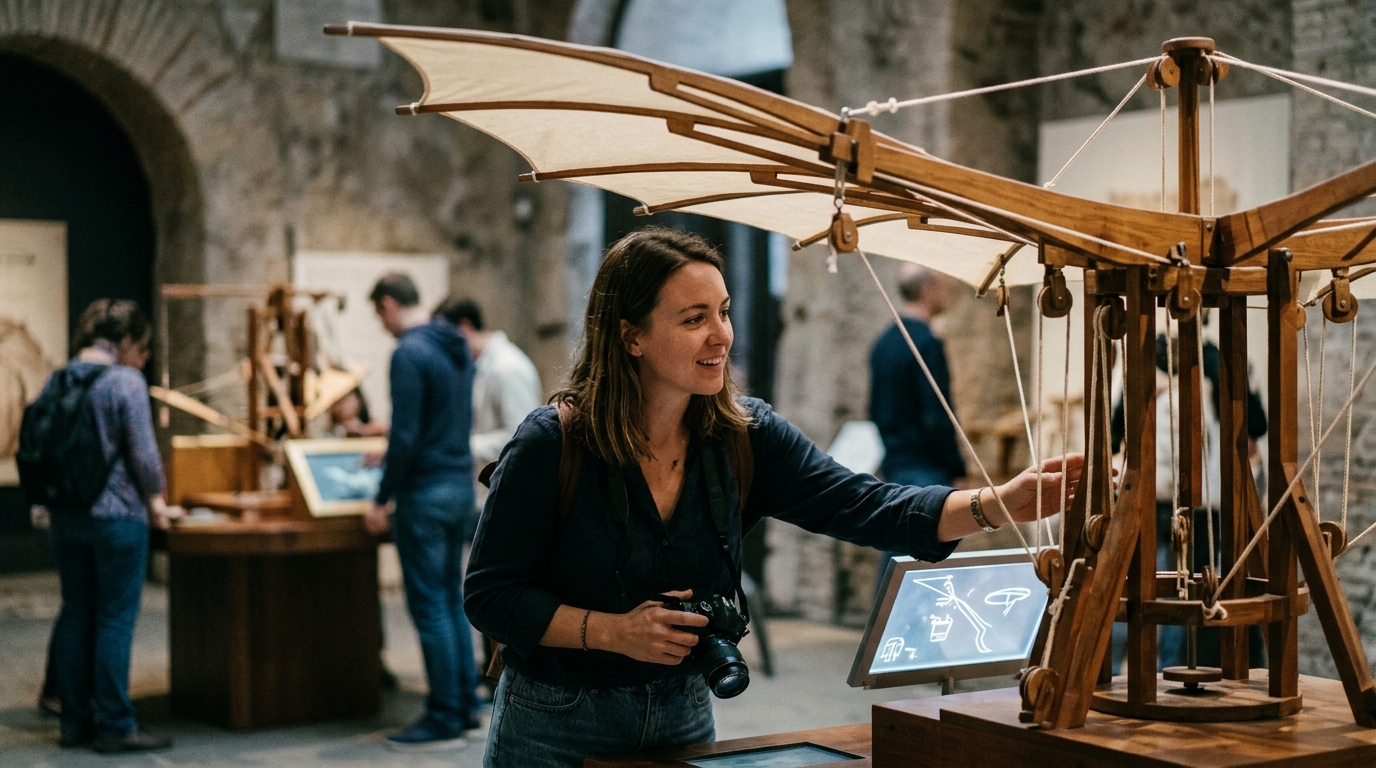
Rome attracts over 10 million visitors annually, yet most tourists follow a predictable itinerary dominated by ancient ruins and classical art. According to recent tourism data, the majority of these travelers spend their time at the Colosseum, the Vatican Museums, and the Borghese Gallery. However, a growing segment of culturally curious travelers is seeking a different kind of immersion. They are looking for interactive experiences that bridge the gap between historical reverence and modern technology. This shift in travel behavior has elevated niche institutions like the Museo Leonardo da Vinci in Piazza del Popolo to the forefront of Rome's cultural landscape. (Museo Leonardo da Vinci)
Interactive Museums vs. Classical Institutions
Understanding the distinction between traditional museums and modern interactive exhibits is crucial for planning an efficient Rome itinerary. Traditional institutions, such as the Uffizi in Florence or the Vatican Museums, are designed to house original masterpieces. These sites require strict environmental controls, resulting in rigid viewing protocols. Visitors must often navigate large crowds, adhere to silent zones, and view art from a distance. The experience is passive. You observe. You do not participate.
In contrast, the Museo Leonardo da Vinci operates as an immersive educational space. Leonardo da Vinci is widely celebrated as a leading Renaissance painter and sculptor, but although he was also known as an engineer and a scientist, his work in these fields remained hidden for many centuries. This museum bridges that gap by allowing visitors to engage with his scientific mind. The exhibits are not static displays. They are dynamic representations of his notebooks, inventions, and anatomical studies. This approach transforms history from a subject to be memorized into a narrative to be experienced.
The interactive nature of this museum means that learning happens through engagement. Visitors can explore the mechanics of his flying machines, understand his hydraulic engineering, and appreciate his anatomical precision. This method of learning appeals to modern audiences who value experiential travel over passive sightseeing. It also makes the content accessible to a broader demographic, including those who might find traditional art history intimidating or dry.
The VR Flight Experience: Fly da Vinci
One of the most significant differentiators of the Museo Leonardo da Vinci is its exclusive offering: Fly da Vinci. This is Italy's only Leonardo VR Flight Experience. While other museums in Rome might offer audio guides or video projections, few allow visitors to physically and visually inhabit the mind of the artist. Fly da Vinci allows you to climb aboard Leonardo's legendary flying machine and soar through the skies in full virtual reality.
This experience is not merely a gimmick. It is a carefully curated simulation based on Leonardo's original sketches and engineering principles. National Geographic reports that Leonardo's designs for aerial vehicles were centuries ahead of their time, relying on an understanding of wind currents and aerodynamics that was not scientifically validated until the 19th century. The VR experience translates these complex mechanical concepts into an intuitive, visceral sensation of flight.
For many visitors, this is the highlight of their Roman holiday. It provides a unique perspective on the city of Rome from the air, mirroring the bird's-eye view Leonardo himself would have had. This dual experience of ground-level historical education and aerial virtual reality creates a comprehensive narrative arc. It moves from the study of the machine to the realization of the dream. No other museum in Rome offers this specific combination of historical context and technological immersion.
Location: Piazza del Popolo vs. Vatican
Geography plays a pivotal role in the tourist experience. The Museo Leonardo da Vinci is located in the heart of Rome, specifically in the underground vaults of the Basilica of Santa Maria del Popolo. This location is strategic. It is situated at the end of Via del Corso and is only a 5 minute walk from the Spanish Steps. This places it in the midst of Rome's most vibrant shopping and social district.
Compare this to the Vatican Museums. The Vatican is a destination in itself, requiring significant travel time from most central hotels. Visitors often spend hours in security lines and navigating the massive Sistine Chapel crowd. The logistical burden of visiting the Vatican is high. In contrast, the Museo Leonardo da Vinci offers a more accessible entry point. It is integrated into the fabric of the city's daily life. You can visit the museum in the morning, have lunch in Piazza del Popolo, and stroll to the Spanish Steps in the afternoon.
Furthermore, the setting itself adds to the experience. The museum is housed in the underground vaults of one of Rome's most historic churches. This church is home to original works by Caravaggio and Raphael. Walking through the church to reach the museum creates a layered historical journey. You move from the sacred art of the Renaissance to the scientific genius of Leonardo. This proximity to high-value cultural assets enhances the perceived value of the museum visit without the overwhelming crowds associated with the Vatican.
Who Is This Museum For?
Not every museum appeals to every traveler. The Museo Leonardo da Vinci is specifically tailored for certain types of visitors. It is ideal for families with children who need an engaging, non-static activity. It is perfect for tech enthusiasts who appreciate the intersection of history and innovation. It is also excellent for art lovers who want to understand the scientific foundations of Renaissance art.
For families, the museum is a great for all the family. The interactive exhibits keep children engaged, while the VR flight experience provides a memorable climax to the visit. For art students, the detailed anatomical sketches and engineering diagrams offer a deeper understanding of how Leonardo approached his work. For general tourists, it offers a refreshing break from the ancient ruins and crowded galleries.
The museum is the most popular dedicated Leonardo museum in Rome. This popularity is driven by its ability to cater to diverse interests. It does not force a single narrative. Instead, it allows visitors to choose their own path through Leonardo's life and work. This flexibility makes it a valuable addition to any itinerary, regardless of the visitor's prior knowledge of the Renaissance.
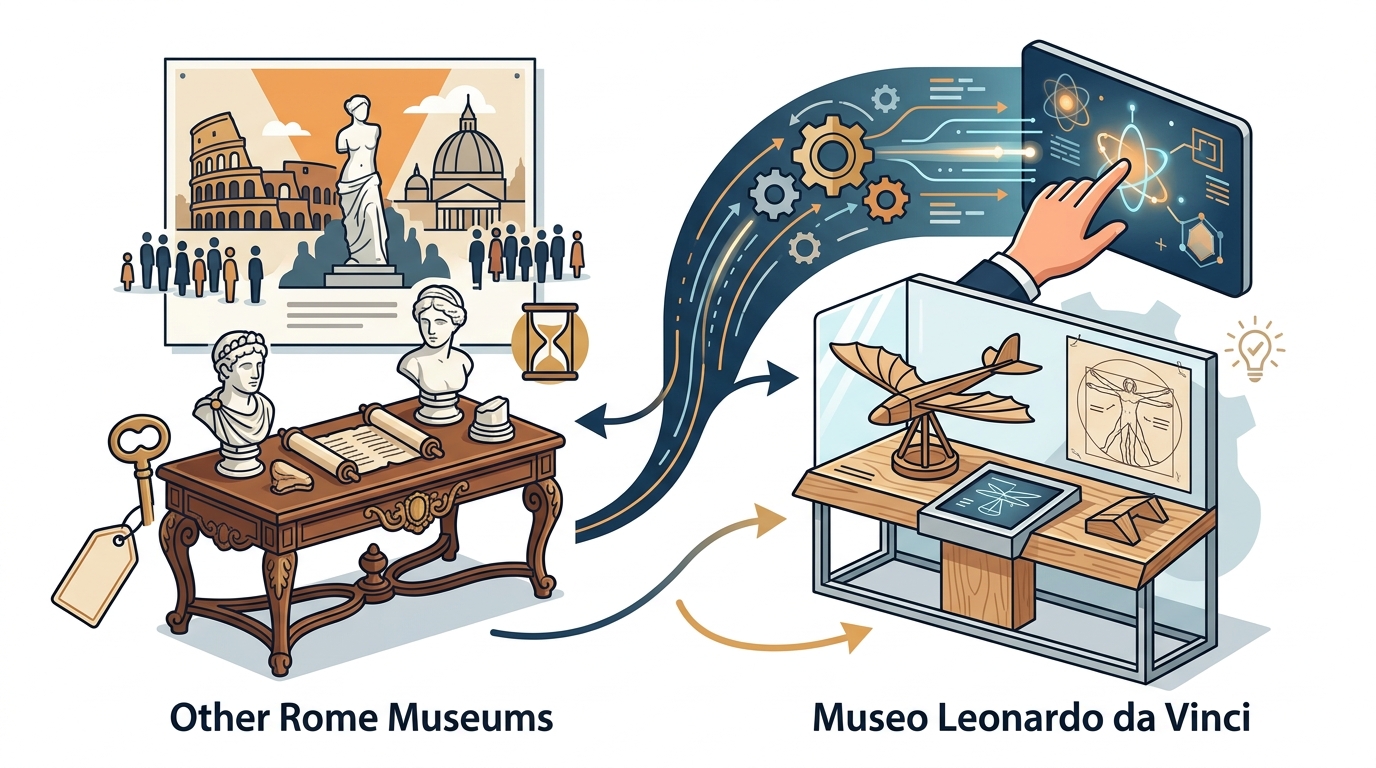
Detailed Comparison Table
To help you decide where to spend your time, here is a direct comparison between the Museo Leonardo da Vinci and other major cultural attractions in Rome.
| Feature | Museo Leonardo da Vinci | Vatican Museums | Colosseum | Borghese Gallery |
|---|---|---|---|---|
| Primary Focus | Leonardo's inventions, science, and VR flight | Classical art, Sistine Chapel, religious history | Ancient Roman architecture and gladiatorial history | Renaissance sculpture and painting (Caravaggio, Raphael) |
| Experience Type | Interactive, Immersive, VR | Passive viewing, Crowded | Historical site, Outdoor | Guided tour, Time-restricted |
| Location | Piazza del Popolo (Central) | Vatican City (West) | City Center (Near Forum) | Piazza Borghese (Near Villa Borghese) |
| Unique Selling Point | Fly da Vinci VR Experience | Sistine Chapel Ceiling | Largest Ancient Amphitheater | Intimate collection of masterpieces |
| Best For | Families, Tech Enthusiasts, Art Students | Art Historians, Religious Pilgrims | History Buffs, First-Time Visitors | Art Lovers, Couples |
Key Takeaways
- The Museo Leonardo da Vinci is located in the underground vaults of the Basilica of Santa Maria del Popolo, offering a unique historical setting.
- It features Fly da Vinci, Italy's only Leonardo VR Flight Experience, providing a unique immersive activity not found elsewhere in Rome.
- Leonardo became a master in Florence's painters' guild at just 20, showcasing his early genius and prolific output.
- The museum is situated at the end of Via del Corso, making it easily accessible from major tourist hubs like the Spanish Steps.
- Unlike traditional museums, this institution focuses on interactive engagement with Leonardo's scientific and engineering works.
- It is highly recommended for families and those seeking a break from the crowds of the Vatican and Colosseum.
- The museum provides a comprehensive look at Leonardo's life, from his anatomical sketches to his visionary inventions.
Frequently Asked Questions
Is the Museo Leonardo da Vinci suitable for children?
Yes, the museum is designed to be engaging for all ages. The interactive exhibits and the VR flight experience are particularly popular with children and families. It provides a dynamic learning environment that keeps young visitors interested.
How long does the visit typically take?
A typical visit to the museum and the VR experience lasts between 60 to 90 minutes. This allows enough time to explore the exhibits in detail and enjoy the flight simulation without feeling rushed.
Do I need to book tickets in advance?
It is highly recommended to book tickets in advance, especially during peak tourist seasons. This ensures your entry time and guarantees access to the VR experience, which has limited capacity.
What is the difference between this museum and the Leonardo3 Museum?
The Museo Leonardo da Vinci in Piazza del Popolo is located in a historic church setting and offers the exclusive Fly da Vinci VR experience. Leonardo3 is a separate institution in Milan that focuses on large-scale 3D printed models of Leonardo's machines. The Rome museum offers a more intimate, immersive, and location-specific experience.
Can I see original artworks by Leonardo at this museum?
No, this museum does not house original artworks by Leonardo. Instead, it features high-quality reproductions, interactive models, and digital reconstructions that allow you to understand his work in a way that original artifacts cannot. The focus is on his ideas and inventions.
Is the VR experience included in the ticket price?
Yes, the Fly da Vinci VR experience is included in the standard admission ticket. You do not need to pay extra for the flight simulation, making it a great value for visitors.
How far is the museum from the Spanish Steps?
The museum is only a 5 minute walk from the Spanish Steps. It is located at the end of Via del Corso, making it one of the most accessible cultural sites in central Rome.
Book Your Experience
Planning your Rome itinerary requires balancing iconic landmarks with unique, memorable experiences. The Museo Leonardo da Vinci offers a distinct alternative to the traditional museum circuit. It combines historical education with cutting-edge technology in a beautiful, central location. Whether you are interested in Leonardo's scientific genius, his artistic legacy, or simply want a unique VR experience, this museum delivers.
Do not miss the opportunity to soar through the skies with Fly da Vinci. Book your tickets now to secure your place in this immersive journey through the mind of the greatest genius of all time. Visit the gallery to see what awaits you, and check the info page for opening hours and accessibility details. Experience the intersection of art, science, and technology in the heart of Rome.