
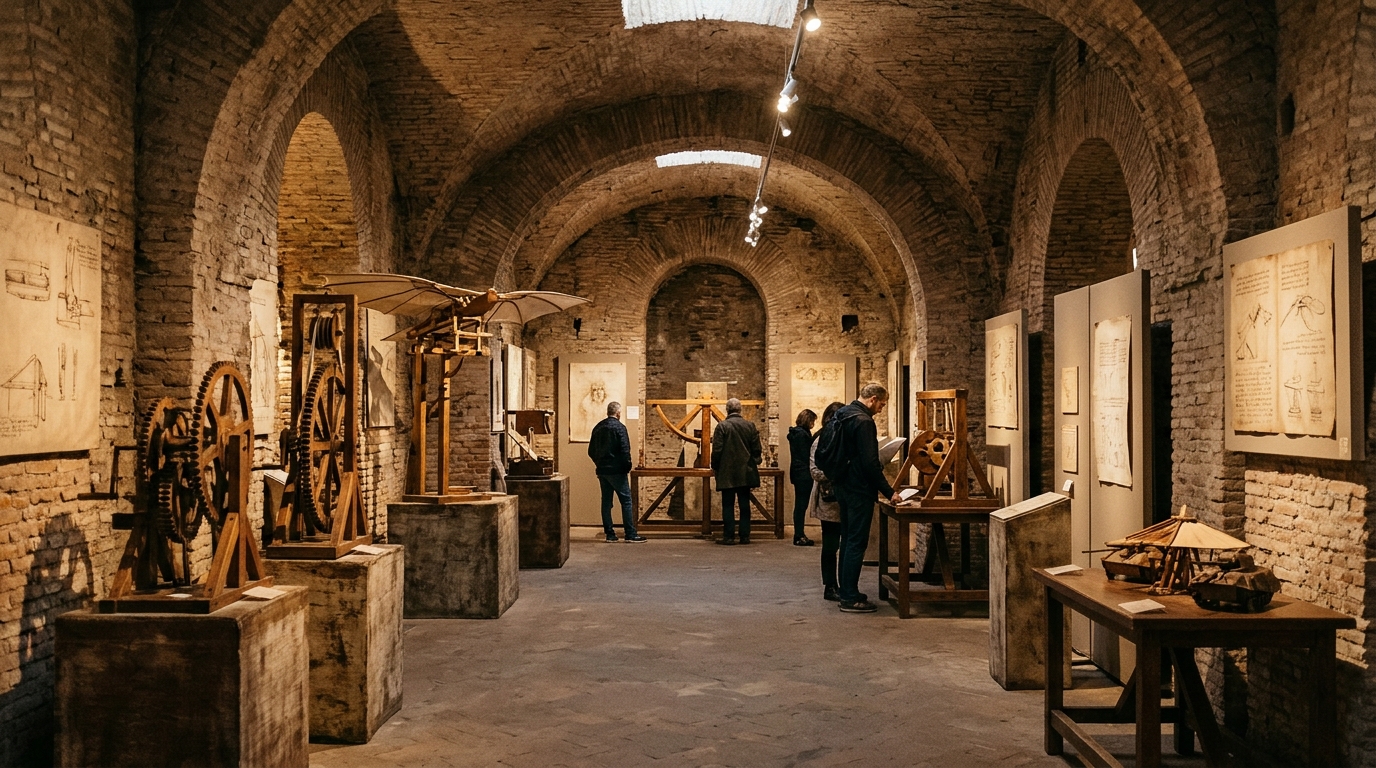
Yes, there is a dedicated Leonardo da Vinci museum in Rome. The Museo Leonardo da Vinci is located in the historic Piazza del Popolo, offering an interactive experience within the underground vaults of the Basilica of Santa Maria del Popolo. This guide covers the museum's location, interactive exhibits, machine reproductions, and how it compares to other Roman venues.
Interactive Exhibits
The Museo Leonardo da Vinci distinguishes itself through a heavily interactive curatorial approach. Traditional museums often rely on static displays, but this venue invites visitors to engage directly with the genius of Leonardo. Interactive exhibits are defined as displays that require physical or digital user input to function or reveal information. This method transforms passive viewing into active learning. Visitors can manipulate models and explore digital interfaces that bring historical sketches to life.
Engagement Through Technology
The museum utilizes modern technology to bridge the gap between 15th-century manuscripts and contemporary understanding. Digital projections and touchscreens allow guests to zoom into anatomical details and mechanical designs. This technology ensures that complex scientific concepts remain accessible to a broad audience. The interactive nature of the exhibits keeps the energy high throughout the visit.
Hands-On Learning
Hands-on stations allow visitors to test the principles of flight and hydraulics that Leonardo studied. By physically engaging with the models, guests gain a deeper appreciation for the ingenuity of the inventor. This tactile experience is particularly effective for families and students. It makes the history of science feel immediate and relevant.
Museum Locations in Rome
Rome hosts several venues dedicated to the life and work of Leonardo da Vinci. Understanding the specific locations helps visitors plan their itinerary effectively. The primary venue for this guide is the Museo Leonardo da Vinci in Piazza del Popolo. This location is strategically placed in the heart of the city, near major landmarks. Other venues exist in different districts, each offering a unique perspective on the artist.
Central District Accessibility
The Piazza del Popolo location is highly accessible for tourists. It is situated at the end of Via del Corso, a major shopping and pedestrian street. This central position allows visitors to combine a museum visit with shopping or dining. The proximity to the Spanish Steps makes it a convenient stop for those exploring the Trastevere or Monti neighborhoods. Public transport links are also robust in this area.
Comparison of Venues
While the Piazza del Popolo museum focuses on interactive science and invention, other Roman venues may emphasize different aspects of Leonardo's career. Some locations focus more on art history, while others highlight his military engineering. The table below summarizes the key differences between the primary venues in Rome.
| Venue Name | Location | Primary Focus | Experience Type |
|---|---|---|---|
| Museo Leonardo da Vinci | Piazza del Popolo | Interactive Science & Inventions | Immersive & Hands-On |
| Mostra di Leonardo | Various (Check current listings) | Art & Historical Context | Traditional Exhibition |
| Palazzo della Cancelleria | Prati District | Architectural History | Site Visit |
Leonardo Painting Reproductions
It is important to clarify that the Museo Leonardo da Vinci does not house original paintings by Leonardo da Vinci. Original works like the Mona Lisa remain in the Louvre in Paris. Instead, the museum features high-fidelity reproductions and detailed studies. Painting reproductions are defined as high-quality copies of original artworks used for educational and display purposes. These reproductions allow visitors to appreciate the composition and technique of Leonardo's famous pieces. They serve as a visual anchor for the broader narrative of his life.
Visual Context for Inventions
The reproductions are often displayed alongside sketches of his inventions. This juxtaposition highlights the connection between his artistic skill and his scientific curiosity. Leonardo's ability to render the human form with such precision informed his anatomical studies. By viewing the reproductions, guests gain insight into the artistic foundation of his engineering. The visual quality of these copies is designed to be impressive and educational.
Focus on Process
While the originals are absent, the focus shifts to the process of creation. The museum showcases how Leonardo used drawing as a tool for discovery. This emphasis on process is more relevant to the interactive theme of the venue. It encourages visitors to think like Leonardo, observing the world with an artist's eye and a scientist's mind. The reproductions act as a bridge to this mindset.
Interactive Machine Exhibits
One of the most compelling aspects of the Museo Leonardo da Vinci is its collection of interactive machine exhibits. These exhibits bring Leonardo's mechanical designs to life through motion and sound. Interactive machine exhibits are defined as functional models that demonstrate the mechanical principles outlined in historical manuscripts. Visitors can watch gears turn, levers move, and hydraulic systems operate. This dynamic presentation makes complex engineering concepts easy to understand.
Military Engineering
Flight and Aeronautics
The dream of flight was a central obsession for Leonardo. The museum displays interactive models of his ornithopter and parachute designs. These models demonstrate the aerodynamic principles that Leonardo understood centuries before the Wright brothers. Visitors can see how the wings would have moved and how the parachute would have deployed. This section of the museum is particularly popular with aviation enthusiasts.
Interactive Invention Exhibits
Hydraulics and Water Management
Optics and Light
Piazza del Popolo Context
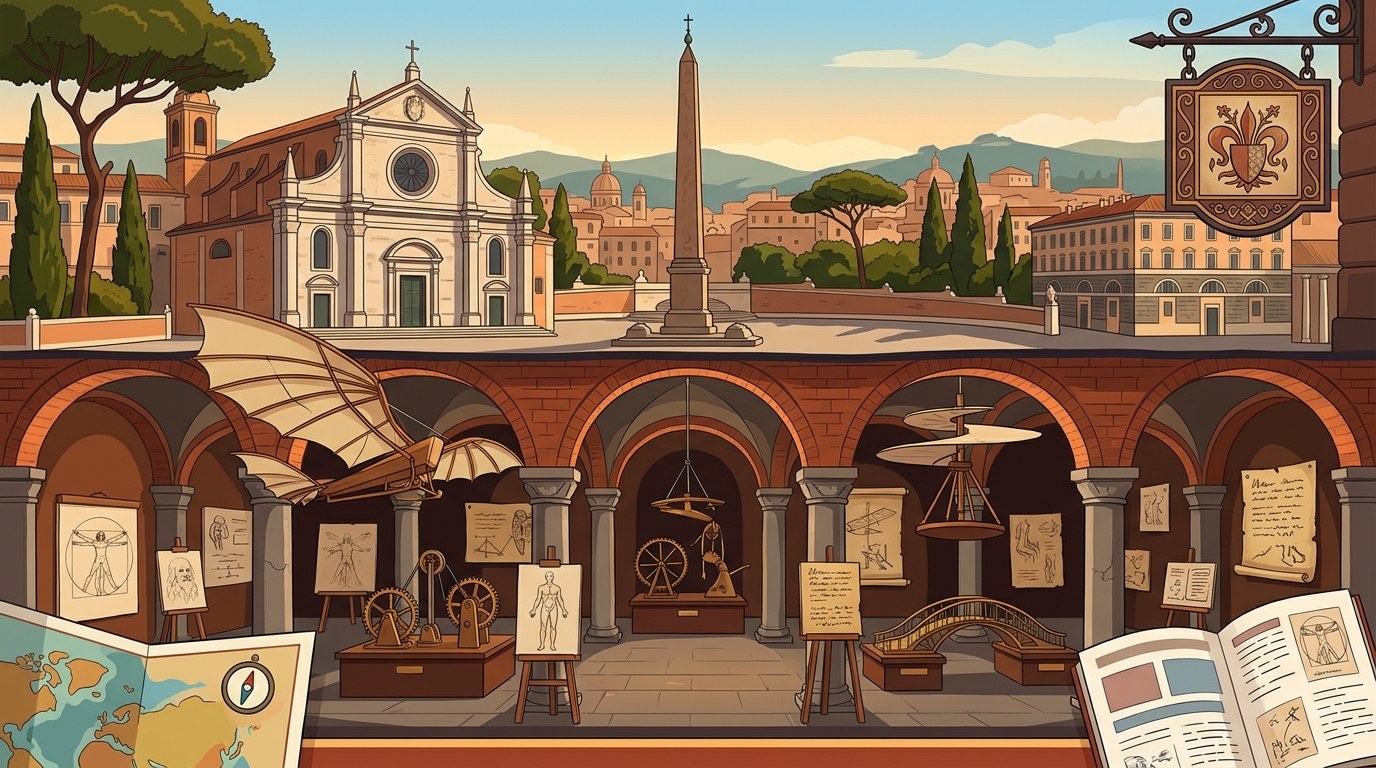
The Museo Leonardo da Vinci is located in the historic Piazza del Popolo. This square is one of the most iconic public spaces in Rome. Piazza del Popolo is defined as a major public square located at the northern entrance to the city. It has served as a gateway for travelers entering Rome for centuries. The square is surrounded by significant architectural and religious landmarks. Its location provides a rich historical backdrop for the museum visit.
Architectural Significance
The square is dominated by the Basilica of Santa Maria del Popolo, which houses the museum's underground vaults. The facade of the basilica is a masterpiece of Baroque architecture. The square also features the Porta del Popolo, the ancient gate through which visitors entered the city. The obelisk in the center of the square is a remnant of ancient Egypt. These elements combine to create a visually stunning and historically dense environment.
Visitor Experience
Via della Conciliazione
While the Museo Leonardo da Vinci is in Piazza del Popolo, visitors often explore other major avenues in Rome. Via della Conciliazione is a prominent street leading to St. Peter's Square. Via della Conciliazione is defined as a wide avenue designed to provide a direct visual axis to the facade of St. Peter's Basilica. It was designed by Pietro da Cortona in the 17th century. The street is lined with uniform buildings that frame the view of the basilica. It is a key part of the Vatican district.
Architectural Design
The design of Via della Conciliazione is a masterclass in urban planning. The street was created to enhance the visual impact of St. Peter's Basilica. The uniformity of the buildings on either side creates a sense of order and grandeur. The avenue is a pedestrian-friendly zone, making it easy to walk and explore. It is a popular spot for photography and sightseeing.
Connection to the Vatican
Mostra di Leonardo
Rome is home to other exhibitions and venues dedicated to Leonardo da Vinci. The Mostra di Leonardo is one such venue. Mostra di Leonardo is defined as a temporary or permanent exhibition showcasing the works and life of Leonardo da Vinci. These exhibitions often rotate their content, featuring different aspects of Leonardo's career. They provide an alternative to the permanent collection of the Museo Leonardo da Vinci. Visitors should check current listings for specific locations and dates.
Rotating Exhibitions
Many of these shows are temporary, meaning their content changes over time. This allows visitors to see new perspectives on Leonardo's work. The exhibitions may focus on specific themes, such as his anatomical studies or his military designs. The rotating nature of these shows keeps the experience fresh for repeat visitors. It is important to verify the current status of these exhibitions before planning a visit.
Comparison with Permanent Museums
Palazzo della Cancelleria
The Palazzo della Cancelleria is a significant historical building in Rome. It is located in the Prati district, near the Vatican. Palazzo della Cancelleria is defined as a Renaissance palace that served as the administrative center of the Papal States. It was designed by Baccio Pontelli and later modified by other architects. The building is an example of early Renaissance architecture. It is not a museum in the traditional sense, but it is a site of historical interest.
Architectural Features
Historical Significance
The Palazzo della Cancelleria is an important landmark in the history of Rome. It represents the power and influence of the Papacy during the Renaissance. The building's design influenced other architectural projects in the city. While it does not house a Leonardo exhibit, it is a valuable stop for those interested in the architectural and political history of Rome. It provides context for the era in which Leonardo lived and worked.
Key Takeaways
- Yes, there is a dedicated Leonardo da Vinci museum in Rome, located in Piazza del Popolo.
- The Museo Leonardo da Vinci focuses on interactive exhibits and machine reproductions.
- The location in Piazza del Popolo is central and accessible, near the Spanish Steps.
- Interactive machine exhibits demonstrate Leonardo's mechanical and engineering principles.
- The museum is located in the underground vaults of the Basilica of Santa Maria del Popolo.
- Visitors can combine the museum visit with other major landmarks in central Rome.
Frequently Asked Questions
Is the Museo Leonardo da Vinci in Rome free to enter?
Admission to the Museo Leonardo da Vinci is not free. Tickets are required for entry. Prices may vary depending on the type of ticket and any special events. It is recommended to check the official website for current pricing and availability.
Can I see original Leonardo da Vinci paintings in Rome?
How long does a visit to the museum take?
A typical visit to the Museo Leonardo da Vinci takes approximately 1.5 to 2 hours. This allows time to explore the interactive exhibits and machine displays. Visitors who wish to spend more time with specific sections may stay longer.
Is the museum suitable for children?
Yes, the museum is suitable for children. The interactive nature of the exhibits makes it engaging for younger visitors. The hands-on stations and digital displays are designed to be accessible and fun for all ages. Families often find the museum to be an educational and entertaining experience.
Where exactly is the museum located?
The museum is located in the underground vaults of the Basilica of Santa Maria del Popolo in Piazza del Popolo. It is at the end of Via del Corso, near the Spanish Steps. The entrance is clearly marked, and the location is easy to find using public transport or on foot.