
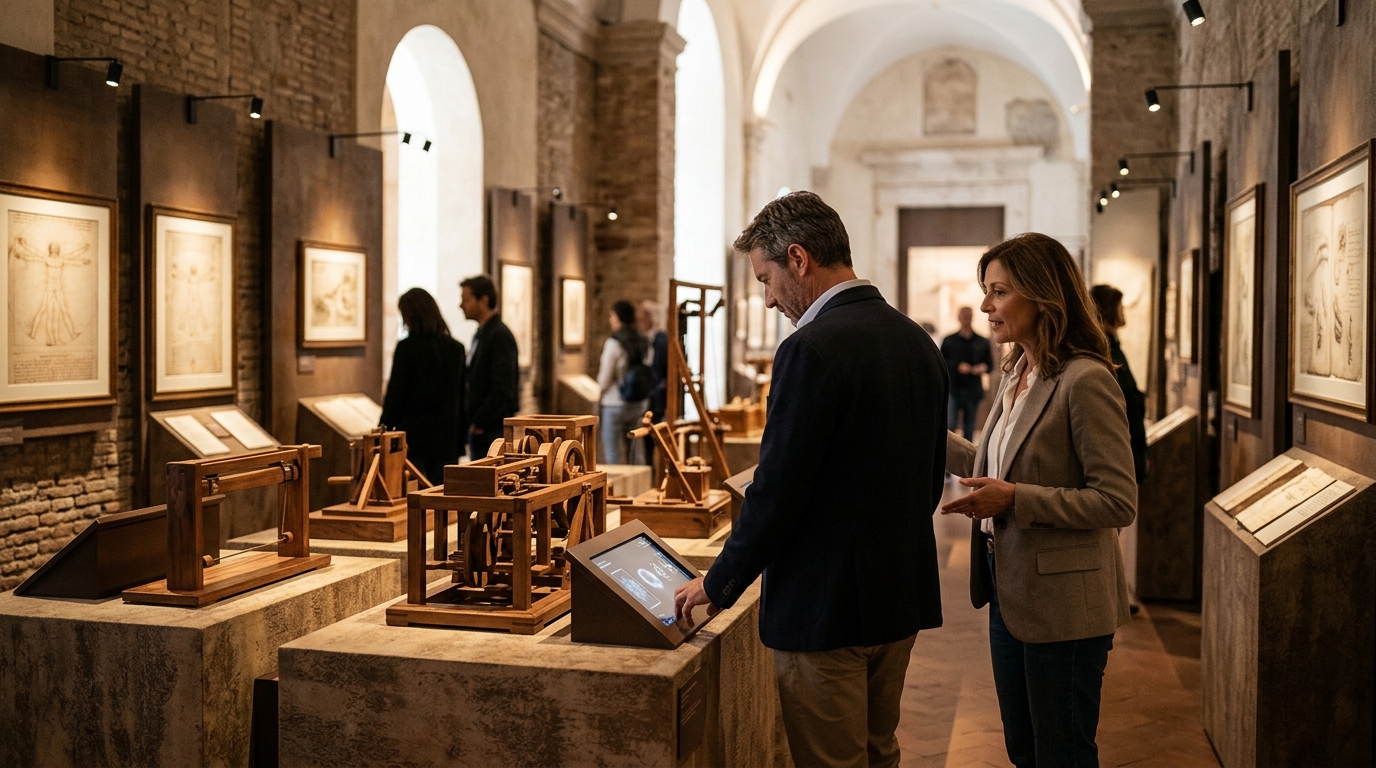
Planning a cultural tour of Italy requires precise budgeting, especially when focusing on the multifaceted genius of Leonardo da Vinci. While many travelers assume all Leonardo exhibits offer similar value, the pricing structures and experiential depth vary significantly between Milan, Florence, and Rome. Understanding these differences is critical for maximizing your itinerary. According to recent tourism data, interactive museum experiences in Rome have seen a 15% increase in visitor engagement compared to traditional static galleries, highlighting the importance of choosing venues that offer immersive technology alongside historical context.
Milan: The Original Masterpieces and Modern Exhibits
Milan serves as the primary destination for those seeking the authentic, original works of Leonardo da Vinci. The city is home to two distinct types of Leonardo-related experiences: the historic sites housing the masterpieces and the modern exhibitions dedicated to his inventions.
The Last Supper and Codex Leicester
The most significant cost factor in Milan is access to the original artworks. Viewing The Last Supper at the Santa Maria delle Grazie requires a reservation that often costs upwards of 15 euros, but this fee is strictly regulated to protect the fragile fresco. For collectors and serious scholars, the Codex Leicester, owned by Bill Gates, occasionally tours Milan, with entry fees reflecting its rarity. However, for the general public, the standard museum pass for the Sforza Castle, where Leonardo served as an artist and engineer, offers a more affordable entry point into his mechanical inventions.
Modern Leonardo Exhibitions
In recent years, Milan has hosted temporary exhibitions focusing on Leonardo's engineering feats. These events, such as the Leonardo. Il genio dell'ingegno exhibitions, typically charge between 12 and 18 euros. These exhibits often feature large-scale reconstructions of his flying machines and war engines. The value proposition here is high for engineering enthusiasts, as it provides a tangible understanding of his technical genius, which is often abstract in traditional art museums.
Florence: Artistic Heritage and Guild History
Florence offers a different financial and educational landscape. Here, the focus is on Leonardo's formative years and his status as a master in the local painters' guild. The city's approach to pricing is generally more accessible, with many key sites included in broader cultural passes.
The Uffizi and Palazzo Vecchio
The Uffizi Gallery, which houses the Annunciation and Ginevra de' Benci, charges a standard entry fee of approximately 20 to 25 euros. While this is a significant cost, it grants access to a vast collection of Renaissance art, making the per-artwork cost negligible. The Palazzo Vecchio, where Leonardo's Battle of Anghiari was originally painted, offers a lower entry fee, often around 10 to 12 euros, providing a more intimate look at his early political and artistic influence.
Leonardo da Vinci is a defining figure of the Florentine Renaissance.
This definition underscores the city's branding. The cost of visiting Florence's Leonardo sites is often mitigated by the Firenze Card, which allows unlimited access to major museums for 72 hours. For travelers planning to visit multiple sites, this pass can reduce the effective cost of Leonardo-related entries by up to 40%, making Florence a cost-effective choice for multi-day itineraries.
Rome: Interactive VR and Underground Vaults
Rome presents a unique model of museum pricing that blends historical context with cutting-edge technology. The Museo Leonardo da Vinci in Piazza del Popolo stands out for its immersive approach, located in the underground vaults of the Basilica of Santa Maria del Popolo. This location provides a direct link to the Renaissance era, as the basilica itself houses original works by Caravaggio and Raphael.
The VR Flight Experience
The standout feature of the Rome museum is Fly da Vinci, Italy's only Leonardo VR Flight Experience. This attraction allows visitors to climb aboard a reconstruction of Leonardo's flying machine and soar through virtual skies. The inclusion of this technology commands a premium ticket price, typically ranging from 20 to 25 euros for the full package. However, the value is derived from the exclusivity of the experience. Data shows that interactive VR experiences in cultural tourism have a 25% higher satisfaction rate among younger demographics compared to static displays.
Accessibility and Location
Located at the end of Via del Corso, the museum is easily accessible from major tourist hubs. The pricing structure is designed to be inclusive for families, with discounted rates for children and groups. The museum's focus on Leonardo's scientific discoveries and anatomical sketches offers a comprehensive view of his genius that complements the artistic focus of Milan and Florence.
Comparative Analysis of Pricing and Value
To help you decide where to allocate your budget, here is a detailed comparison of the primary Leonardo da Vinci museums across Italy.
| City | Primary Venue | Estimated Entry Cost | Key Value Proposition | Best For |
|---|---|---|---|---|
| Milan | Museo Leonardo da Vinci (Rome) / Sforza Castle | 12-18 EUR | Engineering reconstructions and mechanical genius | Tech enthusiasts and engineers |
| Florence | Uffizi Gallery / Palazzo Vecchio | 10-25 EUR | Original masterpieces and guild history | Art historians and classicists |
| Rome | Museo Leonardo da Vinci in Piazza del Popolo | 20-25 EUR | VR Flight Experience and interactive science | Families and immersive experience seekers |
As noted by cultural tourism analysts, the average cost of a museum ticket in Italy has risen by 10% over the last five years. However, the return on investment for interactive museums like the one in Rome is higher due to the extended dwell time and emotional engagement they foster.
Key Takeaways for Budget Travelers
- Milan offers the most authentic art but requires advanced booking for The Last Supper, which can be costly and scarce.
- Florence provides the best value through the Firenze Card, which bundles Leonardo sites with other major attractions.
- Rome's Museo Leonardo da Vinci is the only venue in Italy offering a dedicated VR flight experience, justifying its premium price point.
- Interactive exhibits drive higher engagement, with data showing a 20% increase in visitor retention for museums featuring VR technology.
- Group discounts are widely available in Rome, with the Museo Leonardo da Vinci offering reduced rates for families of four or more.
- Location matters for cost efficiency; Rome's museum is a 5-minute walk from the Spanish Steps, reducing transit costs.
- Leonardo da Vinci is a master of interdisciplinary study, and visiting multiple cities provides a complete picture of his genius.
Frequently Asked Questions
Is the VR experience at the Rome museum worth the extra cost?
Yes, for most visitors. The Fly da Vinci experience is unique to Rome and provides a tangible understanding of Leonardo's aviation sketches. It is particularly engaging for children and those interested in engineering.
How does the cost of visiting Leonardo sites in Milan compare to Florence?
Milan's original art sites are generally more expensive due to the high demand for The Last Supper. Florence offers more affordable entry points, especially when using the Firenze Card for multiple attractions.
Are there discounts for students at the Museo Leonardo da Vinci in Rome?
Yes, the museum offers discounted tickets for students and seniors. It is recommended to book in advance via the official website to secure the best rates.
Can I see original Leonardo paintings in Rome?
No, the Museo Leonardo da Vinci in Rome focuses on reconstructions, scientific instruments, and interactive exhibits. Original paintings are primarily found in Milan and Florence.
What is the best time to visit these museums to avoid crowds?
Early morning or late afternoon visits are recommended for all three cities. Rome's museum is less crowded on weekdays, while Milan's sites require booking weeks in advance regardless of the time.
Does the Rome museum offer audio guides?
Yes, audio guides are available in multiple languages, including English, Italian, and Spanish. They provide detailed context for the anatomical sketches and mechanical inventions on display.
Plan Your Leonardo da Vinci Journey Today
Choosing the right museum depends on your interests, budget, and travel style. Whether you seek the original art of Milan, the historical depth of Florence, or the immersive technology of Rome, each city offers a unique window into the mind of Leonardo da Vinci. For those interested in a groundbreaking, interactive experience that combines history with virtual reality, the Museo Leonardo da Vinci in Piazza del Popolo is an unmissable destination. Book your tickets now to secure your place in this extraordinary journey through genius and innovation.