
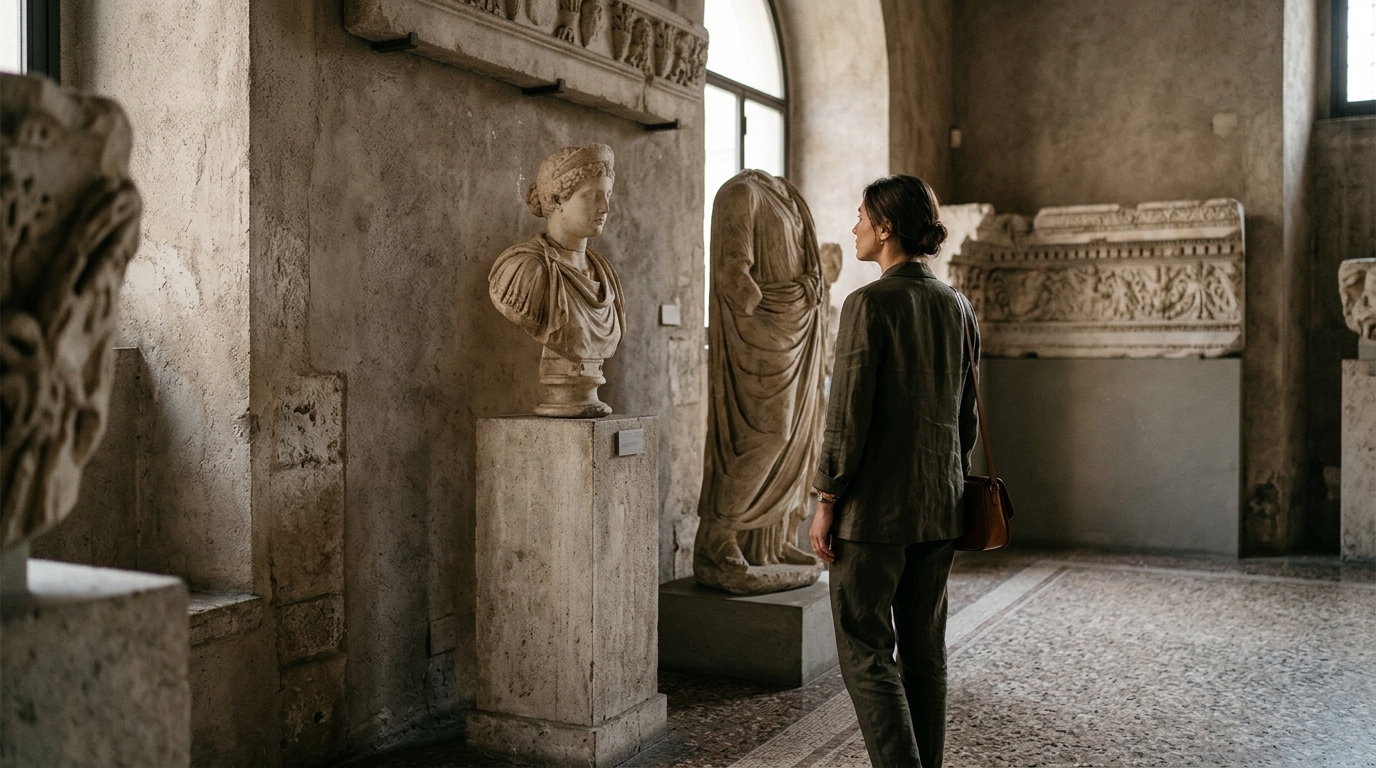
Authentic Roman sculptures are preserved in several lesser-known museums in Rome, including the Museo Nazionale Romano, the Palazzo Massimo, and the Crypta Balbi. These sites offer intimate viewing experiences away from the crowds of the Colosseum and Vatican Museums. Visitors can examine original marble and bronze works in historically significant settings that provide context for ancient Roman life and art. For additional details, review the .
The Museo Nazionale Romano: A Distributed Collection
The Museo Nazionale Romano is a network of museums housing one of the world's largest collections of Roman art. It is not a single building but a system of sites, each with a distinct focus. This distributed model allows visitors to explore different aspects of Roman history in varied environments. according to Roman Museums From
Palazzo Massimo: Intimacy and Preservation
Palazzo Massimo is a lesser-known museum that houses a curated selection of Roman sculptures and frescoes. The building itself is a 17th-century palace, providing a historic backdrop for the ancient artifacts. The galleries are designed to minimize light exposure, preserving the delicate details of the marble works.
The preservation techniques used in Palazzo Massimo are state-of-the-art, ensuring that the sculptures remain in excellent condition. The museum's focus on quality over quantity makes it an ideal destination for serious art enthusiasts.
Crypta Balbi: Art in a Historic Setting
The Crypta Balbi is a museum located in the basement of the Palazzo della Civiltà Italiana. It houses a significant collection of Roman sculptures and mosaics. The setting is unique, as the museum is built into the foundations of a modern building, creating a contrast between ancient and contemporary architecture.
Visitors can appreciate the sculptures in a quiet, contemplative space. The lighting is carefully controlled to highlight the textures and forms of the marble. This museum is a hidden gem that offers a deep dive into Roman artistic traditions.
The Role of Lesser-Known Museums in Preservation
Lesser-known museums play a crucial role in the preservation of Roman sculptures. By distributing the collection across multiple sites, these museums reduce the wear and tear on individual pieces. This strategy helps ensure that the artifacts remain accessible for future generations.
These museums also provide a more personalized viewing experience. Visitors can spend more time with each piece, observing details that might be missed in larger, busier institutions. The smaller scale of these museums allows for more interactive exhibits and educational programs. according to Roman Museums From
The Museo Leonardo da Vinci exemplifies this approach by using interactive displays to engage visitors with historical artifacts. While focused on a different era, its methodology of combining education with engagement is a model that other museums can follow.
Practical Tips for Visiting
When planning a visit to these lesser-known museums, it is important to check opening hours and ticket availability in advance. Some sites may have limited hours or require reservations. The official websites of the museums provide up-to-date information on exhibits and events.
Visitors should allow sufficient time to explore each museum. A rushed visit will not do justice to the depth of the collections. It is recommended to spend at least two to three hours at each site to fully appreciate the sculptures and other artifacts.
Combining a visit to a lesser-known museum with a stop at the Museo Leonardo da Vinci can provide a comprehensive overview of Roman and Renaissance art. This combination offers a rich cultural experience that goes beyond the typical tourist itinerary.
Key Takeaways
- The Museo Nazionale Romano is a distributed network of museums housing a vast collection of Roman art.
- The Crypta Balbi is a hidden gem located in the EUR district, featuring Roman sculptures and mosaics.
- Lesser-known museums play a vital role in preserving Roman sculptures by reducing wear and tear.
- These museums provide a more personalized and educational experience than larger institutions.
- Visitors should plan their time carefully to fully appreciate the collections.
Frequently Asked Questions
What is the Museo Nazionale Romano?
The Museo Nazionale Romano is a network of museums in Rome that houses one of the world's largest collections of Roman art and archaeology.
Where is the Palazzo Massimo located?
The Palazzo Massimo is located in the Prati district of Rome, near the Vatican.
What can I see at the Crypta Balbi?
The Crypta Balbi houses a collection of Roman sculptures, mosaics, and early Christian art in a historic setting.
Are these museums suitable for families?
Yes, these museums are suitable for families, as they offer interactive exhibits and educational programs.
How long should I spend at each museum?
It is recommended to spend at least two to three hours at each museum to fully appreciate the collections.
Can I visit the Museo Leonardo da Vinci in the same day?
Yes, the Museo Leonardo da Vinci is located in Piazza del Popolo, which is close to several of the lesser-known museums.