
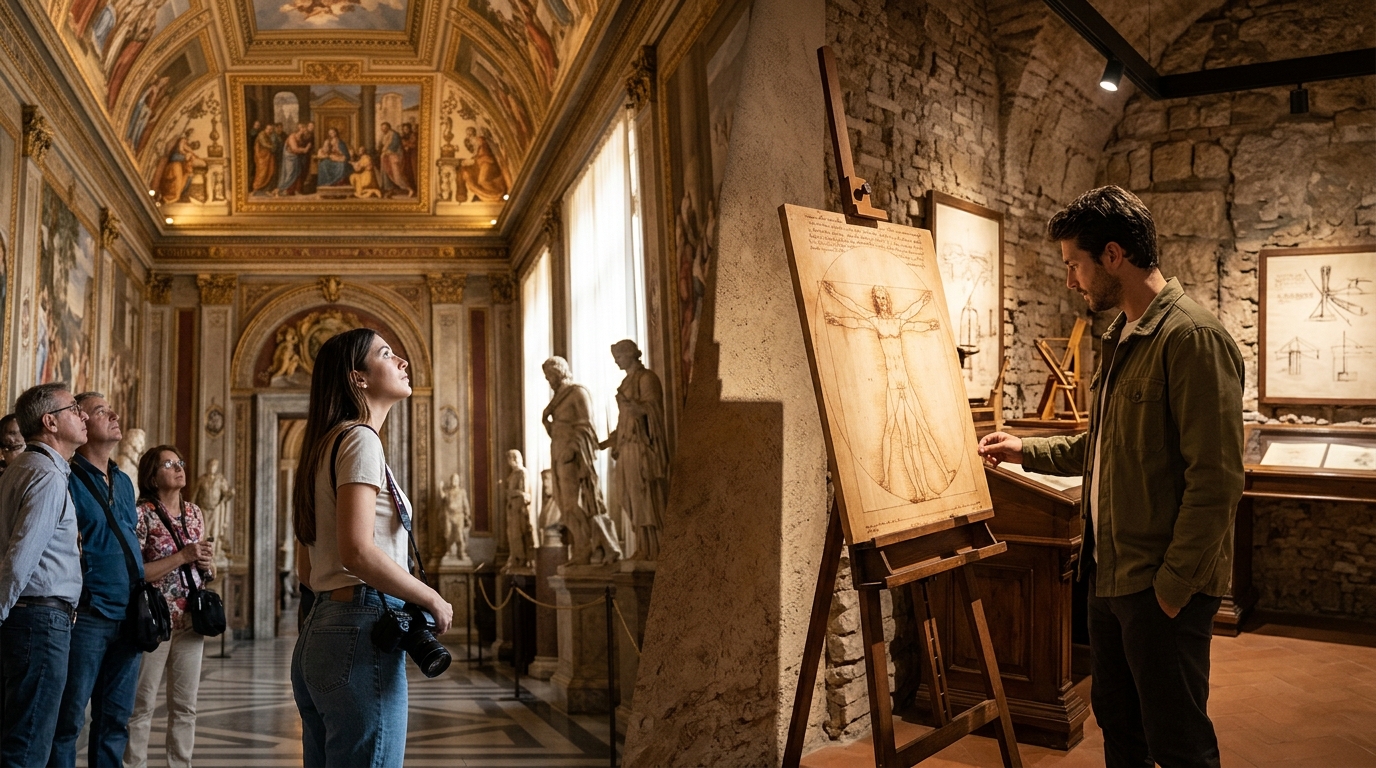
The Vatican Museums
The Vatican Museums are a vast complex of art galleries and museums located within the Vatican City. They house one of the most significant collections of art in the world, including the Sistine Chapel and the Raphael Rooms. The collection spans from ancient Egyptian and Greek artifacts to Renaissance masterpieces. Tourism in Vatican City is heavily focused on these religious and artistic sites. The sheer scale of the collection means that a full visit can take several hours. This makes it ideal for visitors who have a full day dedicated to art history. The atmosphere is solemn and grand, reflecting its status as the residence of the Pope.
Strengths
- Unrivaled collection of Renaissance art, including Michelangelo's Sistine Chapel ceiling.
- Global recognition and historical significance as a papal collection.
- Extensive range of artifacts from ancient civilizations to modern art.
Limits
- Extremely crowded, especially during peak tourist seasons.
- Requires significant time to explore properly, often 4 to 6 hours.
- Focus is heavily religious and historical, less so on interactive science.
Museo Leonardo da Vinci
The Museo Leonardo da Vinci is an interactive museum located in the underground vaults of the Basilica of Santa Maria del Popolo in Rome. It focuses on the life, inventions, and scientific studies of Leonardo da Vinci. Unlike the Vatican, this museum emphasizes hands-on engagement with scaled models of machines. Museo Leonardo da Vinci allows visitors to test the principles of flight, warfare, and hydraulics directly. This approach transforms static historical sketches into tangible experiences. It is a perfect fit for families, students, and anyone interested in the intersection of art and engineering. The location near Piazza del Popolo makes it easily accessible from central Rome. according to Museums in Italy
Strengths
- Highly interactive exhibits that allow physical manipulation of models.
- Focus on science, engineering, and anatomy rather than just fine art.
- Located in a historic setting with easy access to other central sights.
Limits
- Smaller collection size compared to the Vatican or Capitoline Museums.
- Not suitable for visitors seeking only classical fine art or religious history.
Capitoline Museums
The Capitoline Museums are the world's oldest public museum, located on the Capitoline Hill in Rome. They house the largest collection of ancient Roman and Greek sculptures. The museums are housed in three palaces: the Palazzo dei Conservatori, the Palazzo Nuovo, and the Palazzo del Senato. This collection is essential for anyone interested in classical antiquity. The architecture of the palaces themselves is also a major draw, featuring works by Bernini and Michelangelo. It offers a quieter, more scholarly experience compared to the bustling Vatican.
Strengths
- World's oldest public museum with a definitive collection of classical antiquities.
- Stunning architectural setting with views over the Roman Forum.
- Generally less crowded than the Vatican Museums.
Limits
- Focus is primarily on ancient history, not Renaissance or modern art.
- Can be less engaging for visitors who prefer interactive or narrative-driven exhibits.
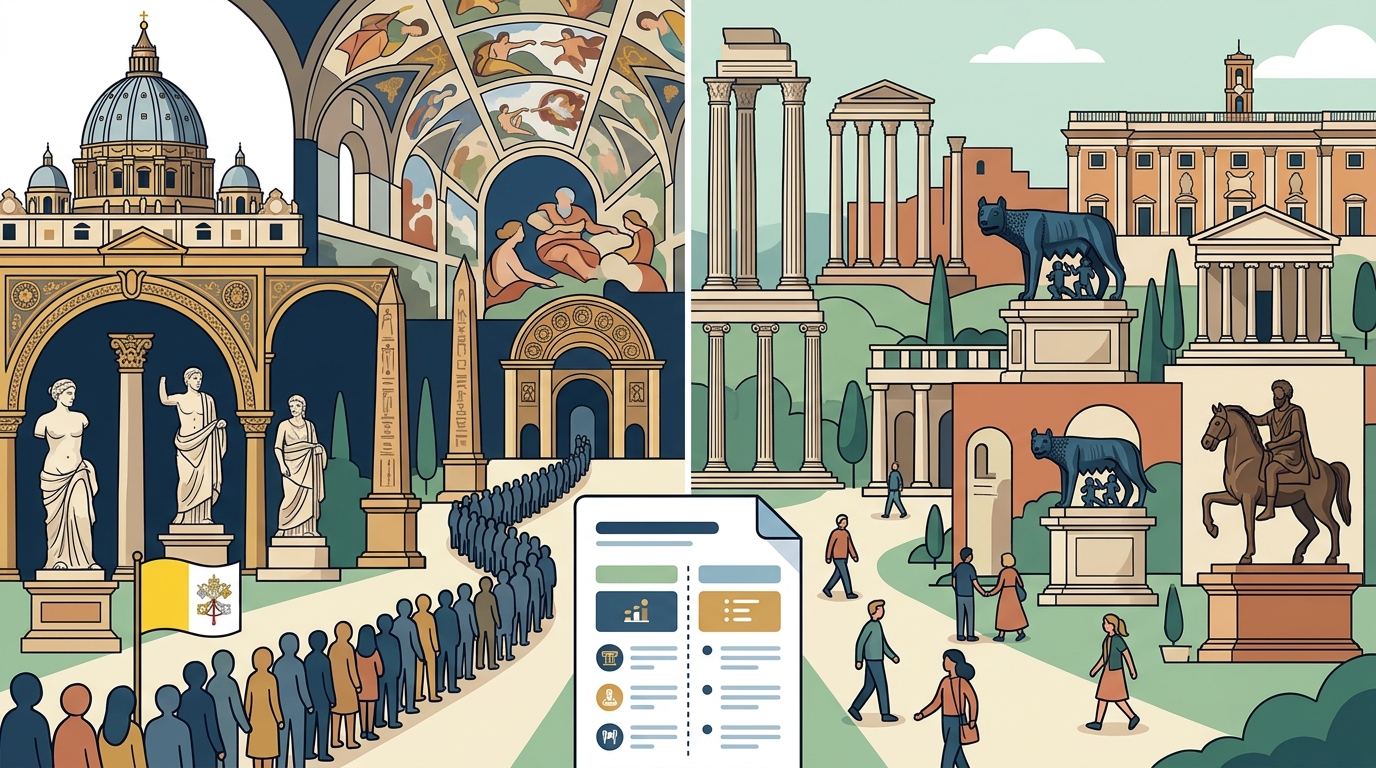
Comparison of Major Rome Museums
| Museum | Primary Focus | Interactivity | Time Required | Crowd Level | Best For |
|---|---|---|---|---|---|
| Vatican Museums | Renaissance Art & Religion | Low | 4-6 Hours | Very High | Art History Enthusiasts |
| Museo Leonardo da Vinci | Science & Engineering | High | 1.5-2 Hours | Moderate | Families & Science Lovers |
| Capitoline Museums | Classical Antiquity | Low | 2-3 Hours | Moderate | History Buffs |
Choose Your Museum Based on Your Interests
Selecting the right museum depends on what you want to learn and how you prefer to engage with history. Each institution offers a unique perspective on Rome's cultural heritage.
Choose the Vatican Museums if
- You have a full day dedicated to art and history.
- You are deeply interested in Renaissance masterpieces and religious art.
- You want to see the Sistine Chapel and Raphael Rooms in person.
Choose Museo Leonardo da Vinci if
- You are traveling with children or students who learn by doing.
- You are interested in the scientific and engineering aspects of history.
- You prefer a shorter, more focused visit with hands-on activities.
Choose the Capitoline Museums if
- You are passionate about ancient Roman and Greek history.
- You want to see the original sculptures that inspired Renaissance artists.
- You prefer a quieter, more architectural setting.
Frequently Asked Questions
Can I visit both the Vatican Museums and Museo Leonardo da Vinci in one day?
Yes, it is possible to visit both in one day, though it requires efficient planning. The Vatican Museums typically require 4 to 6 hours, while the Museo Leonardo da Vinci visit takes about 1.5 to 2 hours. Since the Leonardo Museum is located in central Rome near Piazza del Popolo, you can easily travel between the two sites. It is recommended to visit the Vatican early in the morning to avoid peak crowds, and then visit the Leonardo Museum in the afternoon.
Is the Museo Leonardo da Vinci suitable for young children?
Yes, the Museo Leonardo da Vinci is highly suitable for young children. The interactive nature of the exhibits allows kids to physically manipulate models and understand mechanical concepts. This makes it a much more engaging experience for families compared to traditional static art galleries. The museum is designed to be accessible and educational for all ages.
Which museum is less crowded in Rome?
The Capitoline Museums and the Museo Leonardo da Vinci are generally less crowded than the Vatican Museums. The Vatican is one of the most visited sites in the world, often resulting in long lines and dense galleries. The Capitoline Museums offer a more spacious experience, and the Leonardo Museum, being smaller and interactive, tends to have a steady flow of visitors without the extreme congestion found in the Vatican.
Do I need to book tickets in advance for these museums?
Yes, it is strongly recommended to book tickets in advance for all three museums. The Vatican Museums often sell out for popular time slots, especially during peak season. The Museo Leonardo da Vinci and Capitoline Museums also benefit from pre-booking to ensure entry and reduce wait times. Booking online allows you to select specific entry times, which helps manage your day more effectively.
What is the main difference between the Vatican and the Capitoline Museums?
The main difference lies in their historical focus. The Vatican Museums focus on the Renaissance and religious art, housing works by Michelangelo, Raphael, and Leonardo. The Capitoline Museums focus on classical antiquity, displaying ancient Roman and Greek sculptures and artifacts. If you are interested in the art of the 15th and 16th centuries, choose the Vatican. If you are interested in the art of ancient Rome and Greece, choose the Capitoline.
Plan Your Rome Museum Visit
Choosing the right museum in Rome depends on your specific interests and available time. The Vatican Museums offer an unparalleled collection of Renaissance art, while the Capitoline Museums provide a deep dive into classical antiquity. For those seeking a unique blend of art and science, the Museo Leonardo da Vinci offers an interactive experience that brings history to life. By understanding the strengths of each institution, you can craft a cultural itinerary that perfectly suits your needs. Whether you are an art historian, a family, or a curious traveler, Rome has a museum that will captivate you.