
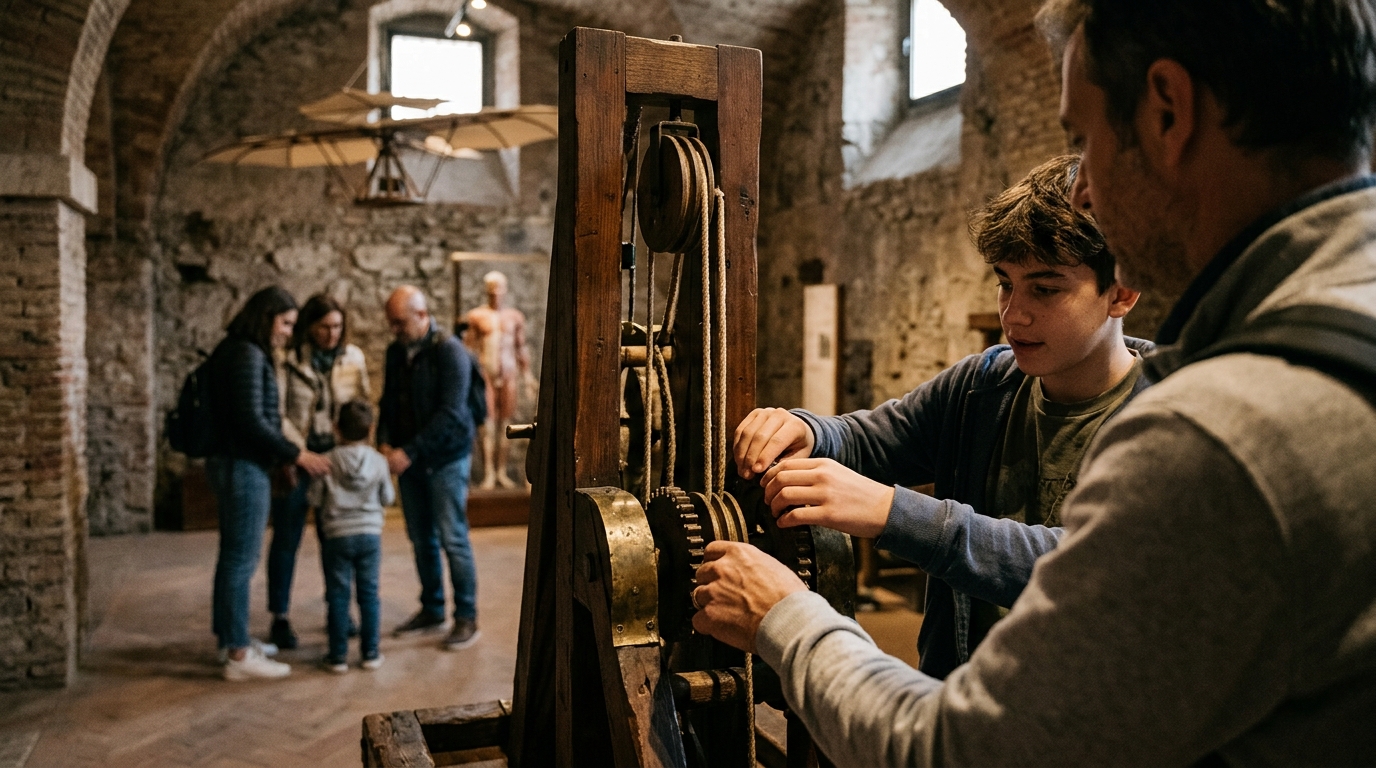
At the Museo Leonardo da Vinci in Piazza del Popolo, you can physically interact with scaled models of flying machines, test anatomical muscle contractions, and operate mechanical devices inspired by Leonardo's sketches. This interactive approach transforms static history into a tactile experience within the underground vaults of the Basilica of Santa Maria del Popolo. Visitors engage directly with the genius of the Renaissance through touch and motion rather than just observation. according to The Last Supper
The Interactive Nature of the Museum
The core philosophy of the Museo Leonardo da Vinci is active participation. Traditional museums often display artifacts behind glass, creating a barrier between the viewer and the object. This museum removes that barrier by allowing visitors to manipulate the exhibits. An interactive exhibit is a display element that requires physical input from the user to demonstrate a function or concept. This design choice ensures that the complex engineering principles of the 15th century remain accessible to modern audiences of all ages. according to Leonardo da Vinci
By moving the parts of a machine, visitors understand the mechanical logic behind Leonardo's designs. This method of learning is often more effective than reading text panels. The museum leverages the unique setting of the basilica's crypts to create an immersive atmosphere. The cool, stone environment complements the historical weight of the inventions on display. according to Department of Mechanical For additional details, review the Frequently Asked Questions.
Mechanical and Engineering Models
Another key area involves his hydraulic and water management studies. Users can adjust valves and channels to see how water flow was controlled. This hands-on interaction clarifies the complexity of his irrigation and canal designs. The museum presents these not as finished products, but as prototypes that reveal the mind of an inventor. The tactile experience of turning a gear or pulling a lever makes the history of engineering tangible.
Anatomy and Human Movement
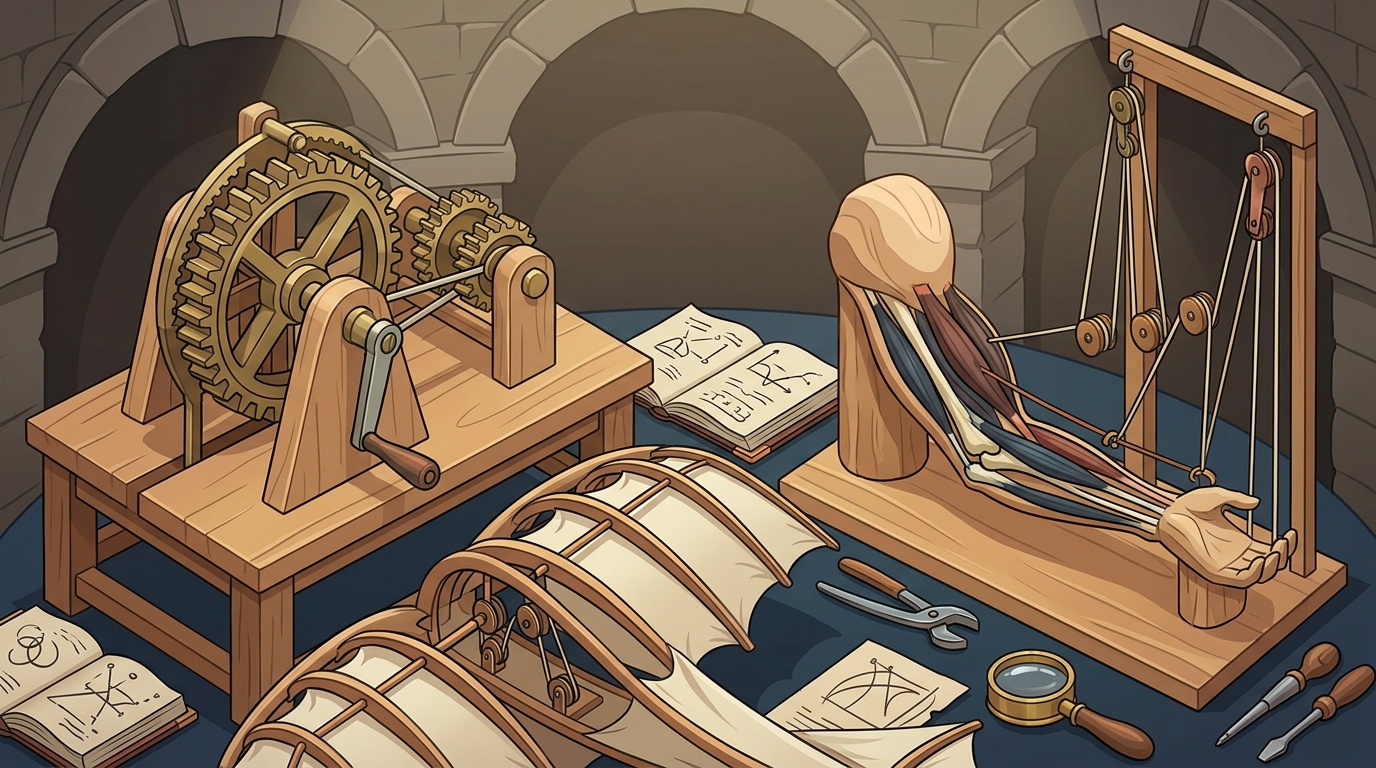
Leonardo da Vinci was a pioneer in the study of human anatomy, and the museum reflects this through interactive anatomical displays. Visitors can explore models that demonstrate the contraction of muscles and the movement of joints. An anatomical model is a three-dimensional representation of the human body used to study structure and function. These exhibits allow users to see how the body moves in real-time. This is particularly engaging for students and those interested in the intersection of art and science. according to Visit the Museum
The museum highlights Leonardo's detailed sketches of the heart, lungs, and skeletal system. By interacting with these models, visitors gain a deeper appreciation for the accuracy of his observations. The connection between artistic rendering and scientific discovery is a central theme. The interactive nature of these exhibits bridges the gap between the artistic and scientific aspects of Leonardo's legacy.
Aeronautics and Flight Studies
The dream of flight is a major focus of the museum, featuring interactive models of Leonardo's flying machines. Visitors can test the principles of aerodynamics using scaled versions of his ornithopter and parachute designs. A flying machine is a device designed to lift and propel itself through the air. These exhibits demonstrate the fundamental concepts of lift and drag that Leonardo explored centuries before the Wright brothers. The hands-on aspect allows users to feel the resistance and balance required for flight.
The museum also includes displays on his studies of bird flight. By manipulating the wings of the models, visitors can see how Leonardo proposed to mimic the movement of birds. This section of the museum is often a favorite among children and aviation enthusiasts. It provides a clear link between historical curiosity and modern aerospace engineering. The interactive elements make the abstract concepts of aerodynamics concrete and understandable.
Practical Tips for Visitors
To make the most of your visit, it is recommended to allow sufficient time to interact with each exhibit. The museum is located in the heart of Rome, near the Spanish Steps, making it easy to combine with other sightseeing. Visitors should wear comfortable shoes, as the museum is situated in the underground vaults. The interactive nature of the exhibits means that you will be on your feet and moving around. Planning your visit in advance ensures you have enough time to engage with the hands-on elements without rushing.
The museum offers a unique perspective on Leonardo's life that is distinct from other art-focused venues in Rome. It is an ideal stop for families, students, and anyone interested in the history of science. The combination of historical context and modern interactive technology creates a memorable experience. By engaging with the exhibits, you become an active participant in the story of one of history's greatest minds.
Key Takeaways
- The museum features interactive models of flying machines, war machines, and anatomical structures.
- Visitors can physically operate gears, levers, and valves to understand mechanical principles.
- Anatomical displays allow users to see muscle contractions and joint movements in real-time.
- The exhibits bridge the gap between artistic sketches and scientific discovery.
- The museum is located in the underground vaults of the Basilica of Santa Maria del Popolo.
- Interactive learning is more effective for understanding complex engineering concepts than static displays.
- The museum is a must-visit for those interested in the intersection of art, history, and science.
Frequently Asked Questions
Is the museum suitable for children?
Yes, the interactive exhibits are designed to be engaging for all ages. Children often enjoy operating the mechanical models and exploring the anatomical displays. The hands-on nature of the museum makes it an educational and fun experience for families.
How long does a visit take?
Most visitors spend between one and two hours exploring the exhibits. This allows enough time to interact with the hands-on elements and read the informational panels. The museum is compact, so you can easily fit it into a day of sightseeing in Rome.
Are the exhibits in English?
Yes, the museum provides information in both Italian and English. The interactive elements are intuitive, so language barriers are minimal. The visual nature of the exhibits helps visitors from all over the world understand the content.
Can I take photos of the exhibits?
Photography is generally allowed within the museum, but flash photography may be restricted to protect the exhibits. It is best to check the specific rules at the entrance. The interactive nature of the exhibits makes for interesting photos, but please be mindful of other visitors.
Is the museum accessible for people with disabilities?
The museum is located in the underground vaults, which may present some accessibility challenges. It is recommended to contact the museum directly to inquire about specific accessibility needs and accommodations. The staff is generally helpful in assisting visitors with mobility issues.