
Common Mistakes When Visiting Museo Leonardo da Vinci and How to Avoid Them
Planning a trip to Rome requires strategic navigation, especially when targeting niche cultural landmarks. Rome tourism data indicates that over 7 million international visitors arrive annually, creating intense congestion at major sites. Many travelers overlook the unique opportunity to explore Leonardo da Vinci's genius in an intimate setting, leading to wasted time and missed inspiration. This guide details the specific pitfalls visitors encounter at the Museo Leonardo da Vinci in Piazza del Popolo and provides the exact strategies to ensure a seamless, educational, and memorable experience. (Museo Leonardo da Vinci)
Mistake 1: Misjudging the Location and Accessibility
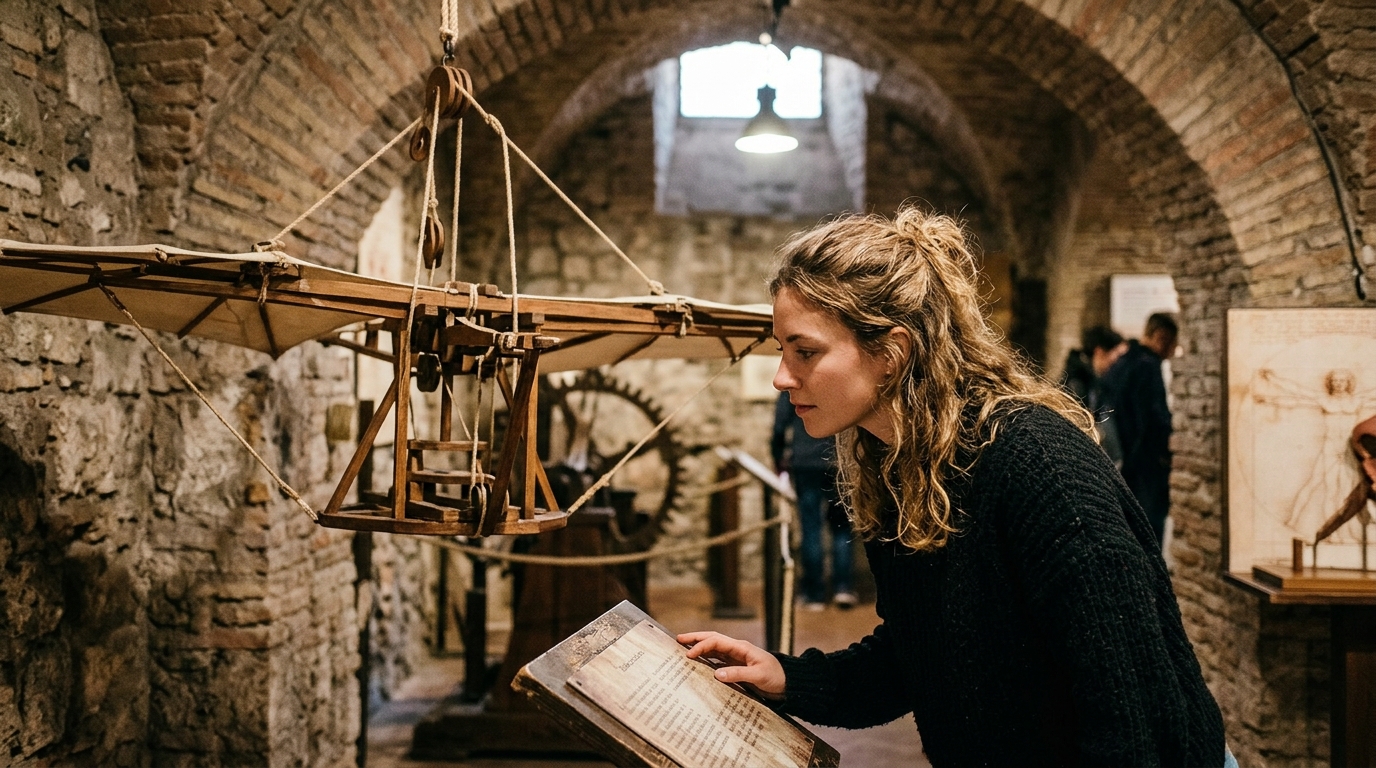
A frequent error involves arriving at the wrong entrance or underestimating the physical nature of the museum. The Museo Leonardo da Vinci is not located in a standard street-level gallery. It is situated in the underground vaults beneath the Basilica Santa Maria del Popolo. This unique architectural placement means that visitors must navigate stairs and potentially steep ramps to reach the exhibition halls.
Many tourists assume the museum is directly accessible from the main piazza without preparation. While the museum is located at the end of Via del Corso, the entrance requires a short descent into the historic subterranean levels. This layout is part of the charm, offering a sense of discovery, but it poses challenges for those with limited mobility or heavy luggage. Santa Maria del Popolo is a major papal basilica, second only in importance to St. Peter's in Rome. Understanding this context helps visitors prepare for the physical journey to the museum.
To avoid this mistake, plan your route using the museum's official access information. Confirm the exact entrance point from Via del Corso. If you have mobility concerns, contact the museum directly at +39 06 3200144 or via their contact page to inquire about assistance options. Arriving with the correct entrance in mind prevents the stress of wandering the bustling piazza with bags and tickets in hand.
Mistake 2: Failing to Book Tickets in Advance
Walk-up visits are a significant risk at this specific venue. As the most popular dedicated Leonardo museum in Rome, capacity is strictly managed to preserve the integrity of the underground vaults. During peak tourist seasons, which typically span from April through October, tickets often sell out days in advance. Relying on availability on the day of your visit is a guaranteed way to miss the experience.
The museum's online booking system allows you to secure a specific time slot. This practice ensures you do not waste hours waiting in line or, worse, being turned away. Booking early also allows you to choose a time that aligns with your broader itinerary, such as a morning slot before the Spanish Steps crowds or an evening visit after dinner in the historic center.
Furthermore, advance booking often provides access to bundled offers or guided tour options that are not available to walk-in guests. By securing your tickets online, you demonstrate respect for the site's operational limits and guarantee your entry. This is particularly crucial for families with children, as the museum is designed to be engaging for all ages, and securing a slot ensures the group can enter together.
Mistake 3: Expecting Original Masterpieces
The most common disappointment for art historians and casual tourists alike is the expectation of seeing original works by Leonardo da Vinci. It is critical to understand that the Mona Lisa, The Last Supper, and The Vitruvian Man are housed in other locations, primarily the Louvre in Paris and the Santa Maria delle Grazie in Milan. The Museo Leonardo da Vinci does not display these originals.
However, this is not a deficit but a different kind of value proposition. The museum focuses on the genius of Leonardo through his notebooks, inventions, and anatomical studies. The collection features detailed reconstructions of his flying machines, war engines, and hydraulic projects. These models are based directly on his surviving sketches, offering a tangible understanding of his engineering mind. Leonardo da Vinci is widely celebrated as a leading Renaissance painter and sculptor, but his work as an engineer and scientist remained hidden for many centuries. This museum brings that hidden genius to light.
Visitors who approach the museum with the right mindset will find the interactive exhibits and historical context far more rewarding than a simple gallery walk. The museum explains how Leonardo's artistic precision informed his scientific discoveries. By focusing on the process of invention rather than just the final paintings, the museum offers a unique educational perspective. Leonardo da Vinci was anointed the master artist of Florence at the tender age of 18. His early training is evident in the meticulous detail of the models displayed here.
Mistake 4: Visiting During Peak Congestion Hours
Timing your visit is as important as booking the ticket. The museum is located in a high-traffic zone near the Spanish Steps and the Trevi Fountain. Visiting during the midday rush, typically between 12:00 PM and 3:00 PM, can result in a noisy, crowded environment that detracts from the contemplative nature of the exhibits.
Early morning slots, right when the museum opens, offer the quietest and most immersive experience. You can absorb the details of the anatomical sketches and the mechanical models without the pressure of surrounding crowds. Alternatively, late afternoon visits can provide a softer light and a more relaxed atmosphere as the day's peak tourism subsides.
Consider the broader context of Rome's tourism patterns. The city sees a significant spike in visitor numbers during the summer months. By choosing off-peak hours for your museum visit, you maximize the quality of your engagement with the content. The underground location also means the temperature is cooler, making a midday visit potentially more comfortable physically, but the noise factor remains a critical consideration for a peaceful experience.
Mistake 5: Ignoring the Connected Basilica Experience
Many visitors treat the museum and the Basilica Santa Maria del Popolo as separate entities, missing the opportunity to combine them into a cohesive cultural tour. The museum is physically integrated into the basilica's structure. This connection is not just architectural but historical. The basilica is the burial site of six popes and holds significant artistic treasures.
Combining your visit allows you to see the context in which Leonardo's work is displayed. The basilica houses original Caravaggio paintings from the 1600s and the magnificent Chigi Chapel, built and decorated by the legendary Raphael. These works represent the pinnacle of the High Renaissance, the same era in which Leonardo was active. Understanding the artistic environment of the 16th century enhances your appreciation of Leonardo's contributions.
Plan your itinerary to include both. Start with the museum to understand the scientific and inventive mind of Leonardo. Then, ascend to the basilica to witness the artistic achievements of his contemporaries. This dual approach provides a comprehensive view of the Renaissance period. The museum's gallery and the basilica's chapels form a complete narrative of Italian cultural heritage. Do not miss the chance to be inspired by both.
Key Takeaways
- Location Awareness: The museum is in the underground vaults of Basilica Santa Maria del Popolo, requiring stair access and careful navigation from Via del Corso.
- Advance Booking: Tickets are essential and often sell out; use the official booking page to secure your slot.
- Realistic Expectations: The museum displays models and sketches of inventions, not original paintings like the Mona Lisa.
- Timing Strategy: Visit early in the morning or late in the afternoon to avoid peak crowd congestion.
- Integrated Experience: Combine your visit with the basilica to see Caravaggio and Raphael works for a complete Renaissance context.
- Accessibility: Check accessibility details beforehand if you have mobility constraints.
- Historical Context: Leonardo was a master artist at age 18; the museum highlights his engineering genius, not just his art.
Frequently Asked Questions
Where exactly is the entrance to the Museo Leonardo da Vinci?
The entrance is located at the end of Via del Corso, leading into the underground vaults of the Basilica Santa Maria del Popolo. It is a short walk from the Spanish Steps.
Do I need to book tickets in advance?
Yes, booking in advance is highly recommended. The museum is the most popular dedicated Leonardo museum in Rome, and capacity is limited. You can book tickets online to guarantee entry.
Can I see the original Mona Lisa at this museum?
No, the original Mona Lisa is housed in the Louvre Museum in Paris. This museum focuses on Leonardo's inventions, anatomical studies, and engineering models based on his notebooks.
Is the museum suitable for children?
Yes, the museum is designed to be engaging for all the family. The interactive exhibits and detailed models of flying machines and war engines often captivate younger visitors.
How long does a typical visit take?
A typical visit lasts between 45 minutes to 1.5 hours, depending on your interest in the detailed models and the accompanying historical context. Allowing extra time to explore the connected basilica is also advised.
What is the best time of day to visit?
Early morning or late afternoon visits are best to avoid the midday tourist rush. This ensures a quieter, more contemplative experience in the underground vaults.
Can I visit the Basilica Santa Maria del Popolo separately?
Yes, the basilica is open to the public and can be visited independently. However, combining the visit with the museum provides a richer understanding of the Renaissance period.
Book Your Visit Today
Do not let the opportunity to explore the genius of Leonardo da Vinci pass you by. Secure your place in the heart of Rome by booking your tickets now. For more information on hours, accessibility, and guided tours, visit the info page or contact the museum directly. Experience the intersection of art, science, and history in one of Rome's most unique cultural venues.