
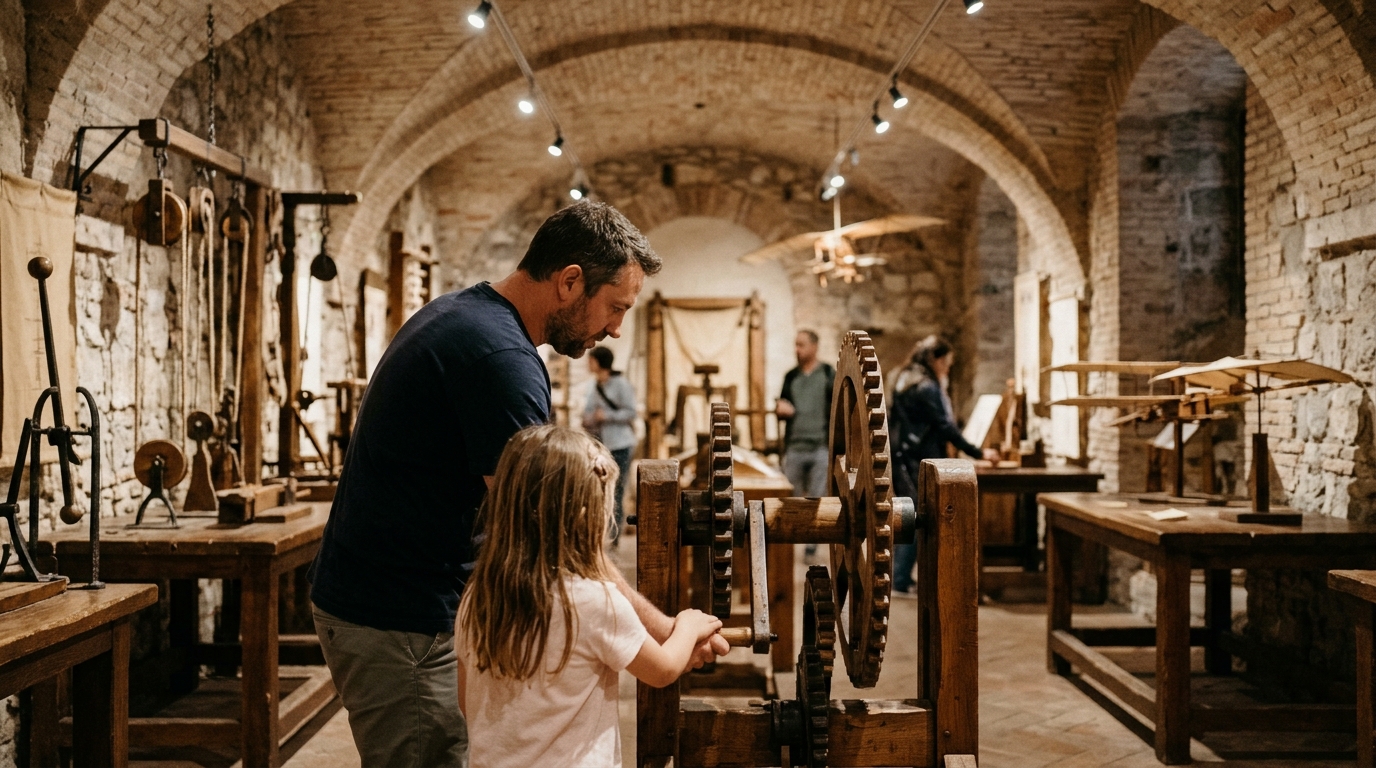
Choosing the best interactive museum in Rome depends on your family's age group and interests. Museo Leonardo da Vinci in Piazza del Popolo offers a top-tier hands-on experience for families exploring science and history. This guide covers booking procedures, age recommendations, and top venues like Explora and Technotown to help you plan the perfect day out.
Children's Interactive Museums
Interactive museums are designed to engage young learners through touch, movement, and play. In Rome, these venues transform passive observation into active discovery. Museo Leonardo da Vinci stands out by allowing visitors to manipulate replicas of historical inventions. This approach helps children understand complex engineering concepts through physical interaction rather than static displays.
The Role of Hands-On Learning
Hands-on learning is a pedagogical method where students learn by doing. For families, this means exhibits that invite participation. At the Museo Leonardo da Vinci, guests can experiment with water mechanics and flight principles. These activities are grounded in Leonardo's original studies, providing a unique blend of history and science.
Why Interactive Exhibits Matter
Interactive exhibits are installations that require user input to function. They keep attention spans high and make learning memorable. Families often find that these museums reduce the fatigue associated with traditional gallery walking. The underground vaults of the Basilica of Santa Maria del Popolo provide a cool, immersive environment that enhances the experience.
Natural History Experiences
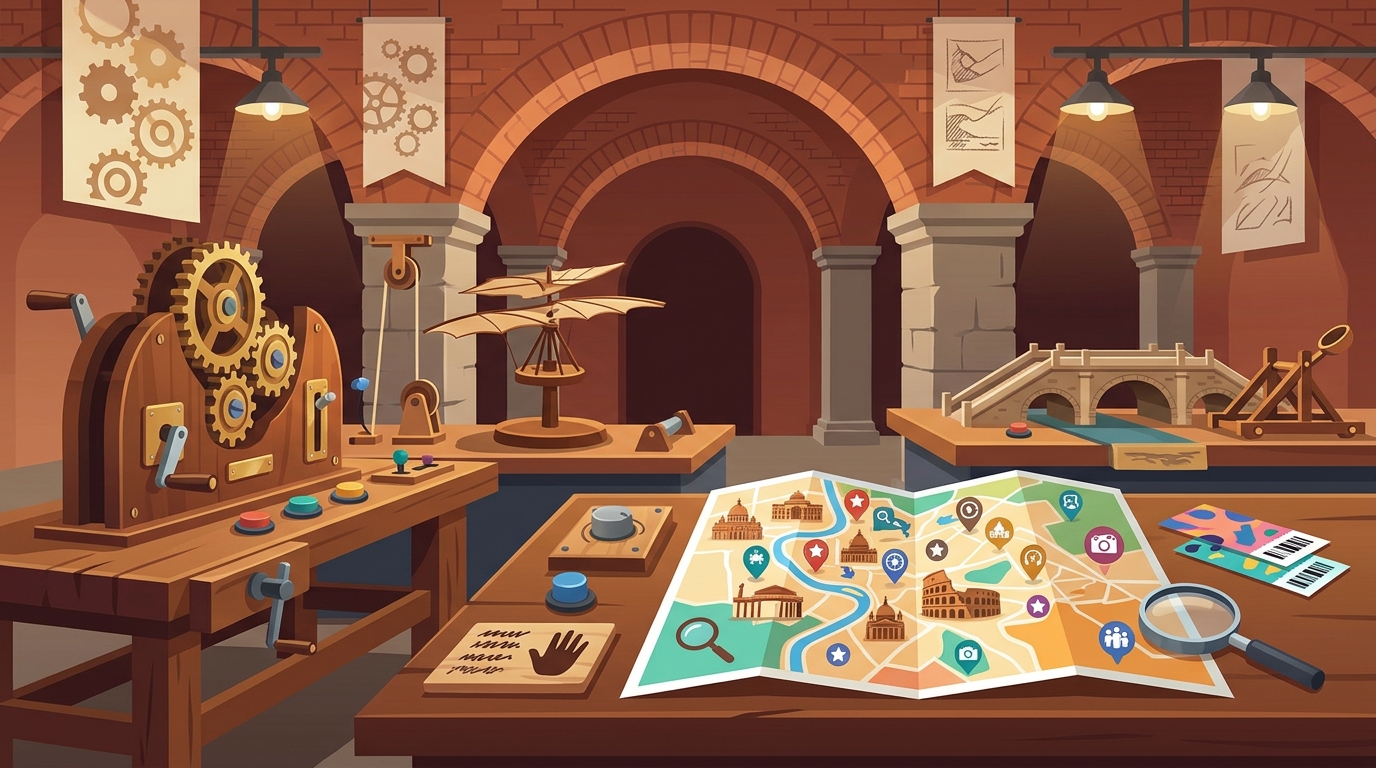
Connecting Science and History
Natural history is the study of the natural world, including plants, animals, and geology. In the context of a family trip, these experiences often overlap with scientific discovery. Leonardo da Vinci's anatomical sketches, for example, bridge the gap between art and biology. His detailed studies of the human body remain a cornerstone of scientific history.
Family-Friendly Science Centers
Museum Booking Procedures
Booking in advance is essential for popular interactive museums in Rome. Timed entry tickets help manage crowd flow and ensure a comfortable experience. Most major venues, including Museo Leonardo da Vinci, require online reservations for peak seasons.
How to Reserve Tickets
Peak Season Considerations
Peak season is the period of highest tourist volume, usually from April to October. During these months, popular time slots sell out quickly. We recommend booking at least two to four weeks in advance. This ensures you can visit your preferred venues without long waits or the risk of being turned away.
Optical Illusion Exhibits
Optical illusion exhibits are displays that trick the eye into seeing something different from reality. These exhibits are a staple of many interactive museums in Rome. They provide a fun, lighthearted break from more serious historical content.
The Science of Perception
Integration with Art History
Many optical illusion exhibits are inspired by the techniques of Renaissance artists. Leonardo da Vinci was a master of perspective and light. His studies on how the eye processes images laid the groundwork for modern understanding of visual perception. Exploring these connections adds depth to the fun of the exhibits.
Interactive Children's Museums
Interactive children's museums are dedicated spaces designed specifically for young audiences. They focus on play-based learning and developmental milestones. These venues often have lower height requirements and simpler explanations than general science centers.
Design for Young Learners
Child-centered design is an approach that prioritizes the needs and abilities of children. In museums, this means exhibits at child height, clear signage, and safe materials. The goal is to empower children to explore independently while parents observe and support. This design philosophy is central to the best family museums in Rome.
Benefits for Family Bonding
Family bonding is the strengthening of relationships through shared activities. Visiting interactive museums provides a shared context for conversation and discovery. Parents and children can collaborate on solving puzzles or completing challenges. This shared experience creates lasting memories and strengthens family connections.
Museum Age Recommendations
Choosing the right museum depends heavily on the age of your children. Different venues cater to different developmental stages. Understanding these age brackets helps you select the most engaging experiences for your family.
Preschoolers (Ages 3-5)
Preschoolers are children aged three to five who are developing basic motor and cognitive skills. They thrive in environments with simple, tactile exhibits. Look for museums with open play areas and minimal text. Short visit durations are recommended to maintain their attention.
School-Age Children (Ages 6-12)
School-age children are those between six and twelve who are developing reading and logical reasoning skills. They can handle more complex exhibits and enjoy challenges. Museums with hands-on science experiments and historical narratives are ideal for this group. They are often eager to learn facts and test their knowledge.
Teens and Adults
Explora Children's Museum
Exhibit Highlights
Location and Accessibility
The EUR district is a modern area of Rome with wide avenues and easy access. Explora is located in a purpose-built facility that is fully accessible. The surrounding area offers dining options and green spaces, making it a convenient stop for a full day out.
Technotown
Technotown is an interactive science museum in Rome that focuses on technology and innovation. It is located in the EUR district, near Explora, making it easy to visit both in one day. The museum offers a modern take on scientific discovery.
Focus on Technology
Comparison with Historical Museums
While Museo Leonardo da Vinci focuses on the past, Technotown looks to the future. Both museums use interactive methods to teach complex concepts. Families can choose based on their interest in historical vs. modern technology. Visiting both provides a comprehensive view of scientific progress.
Welcome to Rome
Why Rome for Families
Planning Your Itinerary
Planning is key to a successful family trip to Rome. We recommend grouping museums by location to minimize travel time. The Piazza del Popolo area, home to Museo Leonardo da Vinci, is central and close to other major sites. This makes it an excellent starting point for your family's Roman adventure.
Key Takeaways
- Museo Leonardo da Vinci is a top choice for families interested in science and history.
- Interactive exhibits are designed to engage children through touch and play.
- Booking in advance is crucial, especially during peak tourist seasons.
- Age recommendations help you select the most appropriate venues for your children.
- Explora and Technotown are excellent options for modern science and technology.
- Optical illusion exhibits provide a fun, lighthearted break from serious content.
- Grouping museums by location helps optimize your family's itinerary.
Frequently Asked Questions
Is Museo Leonardo da Vinci suitable for young children?
Yes, the museum is suitable for a wide range of ages. The interactive nature of the exhibits allows young children to engage with the content through play. Parents should supervise young children to ensure they understand the exhibits and stay safe.
Do I need to book tickets in advance?
It is highly recommended to book tickets in advance, especially during peak season. Timed entry tickets help manage crowds and ensure a smooth experience. You can usually book online through the museum's official website.
Where is Museo Leonardo da Vinci located?
The museum is located in the underground vaults of the Basilica of Santa Maria del Popolo in Piazza del Popolo. It is in the heart of Rome, near the Spanish Steps and Via del Corso. This central location makes it easy to combine with other sightseeing activities.
What is the difference between Explora and Technotown?
Are there optical illusion exhibits in Rome?
How long does a visit to Museo Leonardo da Vinci take?
A typical visit takes about one to two hours. This allows time to explore the interactive exhibits and read the informational panels. Families with young children may spend less time, while those with older children or adults may spend longer.
Is the museum accessible for visitors with disabilities?
Yes, the museum is designed to be accessible. The underground vaults are accessible via elevators, and the exhibits are designed to be usable by visitors with various mobility needs. It is always a good idea to check the specific accessibility details on the museum's website before your visit.