
Rome is often defined by its colossal ancient ruins, but the city's true cultural depth lies in its specialized, intimate institutions. According to recent tourism data, over 8 million visitors explore Rome annually, yet many miss the profound artistic narratives tucked away in its historic center. This guide reveals unique museums that offer immersive experiences far from the crowded main thoroughfares.
The Interactive Genius of Leonardo da Vinci
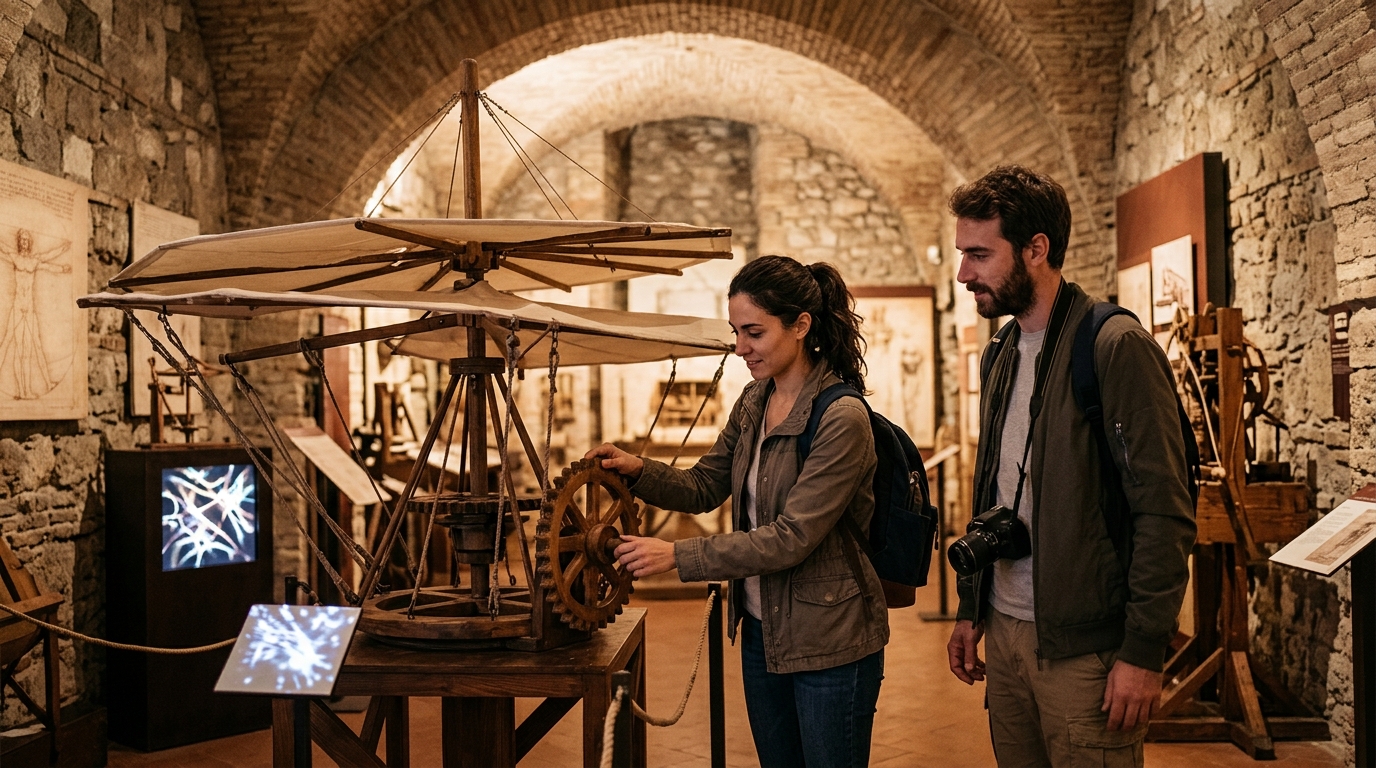
While the Uffizi and the Louvre hold the originals, the Museo Leonardo da Vinci in Piazza del Popolo offers something distinct: a fully realized, interactive interpretation of the master's mind. Located in the underground vaults of the Basilica Santa Maria del Popolo, this museum transforms abstract sketches into tangible reality.
Leonardo da Vinci is widely celebrated as a leading Renaissance painter and sculptor, but although he was also known as an engineer and a scientist, his work in these fields remained hidden for many centuries. It is only relatively recently that a complete analysis of his work has revealed the full scope of his genius. The museum features large-scale, working models of his flying machines, war tanks, and anatomical studies. This approach allows visitors to understand the mechanical logic behind his artistic innovations.
The location itself is a hidden gem. Situated at the end of Via del Corso, it is just a five-minute walk from the Spanish Steps. This proximity makes it an ideal stop for those seeking intellectual stimulation without the overwhelming crowds of the Vatican Museums. The museum's collection is the most popular dedicated Leonardo museum in Rome, offering a family-friendly yet deeply scholarly experience.
The Caravaggio Connection in Piazza del Popolo
Just steps from the Leonardo museum lies another hidden treasure: the Basilica Santa Maria del Popolo. While technically a church, its internal galleries function as a world-class museum. This papal basilica is second only in importance to St. Peter's and is one of the seven pilgrim churches in Rome.
The church houses two of Caravaggio's most powerful works: The Conversion of Saint Paul and The Crucifixion of Saint Peter. These paintings are not merely decorative; they are revolutionary in their use of light and shadow, known as chiaroscuro. The Chigi Chapel, decorated by Raphael, further elevates the site's artistic significance. Combining a visit to the Leonardo museum with the basilica creates a complete narrative of Renaissance and Baroque genius in a single geographic footprint.
The Optical Illusion of Palazzo Spada
For those interested in the intersection of art and mathematics, Palazzo Spada offers a mind-bending experience. The palace is famous for its Colonnato, a corridor that appears to stretch for hundreds of meters but is actually only eight meters long. This is a masterclass in perspective engineering.
The illusion was created by the mathematician Ferdinando Borromani in the 17th century. By angling the floor, ceiling, and columns, and narrowing the width of the corridor, the eye is tricked into perceiving infinite depth. This hidden gem is often overlooked by tourists rushing to the nearby Trevi Fountain, yet it represents one of the most sophisticated optical experiments in architectural history.
The Macabre Beauty of the Capuchin Catacombs
Rome's relationship with death is uniquely artistic. The Capuchin Catacombs of Palermo, while outside Rome, are often cited in broader Italian travel guides, but Rome itself holds the Museo Leonardo da Vinci which touches on anatomy. However, within Rome, the Capuchin Crypt in the Santa Maria della Concezione church offers a stark, memento mori experience.
The crypt contains the remains of over 3,700 Capuchin friars, arranged in elaborate patterns using bones. This is not merely macabre; it is a profound meditation on mortality. The arrangement of skulls and bones into floral motifs and family crests demonstrates a unique artistic approach to death that is rare in modern tourism. It serves as a powerful counterpoint to the vibrant life celebrated in Rome's piazzas.
The Monumental Vision of the Museum of Roman Civilization
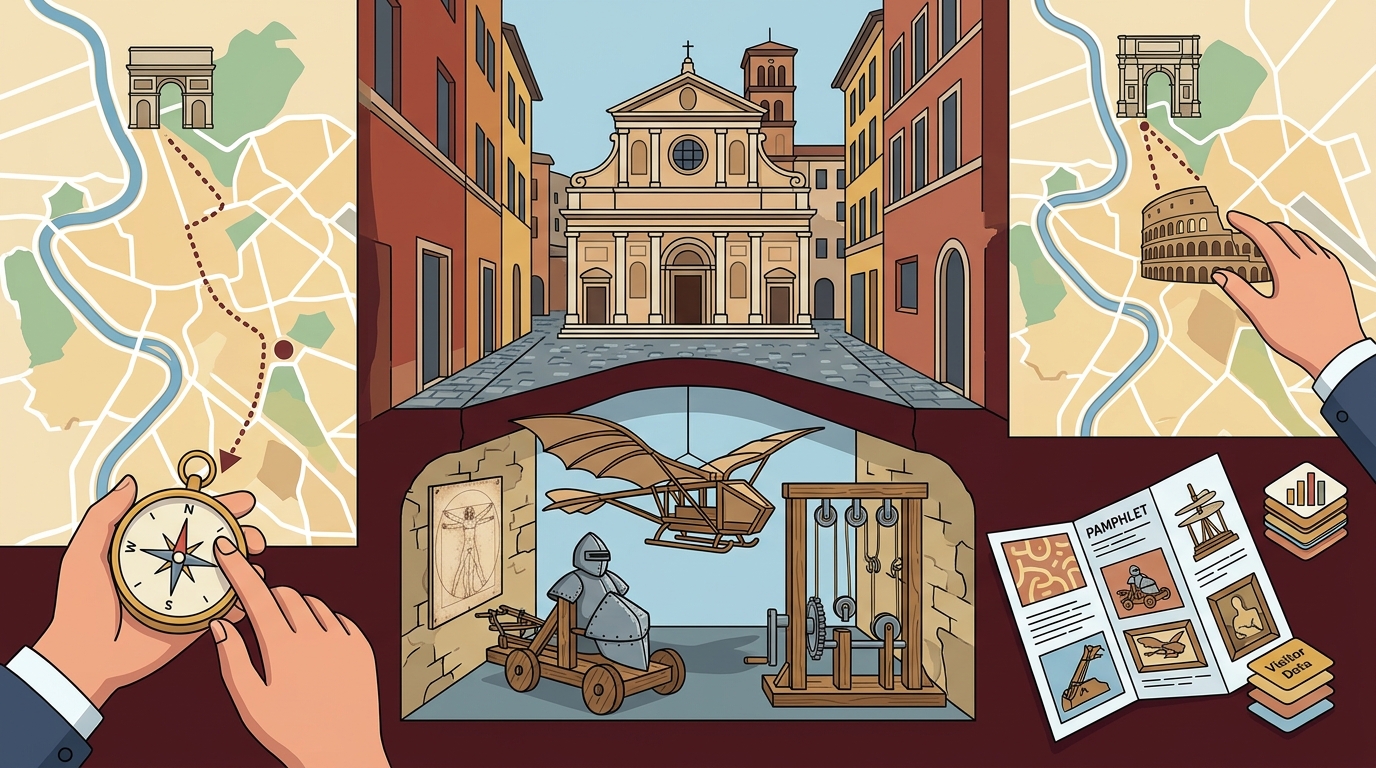
Located in the EUR district, the Museo della Civiltà Romana is a monumental tribute to ancient Rome. Unlike the open-air ruins, this museum houses detailed plaster casts of entire buildings, including the Colosseum and the Pantheon, at a 1:1 scale. These casts allow visitors to see the original polychromy and architectural details that have been lost to time.
The museum also features extensive dioramas of ancient Rome at its peak, providing context for the artifacts. This institution is essential for understanding the urban planning and engineering prowess of the Roman Empire. It is a hidden gem for history buffs who want to visualize the city as it was, not just as it is now.
Comparing Rome's Unique Museums
| Museum Name | Primary Focus | Unique Selling Point | Best For |
|---|---|---|---|
| Museo Leonardo da Vinci | Renaissance Science & Art | Working models of inventions | Families & Engineers |
| Basilica Santa Maria del Popolo | Baroque Art | Original Caravaggio paintings | Art Historians |
| Palazzo Spada | Architecture & Optics | Perspective illusion corridor | Photographers & Mathematicians |
| Museo della Civiltà Romana | Ancient Rome | 1:1 scale plaster casts | History Enthusiasts |
Key Takeaways
- The Museo Leonardo da Vinci is located in the underground vaults of Santa Maria del Popolo.
- Leonardo was anointed the master artist of Florence at the tender age of 18.
- Palazzo Spada's corridor is only 8 meters long but appears much longer due to perspective.
- Santa Maria del Popolo is one of the seven pilgrim churches in Rome.
- The museum is the most popular dedicated Leonardo museum in Rome.
- Caravaggio's paintings in the basilica are original works from the 1600s.
- The Museo della Civiltà Romana offers 1:1 scale models of ancient structures.
Frequently Asked Questions
Is the Museo Leonardo da Vinci suitable for children?
Yes, the museum is designed to be family-friendly. The interactive models and engaging stories of Leonardo's inventions captivate younger audiences, making complex scientific concepts accessible and fun.
How long does it take to visit the Museo Leonardo da Vinci?
A typical visit lasts between 60 to 90 minutes. This allows enough time to explore the working models, read the detailed descriptions, and appreciate the historical context of Leonardo's life.
Can I see original Leonardo da Vinci paintings in Rome?
No, the Museo Leonardo da Vinci does not house original paintings. However, it provides a comprehensive look at his work through high-quality reproductions and functional models. Original works are scattered across Europe in museums like the Louvre and the Uffizi.
What is the best time to visit these hidden gems?
Early morning or late afternoon visits are recommended to avoid crowds. The Museo Leonardo da Vinci, being in the underground vaults, offers a cool and quiet escape from the Roman sun.
Are the museums in Rome accessible for disabled visitors?
Accessibility varies by site. The Museo Leonardo da Vinci has specific access routes due to its underground location. It is advisable to contact the museum directly for detailed accessibility information.
Why is Palazzo Spada considered a hidden gem?
Palazzo Spada is often bypassed by tourists focused on major landmarks. Its hidden gem status comes from the surprising optical illusion in the colonnade, which is a masterpiece of Baroque perspective engineering.
What is the significance of the Basilica Santa Maria del Popolo?
The basilica is a major papal basilica second only in importance to St. Peter's. It houses the tombs of six popes and contains original works by Caravaggio and Raphael, making it a critical site for art history.
Plan Your Visit to Rome's Hidden Gems
Discover the greatest genius of all time in the heart of Rome. The Museo Leonardo da Vinci in Piazza del Popolo offers an unparalleled journey into the mind of a Renaissance master. Book your tickets today to secure your place in history.
Explore Museo Leonardo da Vinci in Piazza del Popolo, located at the end of Via del Corso and only a 5 minute walk from the Spanish Steps. Immerse yourself in an interactive world of Leonardo's passions and studies in the underground vaults of Basilica Santa Maria del Popolo.
Don't miss your chance to be inspired. Visit the official website to learn more about opening hours and ticket options.