
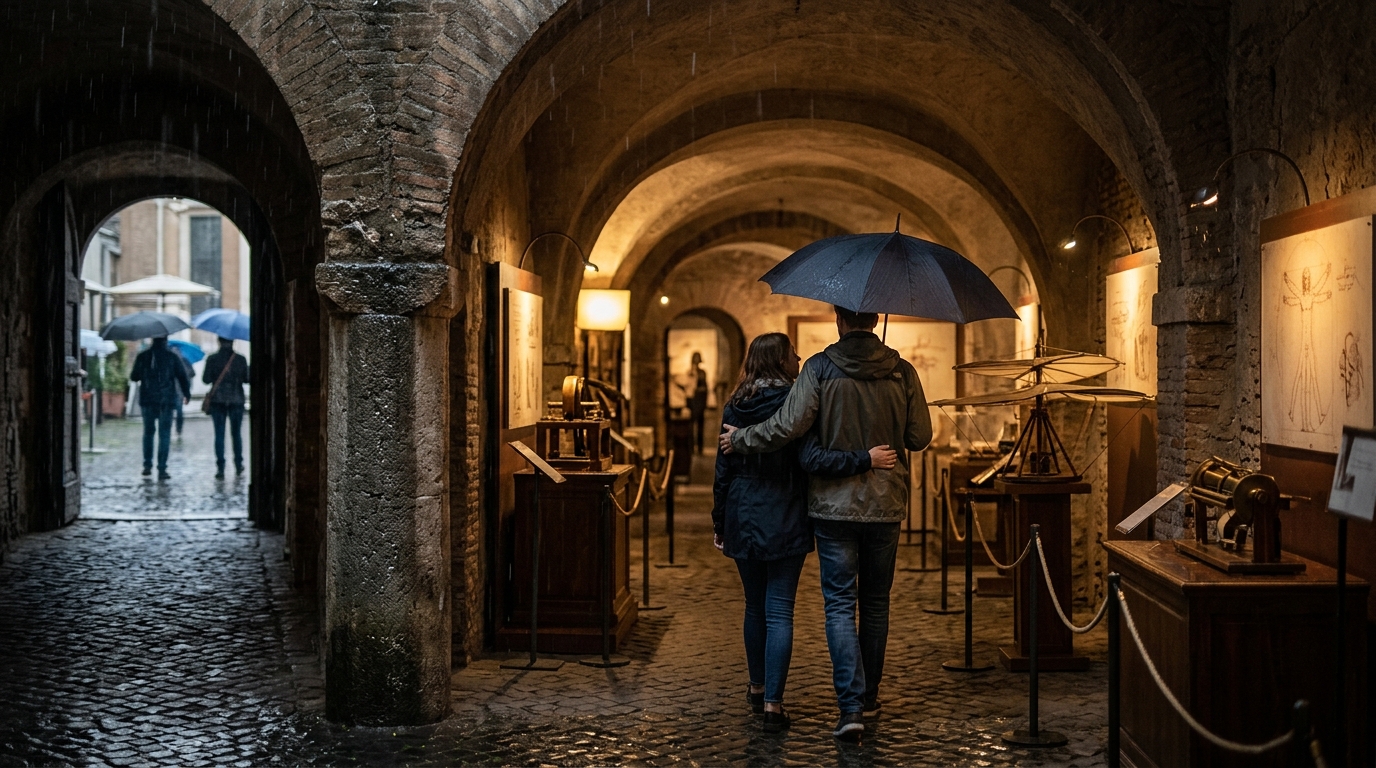
Rome is often celebrated for its golden hour light and open-air piazzas, but the city transforms beautifully when the skies open up. According to recent tourism data, approximately 20% of all international visitors to Italy arrive during the autumn and winter months, seeking a more intimate connection with history without the peak summer crowds. This shift in weather does not mean your itinerary must halt. Instead, it offers a unique opportunity to explore the capital's profound indoor heritage, from ancient catacombs to world-class museums. Whether you are a history buff, an art enthusiast, or simply looking for a warm place to enjoy espresso, Rome provides ample shelter for every type of traveler. (Museo Leonardo da Vinci)
Discover the Museo Leonardo da Vinci
When rain pours down in the historic center, one of the most inspiring escapes is the Museo Leonardo da Vinci. Located in the underground vaults of the Basilica Santa Maria del Popolo, this museum offers a fascinating look into the mind of the Renaissance polymath. The museum is the most popular dedicated Leonardo museum in Rome, making it a perfect stop for families and adults alike.
While you will not see the original Mona Lisa or The Last Supper here, the experience is no less profound. The museum features detailed anatomical sketches, startling scientific discoveries, and groundbreaking inventions that Leonardo designed centuries ago. These exhibits are brought to life through interactive displays that allow visitors to understand the mechanics behind his genius. The location itself is a marvel, situated at the end of Via del Corso and only a five-minute walk from the Spanish Steps.
Leonardo was anointed the master artist of Florence at the tender age of 18, responsible for iconic artworks that still define Western art. Visiting this museum provides context for those masterpieces while highlighting his contributions to engineering and science. The underground setting also offers a natural refuge from the elements, allowing you to spend hours immersed in his world without worrying about the weather outside.
The Vatican Museums and Sistine Chapel
No discussion of rainy-day activities in Rome is complete without mentioning the Vatican Museums. This vast complex houses one of the greatest art collections in the world, ensuring that your day remains rich with culture regardless of the forecast. The museums are home to the Sistine Chapel, where Michelangelo's ceiling frescoes are a testament to human creativity.
According to historical records, the Vatican Museums receive millions of visitors annually, making them a cornerstone of Roman tourism. The sheer scale of the collection means that even on a busy day, there are quiet corners to explore. Highlights include the Gallery of Maps, the Raphael Rooms, and the extensive collection of ancient Roman sculptures.
Planning your visit during a rainy day can sometimes offer a slightly more manageable crowd flow compared to the sweltering heat of July. However, tickets should always be booked in advance to avoid long queues. The experience of walking through these halls, where popes and artists have walked for centuries, is a profound connection to history that transcends the weather.
Art and History at the Capitoline Museums
Perched atop the Capitoline Hill, the Capitoline Museums are considered the world's oldest public museums. Established in 1471, they offer a panoramic view of Rome and a deep dive into its ancient past. The museum is located in the Piazza del Campidoglio, designed by Michelangelo himself, which provides a stunning architectural frame for your visit.
The Capitoline Museums house the iconic bronze statue of the Capitoline Wolf, a symbol of Rome's founding myth. The collection includes the Dying Gaul, the Equestrian Statue of Marcus Aurelius, and numerous other artifacts that tell the story of the Roman Empire. The indoor galleries are well-lit and climate-controlled, providing a comfortable environment for art lovers.
For those interested in the political and military history of Rome, this museum is essential. The layout guides visitors through a chronological journey from the early Republic to the height of the Empire. The museum's location also offers a great vantage point to watch the rain fall over the Roman Forum, adding a dramatic backdrop to your cultural exploration.
The Pantheon: A Masterpiece of Engineering
The Pantheon is perhaps the best example of Roman engineering that can be enjoyed in any weather. Originally built as a temple to all the gods, it is now a church and one of the best-preserved ancient buildings in the world. The structure's massive concrete dome remains an engineering marvel nearly two millennia after its construction.
The defining feature of the Pantheon is the oculus, a large opening at the top of the dome that allows rain to fall into the center of the building. This design element means that the floor is often wet, but it also creates a mesmerizing visual effect as raindrops cascade from the heavens. The interior is vast and silent, offering a moment of reflection amidst the bustling city.
Visiting the Pantheon on a rainy day allows you to witness this unique interaction between architecture and nature. The light filtering through the oculus, even when diffused by clouds, creates a dynamic atmosphere that changes throughout the day. It is a reminder that in Rome, even the rain is part of the historical experience.
Relaxing in Rome's Thermal Baths
After a day of walking and exploring museums, there is no better way to recover than in Rome's thermal baths. The city has a long tradition of bathing, dating back to the ancient Romans who built elaborate bathhouses for public use. Today, visitors can experience this tradition in modern facilities that offer both relaxation and wellness treatments.
Thermal baths in Rome typically feature pools of heated mineral water, saunas, and steam rooms. These facilities provide a perfect escape from the cold and dampness of a rainy afternoon. Many spas also offer massages and other therapeutic treatments that can help alleviate the fatigue of travel.
For a more historical experience, some spas are located in or near ancient thermal sites, adding a layer of historical context to your relaxation. Whether you choose a luxury spa or a more traditional bathhouse, the warmth and comfort provided are a welcome contrast to the Roman rain.
Culinary Delights in Covered Markets
Rome's food scene is a major draw for visitors, and rainy days are perfect for exploring its covered markets. Markets like Campo de' Fiori and Mercato di Testaccio offer a vibrant atmosphere where you can sample local delicacies while staying dry. These markets are hubs of daily life in Rome, offering fresh produce, meats, cheeses, and street food.
Walking through these markets allows you to interact with local vendors and learn about the ingredients that define Roman cuisine. You can taste fresh mozzarella, cured meats, and seasonal fruits, all while enjoying the lively chatter of the market. Many stalls also offer ready-to-eat snacks, such as supplì (rice balls) and pizza al taglio, which are perfect for a quick bite.
For a more structured culinary experience, many restaurants in the historic center offer cozy interiors and traditional Roman dishes. Dishes like carbonara, cacio e pepe, and amatriciana are hearty and comforting, ideal for a rainy day. Exploring these culinary options provides a sensory experience that complements the visual and historical aspects of your trip.
Key Takeaways
- The Museo Leonardo da Vinci is located in the underground vaults of Basilica Santa Maria del Popolo, offering a unique indoor experience.
- Leonardo da Vinci was anointed the master artist of Florence at the age of 18, a fact highlighted in the museum's exhibits.
- The Vatican Museums house the Sistine Chapel and are among the most visited cultural sites in the world.
- The Pantheon's oculus allows rain to enter the building, creating a dramatic and historic visual effect.
- Rome's thermal baths offer a traditional way to relax and recover from a day of sightseeing.
- Covered markets like Campo de' Fiori provide a vibrant culinary experience regardless of the weather.
- Booking tickets in advance for major museums is essential to avoid long queues and ensure entry.
Frequently Asked Questions
Is the Museo Leonardo da Vinci open on rainy days?
Yes, the Museo Leonardo da Vinci is open year-round, including on rainy days. Its location in the underground vaults makes it an ideal shelter from the weather.
How do I avoid crowds at the Vatican Museums?
Visiting early in the morning or later in the afternoon can help avoid the largest crowds. Additionally, booking tickets online in advance is highly recommended.
Is it safe to walk in Rome during heavy rain?
Yes, Rome is generally safe to walk in during rain. However, some cobblestone streets can become slippery, so wearing appropriate footwear is advised.
What is the best indoor activity for families in Rome?
The Museo Leonardo da Vinci is particularly great for families due to its interactive exhibits and engaging content about Leonardo's life and inventions.
Can I visit the Pantheon for free?
As of recent changes, a small fee is required for entry to the Pantheon. It is best to check the current pricing and booking requirements before your visit.
Are there thermal baths near the historic center?
Yes, there are several thermal baths and spas located within or near the historic center, offering convenient access for tourists.
What should I wear in Rome during the rainy season?
Wear waterproof shoes and carry a compact umbrella or a raincoat. Layers are also recommended as indoor temperatures can vary.
Plan Your Rainy-Day Rome Experience
Don't let the weather dictate your itinerary. Rome offers a wealth of indoor activities that provide deep cultural and historical insights. From the interactive wonders of the Museo Leonardo da Vinci to the artistic grandeur of the Vatican, there is something for everyone. Book your tickets today and explore the capital's hidden gems, ensuring a memorable trip regardless of the forecast.